
 KSCN
KSCN
Search
- Page Path
- HOME > Search
Research Article
- [Korean]
- Evaluation of the nutrition quality of meals served in small-scale public foodservice for the elderly in Korea by foodservice operation type–focused on proportion over chronic disease risk reduction intake and nutrient adequacy ratio: a cross-sectional study
- Inhee Kang, Hyeongmo An, Gyoungok Gang, Hyeja Chang
- Korean J Community Nutr 2026;31(4):348-359. Published online August 31, 2026
- DOI: https://doi.org/10.5720/kjcn.2026.00290
-
 Abstract
 PDF
PDF - Objectives
Although delivery-based contract-managed operations have recently increased in small-scale foodservice facilities serving older adults, studies investigating the nutrient adequacy of meals and chronic disease risk reduction intake remain limited. This study aimed to evaluate nutrient intake levels, nutrient intake adequacy, and their chronic disease risk, and to compare differences between self-operation and contract-managed foodservice.
Methods
Nutrient intakes of 777 participants were assessed for lunch and snack in 18 small-scale foodservice settings serving older adults in Korea. Data collection included 12 visits to six self-operated foodservice settings (November 2024–June 2025) and 24 visits to 12 contract-managed foodservice settings (December 2025–March 2026). Using the individual leftover measurement method, consumption adjustment factors were calculated. By applying it to standardized recipes from lunch and afternoon snacks, nutrient intake was analyzed using CAN-Pro 6.0 (Professional Edition; The Korean Nutrition Society). Based on the 2025 Korean Dietary Reference Intakes, nutrient adequacy ratio (NAR), the proportion of participants with intakes below nutrient reference values, and the proportion over chronic disease risk reduction intake (CDRR) were calculated.
Results
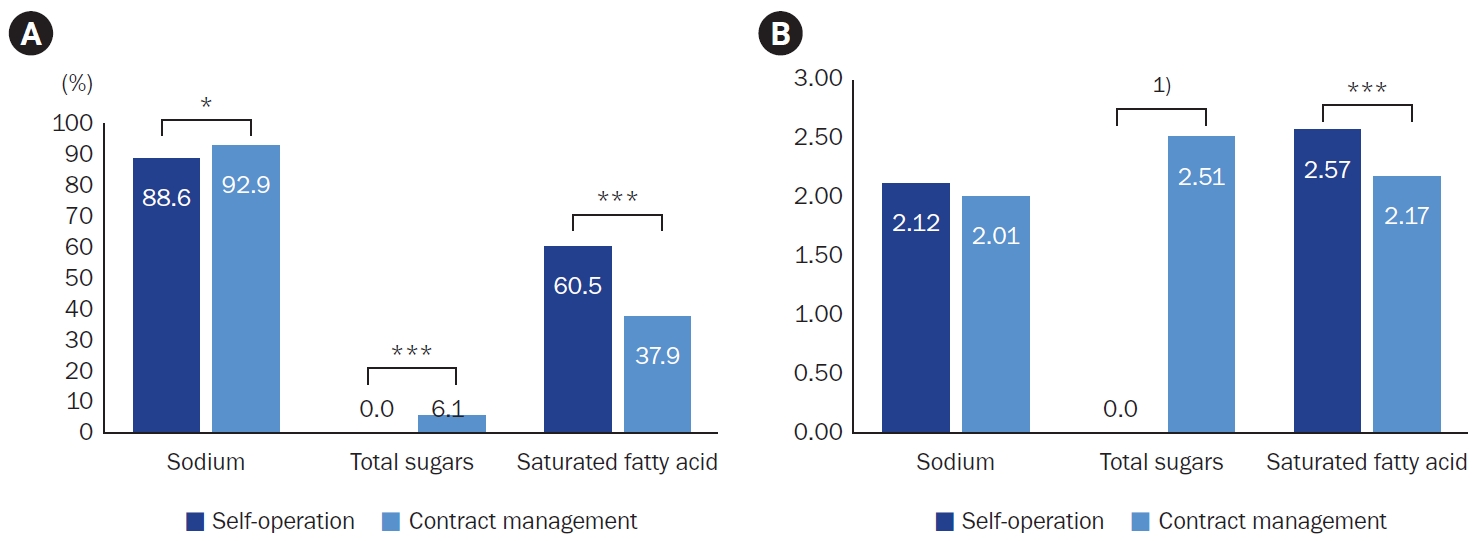
Except for significantly higher soup consumption in self-operated foodservice, no significant differences in consumption and consumption adjustment factors were observed among food types between the two foodservice operation types. NARs were low for vitamin B6 (0.29), vitamin D (0.37), vitamin A (0.52), vitamin C (0.55), and calcium (0.61), indicating inadequate micronutrient intake. The highest proportions were for vitamin B6 (94.9%), followed by vitamin A and folate (76.4%), vitamin C (70.4%), and calcium (69.0%). The proportion over CDRR of the participants was highest for sodium (91.2%), followed by saturated fatty acids (46.6%) and total sugars (3.7%), showing significant differences between the two foodservice operation types.
Conclusion
Nutrition management in small-scale public foodservice facilities for older people should reflect actual consumption and operation type-specific nutrient deficiencies or excesses.
- 183 View
- 10 Download

Review
- [English]
- Nutritional strategies to promote healthy life expectancy of Korean older adults based on their nutritional status and current nutrition programs: a narrative review
- SuJin Song
- Korean J Community Nutr 2026;31(4):297-308. Published online August 31, 2026
- DOI: https://doi.org/10.5720/kjcn.2026.00283
-
Abstract
PDF
- Objectives
Korea has entered a super-aged society, resulting in a growing socioeconomic burden and rapidly increasing demand for home- and community-based nutrition services. This review aimed to examine the nutritional health status of Korean older adults and the existing nutrition programs, along with suggesting effective nutritional strategies to improve their healthy life expectancy.
Methods
This narrative review was conducted by collecting and synthesizing domestic and international literature, including journal articles, books, government documents, national health statistics, and reports on foreign nutrition programs. The literature was collected through scholarly databases and institutional websites searches using relevant keywords.
Results
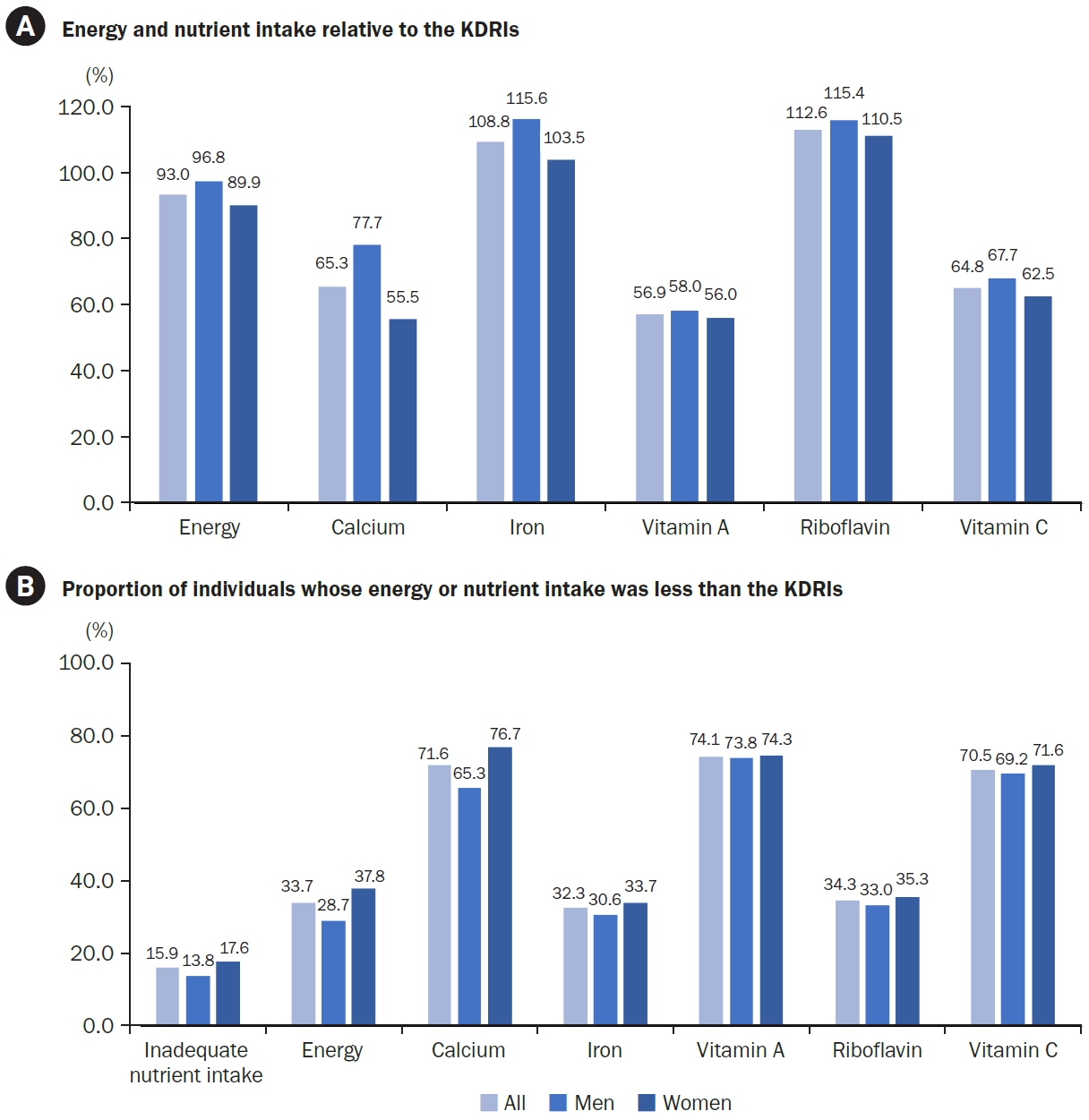
The synthesized results indicate that Korean older adults have insufficient intakes of essential nutrients, such as calcium, vitamin A, and vitamin C, alongside a high prevalence of multimorbidity and associated polypharmacy. Existing community-based nutrition programs provide meal services, home-delivered meals/side dishes, and nutrition education/counseling to vulnerable older populations. Additionally, the Center for Social Welfare Foodservice Management contributes to overseeing nutrition and hygiene management in small-scale elderly foodservice facilities. However, more effective nutritional strategies are required to achieve fully integrated community care. First, homebased nutrition care services for community-dwelling older adults should be introduced to enable tailored nutritional management. Second, expanding and strengthening the role of the Center for Social Welfare Foodservice Management may facilitate efficient management of meals across elderly foodservice facilities. Third, specialized education and training programs are required to enhance the professional competency of dietitians delivering these services. Furthermore, robust legal, institutional, and budgetary foundations, improved working conditions and job security for dietitians, and heightened public awareness of nutrition services are needed.
Conclusion
Implementing these strategies may prevent functional decline and disease aggravation, and ultimately reduce the socioeconomic costs associated with medical treatment, nursing, and long-term care of older adults.
- 183 View
- 7 Download
Research Note
- [Korean]
- Sugar intake from processed foods among Koreans and levy on excessive sugar use: a cross-sectional study
- Sung Ok Kwon, Cho-il Kim
- Korean J Community Nutr 2026;31(3):287-296. Published online June 30, 2026
- DOI: https://doi.org/10.5720/kjcn.2026.00199
-
Abstract
PDF
- Objectives
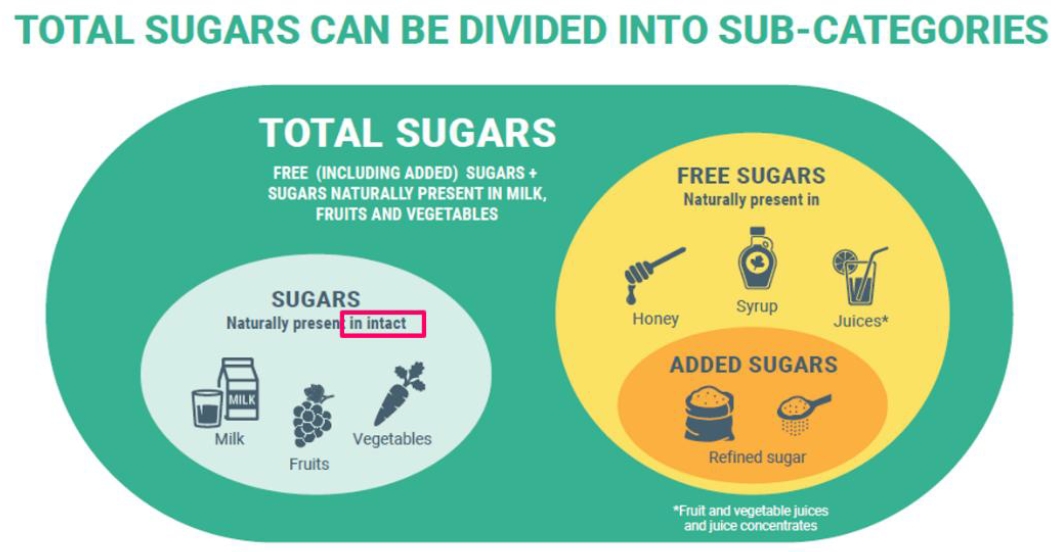
Although reduced mean sugar intakes have been reported recently, proportion changes in the Korean population with a sugar intake higher than the World Health Organization (WHO) sugar intake recommendation (WSIR) remain unknown. Therefore, in this study, we analyzed the sugar intake of Koreans to identify trends and prioritize target groups for relevant policy interventions.
Methods
We used dietary intake data from the 8th and 9th Korea National Health and Nutrition Examination Surveys (KNHANES VIII and IX) to derive sugar intake from processed foods (SIPF) in the Korean population. We classified, aggregated and calculated sugar intake from individual foods at the tertiary-level food codes, and assessed SIPF adequacy based on whether it met the WSIR of less than 10% of the total energy intake.
Results
The proportion of the Korean population with an SIPF exceeding the WSIR was 22.7% and 22.4% in KNHANES VIII and IX, respectively. Nevertheless, more than one-third of children, adolescents, and young adults (34.6%–39.1%) showed SIPF higher than the WSIR with the highest proportion of 41.4% registered among school-age girls in KNHANES IX.
Conclusion
While the mean sugar intake of Koreans has decreased slightly since 2019, the proportion of people with SIPF exceeding WSIR is on the rise in school-age children, adolescents, and young adults, implying the necessity of proactive policy responses. As the Korean government discusses fiscal policy design and implementation to moderate the sugar intake of the population in order to promote public health and prevent chronic diseases, it should bear in mind the point emphasized in the WHO guideline as follows: “Changes in health-related outcomes as a result of a fiscal policy are likely to occur in the long term and should therefore be evaluated over a longer term than outcomes such as purchasing and consumption of foods and beverages.” -
Citations
Citations to this article as recorded by
- Estimating added sugars intake among South Koreans: results from the 2023 Korea National Health and Nutrition Examination Survey
Youngmin Nam, Linxi Huang, Cho-il Kim, Jihyun Yoon
Clinical Nutrition Research.2026; 15(3): 139. CrossRef
- Estimating added sugars intake among South Koreans: results from the 2023 Korea National Health and Nutrition Examination Survey
- 709 View
- 46 Download
- 1 Crossref
Research Articles
- [English]
- Changing patterns and related factors of kimchi consumption among Korean adults: a nationwide cross-sectional analysis of the Korea National Health and Nutrition Examination Survey, 2010–2024
- Hui-Yang Zhao, Hyunji Ham, Sumin Kim, Chang Hyeon Lee, Kyungho Ha, Sangah Shin
- Korean J Community Nutr 2026;31(3):244-263. Published online June 30, 2026
- DOI: https://doi.org/10.5720/kjcn.2026.00108
-
Abstract
PDF
- Objectives
This study was conducted to analyze long-term trends in kimchi consumption and patterns among Korean adults using data from the Korea National Health and Nutrition Examination Survey (KNHANES) from 2010 to 2024, and to identify sociodemographic, dietary, and health-related factors associated with recent kimchi consumption.
Methods
Data from the 5th (2010) through 9th (2024) KNHANES were utilized. Trend analysis included 103,267 participants, while factor analysis focused on 14,244 adults aged ≥ 30 years (2022–2024). Changes in consumption form (side dish versus ingredient) and locations were examined. Multiple logistic regression was used to calculate odds ratios (ORs) for meeting the recommended intake (40 g/day).
Results
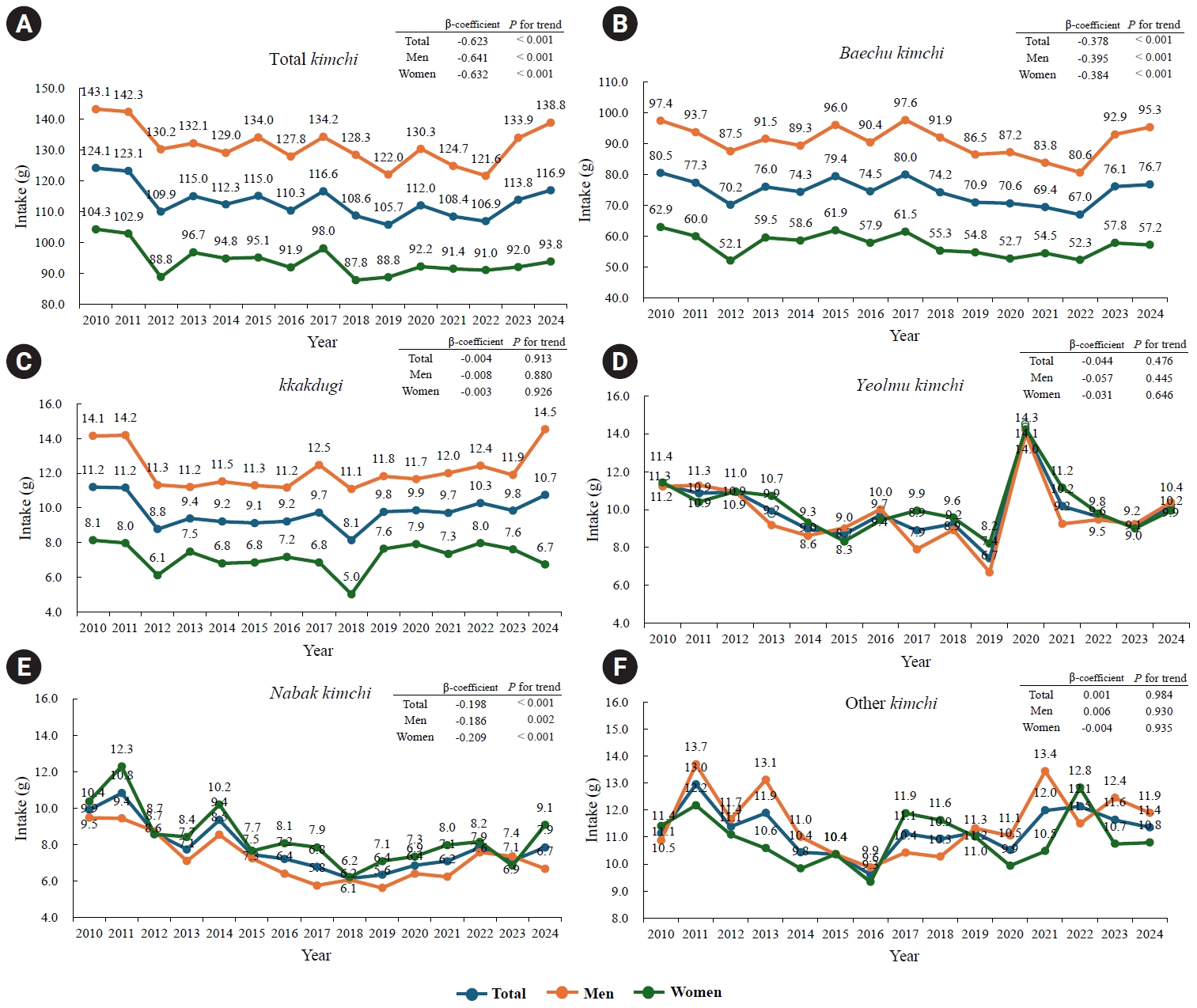
Over the past 15 years, kimchi consumption among Korean adults has significantly decreased regardless of gender (men: β = –1.53, women: β = –1.31, P for trend < 0.05). The proportion of individuals reporting no kimchi intake on the 24-hour recall day increased from 11.7% in 2010 to 22.7% in 2024. Among young adults (20–39 years), a qualitative shift occurred as consumption transitioned from side dishes to dish ingredients. At-home consumption decreased for all age groups under 60 years. Conversely, eating-out consumption increased for most groups, except for those aged 20–39 years, while school/ workplace consumption increased only in the 0–9 years age group. Analysis of the factors associated with meeting the recommended intake revealed that men, older adults, rural residents, married individuals, alcohol consumers, and smokers were more likely to meet the recommendation. Conversely, frequent solo dining or skipping meals were significantly associated with a lower likelihood of meeting the recommendation.
Conclusion
This study confirms a structural shift in the Korean diet. Future strategies for preserving traditional food culture and establishing nutritional policies must be tailored to reflect modern dietary changes, such as an increase in single-person households and the spread of a solo-dining culture.
- 1,587 View
- 31 Download
- [English]
- Current status of sodium provision and reduction management in South Korean school meals: a descriptive study
- Sooyoun Kwon, Youngmi Lee, Meeyoung Kim
- Korean J Community Nutr 2026;31(3):229-243. Published online June 30, 2026
- DOI: https://doi.org/10.5720/kjcn.2026.00101
-
Abstract
PDF
- Objectives
This study investigated the current status of sodium provision and reduction management in South Korean school meals.
Methods
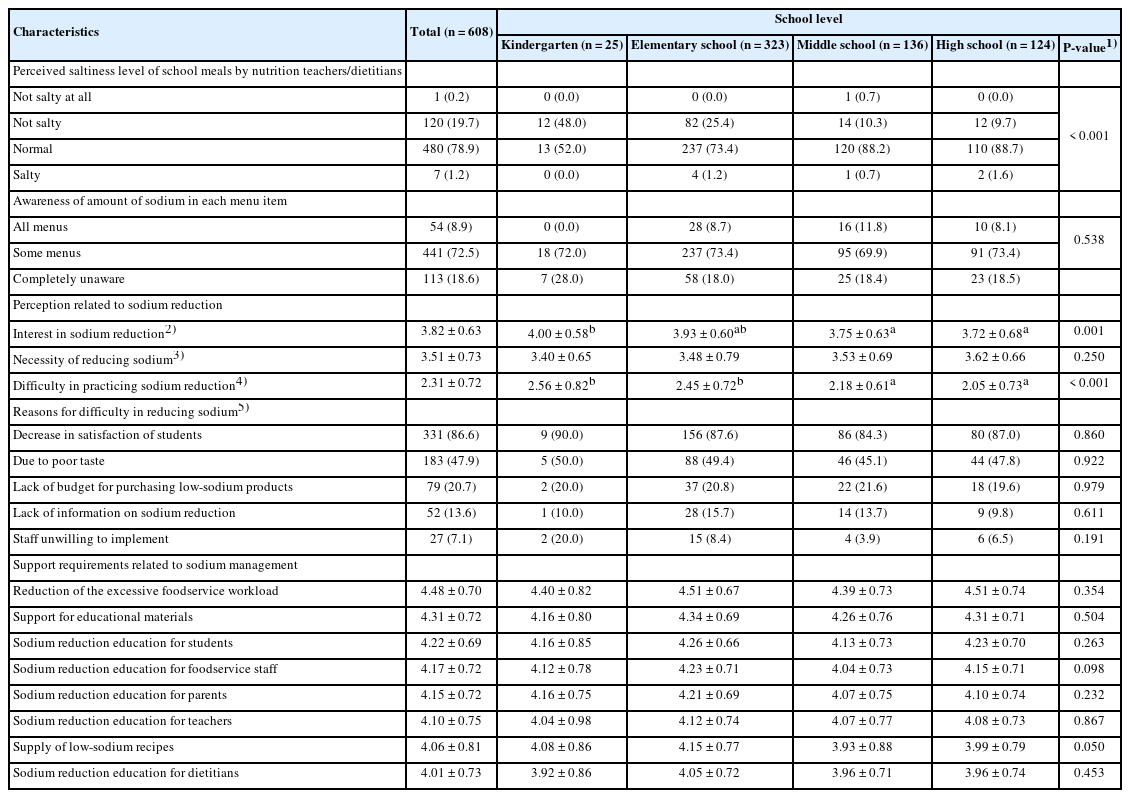
Using a proportional stratified random sampling by school level (kindergarten and elementary, middle, and high school), location (urban, rural, and island/remote area), and region (17 metropolitan and provincial Offices of Education), 1,068 schools (about 10% of all schools) were selected from 430 kindergartens and 5,883 elementary, 2,501 middle, and 2,268 high schools using the school meal system of the National Education Information System. An online survey was conducted with nutrition teachers and dietitians at the selected schools from September to November 2021 (n = 608; response rate: 57%).
Results
About 26.6% of schools had not established sodium provision standards. More than half of the respondents (59.9%) had never used low-sodium products; this percentage increased with school level. The reasons given included “insufficient information” (46.7%) and “high prices” (41.5%). The level of consideration for sodium management was highest at the cooking stage (3.89/5.00 points) and lowest at purchasing stage (3.20 points). Cooking-related consideration was significantly higher in kindergartens and elementary schools than in middle and high schools, while purchasing-related consideration was significantly higher in elementary than in middle schools. To reduce sodium, the most commonly reported requirement was “reduction of the excessive foodservice workload” (4.48/5.00 points), followed by “support for educational materials” (4.31 points).
Conclusion
Reducing sodium intake in school meals may require establishing clear sodium standards, increasing the availability of low-sodium products, easing the excessive workload, and enhancing educational support. To support these efforts, more comprehensive and consistently implemented policy approaches may be needed to reduce sodium in schools.
- 630 View
- 35 Download
- [Korean]
- Awareness, importance and performance of sustainable diets among university students in Daegu and Gyeongbuk, Korea: a cross-sectional study
- Yun-Gyeong Cho, Eun-Kyung Shin, Yeon-Kyung Lee
- Korean J Community Nutr 2026;31(3):276-286. Published online June 30, 2026
- DOI: https://doi.org/10.5720/kjcn.2026.00080
-
Abstract
PDF
- Objectives
The need for a sustainable diet is being emphasized as dietary changes are linked to climate change, biodiversity loss, and worsening food security. The purpose of this study was to investigate university students’ awareness, knowledge, behaviors, perceived importance, and performance of sustainable diets, and to compare these variables between students who had taken a food and nutrition course and those who had not.
Methods
A total of 300 university students in the Daegu Gyeongbuk region, Korea, participated in an online survey conducted in 2024, and 292 valid (male, 139; female, 153) responses were analyzed. The survey assessed awareness, knowledge, behaviors, perceived importance, and performance of sustainable diets. These were compared between participants (134) and non-participants (158) in the food and nutrition course.
Results
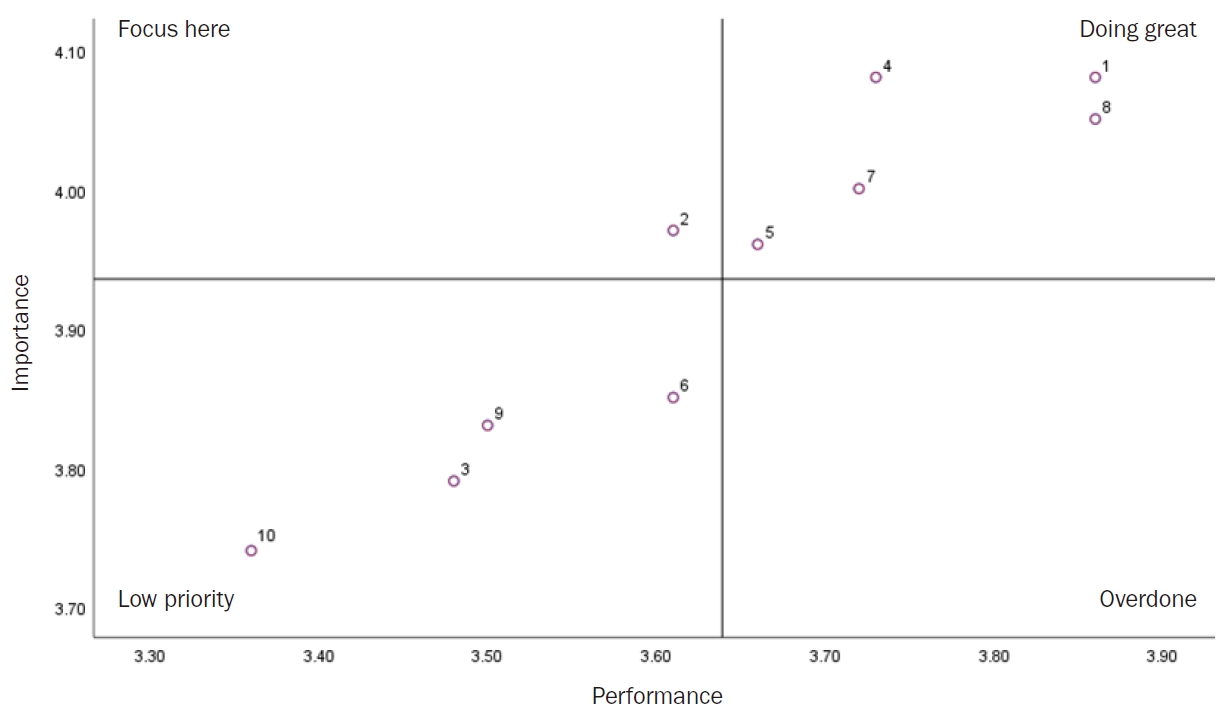
Our results showed that 54.5% of students were aware of sustainable diets, and 58.7% expressed an intention to participate in sustainable diet education in the future. The total knowledge and behavior scores on sustainable diets were 7.09/10 and 3.67/5, respectively, and the scores of the course-taking group were significantly higher than those of the non-course-taking group. The actual level of performance of sustainable diets (3.63/5) was relatively low compared to their perceived importance (3.93/5). Students who took the course demonstrated significantly higher importance (society) and performance (environment, health, and society) scores than those who did not. No significant differences were detected between the two groups regarding the importance of the environmental and health aspects of sustainable diets.
Conclusion
Students taking the food and nutrition course demonstrated high levels of awareness, knowledge, behavior, perceived importance, and performance regarding sustainable diets. These findings highlight the need for systematic educational strategies in higher education to promote sustainable dietary competencies among university students.
- 483 View
- 21 Download
- [Korean]
- Effect of a community-based nutrition intervention incorporating social cognitive theory constructs and transtheoretical model-based counseling among community-dwelling elderly in Korea: a quasi-experimental study
- Hyewon Shin, Seungmin Lee
- Korean J Community Nutr 2026;31(3):264-275. Published online June 30, 2026
- DOI: https://doi.org/10.5720/kjcn.2026.00073
-
Abstract
PDF
- Objectives
This study evaluated the effects of a 7-week nutrition intervention based on the personal and environmental constructs of social cognitive theory (SCT) and the transtheoretical model (TTM) on dietary behavior-related factors, dietary behavior outcomes, and stages of dietary behavior change among community-dwelling older adults.
Methods
A quasi-experimental nonequivalent control group pretest–posttest design was conducted from May to December 2024 at seven senior facilities in Seoul and Gyeonggi, Korea. Older adults aged ≥ 65 years were assigned by facility to either an intervention group (n = 66; four facilities) or a control group (n = 65; three facilities). The intervention group completed a 7-week program consisting of baseline assessment, five weekly group education sessions, individualized nutrition counseling, and post-intervention assessment. The control group received one general nutrition education session. Outcomes included dietary knowledge, outcome expectations, value expectations, self-efficacy, environmental factors (food accessibility and household food availability and social support), dietary behavior outcomes assessed using the Nutrition Quotient for the Elderly (NQ-E), and stage of change. Program effects were analyzed using ANCOVA adjusted for age, family composition, education, baseline dietary knowledge, and value expectations.
Results
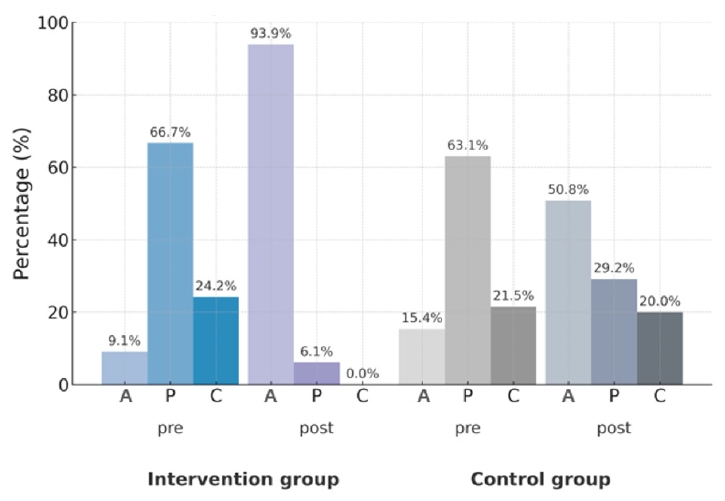
Compared with the control group, the intervention group demonstrated significantly greater improvements in dietary knowledge (P < 0.001), outcome expectations (P = 0.018), self-efficacy (P < 0.001), environmental factors (P < 0.001), and NQ-E total score (P = 0.011). No significant between-group difference was observed for value expectations. The proportion of participants in the action stage increased from 9.1% to 93.9% in the intervention group, and post-intervention stage distribution differed significantly between groups (P < 0.001). Program satisfaction was high (4.69 ± 0.41).
Conclusion
A 7-week nutrition intervention incorporating SCT-based personal and environmental constructs and TTM-based stage-matched counseling improved dietary behavior-related factors, dietary behavior outcomes, and stage distribution among community-dwelling older adults.
- 516 View
- 28 Download
Review
- [English]
- The transition of nutritional status in infants, young children, and school-aged children in Korea and future-oriented nutritional strategies: a narrative review
- Yoonna Lee
- Korean J Community Nutr 2026;31(2):115-126. Published online April 30, 2026
- DOI: https://doi.org/10.5720/kjcn.2026.00115
-
Abstract
PDF
- Objectives
This study examined the secular trends in anthropometric changes and the nutritional transition among Korean infants and school-aged children, while evaluating the efficacy and constraints of existing state-led nutritional policies. Ultimately, it proposes a “systems-centered” nutrition strategy, aligned with the United Nations Children’s Fund (UNICEF) Nutrition Strategy 2020–2030, to ensure health equity for future generations.
Methods
We reexamined comprehensive national health statistics, including school health examination data (1965–2024) and the Korea National Health and Nutrition Examination Survey (1998–2023). Additionally, Dietary Screening Test results from 126,768 young children (2021–2024) were reviewed. These quantitative findings were synthesized through a narrative review of South Korean pediatric nutrition policies and UNICEF’s global strategic frameworks.
Results
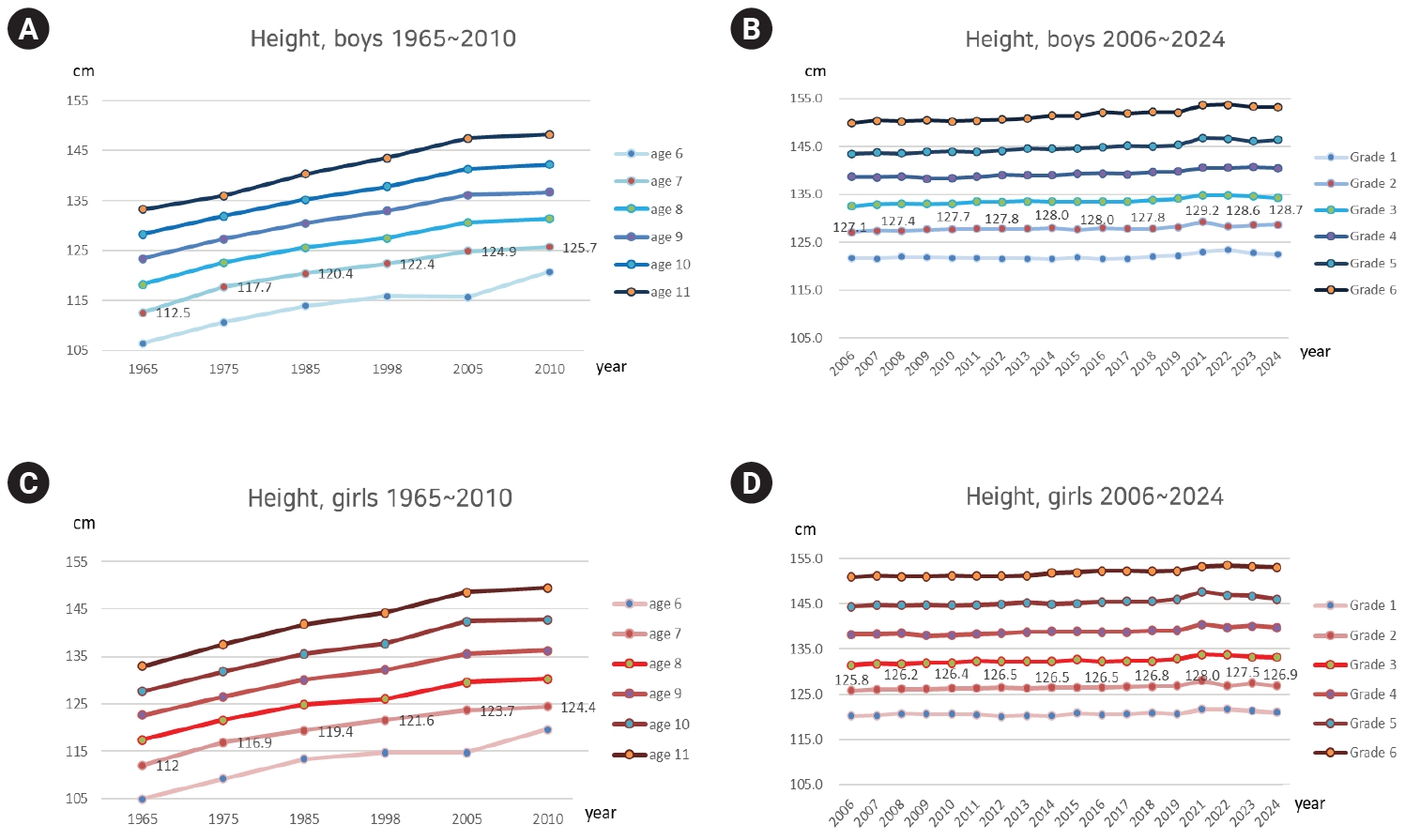
While Korean children have historically experienced rapid secular growth, this has decelerated in the 2000s. Conversely, the prevalence of obesity has surged along with stagnant underweight rates. Dietary problems such as insufficient vegetable intake and frequent consumption of sweet snacks were also found, accelerating the “triple burden” of malnutrition. Policies such as school lunches, NutriPlus program, and Center for Children’s Foodservice Management have demonstrated great success in reducing nutritional risks and improving dietary habits. However, existing fragmented programs face limitations in comprehensively addressing regional disparities or blind spots and in providing tailored nutritional management.
Conclusion
A paradigm shift is imperative to fundamentally resolve these multidimensional nutritional crises. Moving beyond fragmented programs, we need to adopt a “systems- centered” approach integrating health, education, and welfare ecosystems. Key policy recommendations include establishing a continuous life-cycle health database, introducing artificial intelligence and FoodTech-driven precision nutrition coaching, and fostering a healthy food environment through public-private partnerships within a community integrated care network.
- 927 View
- 36 Download
Research Articles
- [English]
- Development of a simplified NOVA-based scoring tool for assessing ultra-processed food consumption among Korean young adults: a cross-sectional study
- Jinhyun Kim, Eunjin Jang, Sarang Jeong, Sukyoung Jung, Jee Young Kim, Jung Eun Lee, Dahye Han, Eunseo Lee, Junhyeok Jang, Sohyun Park
- Korean J Community Nutr 2026;31(2):140-152. Published online April 30, 2026
- DOI: https://doi.org/10.5720/kjcn.2026.00059
-
Abstract
PDF
 Supplementary Material
 - Objectives
This study aimed to develop a NOVA-based scoring approach for evaluating ultra- processed food (UPF) intake among Korean adults and to examine its performance. Previous studies have reported that young adults have the highest levels of UPF consumption. Accordingly, this study focused on adults aged 19–40 years and developed scoring components reflecting dietary patterns specific to Korean eating habits.
Methods
Using 24-hour dietary recall data from adults aged 19–40 years in the Korea National Health and Nutrition Examination Survey (2021–2023), foods were classified according to the Korean-adapted NOVA system. The top 10 food groups accounting for ≥ 80% of cumulative UPF-derived energy were selected to construct the scoring components. The tool was operationalized using food frequency questionnaire (FFQ) data from the Gangwon cohort study (2022–2024). Intake frequencies were converted into scores ranging from 0 (“rarely or never”) to 5 (“≥ 1 time/day”), and summed to generate the NOVA–UPF score (range: 0–50).
Results
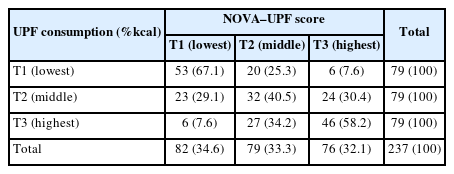
Among 237 young adults (aged 20–49 years), the mean NOVA–UPF score was 22.9 ± 8.3. A positive association was observed between the NOVA–UPF score and FFQbased UPF energy intake (Spearman’s ρ = 0.629, P < 0.001). Cross-classification showed that 51.9% were classified into the same tertile and 94.9% into the same or adjacent tertiles, with a weighted kappa coefficient of 0.279.
Conclusion
This NOVA-based scoring approach may serve as a preliminary tool for assessing UPF intake in Korean young adults. Further refinement and rigorous validation using quantitative dietary assessment methods and more diverse populations are required before broader application.
- 1,098 View
- 53 Download
- [English]
- Association between nutrient intake and frailty status in Korean older adults: a cross-sectional study using the 9th (2022–2023) Korea National Health and Nutrition Examination Survey
- Hyejin Yu, Sang-Jin Chung
- Korean J Community Nutr 2026;31(2):153-164. Published online April 30, 2026
- DOI: https://doi.org/10.5720/kjcn.2026.00038
-
Abstract
PDF
- Objectives
This study evaluated the intake status of key macronutrients and micronutrients (calcium, magnesium, iron, and vitamin D) among Korean older adults and investigated their associations with frailty and its individual components.
Methods
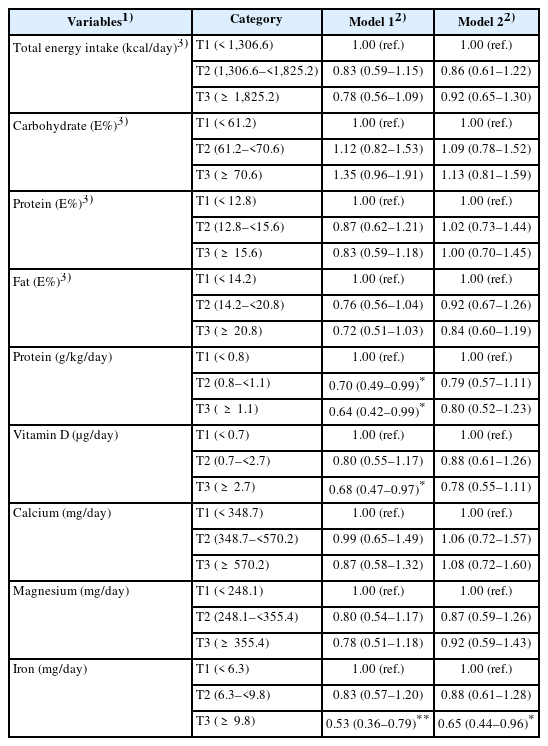
Data from 1,246 participants (aged ≥ 65 years) in the 9th Korea National Health and Nutrition Examination Survey (2022–2023) were analyzed. Participants were classified into Robust, Pre-frail, and Frail groups based on a modified version of the Fried frailty phenotype (unintentional weight loss, exhaustion/fatigue, muscle weakness, slow gait speed, and low physical activity). Nutrient intake levels were categorized into tertiles. Multivariable logistic regression was used to estimate odds ratios (ORs) for frailty. Model 1 was adjusted for age, sex, and total energy intake. Model 2 included additional adjustments for socioeconomic factors (household composition, household income) and function-related factors (aerobic physical activity, chewing difficulty, and disease status).
Results
Total energy intake differed significantly across frailty groups in both Model 1 (P = 0.011) and Model 2 (P = 0.043). In the fully adjusted model, participants in the highest tertile of iron intake (T3) had 35% lower odds of frailty compared to those in the lowest tertile (T1) (OR = 0.65; 95% confidence interval [CI], 0.44–0.96). Iron intake maintained the strongest independent association with reduced odds of muscle weakness (T3 vs. T1: OR = 0.45; 95% CI, 0.28–0.71). Furthermore, higher protein intake per kilogram of body weight (T3) was significantly associated with lower odds of slow gait speed (OR = 0.53; 95% CI, 0.33–0.87) in the minimally adjusted model. Vitamin D, calcium, and magnesium were not significantly associated with overall frailty after full adjustment.
Conclusion
Insufficient intake of protein and iron is associated with increased odds of frailty and its functional components in Korean older adults. These findings underscore the critical need for evidence-based nutritional interventions and policy development to prevent and manage frailty at the population level.
- 782 View
- 23 Download
- [English]
- Association between number of teeth and oxidative balance score in Korean adults: a population-based study
- Jung-Eun Park
- Korean J Community Nutr 2026;31(1):64-74. Published online February 28, 2026
- DOI: https://doi.org/10.5720/kjcn.2025.00325
-
Abstract
PDF
- Objectives
This study aimed to evaluate the relationship between oxidative balance score (OBS), a metric indicating an individual’s oxidative balance status, and the number of teeth in a sample of Korean adults.
Methods
This cross-sectional study included 13,199 adults aged 19 and older who participated in a health survey and oral examination. Subsequent to the adjustment for confounding factors, a logistic regression analysis was employed to evaluate the probability of a subject belonging to a number of teeth category based on OBS level.
Results
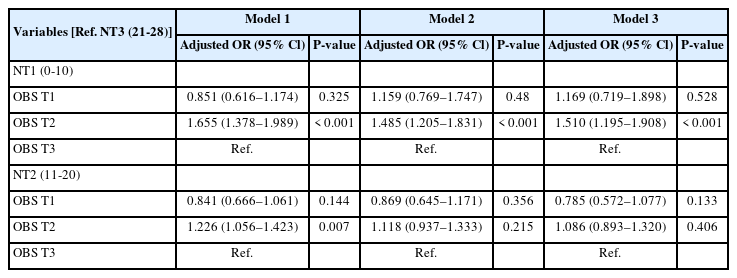
In the group with OBS level T2, the likelihood of having NT1 (0–10 teeth) was found to be significant adjusted for all variables (odds ratios: 1.51, 95% confidence intervals: 1.195–1.908). In the multinomial model, a significant association was observed for the NT1 category, whereas no significant association was found for the NT2 (11–20 teeth) category after adjustment.
Conclusion
In the group with OBS level T2, the likelihood of having NT1 (0–10 teeth) was found to be significant. As this study examines cross-sectional associations, the necessity of conducting longitudinal research as subsequent studies is evident to ascertain the existence of causality.
- 774 View
- 14 Download
- [Korean]
- Evaluation of young children’s dietary behaviors by parental growth concern levels in Gyeonggi area: a descriptive study
- Youn-Rok Kang, Hyung-Sook Kim
- Korean J Community Nutr 2026;31(1):75-86. Published online February 28, 2026
- DOI: https://doi.org/10.5720/kjcn.2025.00269
-
Abstract
PDF
- Objectives
This study investigated differences in dietary habits, lifestyle patterns, and feeding- related developmental issues among Korean preschool children based on their parents’ levels of growth concern, and examined the associations between parental growth concern and children’s eating behaviors.
Methods
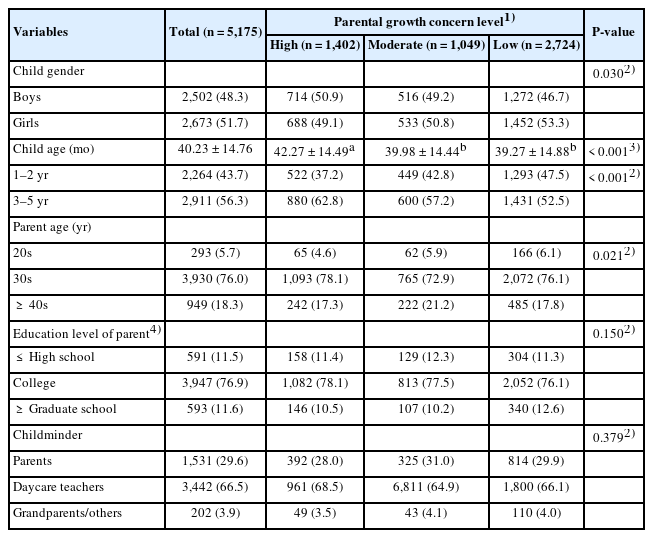
A cross-sectional study was conducted with parents of children aged 1–5 years residing in Gyeonggi Province, Korea. Participants were classified into high, moderate, and low growth concern groups using the children’s dietary screening test. Data were collected on the children’s anthropometric status, lifestyle routines, dietary intake patterns, eating behaviors, and mealtime media exposure.
Results
Children in the high growth concern group showed a higher prevalence of underweight; irregular sleep and mealtime routines; and more frequent eating difficulties, including picky eating, slow eating, and oral processing problems. Mealtime media exposure was associated with lower fruit and vegetable intake and higher consumption of processed and sugar-rich foods. Higher parental growth concern did not correlate with healthier dietary or lifestyle outcomes.
Conclusion
Preschool children’s dietary behaviors and routines differed according to the parents’ levels of growth concern. Higher levels of parental concern were associated with increased feeding difficulties and greater mealtime media exposure. These findings suggest that excessive concern may contribute to maladaptive eating patterns in children. Evidence- based parental guidance and structured nutrition education are essential to promote healthy growth and eating behaviors during early childhood.
- 1,078 View
- 55 Download
- [Korean]
- Prevalence of coronary artery disease according to lifestyle characteristics, nutrient intake level, and comorbidities among Koreans aged 40 years and older: a cross-sectional study using data from the 7th (2016–2018) Korea National Health and Nutrition Examination Survey
- Areum Song, Sook-Bae Kim
- Korean J Community Nutr 2025;30(6):457-470. Published online December 31, 2025
- DOI: https://doi.org/10.5720/kjcn.2025.00346

-
Abstract
PDF
- Objectives
To examine the prevalence of coronary artery disease (CAD) according to lifestyle characteristics, nutrient intake level, and comorbidities among Koreans aged 40 years.
Methods
Data were derived from 11,025 participants aged ≥ 40 years in the 7th Korea National Health and Nutrition Examination Survey. Participants were assigned to a CAD group (n = 470) or a non-CAD group (n = 10,555). Socio-demographic characteristics (age, sex, residence, income, marital status, education level, and employment status), lifestyle characteristics (smoking, drinking, walking, strength training, sleep duration, stress level, and subjective health perception), energy and nutrient intakes, and comorbidities, including obesity, hypertension, dyslipidemia, diabetes mellitus, stroke, cancer, depression, renal failure, cataract, asthma, chronic obstructive pulmonary disease, osteoarthritis, and osteoporosis were analyzed.
Results
The prevalence of CAD was higher in older participants and in male. Participants with CAD had higher rates of smoking, engaged in less strength training, experienced higher stress, and had poorer perceived health. They had lower intakes of energy, fiber, folate and iron. The prevalence of obesity, hypertension, dyslipidemia, diabetes mellitus, stroke, depression, renal failure, cataract, asthma, allergic rhinitis, osteoarthritis, or osteoporosis was significantly higher in the CAD group. The likelihood of having CAD was significantly higher among participants with renal failure (odds ratio [OR], 4.25; 95% confidence interval [CI], 2.24–8.08), depression (OR, 2.14; 95% CI, 1.55–2.95), asthma (OR, 2.07; 95% CI 1.48–2.91), and dyslipidemia (OR, 2.03; 95% CI, 1.69–2.44).
Conclusion
In Koreans aged 40 years, CAD was associated with unhealthy lifestyle habits, low nutrient intake, and increased comorbidities such as renal failure, depression, asthma, and dyslipidemia. These findings suggest the need for lifestyle management and intensive chronic disease management to reduce the risk of CAD.
- 1,549 View
- 66 Download
- [Korean]
- Parents' needs and perceptions of dietary and nutrition education in early childhood education institutions in South Korea: a mixed methods study
- Jounghee Lee, Sookyung Choi, Minseo Kim, Seonghyun Lim, Jeong-Weon Kim
- Korean J Community Nutr 2025;30(6):441-456. Published online December 31, 2025
- DOI: https://doi.org/10.5720/kjcn.2025.00304

-
Abstract
PDF
- Objectives
This study aimed to clarify parental perceptions of dietary and nutritional education provided to young children, identify parental support needs, and suggest directions for improvement.
Methods
A mixed-method sequential explanatory design was followed. Quantitative data were collected through an online survey conducted nationwide that included 200 parents of children aged three to six years in South Korea. Qualitative data were subsequently obtained through focus group interviews with fifteen parents to explore their contextual insights and experiences.
Results
Needs ratings prioritized expanding activity-based/experiential education (3.65 ± 0.88), followed by strengthening home-school communication and connectivity (3.59 ± 0.84), diversifying topics and content (3.55 ± 0.88), and increasing instructional time (3.39 ± 0.94). Integrated with the focus group interview findings, multilevel barriers were revealed—individual level: strong preferences of children for sweet/processed foods; interpersonal level: strong parental modeling and peer effects counterbalancing limited teacher expertise/time; organizational level: insufficient effective event-based experiential activities, and resource gaps across institutions; community/policy level: infrequent external support, uneven access to local resources, lack of standardized guidance, and limited opportunities for parental participation. Parents favored short, interactive digital content and expressed concerns about overexposure. These convergent findings indicate needs to 1) formalize and extend experiential programs within the regular curriculum, 2) provide standardized guidelines and home resource kits, and 3) institutionalize parental involvement.
Conclusion
These findings reveal that dietary and nutritional education for young children should move beyond fragmented, event-based programs toward an integrated three-tiered model incorporating (1) a structured, experiential curriculum, (2) home-linked educational packages, and (3) safe and interactive digital content. Establishing standardized guidelines, enhancing educational infrastructure, and institutionalizing parental participation are essential for sustainable improvement of early childhood dietary education.
- 1,200 View
- 87 Download
- [English]
- Nutrition Quotient and nutrient intake among older adults in a rural Korean community: a cross-sectional study
- Ji-Sook Park, Hyeon-Mi Bae, Jung-Eun Yim
- Korean J Community Nutr 2025;30(6):397-409. Published online December 31, 2025
- DOI: https://doi.org/10.5720/kjcn.2025.00283

-
Abstract
PDF
- Objectives
Korea is experiencing rapid population aging, with older adults forming a large proportion of rural communities. Aging leads to physiological and functional declines, resulting in lower physical activity, poor diet quality, and higher risk of chronic diseases. Although the Nutrition Quotient for the Elderly (NQ-E) is a validated tool to assess dietary quality, few studies have applied it to rural populations. This study aimed to compare nutrient intake and NQ-E scores by age and sex and examine their associations with lifestyle factors.
Methods
This study investigated the relationship between nutrient intake and NQ-E scores among older adults in rural Korean community, considering age, sex, and lifestyle factors. A cross-sectional study was conducted with 79 community-dwelling older adults (24 male and 55 female; mean age: 76.3 years) residing in Geochang-gun, Gyeongsangnam-do, Korea. Participants were recruited from community centers and health posts between June 2024 and December 2024. Data collection included general characteristics, 24-hour dietary recalls, and NQ-E questionnaires.
Results
Female aged > 75 years had significantly lower intakes of energy, protein, fat, vitamin E, riboflavin, folate, and zinc than their male counterparts (P < 0.05). The mean NQ-E score was 55.01, which was lower than the national average reported for urban older adults (57.6). Participants with higher NQ-E grades had significantly higher intakes of dietary fiber, vitamin A, thiamine, riboflavin, niacin, potassium, and magnesium, and regular physical activity and dietary supplement use were positively associated with higher NQ-E grades (P < 0.01).
Conclusion
These findings suggest that older female in rural communities are particularly vulnerable to inadequate nutrient intake and lower dietary quality, and that the NQ-E is a useful screening tool for identifying nutritional risk in this population. Community-based nutrition interventions promoting physical activity, supplement use, and dietary diversity are warranted to improve dietary quality and support healthy aging.
- 1,276 View
- 43 Download
- [Korean]
- A study on the development of nutrition counseling manual and curriculum for the disabled in Korea: a mixed-methods study
- Kyoung-Min Lee, Woo-jeong Kim, So-young Kim, Young-mi Park, Hwa-young Yoon, Min-Sun Jeon
- Korean J Community Nutr 2025;30(5):376-388. Published online October 31, 2025
- DOI: https://doi.org/10.5720/kjcn.2025.00192

-
Abstract
PDF
- Objectives
Individuals with disabilities require targeted interventions to ameliorate disability-related conditions and improve overall health status. Nutritional challenges and counseling needs vary according to the type of disability, necessitating comprehensive assessments of dietary habits, physical activity, and food intake. Compared to traditional education, nutrition counseling offers a more sustainable and environmentally adaptable approach that effectively addresses individualized nutritional issues. Therefore, this study aimed to develop and evaluate a practical nutrition counseling manual and meal guidelines for people with disabilities in Korea, addressing their diverse dietary needs and improving nutritional care in social welfare facilities.
Methods
A four-stage integrated research design was employed. Stage 1 involved qualitative research through in-depth interviews with 11 facility staff. In Stage 2, a nationwide survey (n = 249) was conducted based on the results of the interviews. Stage 3 integrated both qualitative and quantitative findings. Stage 4 focused on developing and evaluating a nutrition counseling manual and five types of meal guidelines through feedback from 26 nutritionists at 24 Korean Centers for Social Welfare Foodservice Management.
Results
Six major nutrition counseling topics were identified: healthy eating, managing salt and sugar intake, dysphagia diet, appropriate intake, and hygiene. The manual and guidelines demonstrated high field usability, with average satisfaction scores of 3.98 and 3.99, respectively.
Conclusion
The integrated study resulted in the development of a specialized nutrition counseling manual and handbook for individuals with disabilities in Korean social welfare facilities. The materials were revised and improved based on practical evaluations by dietitians, enhancing their field applicability. These tools are expected to contribute to better dietary management and health promotion among facility residents. The developed materials reflect the real-world needs of people with disabilities and offer practical tools for effective nutrition counseling and dietary management in institutional settings.
- 998 View
- 40 Download
- [Korean]
- Survey on consumer perceptions, health benefits and preferences of kindergarten and school foodservices in Korea, including related keywords reported in newspaper: a mixed-methods study
- Gyoungok Gang, Chaewon Park, Hyeja Chang
- Korean J Community Nutr 2025;30(4):309-320. Published online August 29, 2025
- DOI: https://doi.org/10.5720/kjcn.2025.00199
-
Abstract
PDF
- Objectives
With the rapid development of social culture, the perception of kindergarten and school foodservice, as well as opinions on its health benefits, has changed significantly. However, research on this topic remains scarce. We conducted a survey in South Korea on consumers’ perceptions, healthiness, and preferences regarding kindergarten and school foodservice.
Methods
With the nationwide cooperation of 17 city and provincial education offices, online and offline surveys were conducted targeting the parents of kindergarten and lower-grade elementary school children, as well as upper-grade elementary, middle, and high school students. In addition, keywords in newspaper reports were analyzed using the Big Kinds platform. A total of 532 valid questionnaires were collected, and statistical analysis was performed using IBM SPSS Statistics version 27.0 (IBM Co.).
Results
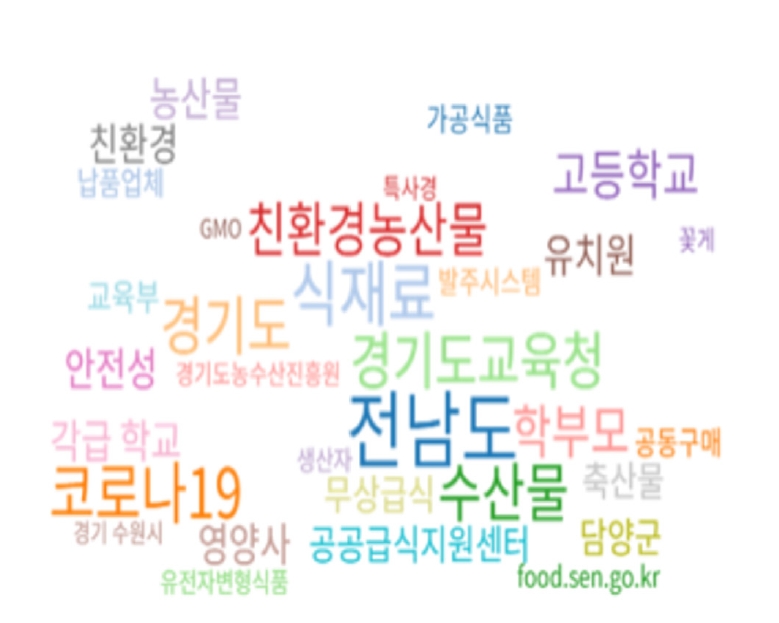
The average age of the parents and students was 40 and 12.5 years, respectively, with 36.4% of the students attending schools in the Seoul and Gyeonggi areas. The main keywords reported in newspaper articles, as analyzed using the Big Kinds platform, were “eco-friendly agricultural products,” “food ingredients,” “safety,” and “marine products.” The perception of kindergarten and school foodservice was very positive, especially regarding the attributes of safe ingredient use (4.44), menu variety (4.29), cafeteria cleanliness (4.31), cleanliness of plates, spoons, and utensils (4.24), thorough hygiene management (4.2), nutritional excellence (4.24), and support for proper eating habits (4.18). The healthiness of school foodservice was highly rated, although there is still room for improvement in terms of “not serving fried foods more than twice a week”. In terms of preference for school meals, the most preferred items were meat side dishes, followed by chicken, noodles, fried food, beverages, and bread. In contrast, soybean paste soup, vegetables, and mixed-grain rice received relatively low preference.
Conclusion
The results described above may be used to develop educational programs or policies that inform students and parents about the goals of school foodservice and help address common misunderstandings.
- 3,406 View
- 54 Download
- [Korean]
- A study on the diet and nutrition management status and educational needs in elderly care facilities in Korea: focus group interviews with staff from children’s and social welfare meal management support centers and elderly care facilities
- Seo Young Choi, Hyun joo Ryou, Jieun Oh
- Korean J Community Nutr 2025;30(4):286-295. Published online August 29, 2025
- DOI: https://doi.org/10.5720/kjcn.2025.00143
-
Abstract
PDF
- Objectives
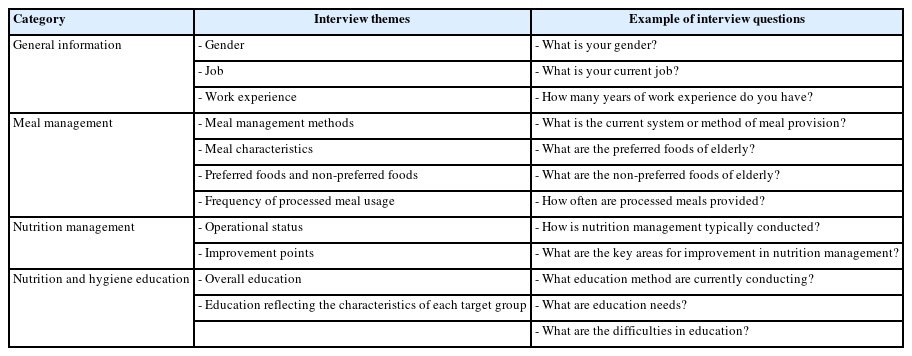
In this study, we identified the current status of meal and nutritional management in elderly care facilities and analyzed the educational needs of employees, with the goal of proposing effective support strategies for nutritional management and to suggest directions for developing customized educational content.
Methods
Between May and June 2024, we conducted nine focus group interviews with 22 participants recruited from 10 cities across four major regions of Korea, including 13 employees of children and social welfare meal management support centers and nine employees of elderly care facilities.
Results
Our findings revealed that supporting algorithm-based dietary planning, improving communication with caregivers, and providing flexible, practical education tailored to facility conditions, are key elements for enhancing nutritional management in elderly care facilities. To facilitate the translation of these insights into practice, it will be necessary to strengthen collaboration between centers and facilities, combined with efforts to improve the operational environment for applying the algorithm and providing continuous educational support.
Conclusion
The findings of this study emphasize the importance of on-site education and sustainable support strategies based on the diet and nutritional management status and education needs of elderly care facilities. Strengthening practical education, communication systems, and center–facility collaboration is required, and future research needs to verify the efficacy of these measures and define a sustainable support system based on quantitative analysis.
- 2,536 View
- 106 Download
- [Korean]
- Analysis of the relationship between foodservice staffing and foodservice quality in elderly care facilities in Korea: a cross-sectional study
- Hyeonjeong Kim, Jinhee Kwon, Jungsuk Lee
- Korean J Community Nutr 2025;30(4):296-308. Published online August 29, 2025
- DOI: https://doi.org/10.5720/kjcn.2025.00122

-
Abstract
PDF
- Objectives
This study was performed to investigate the relationship between foodservice staffing and foodservice quality in elderly care facilities.
Methods
Data was obtained from the Korean Long-term Care Institute Database and used to analyze 2,084 elderly care facilities operating on-site foodservice. The presence of dietitians and staffing levels for cooking personnel were analyzed by categorizing size according to staffing criteria. Foodservice quality was assessed using food sanitation management and meal service provision as indicators. Descriptive statistical analysis, chi-square test, Fisher’s exact test, and Cochran-Mantel-Haenszel test were conducted to analyze relationships between staffing level and foodservice quality.
Results
Presence of a dietitian correlated with food sanitation management and meal service provision in groups with 30 or more recipients (P = 0.027, P = 0.049). Elderly care facilities with dietitians had better foodservice quality. After adjusting for size, the presence of dietitians was also found to correlate with food sanitation management (P = 0.024). Staffing levels for cooking personnel were found to correlate with meal service provision only in groups with 38 to 62 recipients. Institutions with larger staffs provided better meal service quality compared to those with basic staffing.
Conclusion
Inclusion of a dietitian and cooking staff size each contribute to enhanced foodservice quality in elderly care facilities, with dietitian inclusion showing a particularly significant association with food sanitation management. These findings suggest the need to revise current staffing and related regulatory standards to optimize deployment of foodservice personnel in elderly care settings. Future studies should focus on developing effective policies for securing qualified foodservice staff and establishing robust quality management systems to enhance overall foodservice quality in long-term care facilities.
- 2,047 View
- 65 Download
- [Korean]
- Behavioral intention toward planetary health diet among adult users of government worksite cafeterias in Seoul, South Korea: a mixed-methods study based on the theory of planned behavior and focus groups interviews
- Ji-Won Kang, Su-Jin Lee, Sil-Ah Kim, Ji-Yun Hwang
- Korean J Community Nutr 2025;30(3):224-236. Published online June 30, 2025
- DOI: https://doi.org/10.5720/kjcn.2025.00108
-
Abstract
PDF
- Objectives
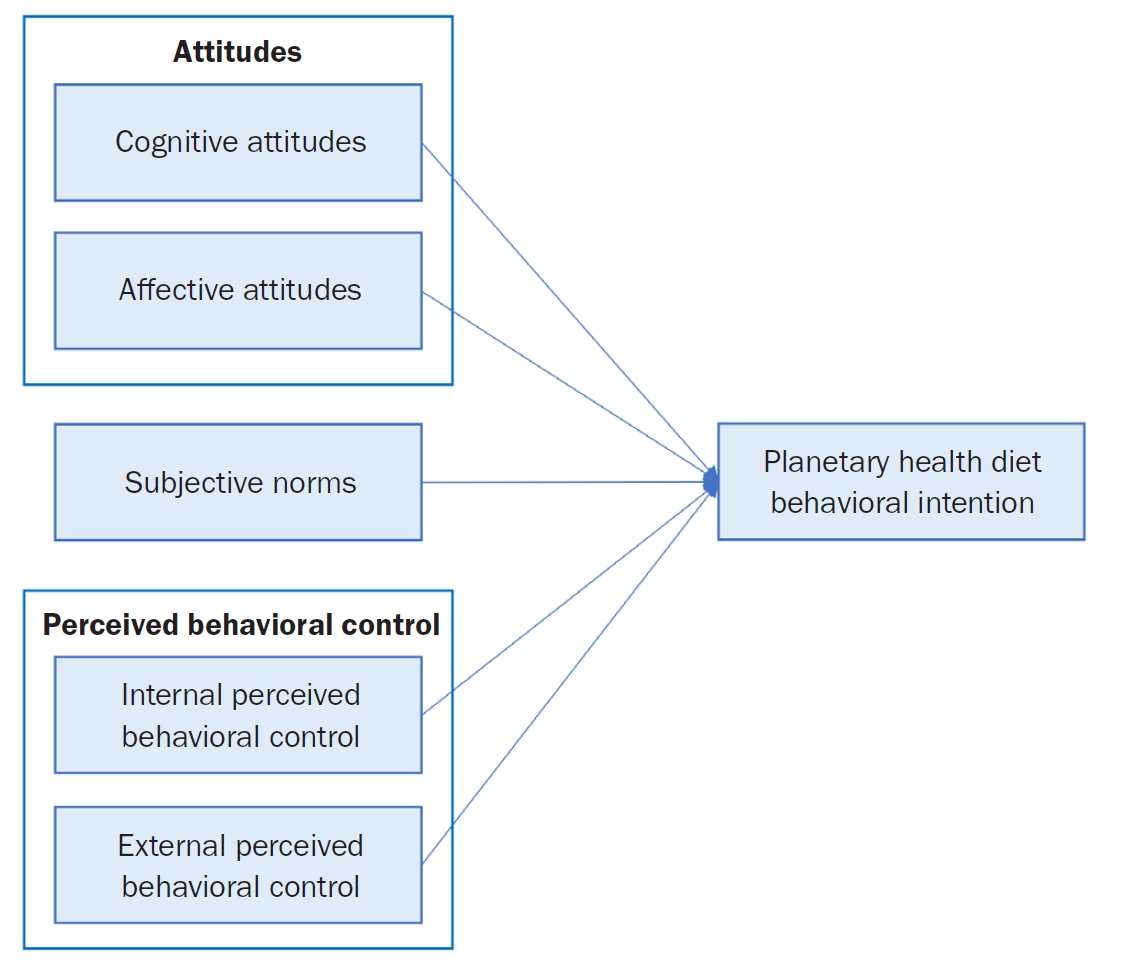
To reduce urban carbon emissions, in this study, we aimed to suggest strategies for disseminating the planetary health diet (PHD) guidelines to adult cafeterias in a government worksite in Seoul based on the theory of planned behavior (TPB) and focus group interviews (FGI).
Methods
A total of 132 adults who worked at a government worksite in Seoul and used its cafeteria were included for a TPB-based survey. Factor analyses and multiple regression were used to investigate the relationships between attitude (cognitive•affective), subjective norms, and perceived behavioral control (PBC, internal•external) and the behavioral intention to adopt the PHD. To identify the contextual factors related to PHD dissemination, 14 participants underwent in-depth interviews.
Results
Affective attitudes and PBC (internal•external) constructs of the TPB were significantly related with the intention to adopt PHD: external PBC (β = 0.324, P < 0.001), internal PBC (β = 0.269, P < 0.01), and affective attitudes (β = 0.226, P < 0.05). The FGI results highlighted the insufficiency of simply providing healthy meals to encourage the adoption of PHDs, but that menu development and natural acceptance strategies are needed to increase palatability. In addition, the need for strategies to promote PHDs at an organizational level was identified, as it is directly influenced by the company of partners with whom one dines. Furthermore, users' perceptions of how “Meals for the Planet” are delivered and suggestions for its improvement were also interpreted.
Conclusion
Our results suggest that users' beliefs, convictions, and emotions are important while promoting or educating individuals about sustainable PHDs. Our findings are expected to help local governments or private group cafeterias that wish to introduce PHDs in the future, given the growing importance of environmentally conscious eating. -
Citations
Citations to this article as recorded by- Planetary Health Diet Adherence in Korean Adults: Association with the Korean Healthy Eating Index
Su-Jin Lee, Ji-Yun Hwang
Nutrients.2025; 17(19): 3060. CrossRef - Toward the development of a digital self-nutrition management education program for elderly: findings from focus groups study
Hae-song Yoo, Jin-myong Lee, Min-sun Jeon
Korean Journal of Community Nutrition.2025; 30(6): 431. CrossRef
- Planetary Health Diet Adherence in Korean Adults: Association with the Korean Healthy Eating Index
- 2,409 View
- 85 Download
- 2 Crossref
Review
- [Korean]
- Current status of nutrition education media and its utilization in providing customized nutrition information for older adults in Korea: a scoping review based on the transtheoretical model and food literacy
- Seojin Yun, Jiwon An, Kirang Kim
- Korean J Community Nutr 2025;30(3):175-182. Published online June 30, 2025
- DOI: https://doi.org/10.5720/kjcn.2025.00094

-
Abstract
PDFSupplementary Material
- Objectives
This study analyzes the status of nutrition education media among Korean older adults based on the transtheoretical model (TTM) and their food literacy to propose effective strategies for the development and utilization of educational media.
Methods
A literature review was conducted using The Joanna Briggs Institute (JBI) protocol. The literature search was performed using government and local government agency websites, as well as those of affiliated institutions, health and nutrition-related academic societies, and academic search engines. A total of 144 studies were identified, and after a cross-evaluation by two reviewers based on the literature selection criteria, 73 studies were included in the final analysis.
Results
Among the types of nutrition education media, card news had the highest proportion, followed by video media. The development and distribution of nutrition education media for older adults were primarily carried out by government and local government agencies, as well as related affiliated institutions, accounting for 80.8% (n = 59) of the total. When nutrition education topics in the media were categorized according to the stages of behavior change in the TTM, the largest proportion, 64.6% (n = 61), was applicable to the precontemplation and contemplation stages. When categorized by food literacy domains, all topics fell under the categories of nutrition and safety.
Conclusion
Nutrition education media for older adults were found to be primarily focused on knowledge acquisition and information delivery, making them mostly applicable to the precontemplation and contemplation stages of behavior change. The concept of food literacy addressed in the different types of media was limited to the domains of nutrition and safety, with no content covering the cultural and relational domains or the social and ecological domains. For tailored nutrition education, it is necessary to develop diverse educational materials that comprehensively reflect each stage of the TTM and all aspects of food literacy. -
Citations
Citations to this article as recorded by- A needs assessment for the development of a digital-based self-nutrition management education program for older adults in Korea: a cross-sectional study
Hae-Song Yoo, Jin-Myung Lee, Min-Sun Jeon
Korean Journal of Community Nutrition.2026; 31(2): 178. CrossRef - Effect of a community-based nutrition intervention incorporating social cognitive theory constructs and transtheoretical model-based counseling among communitydwelling elderly in Korea: a quasi-experimental study
Hyewon Shin, Seungmin Lee
Korean Journal of Community Nutrition.2026; 31(3): 264. CrossRef - Toward the development of a digital self-nutrition management education program for elderly: findings from focus groups study
Hae-song Yoo, Jin-myong Lee, Min-sun Jeon
Korean Journal of Community Nutrition.2025; 30(6): 431. CrossRef
- A needs assessment for the development of a digital-based self-nutrition management education program for older adults in Korea: a cross-sectional study
- 2,778 View
- 124 Download
- 3 Crossref
Research Articles
- [English]
- Healthy eating intentions among adults in China: a cross-sectional study of northern and southern regions and city tiers based on the theory of planned behavior
- Yi Jiang, Ji-Yun Hwang
- Korean J Community Nutr 2025;30(2):114-126. Published online April 29, 2025
- DOI: https://doi.org/10.5720/kjcn.2025.00087
-
Abstract
PDF
- Objectives
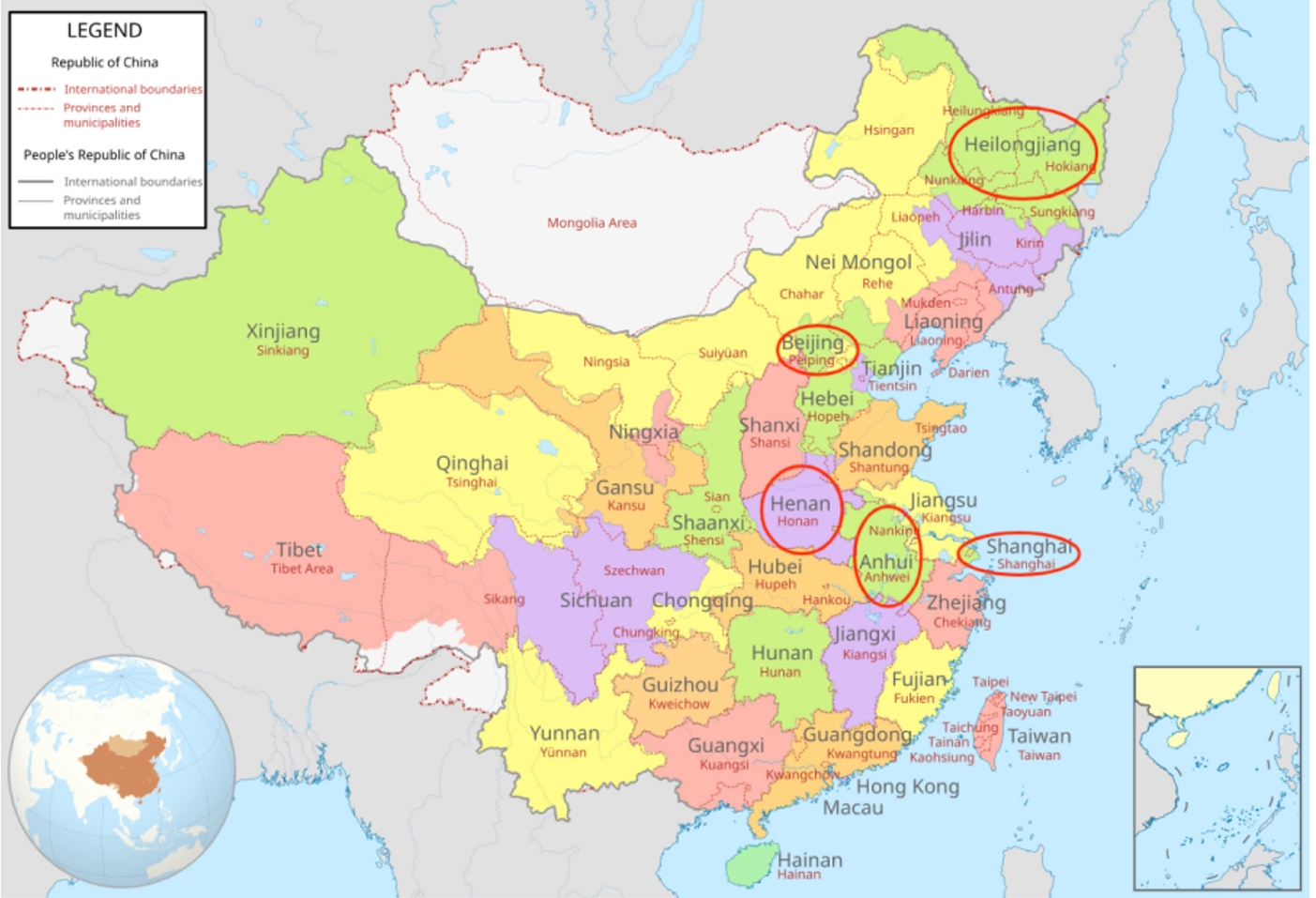
The theory of planned behavior (TPB) has been widely employed to predict healthy eating intentions. Regional differences may affect dietary habits, health status, and personality traits, whereas variations in urbanization influence accessibility to fresh and healthy food, thereby impacting TPB components. This study aimed to explore whether regional differences between northern and southern China including city-tier development are associated with healthy eating intentions among Chinese adults.
Methods
The study included data from 2,114 Chinese adults aged 19–64 years collected between 2019 and 2023. Participants were categorized by geographic region (north or south) and city-tier status (first-tier or other).
Results
Compared to individuals from northern first-tier cities, those from southern regions exhibited stronger attitudes, perceived behavioral control (PBC), and intention to eat healthily. Participants from other cities in the north had more positive attitudes, subjective norms, PBC, and intentions to participate in healthy eating. Furthermore, residents of southern cities revealed weaker subjective norms than those of cities in the north. The adjusted odds ratio (OR) for compliance with intention to engage in healthy eating was higher among participants from other cities in both the north and south compared to those from northern first-tier cities (northern other cities: OR = 2.43, 95% confidence interval [CI]: 1.49–3.97, P < 0.001; southern other cities: OR = 1.95, 95% CI: 1.08–3.51, P = 0.027). No significant differences existed among the subjects from first-tier cities according to their geographic regions. These trends remained consistent even after including the interaction term between geographic regions and city-tier classification.
Conclusion
These findings underscore the complexity of regional variations influencing dietary intentions and indicate that tailored health promotion strategies should incorporate regional characteristics. Future research should explore underlying factors, including regional cultural influences, to better inform policies and interventions. -
Citations
Citations to this article as recorded by- Beyond taste: Unpacking the drivers of plant-based diet adoption
Md. Asaduzzaman Babu
Food and Humanity.2025; 5: 100779. CrossRef
- Beyond taste: Unpacking the drivers of plant-based diet adoption
- 2,943 View
- 39 Download
- 1 Crossref
- [Korean]
- Maternal home meal replacement use and attitudes, and young children’s preferences by usage frequency in meals for young children: a cross-sectional study
- Bo-Yeon Kim, Mi-Hyun Kim, Jee-Young Yeon
- Korean J Community Nutr 2025;30(2):163-172. Published online April 29, 2025
- DOI: https://doi.org/10.5720/kjcn.2025.00066
-
Abstract
PDF
- Objectives
With the increase in women’s workforce participation and changing family eating habits, home meal replacements (HMRs) have become more prevalent. However, research on how mothers incorporate HMR into meals of young children remains limited. This study examined mothers’ attitudes toward and use of HMR, as well as their association with young children’s HMR preferences.
Methods
A survey was conducted between June 1 and July 3, 2020, involving 337 mothers of 5-year-old children in Sejong, South Korea. The questionnaire assessed mothers’ perceptions of HMR, consumption patterns, and their children’s preferences for HMR.
Results
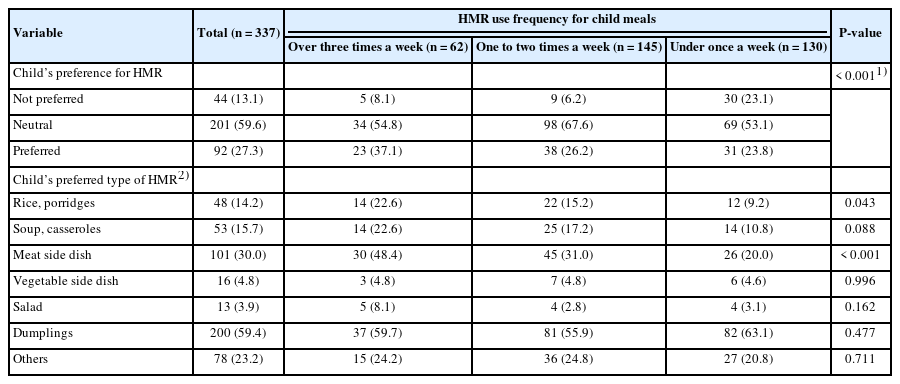
The average age of participating mothers was 38.3 years, with 93.2% living in nuclear families. Full-time homemakers constituted 40.1% of the respondents and showed lower HMR usage among them. HMR was primarily consumed as late-night snacks, side dishes, and dinners, with large discount stores (81.6%) being the primary purchase location. The high HMR consumption group exhibited more positive attitudes toward HMR (P < 0.001). HMR types varied in consumption frequency. Among ready-to-eat foods, kimbap (38.3%) was the most common, followed by meat side dishes (11.3%) and salads (11.0%). Among the heat-and-eat items, dumplings were the most frequently consumed. Simple cooking kits for Korean street food were used by 56.5% of mothers in the high-frequency HMR group, compared to 38.6% and 29.2% in the lower consumption groups (P < 0.01). Children’s preference for HMR was significantly associated with maternal HMR consumption frequency (P < 0.001). The most preferred items among children were rice porridge (P < 0.05) and meat side dishes (P < 0.001).
Conclusion
Higher maternal HMR consumption was associated with increased acceptance by children. Mothers who frequently used HMR exhibited more positive attitudes toward its palatability, convenience, nutritional value, and variety. While HMR offers diverse and tasty meal options, overreliance on processed foods warrants caution. Importantly, high HMR consumption during early childhood may influence long-term dietary behaviors, including a continued preference for HMRs.
- 2,299 View
- 44 Download
- [Korean]
- Effects of night eating on oral health characteristics and symptoms of poor oral health in adolescents: a cross-sectional study using the 18th Korea Youth Risk Behavior Survey
- Seung–Hee Hong
- Korean J Community Nutr 2025;30(2):150-162. Published online April 29, 2025
- DOI: https://doi.org/10.5720/kjcn.2025.00038
-
Abstract
PDF
- Objectives
To determine the association between night eating habits and oral health in adolescents.
Methods
Data from the 18th Korea Youth Risk Behavior Survey conducted in 2022 were analyzed. The study included 51,850 middle and high school students and assessed the frequency of night eating per week, dietary habits, oral health characteristics, and factors affecting the presence of symptoms of poor oral health.
Results
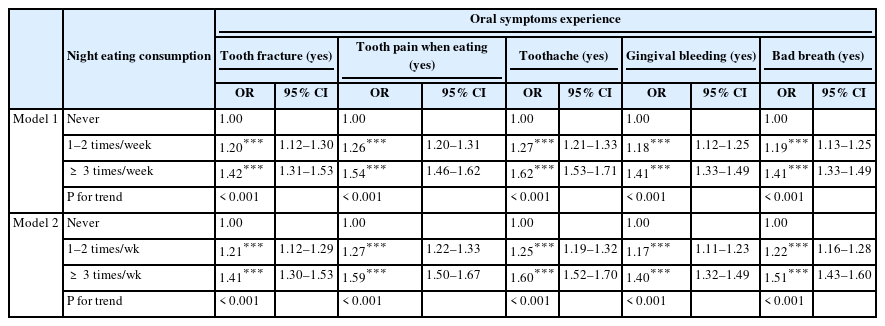
Almost thirty-seven percent (36.6%) of Korean adolescents have eaten at night one to two times per week and 23.0% more than three times per week. An increased frequency of night eating was associated with poor dietary habits. Adolescents who consumed more at night were less likely to have breakfast, drink water, and eat fruit, while their consumption of fast food, sweet drinks, and high-caffeine drinks increased (P < 0.001). An increased frequency of night eating was also associated with poor oral health. In a logistic regression analysis, more frequent night eaters were significantly less likely to brush their teeth at least three times per day (odds ratio [OR], 0.78; 95% confidence interval [CI], 0.75–0.82; P for trend < 0.001), and brush their teeth before going to sleep (OR, 0.70; 95% CI, 0.65–0.75; P for trend < 0.001), while they were more likely to experience sealant (OR, 1.19; 95% CI, 1.13–1.26). More frequent night eaters were significantly more likely to have tooth fracture (OR, 1.41; 95% CI, 1.30–1.53; P for trend < 0.001), tooth pain when eating (OR, 1.59; 95% CI, 1.50–1.67; P for trend < 0.001), toothache (OR, 1.60; 95% CI, 1.52–1.70), and bad breath (OR, 1.51; 95% CI, 1.43–1.60).
Conclusion
Our findings suggest that frequent night eating is linked to symptomatically poor oral health in adolescents. Therefore, oral health education programs related to dietary habits are necessary to reduce the potential of night eating to negatively influence dietary habits and oral health. -
Citations
Citations to this article as recorded by- Association between water intake and oral health among Korean adolescents according to their sugar-sweetened beverages consumption
Hyunwoo Hwang, Jeewon Koh, Jung Woo Lee
Nutrition Research and Practice.2026; 20(4): 656. CrossRef - Teacher-Identified Priorities and Resource Use in Government-Supported School Food and Nutrition Education in Korea
Seung Jae Lee, Jieun Oh, Kyung Won Lee
Nutrients.2026; 18(17): 2843. CrossRef - Association between Sleep Quality and Perceived Oral Health among Adolescents: Analysis of the 2024 Korea Youth Risk Behavior Survey
Bo Young Park, Eun Bi Sim
Journal of Dental Hygiene Science.2025; 25(4): 370. CrossRef
- Association between water intake and oral health among Korean adolescents according to their sugar-sweetened beverages consumption
- 3,766 View
- 88 Download
- 3 Crossref
- [English]
- Relationship between self-care and health-related behaviors among Korean adults: a cross-sectional study
- EunJung Lee, Jin A Jang, Ji-Myung Kim
- Korean J Community Nutr 2025;30(2):103-113. Published online April 29, 2025
- DOI: https://doi.org/10.5720/kjcn.2024.00255

-
Abstract
PDF
- Objectives
This study investigated the relationship between self-care and health-related behaviors such as medication use, dietary supplementation, dietary habits, and physical activity among Koreans aged 20–60 years.
Methods
Data from a total of 300 participants (150 men and 150 women) living in Seoul and Gyeonggi provinces in Korea were analyzed to assess the relationship between health behaviors and dietary supplements (DSs) related to self-care. Based on self-care levels, the participants were classified into three groups: low (LS, n = 124), medium (MS, n = 78), and high (HS, n = 98).
Results
DSs (P < 0.001), physical activity (P < 0.001), recognizing the perceived health benefits of self-care (P < 0.001), self-care when sick (P = 0.039), and the reasons for self-care (P = 0.028) differed among the self-care groups. Daily diet frequency (P = 0.001), breakfast frequency (P = 0.026), regular exercise (P < 0.001), DSs use rate (P < 0.001), DSs use frequency (P = 0.013), and total dietary behavior score (P < 0.001) also differed significantly depending on the degree of self-care. The degree of self-care was significantly and positively correlated with DSs intake (r = 0.377, P < 0.001), physical activity (r = 0.433, P < 0.001), and total dietary behavior score (r = 0.185, P < 0.01).
Conclusion
The results demonstrated that the degree of self-care was related to DSs, physical activity, and total dietary behavior scores in Korean adults. Additionally, self-care capacity should be increased through health-related behaviors based on health education programs. -
Citations
Citations to this article as recorded by- Current status and global trends in self-care among patients with heart failure: challenges and opportunities
Barbara Riegel, Christopher S. Lee, Tiny Jaarsma, Anna Stromberg
The Journal of Cardiovascular Aging.2026;[Epub] CrossRef - Factors Associated With Dietary Supplement Use by Sex Among Korean Adults: A Cross-Sectional Study Using Big Data
Myung-Ock Chae
INQUIRY: The Journal of Health Care Organization, Provision, and Financing.2026;[Epub] CrossRef
- Current status and global trends in self-care among patients with heart failure: challenges and opportunities
- 4,092 View
- 73 Download
- 2 Crossref
- [Korean]
- Development and applicability evaluation of a nutrition education program for residents and users of disability social welfare facilities in Korea: a mixed-methods study
- Jin-kyung Kim, Kyoung-min Lee, Min-sun Jeon
- Korean J Community Nutr 2025;30(1):64-74. Published online February 28, 2025
- DOI: https://doi.org/10.5720/kjcn.2025.00017
-
Abstract
PDF
- Objectives
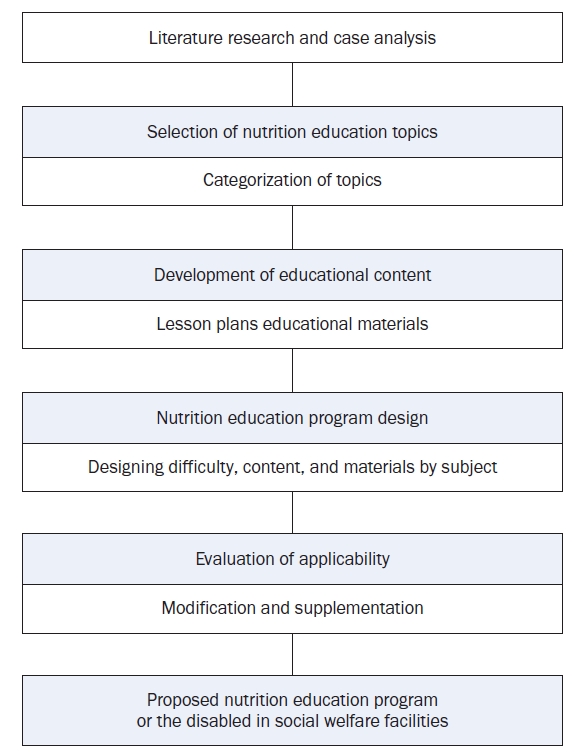
This study aimed to develop a nutrition education program based on social cognitive theory to promote the health of individuals using facilities for people with disabilities. It also sought to evaluate the applicability of the educational materials through assessments by counselors at the Social Welfare Food Service Management Support Center.
Methods
A group of six experts developed the program based on a needs assessment of nutrition education in facilities for individuals with disabilities. Applicability was evaluated through an online survey of 26 counselors from Social Welfare Food Service Management Support Centers nationwide in July 2023, and the results were analyzed.
Results
The nutrition education program includes a basic course on personal hygiene, dining etiquette, picky eating prevention, and obesity management. The advanced course covers dietary management for chronic diseases, such as meal planning for hypertension, diabetes management, and dietary principles for dysphagia. Additionally, lecture PPTs, individual activity sheets, and experiential teaching aids were developed. Applicability evaluations showed high scores, with the teaching-learning plan and PPT averaging 4.15 and the experiential teaching aids scoring 4.17, all above 4.0.
Conclusion
This study developed a nutrition education program for individuals with disabilities and assessed its applicability and usability. Implementing this program in disability welfare institutions could enhance health promotion and improve the quality of life for individuals with disabilities. -
Citations
Citations to this article as recorded by- Research trends in dietary behaviors and nutrition education among individuals with developmental disabilities in Korea: a scoping review (2015–2025)
Nakyung Kwak, Wonyeong Park, Yu-Ri Kim, Jieun Oh
Korean Journal of Community Nutrition.2026; 31(1): 1. CrossRef - Development of a standard nutrition management model algorithm for personalized care in social welfare facilities for the disabled
Su-Jin Lee, Ji-Won Kang, Sil Ah Kim, Kirang Kim, Sohyun Park, Jieun Oh, Hyunjoo Ryou, Ji-Yun Hwang
Journal of Nutrition and Health.2025; 58(5): 498. CrossRef
- Research trends in dietary behaviors and nutrition education among individuals with developmental disabilities in Korea: a scoping review (2015–2025)
- 3,876 View
- 101 Download
- 2 Crossref
- [Korean]
- Application of a living lab model to an evidence-based reduced-sodium healthy eating practice program in Korea: a pre-post study
- Jung-Hyun Kim, Eugene Shim, Min Sook Kyung, Sooyoun Kwon, Hyoung Su Park, Jae-Heon Kang
- Korean J Community Nutr 2025;30(1):53-63. Published online February 28, 2025
- DOI: https://doi.org/10.5720/kjcn.2024.00346
-
Abstract
PDF
- Objectives
To apply a healthy dietary program with reduced sodium intake, developed using data from the Korea National Health and Nutrition Examination Survey (KNHANES), focusing on the sodium intake level and eating patterns.
Methods
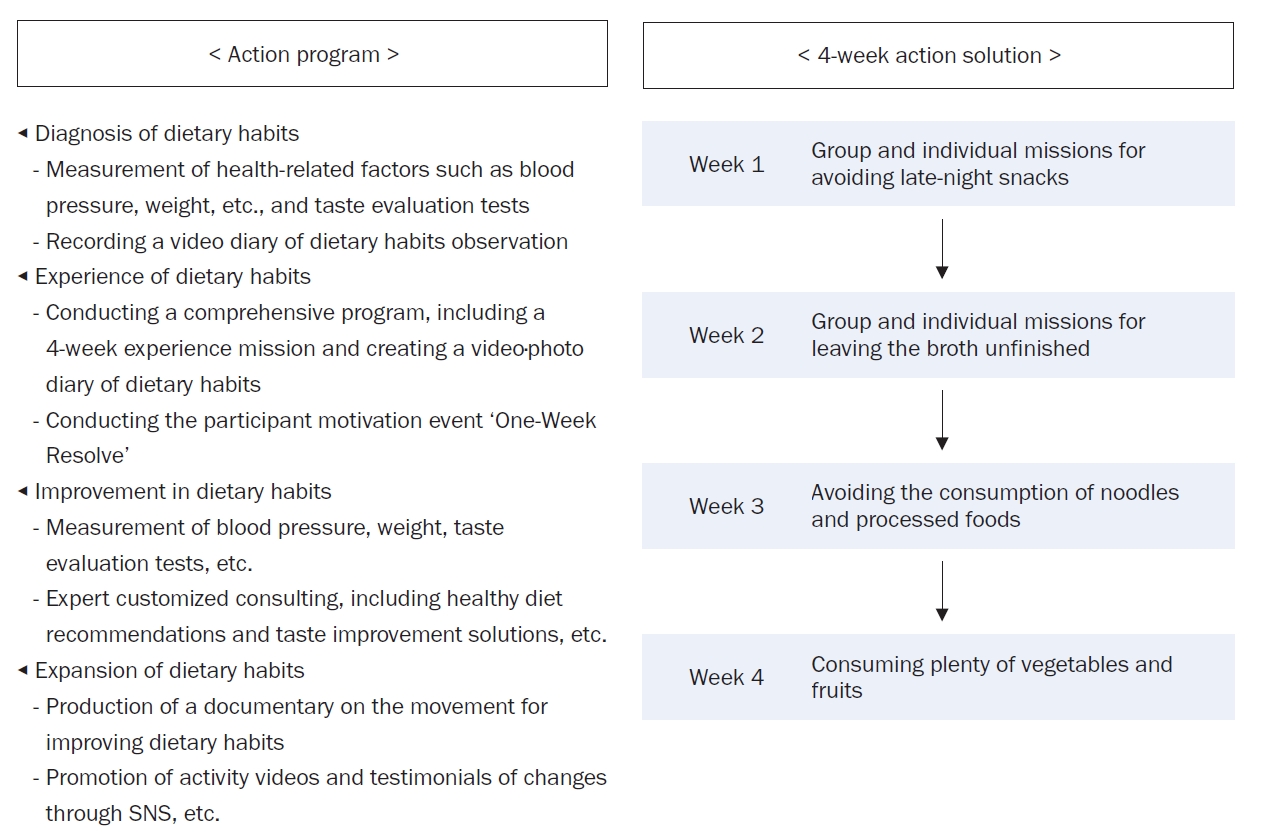
The program was implemented using a living lab model, an open innovation ecosystem for user-centered problem-solving. Analysis of the KNHANES data revealed that older age groups had a low energy intake but a high sodium intake, particularly among those who frequently dined out. The program was designed to improve sodium-reduction literacy and enhance practical competency. Over four weeks, 40 participants tracked their dietary intake and worked with a clinical nutritionist through a process of diagnosis, experience, improvement, and expansion. A self-administered survey was conducted before and after the program to assess effectiveness.
Results
Participants were four teenagers (10%), 26 in their twenties (65%), and 10 aged ≥ 30 years (25%), with eight males (20%) and 32 females (80%). Post-program analysis showed significant improvements in sodium-related nutrition knowledge (P < 0.01), with increased agreement on adopting low-sodium intake practices (e.g., interest in sodium content, choosing lower-sodium foods). Nutrient intake analysis showed a decrease in energy, carbohydrates, lipids, and proteins (P < 0.001), with sodium intake decreasing from 3,382.37 mg/d to 2,119.05 mg/d (P < 0.001).
Conclusion
The community-based, living lab model for the sodium-reduction program effectively improved participant sodium-reduction literacy and practical competency, suggesting that step-by-step, autonomous learning, can reduce sodium intake and promote healthier eating habits. -
Citations
Citations to this article as recorded by- Influence of food literacy on short- and long-term healthy eating intentions among adolescent and adult convenience store users: An application of the extended theory of planned behavior
Wonyeong Park, Hae Jin Park, Suah Moon, Jieun Oh
Nutrition Research and Practice.2025; 19(6): 917. CrossRef
- Influence of food literacy on short- and long-term healthy eating intentions among adolescent and adult convenience store users: An application of the extended theory of planned behavior
- 3,125 View
- 76 Download
- 1 Crossref
- [Korean]
- Analysis of the relationship between sugar intake and cancer prevalence: a cross-sectional study using the 8th Korea National Health and Nutrition Examination Survey
- Hye-Ryun Kim, Soo-Kyung Lee
- Korean J Community Nutr 2025;30(1):89-102. Published online February 28, 2025
- DOI: https://doi.org/10.5720/kjcn.2024.00339
-
Abstract
PDFSupplementary Material
- Objectives
This study aimed to analyze the association between sugar intake and cancer risk among Korean adults aged 19 years and older.
Methods
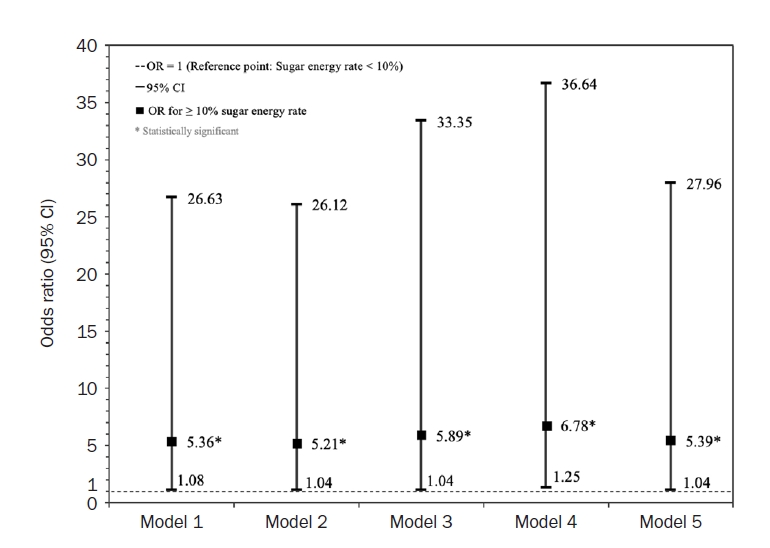
A total of 13,016 adults aged 19 years and older who participated in the 8th Korea National Health and Nutrition Examination Survey from 2019 to 2021 were included. Sugar intake was assessed in terms of both absolute intake and sugar energy rate. Sugar intake was divided into quartiles, while sugar energy rate was categorized into three groups (< 10%, 10%–20%, > 20%) based on the 2020 Dietary Reference Intakes for Koreans and into two groups (< 10%, ≥ 10%) based on WHO recommendations. Cancer prevalence was determined using cancer-related survey questions. The association between sugar intake and cancer prevalence was analyzed by sex and cancer type using logistic regression. All statistical analyses were performed using IBM SPSS statistics 29.0 (IBM Co.).
Results
From 2019 to 2021, sugar intake significantly declined with age in both men and women (P for trend < 0.001), with the highest intake observed in the 19–29 age group (61.38 g). Men consumed significantly more sugar than women across all age groups except for the 50–64 and 65–74 groups (P < 0.05). However, the sugar energy rate was significantly higher in women than in men (P < 0.05). While the association between sugar intake and cancer prevalence varied across regression models and cancer types, cervical cancer consistently showed a significant association with sugar intake (P < 0.05).
Conclusion
The association between sugar energy rate and the prevalence of premenopausal cervical cancer was consistent and significant. Given that women had a higher sugar energy rate than men, the relationship between sugar intake and cancer prevalence in women warrants further investigation. Longitudinal studies with more detailed sugar intake assessments are needed. -
Citations
Citations to this article as recorded by- Sugar rationing during the first 1000 days and early onset cancer: a natural experiment
Runhua Tang, Haoran Wang, Huimin Hou, Jianye Wang, Shuhang Luo, Jianyong Liu, Ming Liu
The American Journal of Clinical Nutrition.2026; 124(3): 101453. CrossRef - A study on hypertension relevant nutritional knowledge and dietary practices in Chinese college students studying in South Korea
Zhe Sun, Wookyoun Cho
Journal of Nutrition and Health.2015; 48(5): 441. CrossRef - Influence of the Size of the Spoon on the Eating rate, Energy Intake and the Satiety Levels of Female College Students
Yang Hee Hong, Young Suk Kim, Hyun Jung Kwon, Do Seok Chang, Dong Geon Kim, Un Jae Chang
Korean Journal of Community Nutrition.2015; 20(5): 375. CrossRef - Dietary behavior and nutritional status among Chinese female college students residing in Korea
Gaowei, Soyeon Kim, Namsoo Chang, Ki Nam Kim
Korean Journal of Nutrition.2013; 46(2): 177. CrossRef
- Sugar rationing during the first 1000 days and early onset cancer: a natural experiment
- 4,038 View
- 142 Download
- 4 Crossref
- [Korean]
- Analysis of pork consumption attribute factors by consumer lifestyle in Korea: a cross-sectional study
- Jounghee Lee, Juhyun Lee, Wookyoung Kim
- Korean J Community Nutr 2025;30(1):75-88. Published online February 28, 2025
- DOI: https://doi.org/10.5720/kjcn.2024.00332
-
Abstract
PDF
- Objectives
This study aims to identify and analyze how different South Korean lifestyles impact attitudes towards pork consumption.
Methods
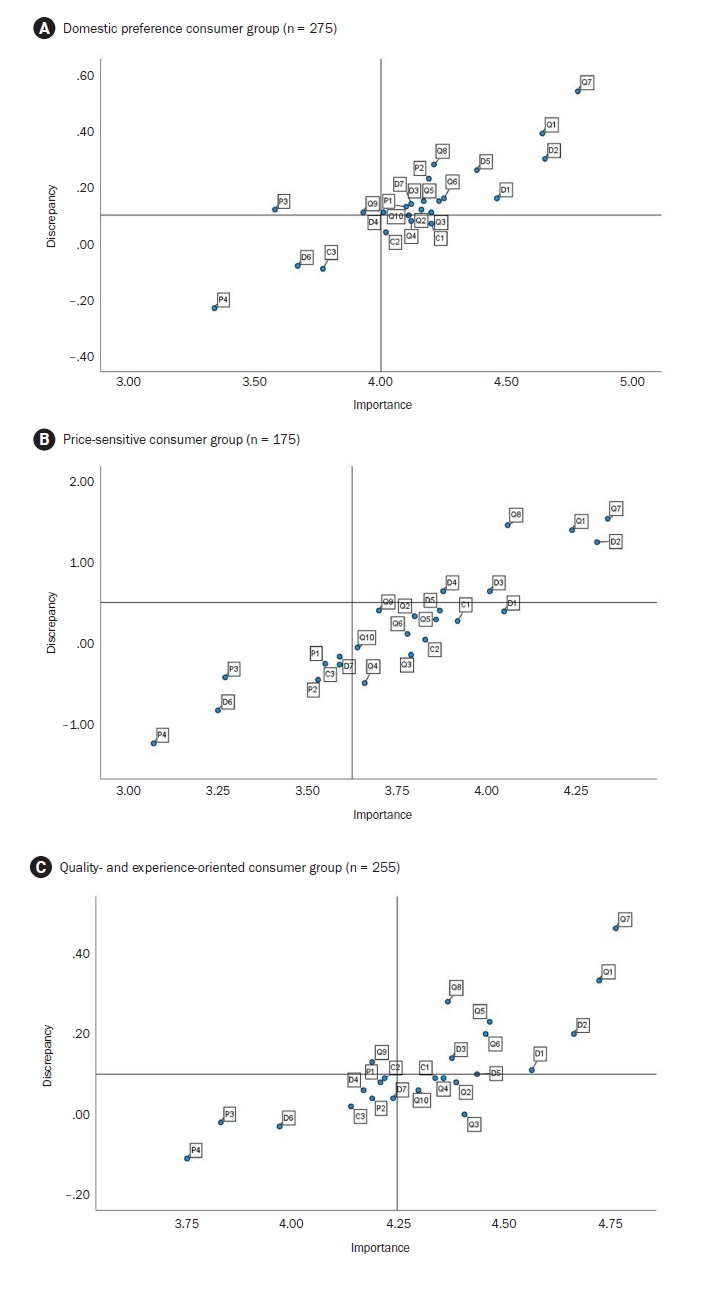
We implemented a cross-sectional survey targeting 705 adult consumers in South Korea using hierarchical and K-means cluster analyses. Respondents were classified into three relevant lifestyles: (1) domestic preference, (2) price-sensitive, and (3) quality-experience-oriented. The importance-performance analysis was employed to evaluate discrepancies between how they rated pork consumption using factors of “importance” and “satisfaction”. We employed Borich’s needs assessment and the Locus for Focus model to prioritize management areas.
Results
The research findings highlight that unpleasant odor/smell (Q7) and hygiene (Q1) were common key areas for management across all consumer groups, emphasizing their importance in enhancing pork consumption satisfaction. Among the groups, the domestic preference group showed high importance-performance discrepancies in attributes like expiry date (D2), suggesting a need for strengthened trust in domestic pork distribution and information transparency. The price-sensitive group prioritized economic factors, with fat thickness (Q8) identified as an essential management area. The quality-experience-oriented group emphasized sensory qualities such as juiciness (Q6) and meat color (Q5), with off-flavors (Q7) displaying the largest discrepancy. These results show the significant role of sensory attributes in consumer satisfaction.
Conclusion
This study demonstrated the multidimensional nature of pork consumption behavior, emphasizing the need for tailored strategies across consumer groups. Managing hygiene (Q1) and reducing off-flavors (Q7) are critical for all segments, while group-specific strategies include managing sensory quality for the quality-experience-oriented group, providing product information (D2) to increase trust for the domestic preference group, and emphasizing value for money for the price-sensitive group.
- 2,690 View
- 49 Download
- [English]
- Food and nutrient intake in pregnant women with singletons or multiples and post-delivery changes in intake in Korea: an observational study
- Cheawon Lee, Dahyeon Kim, Yoon Ha Kim, Myeong Gyun Choi, Jong Woon Kim, Clara Yongjoo Park
- Korean J Community Nutr 2025;30(1):1-15. Published online February 28, 2025
- DOI: https://doi.org/10.5720/kjcn.2024.00325
-
Abstract
PDFSupplementary Material
- Objectives
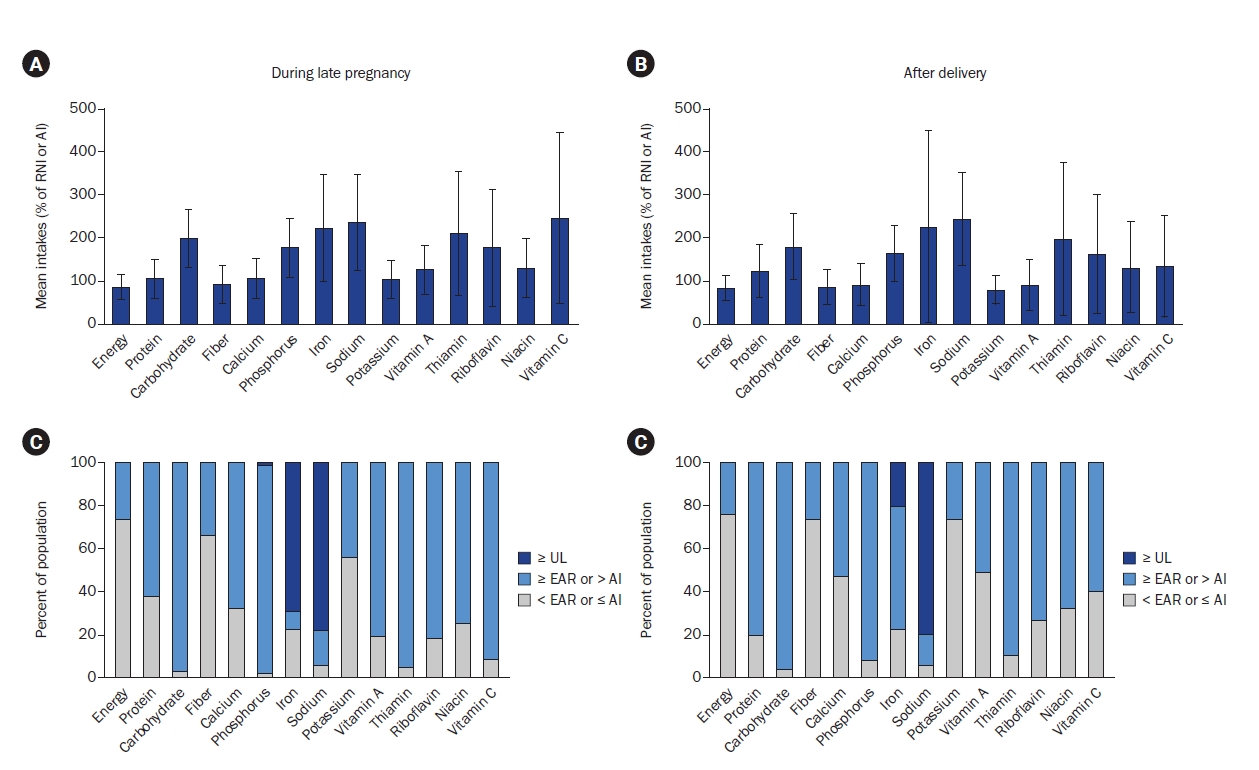
Nutrient intake during pregnancy and lactation is crucial for the health of both mother and offspring. Diet and nutrient metabolism potentially vary according to ethnicity and fetal number; nevertheless, recent studies validating this are inadequate. Furthermore, few studies have tracked changes in intake after delivery. We compared the food and nutrient intakes between pregnant women in Korea carrying singletons and multiples during late pregnancy and assessed their changes through postpartum.
Methods
Ninety-eight pregnant women were recruited from Chonnam National University Hospital between January 2019 and December 2023, and 48 responded to follow-up. Third trimester and postpartum intake were assessed via food frequency questionnaires and supplement questionnaires. Student’s t-test, Mann–Whitney U test, chi-square test, paired t-test or Wilcoxon signed-rank test was performed and adjustments were made for covariates.
Results
Nutrient intake was generally adequate relative to the Dietary Reference Intakes for Koreans, with no differences between singleton- and multiple-pregnancy women. Sixty-six of 98 (67%) pregnant women consumed meat, fish, vegetables, and fruit daily. Dairy intake was low, while the mean iron intake during pregnancy reached 54.2 ± 34.0 mg/d, exceeding the tolerable upper intake level, mainly owing to supplements. Postpartum fruit and vitamin C intake decreased, with no significant differences between breastfeeding and non-breastfeeding women.
Conclusion
Dietary intake did not significantly differ between Korean singleton- and multiple-pregnancy women. Dairy intake was low and iron intake was excessive. Fruit intake decreased after delivery; however, difference in dietary intake according to breastfeeding status was minimal. Nutritional education may be necessary to promote a balanced diet in pregnant and postpartum women. Trial Registration: Clinical Research Information Service Identifier KCT0005118. -
Citations
Citations to this article as recorded by- Postpartum bone mineral density in Korean women: associations with lactation status and calcium intake
Cheawon Lee, Hangyeol Jeon, Yoon Ha Kim, Myeong Gyun Choi, Jong Woon Kim, Clara Yongjoo Park
Nutrition Research and Practice.2026; 20(1): 145. CrossRef - Placental cadmium and its association with maternal diet and offspring growth in Koreans
Dahyeon Kim, Cheawon Lee, Yoon Ha Kim, Myeong Gyun Choi, Jong Woon Kim, Clara Yongjoo Park
Nutrition Research and Practice.2025; 19(3): 473. CrossRef
- Postpartum bone mineral density in Korean women: associations with lactation status and calcium intake
- 8,960 View
- 87 Download
- 2 Crossref
- [English]
- Nutrition quotient for preschoolers and key impacting factors in Korea: a cross-sectional study on food literacy, social support, and the food environment of primary caregivers
- Danbi Gwon, Ji-Yun Hwang, Jieun Oh
- Korean J Community Nutr 2025;30(1):16-26. Published online February 28, 2025
- DOI: https://doi.org/10.5720/kjcn.2024.00311
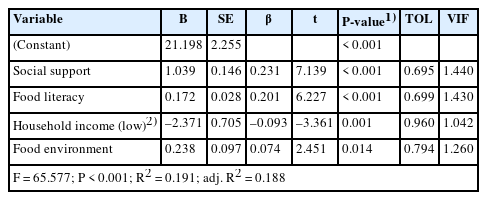
-
Abstract
PDF
- Objectives
This study evaluated the nutrition quotient for preschoolers (NQ-P) and analyzed the impact of key factors, such as caregivers’ food literacy, social support, and food environment, on the eating habits of preschool children in Korea. This study also sought to provide foundational data for developing tailored nutrition education programs by identifying the nutrition education needs of caregivers.
Methods
This study was conducted among caregivers of preschool children (aged 0–6 years) using an online self-administered survey conducted from August 22 to August 28, 2023. A total of 1,116 survey responses were analyzed. This study assessed children’s NQ-P score, caregivers’ food literacy, social support, food environment, and nutritional education needs. Data were analyzed using SPSS 29.0 (IBM Co.).
Results
The average NQ-P score for preschool children was 52, showing a tendency for the balance score to decrease and the moderation score to increase with age. Children from rural and low-income areas exhibited significantly lower NQ-P scores. Caregivers’ food literacy was higher in urban and higher-income groups. Multiple regression analysis revealed that social support, food literacy, income, and food environment significantly affected children's NQ-P scores. The effectiveness of nutrition education varied based on the income level, with nutrition education on healthy eating being the most preferred topic for preschool children.
Conclusion
This study confirmed that caregivers’ food literacy and social support significantly affected preschool children’s nutritional status. This suggests a need for tailored nutritional education and dietary support policies, particularly for low-income and rural populations. -
Citations
Citations to this article as recorded by- Cluster-Based Evaluation of Dietary Guideline Adherence and Food Literacy Among Adolescents: Implications for Tailored Diets
Jimin Lim, Jieun Oh
Nutrients.2026; 18(2): 241. CrossRef - Development and usability evaluation of a web-based healthy eating practice questionnaire for Korean preschool children: a child–parent dyad approach
Young-Hee Han, Dawon Park, Dahyeon Kim, Saerom Shin, Eun Yeol Woo, Hye-Kyung Park, Taisun Hyun
Nutrition Research and Practice.2026; 20(1): 132. CrossRef - Nutrition literacy and socio-demographic determinants among Chinese women of childbearing age
Jing-Jing Meng, Jun Chen, Li Pu, Yan Zhu, Yan Zuo, Fang Wang, Li Chang, Yi-Ying He, Jian-Jun Zhang, Zhi-Lan Bai, Si-Qin Sun, Jie Liu, Jia Shi
Frontiers in Public Health.2026;[Epub] CrossRef - Dietary intake and eating behaviors by weight status among rural preschool children: NQ-P analysis
Ji-Sook Park, Hyojung Lee, Jaehee An, Jung-Eun Yim
Journal of Nutrition and Health.2026; 59(1): 63. CrossRef - The transition of nutritional status in infants, young children, and school-aged children in Korea and future-oriented nutritional strategies: a narrative review
Yoonna Lee
Korean Journal of Community Nutrition.2026; 31(2): 115. CrossRef - Exploring predictors of low nutritional literacy in maintenance hemodialysis patients: a machine learning and network analysis approach
Ling Yao, Yanling Liu, Xufeng Tan, Sisi Chen, Yanchun Fang
Frontiers in Public Health.2026;[Epub] CrossRef - Effects of primary caregivers’ food literacy, social support, food environment, and household income on the nutritional status of school-aged children: a cross-sectional study
Seyeon Park, Ji-Yun Hwang, Sohyun Park, Hyun Joo Ryou, Jieun Oh
Korean Journal of Community Nutrition.2025; 30(5): 352. CrossRef
- Cluster-Based Evaluation of Dietary Guideline Adherence and Food Literacy Among Adolescents: Implications for Tailored Diets
- 5,048 View
- 88 Download
- 7 Crossref
- [Korean]
- Biochemical characteristics, nutrient intakes, and chronic disease risk according to the dietary fat energy ratio in middle-aged Korean: a cross-sectional study using data from the 7th (2016–2018) Korean National Health and Nutrition Examination Survey
- Ga-Hyeon Jeong, Sook-Bae Kim
- Korean J Community Nutr 2024;29(6):528-540. Published online December 31, 2024
- DOI: https://doi.org/10.5720/kjcn.2024.00304
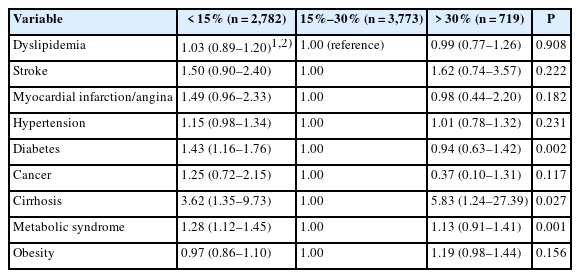
-
Abstract
PDF
- Objectives
This study aimed to examine health-related characteristics and chronic disease risk in middle-aged Koreans based on their fat energy intake ratio.
Methods
We analyzed data from 7,274 Koreans aged 40–64 years using the 7th (2016–2018) Koreans National Health and Nutrition Examination Survey. Participants were classified into three groups based on their fat energy intake ratio: insufficient (< 15%), adequate (15%–30%), and excessive (> 30%). We assessed their socio-demographic characteristics; lifestyle characteristics; biochemical characteristics; quantitative and qualitative nutrient intakes, measured using dietary reference intakes for Koreans and index of nutrition quality (INQ); and chronic disease risk.
Results
Significant differences were observed between the groups in age, gender, income, education, and residence region. The insufficient group had the highest proportion of older adults, male, lower income, rural residents, and lower education levels. The groups differed significantly in lifestyle characteristics, with the insufficient group having the highest rates of no walking, heavy drinking, smoking, and poor subjective health perception. Biochemical characteristics in the insufficient group exhibited the lowest levels for fasting blood glucose, hemoglobin A1c, and triglycerides. Significant differences were found in both the quantitative and qualitative intake of nutrients. The insufficient group had the lowest intake of most nutrients except fiber, whereas the excessive group had the lowest fiber intake. Based on the INQ, vitamin A and Ca were the lowest in the insufficient group, and vitamin C and folic acid were the lowest in the excessive group. The risk of diabetes mellitus and metabolic syndrome was highest in the deficient group, and the risk of liver cirrhosis was highest in the excessive group.
Conclusion
Insufficient or excessive fat energy intake ratio negatively affects nutrient intake and chronic disease risk. Fat energy intake of 15%–30% is important for improving nutrient intake and managing chronic diseases, such as diabetes mellitus, metabolic syndrome, and liver cirrhosis. We suggest that education and an appropriate social environment are necessary to ensure this fat energy intake. -
Citations
Citations to this article as recorded by- Study on the Optimization of Manufacturing Conditions for Traditional Potato Bugak Using Response Surface Methodology
Yu Hyeon Jo, Jeong Ok Rho
Journal of the East Asian Society of Dietary Life.2025; 35(1): 60. CrossRef - Nutritional risk assessment using estimated usual nutrient intake in Korean adults: analysis of the 8th (2019–2021) Korea National Health and Nutrition Examination Survey data
Woojin Byeon, Cho-il Kim, Sung Ok Kwon, Jihyun Yoon, Linxi Huang
Nutrition Research and Practice.2025; 19(5): 799. CrossRef
- Study on the Optimization of Manufacturing Conditions for Traditional Potato Bugak Using Response Surface Methodology
- 2,783 View
- 76 Download
- 2 Crossref
- [Korean]
- Co-occurrence network and pattern of school lunch using big data and text-mining using data from the 2021–2023 school meal menu information on the NEIS open educational information portal: an exploratory study
- Hyeyun Kang, Jimi Kim
- Korean J Community Nutr 2024;29(6):514-527. Published online December 31, 2024
- DOI: https://doi.org/10.5720/kjcn.2024.00297
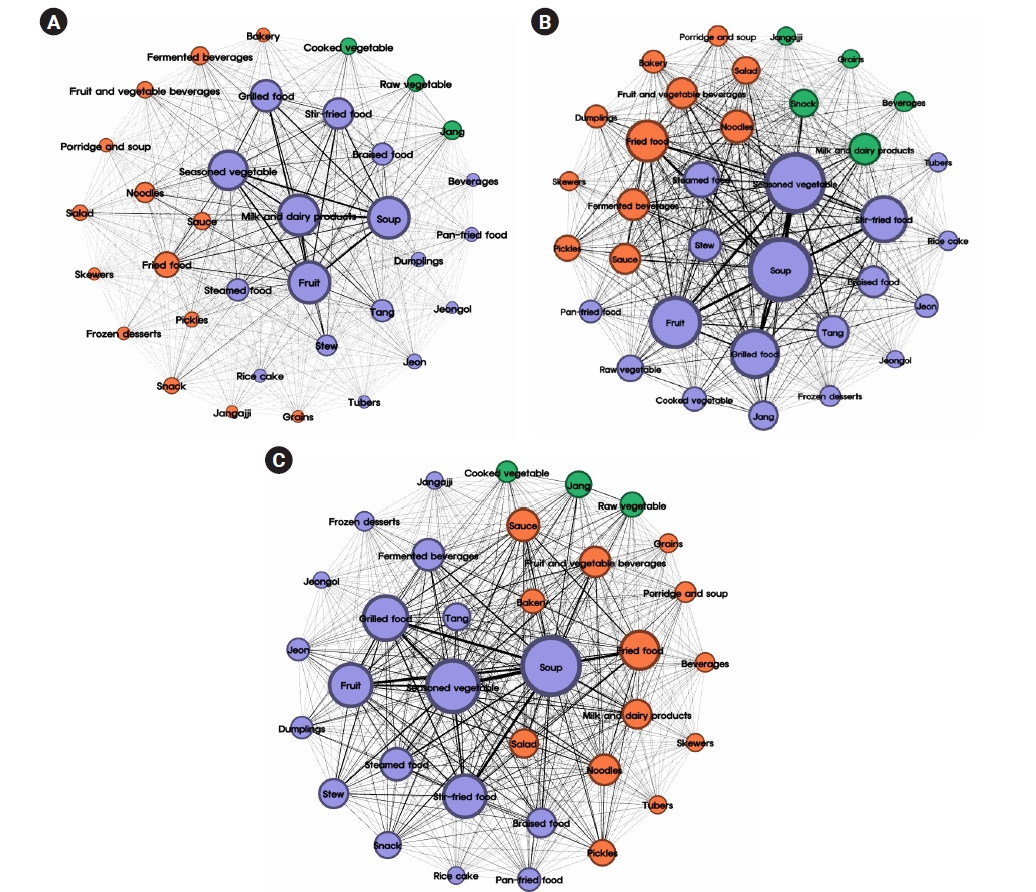
-
Abstract
PDFSupplementary Material
- Objectives
This study aimed to use big data from elementary, middle, and high school lunches to determine the primary food groups and menu items that contribute to lunch meals through text-mining and investigate the variations in food groups and menu composition patterns across different grade levels.
Methods
Between 2021 and 2023, a total of 7,892,456 lunch menus from 17 cities and provinces in South Korea were analyzed using big data from the National Education Information System (NEIS) system. After undergoing text preprocessing for text-mining, the collected menus were classified into 34 food groups based on primary ingredients and cooking methods, excluding the types of rice and kimchi. Subsequently, analyses of term frequency, term frequency-inverse document frequency (TF-IDF), centrality, and co-occurrence networks were performed on the food group and menu data.
Results
According to the TF-IDF, the most frequent food group across all grade levels was soup and seasoned vegetables, whereas milk was the most frequently provided menu. As the grade level increased, the frequency of grilled and fried food increased. In elementary schools, fruits exhibited the highest centrality, whereas soup had the highest centrality in middle and high schools. Co-occurrence frequency revealed that the soup-fruit combination was the most common in elementary schools, whereas soup and seasoned vegetables were most frequently paired in middle and high schools. The co-occurrence network of food groups and menus further indicated that menus regularly provided as standard meals and those frequently offered as special meals formed distinct communities.
Conclusion
This study investigated the food groups and menu provision patterns in school meals through text-mining techniques applied to large-scale school lunch. The findings may contribute in enhancing the quality of nutritional management, school foodservice, and menu composition of school meal programs. -
Citations
Citations to this article as recorded by- Dietary patterns and diet quality among adults in their 20s according to rice consumption: a co-occurrence network analysis using the Korea National Health and Nutrition Examination Survey (KNHANES) 2019–2021
Eun-kyung Kim, Jin-Young Lee, Yong-Seok Kwon, Minji Kang
Journal of Nutrition and Health.2025; 58(6): 571. CrossRef
- Dietary patterns and diet quality among adults in their 20s according to rice consumption: a co-occurrence network analysis using the Korea National Health and Nutrition Examination Survey (KNHANES) 2019–2021
- 3,341 View
- 73 Download
- 1 Crossref
- [Korean]
- Impact of a public health center nutrition education program on patients with type 2 diabetes in a primary care-based chronic disease management project: a pilot intervention study
- Haerim Yang, Yoo Kyoung Park, Ji-hyun Lee, Hee-Sook Lim, Heejoon Baek, Hyejin Lee, Haeran Park, Pyunghwa Lee, Jooyoun Chung, Won Gyoung Kim
- Korean J Community Nutr 2024;29(6):492-503. Published online December 31, 2024
- DOI: https://doi.org/10.5720/kjcn.2024.00018
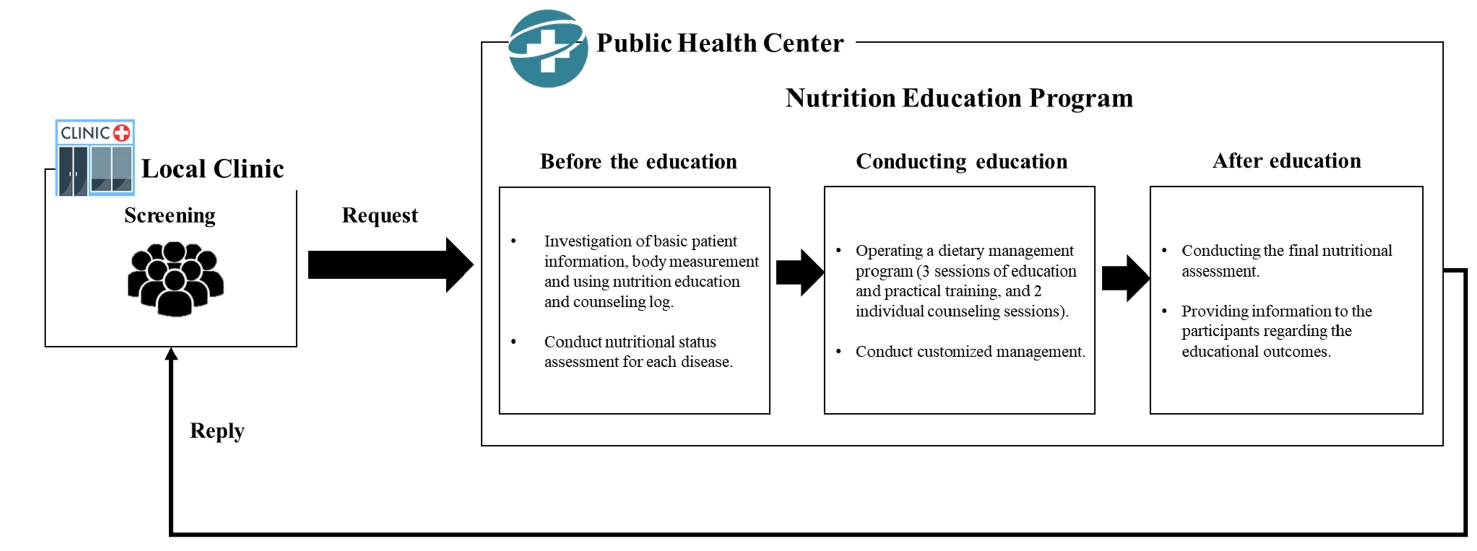
-
Abstract
PDF
- Objectives
We investigated the impact of an advanced “Nutrition Education Program” on patients with Diabetes mellitus, type 2 from public health centers enrolled in a primary health care-based chronic disease management project. This 12-week dietary management program was developed by the Korea Health Promotion and Development Institute. We assessed if this program improved glycemic control and other health indicators through dietary and nutritional improvements.
Methods
Seventeen patients with Diabetes mellitus type 2 were enrolled in the “Nutrition Education Program.” These patients were referred to public health centers for lifestyle management based on physician assessments at local clinics that were participating in a pilot project on primary health care-based chronic disease management. The participants attended the program comprising face-to-face basic, in-depth, and practical training sessions at the health center during the third, fifth, and seventh weeks, respectively. Anthropometric measurements, body composition analysis, blood biochemical characteristics, nutritional knowledge, and self-efficacy evaluation were performed before and after the program. Data were analyzed using SPSS ver. 28.0.
Results
The mean age of the participants was 62 years, and most participants were female (14, 82.4%). No significant changes in patients’ anthropometric measurements or body composition were observed after the training. However, significant reductions were observed in the blood biochemical characteristics, including glycated hemoglobin, total cholesterol, and low-density lipoprotein levels. Additionally, patients’ nutritional knowledge and self-efficacy scores increased significantly.
Conclusions
The “Nutrition Education Program” helped in improving glycemic control and other health indicators in patients with Diabetes mellitus type 2. Further research is required to objectively confirm the long-term and sustained effects of the program in a controlled study. Trial Registration Clinical Research Information Service Identifier: KCT0010010
- 3,623 View
- 116 Download
- [English]
- Health-related quality of life and nutrient intake of the elderly with type 2 diabetes according to comorbidity burden: a cross-sectional study
- Yejung Choi, Kyong Park
- Korean J Community Nutr 2024;29(5):418-430. Published online October 31, 2024
- DOI: https://doi.org/10.5720/kjcn.2024.00014
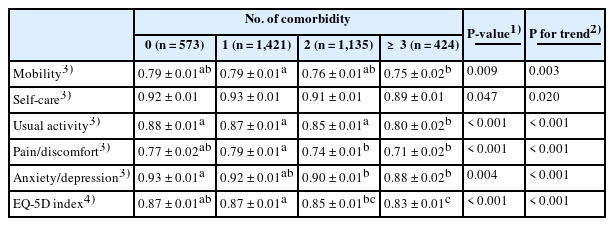
-
Abstract
PDF
- Objectives
This study aimed to explore the cross-sectional association between health-related quality of life (HRQoL) according to the number of comorbidities in older adults with type 2 diabetes mellitus (T2DM) using the Euro Quality of Life-5 Dimensions (EQ-5D) index. Methods: This study included 3,553 participants aged ≥ 65 years from the 2008–2020 Korea National Health and Nutrition Examination Survey. Dietary data were collected through 24-hour recall interviews by trained researchers, and demographic and lifestyle information via self-administered questionnaires. HRQoL was measured using a modified EQ-5D scale. Multivariable linear regression analyzed the associations between EQ-5D scores, nutrients and comorbidity, controlling for sociodemographic and health variables. Results: Most participants reported ‘no problems’ in the EQ-5D scores, although approximately 17% to 47% of participants reported ‘some problems’ or ‘extreme problems,’ depending on the dimension. As comorbidities increased, significant declines were observed across all dimensions, particularly in mobility, usual activities, pain/discomfort, and anxiety/ depression. Nutrient intake analysis revealed that participants with three or more comorbidities consumed less carbohydrates, but more fat. Conclusion: Our findings demonstrate that among older adults with T2DM, a higher number of comorbidities is associated with decreased HRQoL. Additionally, there are differences in nutrient intake patterns among those with more comorbidities, specifically decreased carbohydrate intake and increased fat intake. These results emphasize the need for comprehensive and tailored management strategies that consider both diabetes and the co-occurring health conditions. By addressing the complex healthcare needs of individuals with multiple comorbidities, it is possible to enhance their HRQoL and overall well-being. -
Citations
Citations to this article as recorded by- Real-World Comparison of the Effectiveness of Defocus Incorporated Multiple Segments and Myopi-X Spectacle Lenses for Myopia Control in Turkish Children: A Retrospective Study
Nilay Akagün, Uğur Emrah Altıparmak
Turkish Journal of Ophthalmology.2026; 56(1): 8. CrossRef - Multidimensional Determinants of Quality of Life in Older Adults with Type 2 Diabetes: A Narrative Synthesis
Martaria Rizky Rinaldi, Nida Ul Hasanat, Kwartarini Wahyu Yuniarti
Clinical Gerontologist.2026; : 1. CrossRef
- Real-World Comparison of the Effectiveness of Defocus Incorporated Multiple Segments and Myopi-X Spectacle Lenses for Myopia Control in Turkish Children: A Retrospective Study
- 3,266 View
- 37 Download
- 2 Crossref
- [English]
- Factors associated with malnutrition in demented and non-demented elderly residing in the community of Korea: a cross-sectional descriptive and analytical study
- Jinhee Kwon, Jung Hee Kim, Hyeonjin Jeong, Jung Suk Lee
- Korean J Community Nutr 2024;29(5):359-371. Published online October 31, 2024
- DOI: https://doi.org/10.5720/kjcn.2024.00013

-
Abstract
PDF
- Objectives
This study aimed to investigate and compare factors associated with malnutrition according to the presence or absence of dementia in community-dwelling elderly people.
Methods
Needs assessment data from 311 long-term care insurance (LTCI) recipients (dementia group 203; non-dementia group 108) that participated in the second pilot program of the integrated care model in community care settings under the Korean LTCI system were used. Descriptive statistical analysis, independent t-test, and analysis of variance were conducted on the sociodemographic characteristics, health and functional status, and nutritional status of the dementia and non-dementia groups. Logistic regression analysis was conducted to identify factors associated with malnutrition in the dementia and non-dementia groups.
Results
Malnutrition occurred in 33.5% and 26.9% of participants in the dementia and non-dementia groups, respectively. In the dementia group, living with family rather than living alone (odds ratio [OR]: 3.81; 95% confidence interval [CI]: 1.50–9.66; P = 0.031), increase in Korean Activities of Daily Living (K-ADL) score (OR: 1.35; 95% CI: 1.17–1.55; P < 0.001), and increase in the Neuropsychiatric Inventory-Questionnaire score (OR: 1.02; 95% CI: 1.01–1.03; P = 0.005) were associated with a higher risk of malnutrition. In the non-dementia group, the risk of malnutrition increased as the K-ADL score increased (OR: 1.20; 95% CI: 1.04–1.39; P = 0.011) and in the depressed group (OR: 2.84; 95% CI: 1.04–7.74; P = 0.042).
Conclusions
The study results confirmed the necessity of nutritional management for community-dwelling LTCI recipients. When developing a nutritional management program, considering the differences in factors related to malnutrition between the dementia and non-dementia groups is important. This study proposes policies for improving the LTCI system in terms of nutritional management and the utilization of community resources. -
Citations
Citations to this article as recorded by- Prevalence of Sarcopenia and Its Association with Nutrition Risk in Community-Dwelling Older Adults with Subjective Cognitive Impairment or Living in Retirement Homes
Raksha Aravind, Heather H. Keller
Nutrients.2026; 18(16): 2733. CrossRef
- Prevalence of Sarcopenia and Its Association with Nutrition Risk in Community-Dwelling Older Adults with Subjective Cognitive Impairment or Living in Retirement Homes
- 2,988 View
- 77 Download
- 1 Crossref
- [English]
- Associations between the symptoms of gastroesophageal reflux disease and dietary and lifestyle behavior among young Korean adults: a preliminary cross-sectional study
- Soheun Shim, Jeong-Hwa Choi, Young-Ran Heo
- Korean J Community Nutr 2024;29(5):396-405. Published online October 31, 2024
- DOI: https://doi.org/10.5720/kjcn.2024.00011

-
Abstract
PDF
- Objectives
Gastroesophageal reflux disease (GERD) is a clinical condition caused by esophageal tissue damage resulting from the reflux of stomach or duodenal contents. An increasing number of GERD cases have been reported recently; however, research on this population, especially young adults, is lacking. This study aimed to investigate the dietary and lifestyle factors associated with GERD symptoms in young Korean adults. Methods: A total of 202 individuals (19–34 years old) living in Gwangju were surveyed using a questionnaire to examine their general characteristics, lifestyle, and dietary behaviors. GERD symptoms were investigated using the gastroesophageal reflux disease questionnaire (GerdQ). The participants were grouped into normal (GerdQ score ≤ 4) and caution (GerdQ score ≥ 5), and their characteristics were analyzed according to the group. Results: The findings suggested 15 participants (7.4%) belonged to the GERD caution group. More non-office workers were in the caution group than in the normal group (P < 0.05). The participants’ smoking, physical activity, sleep duration, and pillow height were not significantly different between the GERD phenotypes; however, the caution group consumed alcohol more frequently than the normal group (P < 0.001). The analyses of the participants’ eating behaviors revealed that the frequency of overeating, late-night snacking and chocolate consumption was significantly higher in the caution group (P < 0.001). Conclusion: Lifestyle and dietary behaviors were associated with GERD symptoms in young Korean adults. Further studies with larger cohorts are required to confirm these findings.
- 7,237 View
- 98 Download
- [English]
- Exploring the customer perceived value of online grocery shopping: a cross-sectional study of Korean and Chinese consumers using Means-End Chain theory
- Xinyu Jiang, Hyo Bin Im, Min A Lee
- Korean J Community Nutr 2024;29(4):318-335. Published online August 31, 2024
- DOI: https://doi.org/10.5720/kjcn.2024.00007
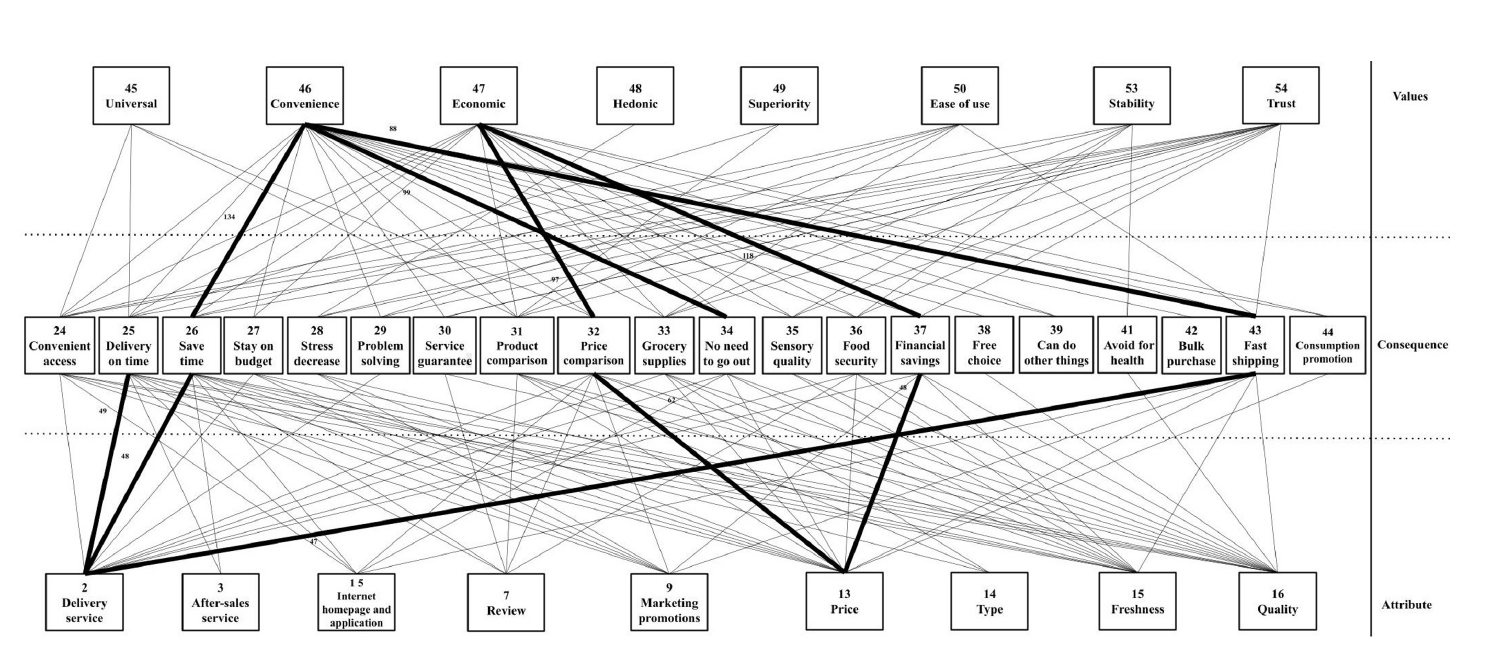
-
Abstract
PDF
- Objectives
Despite the growing market share of online grocery shopping, there is a need to understand customer perceived value due to the ongoing advancements in information technology. This study explores the connections between attributes, consequences, and values. Additionally, it conducts a cross-country comparison of consumers’ online grocery shopping behaviors to gain a deeper understanding of consumer market segments and any potential variations among them.
Methods
Data was collected through an online questionnaire survey conducted from May 1 to 15, 2024, targeting 400 consumers in Seoul, Korea, and Shanghai, China, who have experience with online grocery shopping. The survey utilized the Means-End Chain theory and association pattern technique hard laddering. Data collation and analysis were conducted using the IBM SPSS Statistics 28.0 program. The LadderUX software was employed to analyze the links between attributes, consequences, and values and create the consumer purchasing process’s implication matrix and hierarchical value map (HVM).
Results
The study identified key attributes that influence online grocery shopping decisions, including delivery service, price, freshness, and quality. Korean consumers demonstrated a higher sensitivity to price (19.0%) and delivery service (17.0%). In contrast, Chinese consumers prioritized delivery service (15.0%) and after-sales service (14.8%). Commonly cited consequences included time saving (12.6% for Koreans, 11.3% for Chinese), whereas prevalent values encompassed convenience (36.8% for Koreans, 19.6% for Chinese) and economic value (26.6% for Koreans, 14.7% for Chinese). The HVM underscored these insights, highlighting diverse consumer preferences and country-specific nuances.
Conclusions
The findings highlight the current state of online food consumption and consumers’ value systems, revealing variations among countries. These findings offer empirical insights that can be used to create customized global marketing strategies that resonate with various consumer preferences and market dynamics. -
Citations
Citations to this article as recorded by- Beyond the stage: how performing arts tourism shapes tourist perceptions and destination image
Islam Elbayoumi Salem, Mohammed Ali Bait Ali Sulaiman, Enrico di Bella, Sara Preti, Mohamed Kamal Abdien, Ahmed Magdy
Journal of Hospitality and Tourism Insights.2026; 9(1): 375. CrossRef - Decoding digital market power: a network-based framework for consumer behaviour and strategic advantage
Larissa M. Batrancea, Ömer Akgüller, Mehmet Ali Balcı, Anca Nichita, Mircea-Iosif Rus
Journal of Marketing Analytics.2026;[Epub] CrossRef
- Beyond the stage: how performing arts tourism shapes tourist perceptions and destination image
- 8,057 View
- 95 Download
- 2 Crossref
- [Korean]
- Nutritional status of North Koreans and related perceptions among South Korean adults
- Youngmin Nam, Jihyun Yoon
- Korean J Community Nutr 2024;29(4):288-303. Published online August 31, 2024
- DOI: https://doi.org/10.5720/kjcn.2024.00006
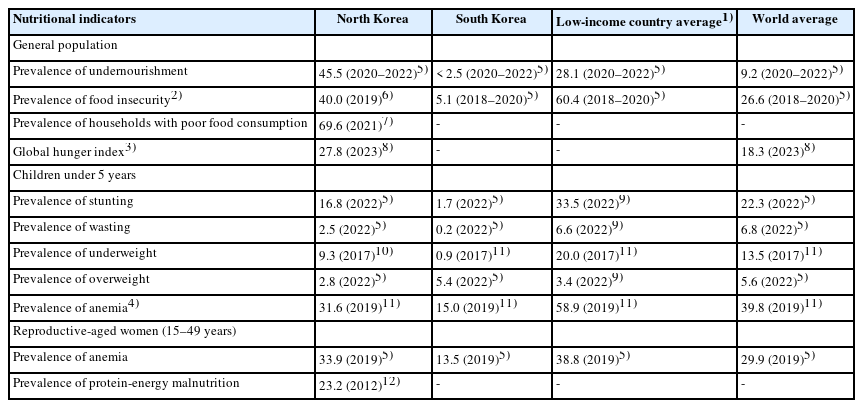
-
Abstract
PDF
- Objectives
North Koreans have been facing chronic food shortages and malnutrition. This study examined the nutritional status of North Koreans and the perceptions of South Korean adults regarding their nutritional status.
Methods
The nutritional status was examined using nutritional indicators for the general population, children, and reproductive-aged women in North Korea. An online survey was conducted among 1,000 South Korean adults aged 19–69 years to investigate their perceptions regarding the nutritional status of North Koreans.
Results
Although the nutritional status of children in North Korea has consistently improved, significant progress in the general population and reproductive-aged women in the country remains elusive. The prevalence of malnutrition among North Korean children has decreased to a level that is not considered severe based on international standards, although it shows a substantial difference from that among South Korean children. The prevalence of undernourishment and food insecurity in North Korea remains over 40%. South Korean adults perceive the nutritional status of North Koreans as being more severe than it is in reality. Notably, a significant inconsistency exists between the perceived and actual nutritional status of North Korean children, with over 95% of South Korean adults perceiving North Korean children’s malnutrition as being more severe than it actually is. Moreover, South Korean adults in their 20s to 40s tended to perceive the nutritional status of North Koreans as being more severe than those in their 50s to 60s did.
Conclusions
The nutritional status of North Koreans is a matter of concern. The disparity between South Koreans’ perceptions of the nutritional status of North Koreans and the actual status highlights the need for accurate information dissemination to effectively address malnutrition in North Korea. These efforts could be instrumental in enhancing public awareness and fostering social consensus on food aid and nutritional support programs for North Korea.
- 5,293 View
- 85 Download
- [English]
- Effects of a nutrition education program on metabolic syndrome risk factors in middle-aged Korean adults: an intervention study
- Minji Kang, Young-Hee Park, Subeen Kim, Eunyoung Tak, Hyun Wook Baik, Hee Young Paik, Hyojee Joung
- Korean J Community Nutr 2024;29(4):265-277. Published online August 31, 2024
- DOI: https://doi.org/10.5720/kjcn.2024.00005
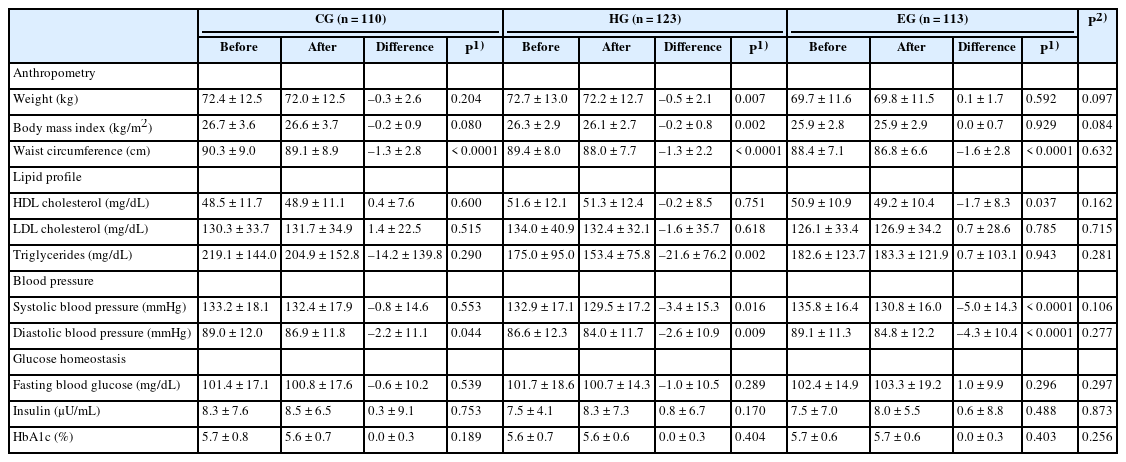
-
Abstract
PDF
- Objectives
This study was conducted to evaluate the effects of a nutrition education program on metabolic syndrome in middle-aged Korean adults.
Methods
A total of 411 Korean adults 30–59 years of age were allocated randomly into three groups: the nutrition education group for promoting Han-sik consumption (HG), the nutrition education group for eating balanced diet (EG), and the control group (CG). The HG and EG received four face-to-face nutrition education sessions over 16 weeks to improve nutritional problems based on the individual’ usual diet. Effectiveness of the program was evaluated with the differences of self-reported dietary behaviors, dietary intakes, anthropometric measurements and biochemical indices between the baseline and the end of the nutrition education program. The changes within groups were analyzed using paired t-test and McNemar test and effectiveness among three groups was analyzed by repeated analysis of variance.
Results
After the nutrition education, the percentages of participants who achieved the recommended food group consumption in the Korean Food Guidance Systems significantly increased in HG (P = 0.022). Body weight (P = 0.007), body mass index (P = 0.002), and triglycerides (P = 0.002) significantly decreased in HG. Waist circumference and diastolic blood pressure decreased in all three groups (P < 0.05).
Conclusions
This study found that tailored nutrition education program for middle aged Korean adults showed beneficial effects on improving dietary behaviors and metabolic syndrome risk factors. Further studies are needed to assess the long-term effects of the nutrition education programs on metabolic syndrome risks. -
Citations
Citations to this article as recorded by- Multicomponent intervention increases nutrition knowledge scores in rural China
Zhifan He, Ming Feng, Lu Li, Jing Li, Xiaohui Li
Scientific Reports.2025;[Epub] CrossRef
- Multicomponent intervention increases nutrition knowledge scores in rural China
- 5,700 View
- 104 Download
- 1 Crossref
- [English]
- Sex differences in health-related quality of life among older Korean adults with type 2 diabetes mellitus: a cross-sectional study
- Hyeonji Jeong, Kyong Park
- Korean J Community Nutr 2024;29(4):336-347. Published online August 31, 2024
- DOI: https://doi.org/10.5720/kjcn.2024.00003
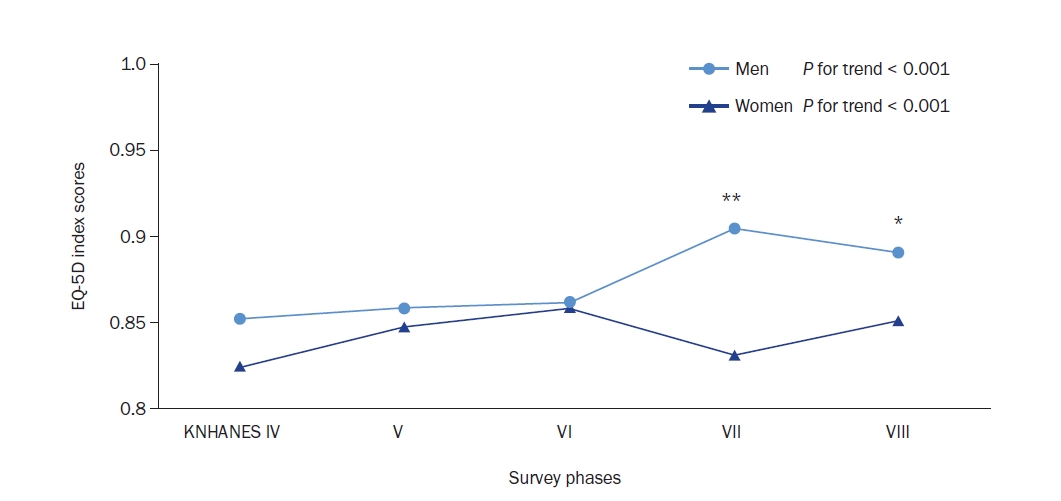
-
Abstract
PDF
- Objectives
This cross-sectional study examined sex differences in Health-Related Quality of Life (HRQoL) among seniors with Type 2 Diabetes Mellitus (T2DM).
Methods
Data from the Korea National Health and Nutrition Examination Survey (2008–2020) were analyzed. The EuroQol-5 Dimensions (EQ-5D), a measure of HRQoL, was used. It comprises five dimensions: mobility, self-care, usual activity, pain/discomfort, and anxiety/depression, each with three levels.
Results
Analysis of 3,826 older adults with T2DM showed a significant increasing trend in the EQ-5D Index from the 4th survey phase onwards (P for trend < 0.001 for both men and women). Men consistently reported higher EQ-5D levels than women across all survey years. Women’s EQ-5D levels remained lower than men’s, maintaining a decade-old disparity (P < 0.05). Men scored significantly higher (P < 0.05) in most EQ-5D domains, except for self-care and anxiety/depression, resulting in a higher total EQ-5D Index (P = 0.001). Increased comorbidities were strongly associated with lower EQ-5D levels in both sexes. Additionally, there was a negative correlation between the EQ-5D Index and refined grain intake for both sexes (P for trend < 0.001), with high-EQ-5D groups consuming fewer refined grains. Women in the high-EQ-5D group consumed more nuts, vegetables, and meat compared to men (P for trend < 0.05).
Conclusions
Our study highlights the sex disparities in HRQoL among older adults with T2DM. The findings suggest the need for tailored treatment guidelines aimed at improving the HRQoL of elderly T2DM patients, with a focus on their sex-specific characteristics. Implementing these tailored guidelines could enhance the HRQoL of older women with T2DM and promote more equitable healthcare outcomes. This underscores the importance of considering sex differences to comprehensively improve the well-being of this population. -
Citations
Citations to this article as recorded by- Sex Differences in Failure to Achieve Geriatric-Adjusted Glycemic Targets Among Older Adults with Type 2 Diabetes in Vietnam
Thanh Le, Phuc Le, Vien Bang, Huan Nguyen
Diabetes, Metabolic Syndrome and Obesity.2026; Volume 19: 1. CrossRef - Staying active, staying satisfied: how subjective well-being shapes ageing after retirement
Gyeong-min Lee, Jiwon Hong, Yu Seong Hwang, Hocheol Lee, Hyunjun Lee, Jae-hyun Kim
BMC Public Health.2026;[Epub] CrossRef - Understanding Gender Disparities in Quality of Life Among Patients With Type 2 Diabetes in Ethiopia: An Institutional‐Based Study
Enguday Demeke Gebeyaw, Girma Deshimo Lema
Lifestyle Medicine.2025;[Epub] CrossRef
- Sex Differences in Failure to Achieve Geriatric-Adjusted Glycemic Targets Among Older Adults with Type 2 Diabetes in Vietnam
- 3,926 View
- 47 Download
- 3 Crossref
- [English]
- Total sugar intake and its contributed foods by age groups in Koreans using the 8th (2019–2021) Korea National Health and Nutrition Examination Survey: a cross-sectional study
- Hyejin Yu, Sang-Jin Chung
- Korean J Community Nutr 2024;29(3):222-233. Published online June 30, 2024
- DOI: https://doi.org/10.5720/kjcn.2024.29.3.222
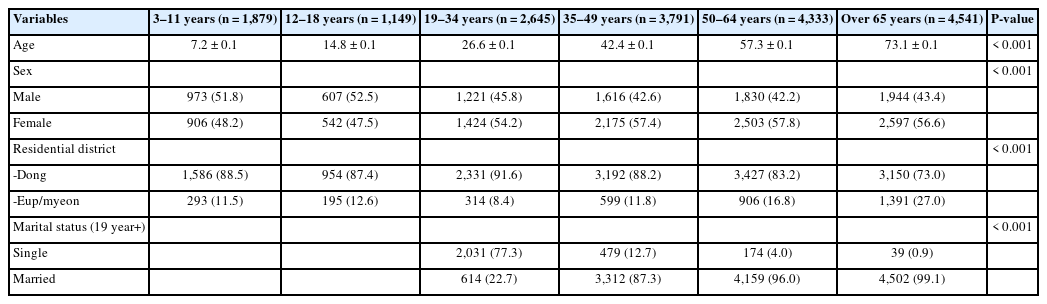
-
Abstract
PDF
- Objectives
This study was conducted to investigate the status of total sugar intake and contributing foods in Korea according to age groups.
Methods
This study used 24-hour dietary recall data from the 8th Korea National Health and Nutrition Examination Survey (2019–2021) to investigate the nutritional and total sugar intake status among Koreans. A total of 18,338 research participants (≥3 years old) were included in this study. To analyze the types of foods contributing to total sugar intake, these foods were categorized into 15 types. Moreover, we examined the total sugar intake and ranked the most consumed foods by age groups (3–11 years, 12–18 years, 19–34 years, 35–49 years, 50–64 years, over 65 years). A survey procedure was employed for statistical analysis.
Results
The energy intake ratio from total sugars was approximately 12%–15%, which was within the recommended range. However, the proportion of individuals consuming total sugar exceeding 20% of their total caloric intake is nearly 20%, raising concerns about excessive sugar consumption. Furthermore, the percentage of participants whose intake of sugar from processed foods exceeded 10% of their total calories was highest in the 12–18 age group at 37.1%, followed by the 3–11 age group at 35.2%, and the 19–34 age group at 34.0%. Carbonated drinks, cola, and cider were the primary foods consumed by children and adolescents (3–18 years old) and young adults (19–34 years old). For middle-aged and older adults, mixed coffee with sugar and cream was a prominent contributor to sugar intake.
Conclusions
This study investigated sugar consumption patterns among Koreans, finding the principal foods contributing to this intake. Identifying these contributors is pivotal, given their potential impact on public health. -
Citations
Citations to this article as recorded by- Psychosocial factors related to the stages of change in reducing sugar intake among adults in Seoul, Korea: a cross-sectional study
Ju Young Lee, Kyung Won Kim
Korean Journal of Community Nutrition.2026; 31(1): 21. CrossRef - Associations of self-efficacy and perceived benefits and barriers with sugar-sweetened beverage consumption patterns: a secondary analysis of the 2017–2020 Nutrition and Health Survey in Taiwan (NAHSIT)
Chi-Hsuan Liu, Chyi-Huey Bai, Te-Chih Wong, Shu-Chen Lee, Yi-Chun Chen
Frontiers in Nutrition.2026;[Epub] CrossRef - Ten-year trends in sugar-sweetened beverages consumption among Koreans, 2014–2023
HyunJi Son, Khongorzul Ganbat, SuJin Song
Nutrition Research and Practice.2026; 20(4): 683. CrossRef
- Psychosocial factors related to the stages of change in reducing sugar intake among adults in Seoul, Korea: a cross-sectional study
- 18,904 View
- 185 Download
- 3 Crossref
- [English]
- Regional differences in protein intake and protein sources of Korean older adults and their association with metabolic syndrome using the 2016–2019 Korea National Health and Nutrition Examination Surveys: a cross-sectional study
- You-Sin Lee, Yoonna Lee
- Korean J Community Nutr 2024;29(3):173-188. Published online June 30, 2024
- DOI: https://doi.org/10.5720/kjcn.2024.29.3.173
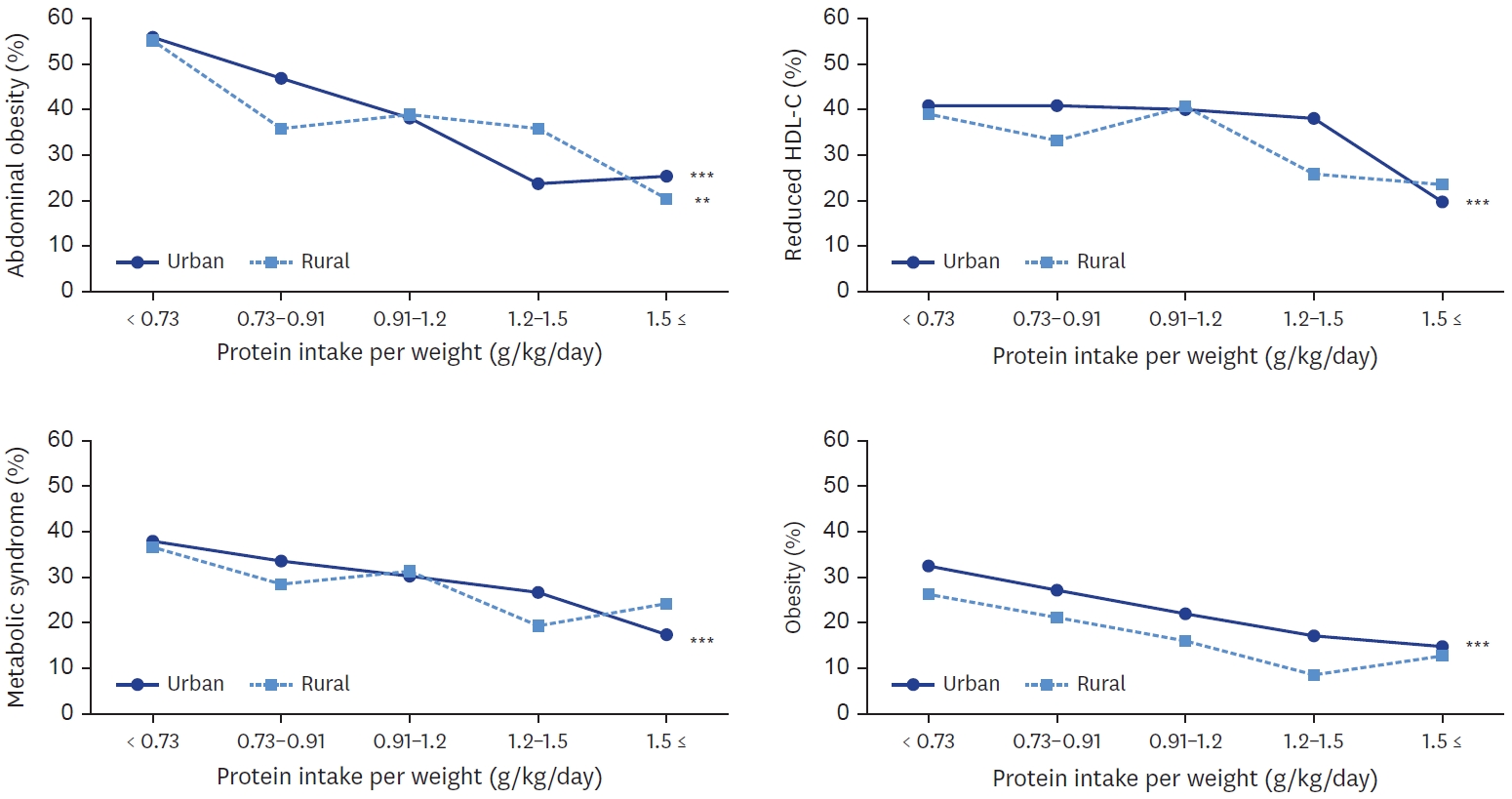
-
Abstract
PDF
- Objectives
The study aim was to analyze the regional differences in dietary protein intake and protein sources of Korean older adults and their association with metabolic syndrome.
Methods
Study participants were 1,721 older adults aged 65 and over who participated in 2016–2019 Korea National Health and Nutrition Examination Survey. Using 24-hour recall dietary intake data, protein intake and their food sources were examined. The association between protein intake and metabolic syndrome, obesity, and abdominal obesity were analyzed by multiple logistic regression.
Results
Total protein and animal protein intakes were higher in urban area (60.0 g, 24.4 g, respectively) than in rural area (54.6 g, 19.6 g, respectively). With increase of protein intake level, animal to total protein proportion was increased in both areas. Total protein and plant protein intake was negatively associated with the risk of obesity, abdominal obesity in both areas. Animal protein intake was negatively associated with the risk of obesity in both areas, and with abdominal obesity only in urban area. In urban area, plant protein intake was also negatively associated with the risks of metabolic syndrome, elevated triglyceride, and reduced high density lipoprotein-cholesterol. In urban area, the risk of metabolic syndrome was decreased when their protein intake was more than 0.91 g/kg and was lowest when their protein intake was more than 1.5 g/kg (P for trend < 0.001).
Conclusions
Korean older adults showed inadequate protein intake and those in rural area showed lower animal protein intake than in urban area. The risk of obesity and metabolic syndrome was decreased with the increase of protein intake level. These findings may help develop effective nutrition support strategy for older adults to reduce regional health disparity. -
Citations
Citations to this article as recorded by- Assessing Nutritional Factors for Metabolic Dysfunction-Associated Steatotic Liver Disease via Diverse Statistical Tools
Yea-Chan Lee, Hye Sun Lee, Soyoung Jeon, Yae-Ji Lee, Yu-Jin Kwon, Ji-Won Lee
Diabetes & Metabolism Journal.2026; 50(1): 178. CrossRef - Longitudinal Deterioration in Nutritional Status Associated With Increased Risk of Sarcopenia in Community‐Dwelling Aged Adults: A Prospective Cohort Study
Ho Jun Lim, Seung Shin Park, Mi Ji Kim, Hak Chul Jang, Sung Hye Kong, Chang Won Won
Journal of Cachexia, Sarcopenia and Muscle.2026;[Epub] CrossRef - Nutritional and environmental implications of incorporating cultivated meat into the Korean diets: a preliminary analysis
Daniel Ryu, Hae Jin Park, Yujin Ahn, Jieun Oh, Yooheon Park
Food Science and Biotechnology.2026; 35(6): 1495. CrossRef - Association between nutrient intake and frailty status in Korean older adults: a cross-sectional study using the 9th (2022–2023) Korea National Health and Nutrition Examination Survey
Hyejin Yu, Sang-Jin Chung
Korean Journal of Community Nutrition.2026; 31(2): 153. CrossRef - Association Between Revised Macronutrient Intake Ratios and Metabolic Syndrome
Min Ju Kim, Jung Hyun Kwak
Nutrients.2026; 18(16): 2706. CrossRef - The association between dietary protein intake and metabolic syndrome: a GRADE-assessed systematic review and meta-analysis of observational studies
Dorsa Ghazvineh, Ali Hosseinpour, Vahid Basirat, Elnaz Daneshzad
Diabetology & Metabolic Syndrome.2025;[Epub] CrossRef - The association between total, animal-based, and plant-based protein intake and cognitive decline in older adults
Maud Peperkamp, Margreet R. Olthof, Marjolein Visser, Hanneke A. H. Wijnhoven
European Journal of Nutrition.2025;[Epub] CrossRef
- Assessing Nutritional Factors for Metabolic Dysfunction-Associated Steatotic Liver Disease via Diverse Statistical Tools
- 13,885 View
- 132 Download
- 7 Crossref
- [English]
- Arterial stiffness index, physical activity and food and nutrient intake: cross-sectional study in adults aged 40 years and older
- Eun-A Kim, Yun-Mi Kim, Eun-Kyung Kim
- Korean J Community Nutr 2024;29(2):81-96. Published online April 24, 2024
- DOI: https://doi.org/10.5720/kjcn.2024.29.2.81
-
Abstract
PDF
- Objectives
This study aimed to investigate arterial stiffness index, physical activity, and food and nutrient intake in middle-aged adults over 40 years when the incidence of cardiovascular disease begins to increase.
Methods
This study included 106 subjects (48 males and 58 females) aged between 40 and 64 years. The arterial stiffness index (brachial-ankle pulse wave velocity [baPWV], and ankle-brachial index [ABI]) were measured using a blood pressure pulse wave testing device. Physical activity was assessed using the Korean version of the Global Physical Activity Questionnaire, and food and nutrient intake was calculated using the Food Frequency Questionnaire.
Results
The mean age of the subjects was 54.4 years. Although the ABI of the subjects was within the normal range, they were divided into tertiles to compare physical activity and food and nutrient intake. In males, the time spent on moderate to vigorous physical activity (MVPA) was significantly higher in T3 (600.6 min/week) than in T1 (304.4 min/week). In females, the time spent in sedentary behavior was significantly lower in T3 (294.5 min/week) than in T1 (472.1 min/week). In addition, the frequency of fish consumption was significantly higher in T3 (1.27 frequency/day) than in T1 (0.64 frequency/day) in females. Polyunsaturated fatty acid (PUFA) and ω-3 fatty acid intake, adjusted for energy intake, were significantly positively correlated with ABI (r = 0.200 and r = 0.218, respectively).
Conclusions
High MVPA (in males), low sedentary behavior (in females), and PUFA and ω-3 fatty acid intake through fish consumption may be associated with low peripheral artery stiffness. Therefore, arteriosclerosis can be prevented through physical activity and proper dietary therapy. -
Citations
Citations to this article as recorded by- Effectiveness of Omega-3 Supplementation on Arterial Stiffness: A Systematic Review
Jacqueline Marlene Ibarra-Peso, Mariel Alejandra Lobos-Farias, Felipe Antonio Albarrán-Torres, Erislandis López-Galán, Miguel Enrique Sánchez-Hechavarria
Medicina.2026; 62(8): 1553. CrossRef
- Effectiveness of Omega-3 Supplementation on Arterial Stiffness: A Systematic Review
- 1,979 View
- 44 Download
- 1 Crossref
- [Korean]
- Effects of watching Mukbang and Cookbang videos on adolescents’ dietary habits and mental health: cross-sectional study using the 18th Korea Youth Risk Behavior Survey
- Seung-Hee Hong
- Korean J Community Nutr 2024;29(2):156-170. Published online April 24, 2024
- DOI: https://doi.org/10.5720/kjcn.2024.29.2.156
-
Abstract
PDF
- Objectives
This study aimed to investigate the association between how often Korean adolescents watch Mukbang and Cookbang videos and their dietary habits.
Methods
Data from the 18th Korea Youth Risk Behavior Survey conducted in 2022 was analyzed for this study. The study included 51,850 middle and high school students and assessed various aspects, including demographics, frequency of watching Mukbang and Cookbang videos per week, dietary habits, health behaviors, and mental health factors.
Results
Nearly a third (29.3%) of Korean adolescents watched Mukbang and Cookbang videos one to four times a week, while 13.5% watched them more than five times weekly. Females, those with lower academic achievement, and those from lower socioeconomic backgrounds were significantly more likely to be frequent viewers (P < 0.001). Increased viewing frequency was associated with poorer dietary habits. Adolescents who watched more frequently were less likely to eat breakfast and consume fruits and milk, while their consumption of fast food, high-caffeine drinks, sugary drinks, and late-night snacks increased (P < 0.001). Higher viewing frequency correlated with increased feelings of stress, depression, and loneliness (P < 0.001). Logistic regression analysis confirmed these associations. More frequent viewers were significantly less likely to eat breakfast (odds ratio (OR), 0.63; 95% confidence interval (CI), 0.58–0.68), and more likely to consume fast food (OR, 1.85; 95% CI, 1.69–2.02), high-caffeine drinks (OR, 1.43; 95% CI, 1.30–1.56), sugary drinks (OR, 1.54; 95% CI, 1.41–1.67), and late-night snacks (OR, 1.37; 95% CI, 1.25–1.51).
Conclusions
Our findings suggest that frequent exposure to Mukbang and Cookbang content is linked to unhealthy dietary habits in adolescents. Educational programs may be necessary to mitigate the potential for these videos to negatively influence dietary choices. -
Citations
Citations to this article as recorded by- Mukbang Addiction and Emotional Eating Among University Students in Saudi Arabia: A Cross-Sectional Study
Fatimah Alenazi, Hend F. Alharbi
Nutrients.2026; 18(15): 2554. CrossRef - Association Between the Consumption of Sugar-Sweetened Beverages and High-Caffeine Drinks and Self-Reported Mental Health Conditions Among Korean Adolescents
Seung Jae Lee, Yeseul Na, Kyung Won Lee
Nutrients.2025; 17(16): 2652. CrossRef - Mediating Effects of Mukbang and Cookbang Viewing on the Association Between SNS Use and Adolescents’ Food-Related Lifestyle
Soo Jin Lee
Journal of the Korean Society of Food Science and Nutrition.2025; 54(11): 986. CrossRef - 성인 남녀의 먹방 시청시간에 따른 식행동에 대한 연구
하얀 남, 복미 정, 은례 전
Korean Journal of Food and Cookery Science.2024; 40(4): 275. CrossRef
- Mukbang Addiction and Emotional Eating Among University Students in Saudi Arabia: A Cross-Sectional Study
- 5,126 View
- 161 Download
- 4 Crossref
- [English]
- Dietary intake and food sources of essential fatty acids among Korean adolescents: a cross-sectional study based on the 2016–2021 KNHANES data
- Enkhgerel Erdenetsetseg, Hye Ran Shin, SuJin Song
- Korean J Community Nutr 2024;29(2):144-155. Published online April 24, 2024
- DOI: https://doi.org/10.5720/kjcn.2024.29.2.144
-
Abstract
PDF
- Objectives
This study evaluated dietary intake and food sources of essential fatty acids in Korean adolescents.
Methods
This study was comprised of 3,932 adolescents (9–18 years) who participated in the 2016–2021 Korea National Health and Nutrition Examination Surveys. Dietary intake and food sources of essential fatty acids, including alpha-linolenic acid (ALA), eicosapentaenoic acid (EPA), docosahexaenoic acid (DHA), and linoleic acid (LA) were evaluated using data obtained from one-day 24-hour dietary recall. The proportions of adolescents consuming ALA, EPA + DHA, and LA above or below the adequate intake (AI) of the 2020 Dietary Reference Intakes for Koreans were calculated. All statistical analyses accounted for the complex sampling design effect and appropriate sample weights.
Results
The mean intakes of ALA, EPA, DHA, and LA among Korean adolescents were 1.29 g/day, 69.6 mg/day, 166.0 mg/day, and 11.1 g/day, respectively. Boys had higher intakes of all essential fatty acids compared to girls. By age group, adolescents aged 15–18 years showed lower intakes of EPA and DHA compared to adolescents in younger age groups. The 9–11-year-old adolescents had lower intakes of ALA and LA than older adolescents. The proportions of adolescents who consumed more than AI were 35.7% for ALA, 30.4% for EPA + DHA, and 41.5% for LA. Adherence to the AI for ALA did not differ by sex or age group, although boys showed a lower adherence to the AI for EPA + DHA than girls. Major food sources for ALA and LA were plant-based oils, mayonnaise, pork, and eggs. Mackerel was the most significant contributor to EPA and DHA intake (EPA, 22.6%; DHA, 22.2%), followed by laver, squid, and anchovy.
Conclusions
The proportion of Korean adolescents who consumed EPA + DHA more than AI was low. Our findings highlight that nutrition education emphasizing an intake of essential fatty acids from healthy food sources is needed among Korean adolescents. -
Citations
Citations to this article as recorded by- Harnessing dietary polyunsaturated fatty acids through gut microbiota to enhance ferroptosis in breast cancer therapy
Yara Adel Haroun, Abdulrahman Abdulla Alzyoud, Mohammad Taha Alizadeh, Nashwa Ahmed Mohamed, Riyad Bendardaf, Sameh S.M. Soliman
Nutrition Research.2025; 141: 10. CrossRef
- Harnessing dietary polyunsaturated fatty acids through gut microbiota to enhance ferroptosis in breast cancer therapy
- 5,279 View
- 76 Download
- 1 Crossref
- [Korean]
- Comparative study on the health and dietary habits of Korean male and female adults before and after the coronavirus disease 2019 pandemic: utilizing data from the 8th Korea National Health and Nutrition Examination Survey (2019–2021)
- Chaemin Kim, Eunjung Kim
- Korean J Community Nutr 2024;29(1):65-80. Published online February 29, 2024
- DOI: https://doi.org/10.5720/kjcn.2024.29.1.65
-
Abstract
PDF
- Objectives
This study aims to compare changes in physical factors, health behaviors, eating habits, and nutritional intake among Korean male and female adults over a period of three years (2019–2021) before and after the outbreak of coronavirus disease 2019 (COVID-19).
Methods
This study utilized raw data from the 8th Korea National Health and Nutrition Examination Survey (2019–2021). The participants in this study included 6,235 individuals in 2019, 5,865 individuals in 2020, and 5,635 individuals in 2021. Individuals whose daily energy intake was less than 500 kcal or exceeded 5,000 kcal were excluded from the study.
Results
In comparison to 2019, overweight/obesity rates, weight, waist circumference, weekend sleep hours, and resistance exercise days/week increased in both male and female during the COVID-19 pandemic. Regarding eating habits, the proportions of people skipping breakfast, not eating out, consuming health supplements, and recognizing nutritional labels increased in 2020 and 2021, whereas the rate of skipping dinner decreased. Total energy intake has continued to decrease for the two years since 2019. A comparison of nutrient intake per 1,000 kcal before and after the outbreak of COVID-19 revealed that intake of nutrients, including protein, phosphorus, iron, vitamin A, riboflavin, and niacin increased, while folic acid intake decreased. In male, calcium, phosphorus, riboflavin, and niacin intakes increased, whereas iron, vitamin C, and folic acid intakes decreased. In female, phosphorus, iron, vitamin A, and riboflavin intake increased significantly, while protein and niacin intake decreased significantly.
Conclusions
After COVID-19, the obesity rate, breakfast skipping rate, health supplement intake, and nutritional label use increased, while the frequency of eating out, dinner skipping rate, and total energy intake decreased. These environmental changes and social factors highlight the need for nutritional education and management to ensure proper nutritional intake and reduce obesity rates in the post-COVID-19 era. -
Citations
Citations to this article as recorded by- Status of Use of Protein Supplement Products according to the Health Concerns of Adults in Their 20s and 30s
Cho-In Oh, Bok-Mi Jung
Journal of the East Asian Society of Dietary Life.2025; 35(1): 9. CrossRef - A study on regional differences in dietary behaviors and satisfaction in Korea focusing on urban and rural comparisons: a cross-sectional study
Jong-Youn Rha, Sohyun Kim, Hae-Rang Lee, Juhyeon Kil
Korean Journal of Community Nutrition.2025; 30(2): 140. CrossRef - How Did the Dietary Behavior of Older Korean Adults Change During the COVID-19 Pandemic?
Yong-Seok Kwon, Dasol Kim, Hee-Sook Lim
Nutrients.2025; 17(12): 1973. CrossRef - Intake of energy and macronutrients according to household income among elementary, middle, and high school students before and during the COVID-19 pandemic: a cross-sectional study
Chae-Eun Jeong, Heejin Lee, Jung Eun Lee
Korean Journal of Community Nutrition.2024; 29(3): 234. CrossRef - 성인 남녀의 먹방 시청시간에 따른 식행동에 대한 연구
하얀 남, 복미 정, 은례 전
Korean Journal of Food and Cookery Science.2024; 40(4): 275. CrossRef
- Status of Use of Protein Supplement Products according to the Health Concerns of Adults in Their 20s and 30s
- 7,163 View
- 98 Download
- 5 Crossref
- [Korean]
- Association of ultra-processed food with diabetes and impaired fasting glucose in elderly populations (urban and rural): a cross-sectional study
- Seung Jae Lee, Mi Sook Cho
- Korean J Community Nutr 2024;29(1):51-64. Published online February 29, 2024
- DOI: https://doi.org/10.5720/kjcn.2024.29.1.51
-
Abstract
PDF
- Objectives
This study examined the association between ultra-processed food (UPF) consumption and chronic diseases in elderly Koreans.
Methods
Data from the 2019–2021 Korea National Health and Nutrition Examination Survey were analyzed. Dietary intake and UPF consumption were assessed using the NOVA food classification based on 24-hour recall data from 3,790 participants (aged 65+ years). Participants were divided into 4 groups based on the quartile of energy intake from UPFs. Regions were classified as urban or rural. Multivariable logistic regression was employed to estimate the adjusted odds ratios (AORs) with 95% confidence intervals (CIs) after controlling for potential confounders.
Results
Among the participants, 71.3% resided in urban and 28.7% in rural areas. Compared to the urban elderly, rural participants tended to be older, have lower education and income levels, be more likely to live in single-person households, and have a higher smoking rate (P < 0.05). Urban elderly consumed more UPFs daily (146.1 g) compared to rural residents (126.6 g; P < 0.05). “Sugar-sweetened beverages” were the most consumed category in both regions. “Sweetened milk and its products” and “traditional sauces” were prominent in urban areas, while rural elderly consumed more “traditional sauces” and “distilled alcoholic beverages.” Rural areas also had a higher carbohydrate-to-calorie ratio than urban areas. Compared to the lowest quartile of UPF intake, the highest quartile was significantly associated with impaired fasting glucose only in rural areas (AOR, 1.48; 95% CI, 1.00–2.19; P for trend = 0.0014). No significant associations were observed for diabetes in either urban or rural areas.
Conclusions
This study suggests that high intake of UPFs is associated with increased odds of impaired fasting glucose in rural elderly. Further research is needed to elucidate the specific negative health effects of UPFs in different populations, and targeted efforts should promote healthy diets in both urban and rural areas. -
Citations
Citations to this article as recorded by- Ultra-Processed Foods and Cardiometabolic Health: A Review of Current Evidence
Nazlıcan Erdoğan Gövez, Eda Köksal
Current Nutrition Reports.2025;[Epub] CrossRef - 노인의 사회활동 참여 정도와 영양상태와의 관계
지수 백, 영란 허
Korean Journal of Food and Cookery Science.2025; 41(6): 418. CrossRef - A Study of the Chemosensory Properties of Commercial Processed Foods Using Electronic Sensors
Hyeonjin Park, Younglan Ban, Sojeong Yoon, Hyangyeon Jeong, Seong Jun Hong, Hee Sung Moon, Se Young Yu, Hyun-Wook Kim, Kyeong Soo Kim, Eun Ju Jeong, Eui-Cheol Shin
Journal of the Korean Society of Food Science and Nutrition.2024; 53(8): 805. CrossRef - Analysis of Flavor and Taste Patterns of Various Processed Animal Foods: Using the Electronic Tongue and Nose
Hee Sung Moon, Se Young Yu, Younglan Ban, Hyeonjin Park, Sojeong Yoon, Na Eun Yang, Seong Jun Hong, Hyun-Wook Kim, Kyeong Soo Kim, Eun Ju Jeong, Eui-Cheol Shin
Journal of the Korean Society of Food Science and Nutrition.2024; 53(12): 1267. CrossRef
- Ultra-Processed Foods and Cardiometabolic Health: A Review of Current Evidence
- 3,206 View
- 101 Download
- 4 Crossref
- [Korean]
- Sustainable diets: a scoping review and descriptive study of concept, measurement, and suggested methods for the development of Korean version
- Sukyoung Jung
- Korean J Community Nutr 2024;29(1):34-50. Published online February 29, 2024
- DOI: https://doi.org/10.5720/kjcn.2024.29.1.34
-
Abstract
PDFSupplementary Material
- Objectives
Transformation through a sustainable food system to provide healthy diets is essential for enhancing both human and planetary health. This study aimed to explain about sustainable diets and illustrate appropriate measurement of adherence to sustainable diets using a pre-existing index.
Methods
For literature review, we used PubMed and Google Scholar databases by combining the search terms “development,” “validation,” “sustainable diet,” “sustainable diet index,” “planetary healthy diet,” “EAT-Lancet diet,” and “EAT-Lancet reference diet.” For data presentation, we used data from National Health and Nutrition Examination Survey, 2017–2018, among adults aged 20 years and older (n = 3,920). Sustainable Diet Index-US (SDI-US), comprising four sub-indices corresponding to four dimensions of sustainable diets (nutritional quality, environmental impacts, affordability, and sociocultural practices), was calculated using data from 24-hour dietary recall interview, food expenditures, and food choices. A higher SDI-US score indicated greater adherence to sustainable diets (range: 4–20). This study also presented SDI-US scores according to the sociodemographic status. All analyses accounted for a complex survey design.
Results
Of 148 papers, 16 were reviewed. Adherence to sustainable diets fell into 3 categories: EAT-Lancet reference diet-based (n = 8), Food and Agriculture Organization (FAO) definition-based (n = 4), and no specific guidelines but including the sustainability concept (n = 4). Importantly, FAO definition emphasizes on equal importance of four dimensions of diet (nutrition and health, economic, social and cultural, and environmental). The mean SDI-US score was 13 out of 20 points, and was higher in older, female, and highly educated adults than in their counterparts.
Conclusions
This study highlighted that sustainable diets should be assessed using a multidimensional approach because of their complex nature. Currently, SDI can be a good option for operationalizing multidimensional sustainable diets. It is necessary to develop a Korean version of SDI through additional data collection, including environmental impact of food, food price, food budget, and use of ready-made products. -
Citations
Citations to this article as recorded by- Association of the planetary health diet score with obesity, high blood pressure, dyslipidemia, and cardiometabolic risk markers: Using data from the 2016–2020 Korea National Health and Nutrition Examination Survey
Ujin Lee, Eugene Kang, Bomi Kim, Diana Shubekova, Adiyasuren Dookhuu, Heejin Lee, Jung Eun Lee, Minji Kang, Jaspinder Kaur
PLOS One.2026; 21(6): e0350821. CrossRef - How Do the Indices based on the EAT-Lancet Recommendations Measure Adherence to Healthy and Sustainable Diets? A Comparison of Measurement Performance in Adults from a French National Survey
Agustín R Miranda, Florent Vieux, Matthieu Maillot, Eric O Verger
Current Developments in Nutrition.2025; : 104565. CrossRef - Behavioral intention toward planetary health diet among adult users of government worksite cafeterias in Seoul, South Korea: a mixed-methods study based on the theory of planned behavior and focus groups interviews
Ji-Won Kang, Su-Jin Lee, Sil-Ah Kim, Ji-Yun Hwang
Korean Journal of Community Nutrition.2025; 30(3): 224. CrossRef - Trends in sustainable dietary patterns in United States adults, 2007-2018
Sukyoung Jung, Heather A. Young, Barbara H. Braffett, Samuel J. Simmens, Eunice Hong Lim Lee, Cynthia L. Ogden
Epidemiology and Health.2025; 47: e2025045. CrossRef
- Association of the planetary health diet score with obesity, high blood pressure, dyslipidemia, and cardiometabolic risk markers: Using data from the 2016–2020 Korea National Health and Nutrition Examination Survey
- 4,081 View
- 106 Download
- 4 Crossref
- [English]
- Nutrition education programs necessary for social welfare facilities for persons with disabilities: a cross-sectional study
- Jinkyung Kim, Min-Sun Jeon
- Korean J Community Nutr 2024;29(1):1-15. Published online February 29, 2024
- DOI: https://doi.org/10.5720/kjcn.2024.29.1.1
-
Abstract
PDF
- Objectives
This study investigated the need for nutrition education aimed at improving the health of residents and users of social welfare facilities for persons with disability and aimed to provide basic information for developing a nutrition education program that meets the needs of the field.
Methods
Altogether, 249 employees working in social welfare facilities for people with disabilities were included in the study. Data on the health status of residents/users, meal management, nutritional education, nutritional education needs, and awareness of nutritional education were obtained through online surveys. A descriptive analysis was conducted to analyze the demographic characteristics, needs, and perceptions of the respondents, and independent t-tests and χ2 tests were performed to analyze and compare the differences between residential and daycare facilities.
Results
The majority of residents/users of social welfare facilities for persons with disabilities have developmental disabilities. When educating residents with residents/users of social welfare facilities, ‘personal hygiene’ was the most necessary topic, followed by ‘obesity management’ education. Regarding the methods of providing education, face-to-face lectures demonstrated a high demand. They responded that when nutrition education experts provide nutrition education to people with disabilities, they must understand ‘the physical characteristics of persons with disabilities’ and have the ability to determine appropriate nutrition for such people. The most appropriate nutrition program training would be twice a year, lasting 30 min to 1 h per training session.
Conclusions
It will present a direction for operating a nutrition education program for persons with disabilities that meets their needs of social welfare facilities and ultimately contribute to the establishment and activation of nutrition education tailored to welfare facilities for such individuals in Korea. -
Citations
Citations to this article as recorded by- Development and applicability evaluation of a nutrition education program for residents and users of disability social welfare facilities in Korea: a mixed-methods study
Jin-kyung Kim, Kyoung-min Lee, Min-sun Jeon
Korean Journal of Community Nutrition.2025; 30(1): 64. CrossRef
- Development and applicability evaluation of a nutrition education program for residents and users of disability social welfare facilities in Korea: a mixed-methods study
- 3,509 View
- 49 Download
- 1 Crossref
 First
First Prev
Prev


