
 KSCN
KSCN
Search
- Page Path
- HOME > Search
Research Articles
- [Korean]
- Maternal home meal replacement use and attitudes, and young children’s preferences by usage frequency in meals for young children: a cross-sectional study
- Bo-Yeon Kim, Mi-Hyun Kim, Jee-Young Yeon
- Korean J Community Nutr 2025;30(2):163-172. Published online April 29, 2025
- DOI: https://doi.org/10.5720/kjcn.2025.00066
-
 Abstract
 PDF
PDF - Objectives
With the increase in women’s workforce participation and changing family eating habits, home meal replacements (HMRs) have become more prevalent. However, research on how mothers incorporate HMR into meals of young children remains limited. This study examined mothers’ attitudes toward and use of HMR, as well as their association with young children’s HMR preferences.
Methods
A survey was conducted between June 1 and July 3, 2020, involving 337 mothers of 5-year-old children in Sejong, South Korea. The questionnaire assessed mothers’ perceptions of HMR, consumption patterns, and their children’s preferences for HMR.
Results
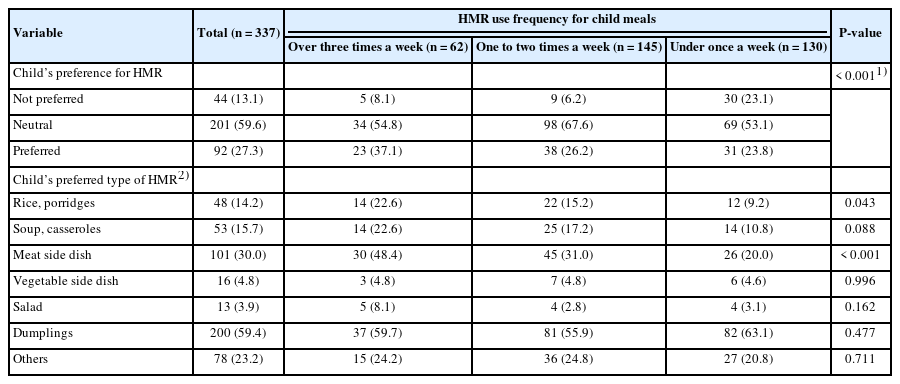
The average age of participating mothers was 38.3 years, with 93.2% living in nuclear families. Full-time homemakers constituted 40.1% of the respondents and showed lower HMR usage among them. HMR was primarily consumed as late-night snacks, side dishes, and dinners, with large discount stores (81.6%) being the primary purchase location. The high HMR consumption group exhibited more positive attitudes toward HMR (P < 0.001). HMR types varied in consumption frequency. Among ready-to-eat foods, kimbap (38.3%) was the most common, followed by meat side dishes (11.3%) and salads (11.0%). Among the heat-and-eat items, dumplings were the most frequently consumed. Simple cooking kits for Korean street food were used by 56.5% of mothers in the high-frequency HMR group, compared to 38.6% and 29.2% in the lower consumption groups (P < 0.01). Children’s preference for HMR was significantly associated with maternal HMR consumption frequency (P < 0.001). The most preferred items among children were rice porridge (P < 0.05) and meat side dishes (P < 0.001).
Conclusion
Higher maternal HMR consumption was associated with increased acceptance by children. Mothers who frequently used HMR exhibited more positive attitudes toward its palatability, convenience, nutritional value, and variety. While HMR offers diverse and tasty meal options, overreliance on processed foods warrants caution. Importantly, high HMR consumption during early childhood may influence long-term dietary behaviors, including a continued preference for HMRs.
- 2,295 View
- 44 Download

- [English]
- Factors influencing consumers’ continuance intention in online grocery shopping: a cross-sectional study using application behavior reasoning theory
- Binglin Liu, Min A Lee
- Korean J Community Nutr 2024;29(3):199-211. Published online June 30, 2024
- DOI: https://doi.org/10.5720/kjcn.2024.29.3.199
-
Abstract
PDF
- Objectives
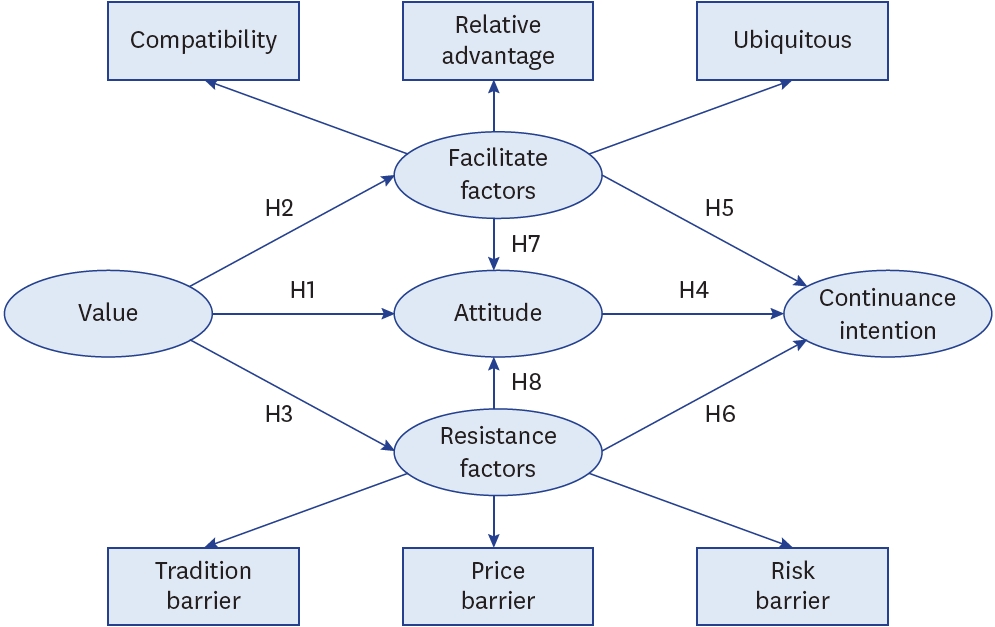
Online grocery shopping has gained traction with the digital transformation of retail. This study constructs a behavioral model combining values, attitudes, and reasons for behavior—specifically, facilitators and resistance—to provide a more novel discussion and further understand the relative influences of the various factors affecting continuance intention in online grocery shopping.
Methods
Data were collected through an online questionnaire from consumers who had engaged in online grocery shopping during the past month in Seoul, Korea. All collected data were analyzed using descriptive analysis, and model validation was performed using partial least squares structural equation modeling.
Results
Continuance intention is primarily driven by facilitative factors (compatibility, relative advantage, and ubiquity). Attitude can also positively influence continuance intention. Although resistance factors (price, tradition, and risk) do not significantly affect continuance intention, they negatively affect attitude. Values significantly influence consumers’ reasoning processes but not their attitude.
Conclusions
These findings explain the key influences on consumers’ online grocery shopping behavior in Seoul and provide additional discussion and literature on consumer behavior and market management. To expand the online grocery market, consumers should be made aware of the potential benefits of the online channel; the barriers they encounter should be reduced. This will help sustain online grocery shopping behavior. Furthermore, its positive impact on attitude will further strengthen consumers’ continuance intention. -
Citations
Citations to this article as recorded by
- Online Food Purchase Frequency Across Generations: Associations with Healthy Eating, Environmental Concern, and Economic Decision Indicators
Robert Wolny, Marcin Awdziej, Magdalena Jaciow, Ilona Lipowska, Marcin Lipowski, Jolanta Tkaczyk
Nutrients.2026; 18(16): 2730. CrossRef - Modelling the mass adoption potentials of fashion-augmented reality among the young consumers: evidence from an emerging economy
Mohima Akther, Mohammad Nurul Hassan Reza, Abdullah Al Mamun, Norzalita Abd Aziz, Marvello Yang
Journal of Fashion Marketing and Management: An International Journal.2025; 29(3): 459. CrossRef
- Online Food Purchase Frequency Across Generations: Associations with Healthy Eating, Environmental Concern, and Economic Decision Indicators
- 9,928 View
- 115 Download
- 2 Crossref
- [Korean]
- Development and Effectiveness Evaluation of the STEAM Education Program on Food Groups for Kindergarteners
- Jinkyeong Ahn, Seyoen Kim, Donghyuk Kim, Jounghee Lee
- Korean J Community Nutr 2022;27(5):361-372. Published online October 31, 2022
- DOI: https://doi.org/10.5720/kjcn.2022.27.5.361
-
Abstract
PDF
- Objectives
The purpose of this study was to explore the effectiveness of the STEAM (Science, Technology, Engineering, Arts, and Mathematics) education program on the use of specific food groups in improving nutrition-related knowledge and attitude, dietary behavior, creative problem solving, and STEAM attitude.
Methods
We selected two classes at a kindergarten in Jeollabuk-do, South Korea. A total of 44 kindergarteners from the two classrooms participated in this study. The experimental group and the control group were formed with 22 students each. The experimental group attended 11 STEAM classes on the use of the grain, fruit, and milk food groups. First, we performed the paired t-test to examine changes from pre-to-post classes for both groups. Then, we used ANCOVA to compare post-test scores between the experimental and control groups with the adjustment of pre-test scores.
Results
The results demonstrate that the STEAM education program on the use of the food groups significantly improved (1) nutrition-related knowledge and attitude, and dietary behavior (P < 0.001), (2) creative problem solving (P < 0.001), and (3) STEAM attitude (P < 0.001) in the intervention group when compared with the control group.
Conclusions
The STEAM education program on the use of food groups is effective in enhancing nutrition knowledge and attitude, dietary behavior, creative problem solving, and STEAM attitudes among kindergarten students. -
Citations
Citations to this article as recorded by- Development and evaluation of play-based food and nutrition education materials for early childhood through sensory experiences: a pre-post observational study
Hyunjoo Ryou, Sohyun Park, Jieun Oh, Ji-Yun Hwang
Korean Journal of Community Nutrition.2025; 30(6): 471. CrossRef
- Development and evaluation of play-based food and nutrition education materials for early childhood through sensory experiences: a pre-post observational study
- 2,141 View
- 57 Download
- 1 Crossref
- [English]
- Relationship between Dietary Habits, Life Stress and Nutrition Knowledge of High School Students in Gyeonggi Area
- Kyung Ae Park, Hongmie Lee, Kyunghee Song
- Korean J Community Nutr 2020;25(2):126-136. Published online April 30, 2020
- DOI: https://doi.org/10.5720/kjcn.2020.25.2.126
-
Abstract
PDF
- Objectives
This study was performed to examine dietary habits, life stress, and nutrition knowledge among high school students in Gyeonggi area.
Methods
A total of 431 high school students (210 males, 221 females) in Gyeonggi area participated in this study from November to December of 2011. The study was a questionnaire-based survey that included dietary habits, dietary attitudes, life stress, and nutrition knowledge.
Results
Body weight, height, and body mass index were all higher in male students than in female students (P < 0.001, respectively). For dietary habits, the average score (P < 0.01) and scores for considering combination of food groups (P < 0.05), eating green and orange vegetables (P < 0.05), eating meat, fish, eggs, or beans everyday (P < 0.05), drinking milk (P < 0.001), and eating seaweed (P < 0.01) were higher in male students than in female students. For dietary attitudes, the average score (P < 0.05) and scores for the five items were significantly different between male and female students. Male students showed a significantly lower nutrition knowledge score than female students (P < 0.05). Life stress score of students largely was attributable to academic factors, and female students showed higher stress score for academic, personal, and surrounding environmental (P < 0.05, respectively) factors than male students. Dietary habit score (P < 0.01) and nutrition knowledge score (P < 0.05) in female students as well as dietary attitude score (P < 0.05) in male students were negatively correlated with life stress score. Dietary habit scores in male and female students were positively correlated with dietary attitude score (P < 0.01, respectively). Need for nutrition education was significantly higher in female students than in male students (P < 0.05).
Conclusions
This study provides basic information on dietary habits, dietary attitudes, life stress, and nutrition knowledge according to sex and suggests gender-specific practical nutrition education programs to address undesirable dietary habits and attitudes in students with higher stress levels. -
Citations
Citations to this article as recorded by- Application and effectiveness of a nutrition education program based on the 2020 Dietary Reference Intakes for Koreans for undergraduates in Gyeongsangnam-do and Gyeonggi-do
Mijoo Choi, Hyein Jung, Nayoung Kim, Sangah Shin, Taejung Woo, Eunju Park
Journal of Nutrition and Health.2023; 56(6): 730. CrossRef - Relationship among Health Interest, Depression and Dietary Habits of College Students according to Sex in Seoul and Gyeonggi Areas
Kyung Ae Park, Jiwon Kim, Onjeong Cho, Kyunghee Song
Journal of the East Asian Society of Dietary Life.2021; 31(4): 213. CrossRef
- Application and effectiveness of a nutrition education program based on the 2020 Dietary Reference Intakes for Koreans for undergraduates in Gyeongsangnam-do and Gyeonggi-do
- 1,802 View
- 26 Download
- 2 Crossref
Original Articles
- [English]
- Effects of Educational Intervention about Breastfeeding on University Students' Knowledge and Attitudes toward Breastfeeding: Focusing on Gender Differences
- Jo Yoon Lee
- Korean J Community Nutr 2018;23(1):1-12. Published online February 28, 2018
- DOI: https://doi.org/10.5720/kjcn.2018.23.1.1
-
Abstract
PDF
- OBJECTIVES
The purpose of this study was to examine the impact of a targeted, practical education intervention on university students' knowledge and attitudes toward breastfeeding.
METHODS
A university curricular intervention was designed for students to increase their knowledge and positive attitude toward breastfeeding issues. The participants attended a breastfeeding education lectures two hours of weekly for fifteen weeks in university; 61 students (female, n=31 and male, n=30) participated. The pre- and post-measurements included future breastfeeding intention, knowledge, attitude and perceived control beliefs scores based on the results of a questionnaire.
RESULTS
The statistical analysis results revealed a significant difference in the pretest and posttest scores (0.57 to 5.10 points, p < 0.001) in regard to the students' breastfeeding knowledge. For female students, significant differences were observed in the future breastfeeding intention (p < 0.05), knowledge (p < 0.001), and attitudes towards breastfeeding (p < 0.05) between the pretest and posttest scores. For male students, there were no significant differences in the future breastfeeding intention, attitudes towards breastfeeding, and perceived control beliefs scores after the breastfeeding education lecture.
CONCLUSIONS
This study showed that the implementation of practical breastfeeding educational interventions helped improve university students' knowledge and attitudes toward breastfeeding. In summary, despite the limitations, it is necessary to pay more attention to improving students' knowledge and attitudes towards breastfeeding through university curricula.
- 1,656 View
- 7 Download
- [English]
- A Study on Sodium-related Dietary Attitude and Behaviors According to Sodium-related Nutrition Knowledge of University Students
- Mi Hyun Kim, Jee Young Yeon, Jong Wook Kim, Jae Eon Byun, So Young Bu, Mi Kyeong Choi, Yun Jung Bae
- Korean J Community Nutr 2015;20(5):327-337. Published online October 31, 2015
- DOI: https://doi.org/10.5720/kjcn.2015.20.5.327
-
Abstract
PDF
- OBJECTIVES
Dietary life is closely associated with dietary attitude and diet-related knowledge. Particularly, dietary habit such as sodium intake can be affected by various dietary behaviors such as food choices, dietary attitude toward salty food and a preference for salty taste. The purpose of this study was to assess sodium-related nutrition knowledge and to identify sodium-related attitude and behaviors according to the level of sodium-related knowledge of university students.
METHODS
Anthropometric measurements were provided by 408 students who participated in this study. The study participants answered questionnaires to provide information on general dietary behaviors, sodium-related dietary attitude and other behavioral factors. A total score of nutrition knowledge was used to categorize study participants in to two groups, namely, low level in sodium-related knowledge (LNaK) or high level in sodium-related knowledge (HNaK) and the attitude and the behaviors of students toward sodium intake were compared between these two groups.
RESULTS
The ratio of female students in HNaK group was higher than that in the LNaK group. HNaK group had a higher score in checking nutrition label of processed food than the LNaK group. Total score of sodium-related attitude and behaviors of HNaK group were 34.81 and 32.75, respectively and these scores were significantly higher than that of the LNaK group whose scores were 32.57 and 30.57, respectively. Total energy intake was not different between two groups but the intakes of calcium, vitamin B2 and folate were higher in HNaK group than in the LNaK group. Correlation analysis adjusted for age and gender revealed that total score of sodium-related nutrition knowledge was positively correlated with total score of sodium-related attitude and behaviors.
CONCLUSIONS
In conclusion, students who had high level of sodium-related nutrition knowledge had desirable attitude and behaviors toward sodium intake and these results can be considered in nutrition education for university students. -
Citations
Citations to this article as recorded by- Maternal nutrition intervention focused on the adjustment of salt and sugar intake can improve pregnancy outcomes
Yuri Seo, Yeon Seon Jeong, Kyung‐A Koo, Jeong In Yang, Yoo Kyoung Park
Food Science & Nutrition.2020; 8(7): 3900. CrossRef - Effect of Protection Motivation Factors on Behavioral Intention to Reduce Sodium Intake among University Students in Gyeongnam and Busan
Soo-Hyun Jang, Eunju Yoon
The Korean Journal of Food And Nutrition.2016; 29(1): 104. CrossRef
- Maternal nutrition intervention focused on the adjustment of salt and sugar intake can improve pregnancy outcomes
- 2,118 View
- 7 Download
- 2 Crossref
- [English]
- A Comparison of Salty Taste Assessment, Dietary Attitude and Dietary Behavior among Adult and Senior Women by Region and by Age in Korea
- Lin Jiang, Yun Young Jung, Hyung Sook Kim, Gi Seon Nam, Jin Sook Yun, Jong Wook Kim, Yeon Kyung Lee
- Korean J Community Nutr 2015;20(2):109-119. Published online April 30, 2015
- DOI: https://doi.org/10.5720/kjcn.2015.20.2.109
-
Abstract
PDF
- OBJECTIVES
The purpose of this study was to compare and analyze the results of salty taste assessment, dietary attitudes, and dietary behaviors among adult and senior women by region and by age. The results generated from this was expected to provide fundamental data for implementing a nationwide salt reduction education program.
METHODS
The salty taste assessment tool was applied to 4,064 subjects from 15 areas in Korea. Also, a survey of dietary attitude and dietary behavior related to salt intake was conducted for all subjects participated in this study.
RESULTS
The salty taste assessment scores by region and by age were the lowest in capital (p < 0.01) and was highest among the 70+ year age group (p < 0.01). The dietary attitude scores and dietary behavior scores showed that Gyeongsang was the highest (p < 0.001) and the capital was the lowest. The dietary attitude scores were highest at 20&30's followed by 40's and 70's group (p < 0.001). Dietary behavior scores showed that 20's~30's and 40's groups were higher than the other age groups (p < 0.001). The score of 'I like kimchi' was 3.46 +/- 0.88, which was the highest among 10 dietary behavior questions. The score of 'I eat a lot of kimchi' was 3.30 +/- 0.90, which was the highest among 10 dietary behavior questions related to salt intake. The scores of salty taste assessment had significant positive correlations between the scores of dietary attitude (p < 0.001), dietary behavior (p < 0.001) and self-awareness (p < 0.001).
CONCLUSIONS
Based on the results of salty taste assessment, we observed a tendency that older people and regions except the capital had higher preference for salty taste. Our results suggested the necessity for a nationwide salty reduction education program tailored for regions and for different age groups. -
Citations
Citations to this article as recorded by- Food and dish group diversity on menus of daycare centers provided by Center for Children’s Foodservice Management in Korea: a descriptive study
Youn-Rok Kang, Kyeong-Sook Lim, Hyung-Sook Kim
Korean Journal of Community Nutrition.2023; 28(6): 449. CrossRef - A Study on the Relationship between Metabolic Syndrome and Sodium among the Clients of the General Medical Examination Center
Mi-Jung Yun, Young-Mi Kim
Journal of the East Asian Society of Dietary Life.2018; 28(6): 404. CrossRef - Correlations Among Threshold and Assessment for Salty Taste and High-salt Dietary Behavior by Age
Lin Jiang, Yun-Young Jung, Yeon-Kyung Lee
Korean Journal of Community Nutrition.2016; 21(1): 75. CrossRef - Nutrition Knowledge, Dietary Attitude, and Dietary Behavior Related to Salt According to the Dietary Lifestyle Groups
Hei-Ryeo Yoon, Nam-E Kang, Juhyeon Kim
Korean Journal of Food & Cookery Science.2016; 32(3): 333. CrossRef
- Food and dish group diversity on menus of daycare centers provided by Center for Children’s Foodservice Management in Korea: a descriptive study
- 1,922 View
- 1 Download
- 4 Crossref
- [English]
- Comparisons of Consumption Attitude toward Vegetables and Fragrance Vegetables Preference among Primary School to University Students in Gyeongbuk Area
- Yun Kyeong Lee, Youngnam Kim
- Korean J Community Nutr 2014;19(3):223-230. Published online June 30, 2014
- DOI: https://doi.org/10.5720/kjcn.2014.19.3.223
-
Abstract
PDF
- OBJECTIVES
The purpose of this study was to provide the preliminary data for dietary education to increase students' vegetables intake.
METHODS
The attitude of vegetables consumption (5-Likert scale), preference score (7-Likert scale) and eating frequency (5-Likert scale) of 9 fragrance vegetables were investigated by survey questionnaire. A total of 370 students enrolled in primary, middle, high schools, and university participated in the study and data were analyzed by the SPSS WIN (ver 12.0).
RESULTS
About 40% of those surveyed answered that they do not eat some kinds of foods and 16% of students do not eat vegetables, the most unfavorable foods. The students in all groups (primary 2nd and 5th, middle and high school, university students) answered that they liked vegetables with the highest score in university students, and they did not often eat fragrance vegetables. Lower age student group, especially primary school 2nd showed more positive attitudes of eating challenge toward no experience, bad taste, and dislike but nutritious vegetable foods. The most important factor of vegetable preference was taste, the biggest reason of both like and dislike. Only 4 students designated nutrition as for vegetable dislike reason, means that all students knew about the nutritional importance of vegetables. It was shown that the color and flavor of the vegetables act as dislikable reason rather than likable reason. The significant correlations between preference score and intake frequency of fragrance vegetables were confirmed, and the younger the students the greater the correlation coefficient.
CONCLUSIONS
Thus providing more chance to experience vegetables, such as fragrance vegetables and education about the importance of balanced diet will be an effective way of increasing vegetables intake, and the younger the students the greater the education effect. -
Citations
Citations to this article as recorded by- Analysis of socio-demographic and dietary factors associated with fruit and vegetable consumption among Korean adolescents: use of data from the 7th and 8th Korea National Health and Nutrition Examination Survey (2016–2019)
Bokyeong Yun, Seunghee Kye
Journal of Nutrition and Health.2024; 57(3): 292. CrossRef - Factors affecting preference of vegetable in elementary school students: based on social cognitive theory
Su Hyeon Cha, Ho Kyung Ryu
Journal of Nutrition and Health.2019; 52(3): 285. CrossRef - Relative Importance of Selection Attributes in Garlic-Based Health Functional Food Using Conjoint Analysis
Jisun Lee
Journal of the East Asian Society of Dietary Life.2019; 29(4): 336. CrossRef - Estimation of Usual Intake and Assessment of Nutrient Intake for Korean Adolescents: Analysis of the 2010-2012 Korea National Health and Nutrition Examination Survey
Meeyoung Kim, Jihyun Yoon
Family and Environment Research.2017; 55(4): 385. CrossRef - The Differences in Preference for Vegetables among Primary School to University Students in Gyeongbuk Area
Yun Kyeong Lee, Youngnam Kim
Korean Journal of Community Nutrition.2014; 19(5): 415. CrossRef
- Analysis of socio-demographic and dietary factors associated with fruit and vegetable consumption among Korean adolescents: use of data from the 7th and 8th Korea National Health and Nutrition Examination Survey (2016–2019)
- 2,098 View
- 1 Download
- 5 Crossref
- [English]
- Body Image, Risk of Disturbed Eating Attitudes and Weight Control of Female Junior High School Students by the Body Mass Index in Seoul
- Hyun Jung Song, Hyun Kyung Moon
- Korean J Community Nutr 2014;19(2):111-121. Published online April 30, 2014
- DOI: https://doi.org/10.5720/kjcn.2014.19.2.111
-
Abstract
PDF
- OBJECTIVES
In this study, perception of body image, eating attitudes and weight control were examined by the degree of obesity using Body Mass Index (BMI).
METHODS
Out of 420 questionnaires distributed to the female middle school students (aged 12-16 years), 407 were returned (97% response rate) and 395 were analyzed (94% analysis rate). Female students were divided into two groups based on the BMI percentile using the 2007 Korean National Growth Charts. (1) normal weight (5 th percentile < or = BMI < 85th percentile) (2) obese (85th percentile < or = BMI) by 2007 Korean National Growth Charts. Satisfaction of self-body shape, risk of disturbed eating attitudes (Eating Attitude Test : EAT-26), and weight control behaviors were examined.
RESULTS
Distribution of the subjects by BMI was 74.5% of normal and 25.5% of obese. There were significant differences between self-perceived current body image and self-perceived ideal body image. The dissatisfaction of body image was higher in obese than in normal groups (p < 0.001). 51.4% of female students were unsatisfied with their body image, while 2.6% were very satisfied. Among the students unsatisfied with their body image, 150 (52.1%) were of normal weight and 48 (49.4%) were obese. EAT-26 total scores were significantly higher in the obese group (16.42 +/- 8.23) compared with normal group (13.72 +/- 8.10) (p < 0.01). Attempted to weight control were significantly different by the BMI (p < 0.001).
CONCLUSIONS
This study concludes that there was desire to become thinner than current status in female students, even those with normal BMI. Many female students were dissatisfied with their body image and attempted to lose weight. It is harmful to their health and nutritional status if they choose undesirable methods. These findings suggested that there are needs to encourage female students for maintaining healthy weight. A higher score of EAT-26 was associated with dissatisfaction of selfbody image and this may lead to unhealthy behaviors in obese female students. -
Citations
Citations to this article as recorded by- Consumer characteristics of Body Mass Index groups, and the effect of body satisfaction and self-esteem on the involvement in dieting among females aged 25-49 years
Su-mok Jeong, Eunah Yoh
The Research Journal of the Costume Culture.2020; 28(5): 591. CrossRef - Survey on Foodservice Satisfaction and Dietary Education needs for Improvement of School Foodservice in Middle School Students in Seoul
Kyung-Hee Shin, Youngmee Lee, Wookyoun Cho
Korean Journal of Community Nutrition.2017; 22(2): 127. CrossRef - Characteristics of Groups classified by Degree of Obesity using Body Mass Index - Focused on Self-esteem, Food lifestyle, Social-cultural Attitudes towards Appearance, and Diet-related Attitude and Behavior -
Kwanghee Park
Journal of the Korean Society of Costume.2016; 66(8): 33. CrossRef - Energy Intake according to Expected Body Mass Index of Middle School Students in Seoul
Min-Jeong Ko
Journal of the East Asian Society of Dietary Life.2015; 25(1): 30. CrossRef
- Consumer characteristics of Body Mass Index groups, and the effect of body satisfaction and self-esteem on the involvement in dieting among females aged 25-49 years
- 2,259 View
- 3 Download
- 4 Crossref
- [English]
- A Survey on the Salt Content of Kindergarten Lunch Meals and Meal Providers' Dietary Attitude to Sodium Intake in Gyeonggi-do Area
- Jin Nam Kim, Seoyun Park, Sohyun Ahn, Hye Kyeong Kim
- Korean J Community Nutr 2013;18(5):478-490. Published online October 31, 2013
- DOI: https://doi.org/10.5720/kjcn.2013.18.5.478
-
Abstract
PDF
- Dietary habit of excess sodium consumption is formed mainly by excessive salt intake from the younger age and this may lead to hypertension, stroke, and stomach cancer. This study was performed to estimate the salt content in kindergarten meals and provide basic data on meal providers' dietary attitude to sodium intake for nutrition education. We collected data on161 food items from 16 institutions in Gyeonggi-do and salt content was calculated from salinity and weight of individual food items. The average salt content from lunch meals was 2.2 g, which was about daily adequate intake of sodium for children aged 3 to 5 years old. Greatest contributor to the salt content in a meal was soup and stew (47.8%). The most salty dishes were sauces and kimchi followed by stir-fried food, deep-fried food, braised food, and grilled food. The salt content was higher in soup and stew despite of low salinity, due to the large quantity per serving. The salt contents of soups and kimchi were 40.6% and 14.3%, respectively of the total salt content in dish groups. Staff members and caregivers at home who prepared food for the child showed preference for one-dish rice meal, dried fish and salted mackerel, and broth when eating soup, stew, and noodles. Caregivers showed higher sodium index score and had higher preference for processed food such as Ramen, canned food, and ham compared with staff members (p < 0.05). These results suggested that monitoring salt content of kindergarten meals and nutrition education for those prepare meals for children are needed to lower sodium intake in childhood.
-
Citations
Citations to this article as recorded by- Changes in the importance and performance of low-sodium management among childcare center cooks in Yongin, South Korea, after salinometer support programs: a descriptive study
Jiwoo Min, Youngmi Lee, Yunhee Chang, Yujin Lee
Korean Journal of Community Nutrition.2024; 29(4): 304. CrossRef - Sodium Reduction Practice and Importance-Performance Analysis of Sodium Reduction Methods in School Foodservice in Daegu
Su-Hyeon Kim, Eun-Kyung Shin, Yeon-Kyung Lee
Korean Journal of Community Nutrition.2020; 25(5): 386. CrossRef - Dietary status of young children in Korea based on the data of 2013 ~ 2015 Korea National Health and Nutrition Examination Survey
Eun-kyung Kim, Byengchun Song, Se-Young Ju
Journal of Nutrition and Health.2018; 51(4): 330. CrossRef - Effects of a Practice Program for Low-Salt Meals on Infant Foodservices : Focusing on Infant Foodservices registered in Center for Children's Foodservice Management in Busan Metropolitan City
Chae-Young Jo, Jin-Suk Han
Journal of the East Asian Society of Dietary Life.2018; 28(1): 66. CrossRef - Comparison of nutrients and food intakes of young children according to lunch places: based on the fifth Korea National Health and Nutrition Examination Survey
Young-Sun Choi
Journal of Nutrition and Health.2018; 51(3): 254. CrossRef - Status of Recognition, Effort, and Satisfaction of Customers on Low-Sodium Diet in Industry Foodservice
Sang Jin Yoon, Kun Og Kang
Journal of the East Asian Society of Dietary Life.2017; 27(2): 168. CrossRef - Salinity Monitoring of Soups of The Institutions Enrolled at Center for Children’s Foodservice Management
Hyun Nae Park, Soon Mi Kim
Journal of the East Asian Society of Dietary Life.2016; 26(6): 507. CrossRef - School Dietitian Awareness, Practice, and Sodium Reduction Plan in School Meal Service
Eun Kyung Kim, Hae Young Kim
Korean Journal of Food & Cookery Science.2016; 32(2): 222. CrossRef - Survey on Actual Situation and Importance of Use of Snacks according to Young Children Mother’s Nutrition Knowledge
Sun-Hyun Kim, Geum-Soon Park
Journal of the East Asian Society of Dietary Life.2016; 26(2): 141. CrossRef - Study on the Salt and Sodium Content of Middle School Lunch Meals in Gyeongsangbuk-do Area - Focus on Application of 'SamSam Foodservice' -
So-Young Park, Kyung-A Lee
Journal of the Korean Society of Food Science and Nutrition.2016; 45(5): 757. CrossRef - The awareness level and needs for education on reducing sugar consumption among mothers with preschool children
Younhee Lee, Nami Joo
Nutrition Research and Practice.2016; 10(2): 229. CrossRef - Study on Sodium Contents of Kindergarten Lunch Meals in Gyeoungsangbuk-do Area
Dan-Bi Song, Kyung-A Lee
Korean Journal of Food & Cookery Science.2016; 32(5): 648. CrossRef - An Evaluation of the Foodservice Quality and Management of Preschool Foodservice Establishments by IPA - Focusing on Parents of Preschoolers in Metropolitan Area of Korea, China and Japan -
Sanghyun Park, Nami Joo
The Korean Journal of Food And Nutrition.2015; 28(1): 160. CrossRef - Sodium-related Eating Behaviors of Parents and Its Relationship to Eating Behaviors of Their Preschool Children
Ye Seul Kim, Hong Mie Lee, Jung Hee Kim
Korean Journal of Community Nutrition.2015; 20(1): 11. CrossRef - Nutrition knowledge, eating attitudes, nutrition behavior, self-efficacy of childcare center foodservice employees by stages of behavioral change in reducing sodium intake
Yun Ahn, Kyung Won Kim, Kyungmin Kim, Jinwon Pyun, Ikhyun Yeo, Kisun Nam
Journal of Nutrition and Health.2015; 48(5): 429. CrossRef - A Study on Eating Out Behavior and Recognition of Salinity in Restaurant Food in Jecheon Area
Soojin Park, Sung Hee Min
Journal of The Korean Society of Food Culture.2015; 30(1): 20. CrossRef - Assessment of Nutritional Status of Children in Community Child Center by Nutrition Quotient(NQ) - Gyeongiu -
Na-Hyung Kim
Journal of the East Asian Society of Dietary Life.2015; 25(1): 73. CrossRef - The Effectiveness of Na Reduction Program for Cook in Child-care Center: Focus on Self-reevaluation and Strengthen Consciousness
Hyewon Shin, Youngmee Lee
Korean Journal of Community Nutrition.2014; 19(5): 425. CrossRef
- Changes in the importance and performance of low-sodium management among childcare center cooks in Yongin, South Korea, after salinometer support programs: a descriptive study
- 2,264 View
- 5 Download
- 18 Crossref
- [English]
- Effectiveness of Nutrition Education and Counseling on the Salty Taste Assessment, Nutrition Knowledge and Dietary Attitude of Hemodialysis Patients
- Young Mi Lee, Yeon Kyung Lee
- Korean J Community Nutr 2013;18(4):402-412. Published online August 31, 2013
- DOI: https://doi.org/10.5720/kjcn.2013.18.4.402
-
Abstract
PDF
- The purpose of this study was to evaluate the effectiveness of nutrition education and counseling on the salty taste assessment, nutrition knowledge and dietary attitude of 21 hemodialysis patients. Five times of the nutrition education and three times of nutrition counseling were performed for a period of 5 months. Biochemical analysis revealed that creatinine was significantly high (p < 0.001), blood urea nitrogen and serum albumin were significantly low (p < 0.05, p < 0.01) and Na, K, Cl, K, P and uric acid were not significantly different. The distribution rate of unsalty taste preference were significantly high and the distribution rate of salty taste preference were significantly low after nutrition education and counseling (p < 0.001). Nutrition knowledge significantly improved following 5th month of education and counseling (p < 0.01). Particularly, the scores for questions related to sodium were improved. The dietary attitude was significantly improved during the counseling period (p < 0.05). There were improvements in responses to 'use food exchange list on diet' and 'habitually add salt or soy sauce before the meal'. According to these results, salty taste assessment, nutrition knowledge and dietary attitude were significantly improved by the hemodialysis diet therapy practices of hemodialysis patients. Therefore, we conclude that there was a need for low-salt diet education and nutrition counseling to help them recognize the taste of low-salt foods and strive towards a preference for less salty tasting foods and the consumption of a low-salt diet.
-
Citations
Citations to this article as recorded by- Malnutrition risk, nutritional knowledge, and dietary intake in chronic kidney disease patients on hemodialysis: comparison according to coexisting diabetes
HyunJung Yoo, Sang Cheol Lee, Hye-Kyeong Kim
Journal of Nutrition and Health.2024; 57(5): 481. CrossRef - Comparison Between Semi-Quantitative Frequency Methods and 7-day Dietary Records Methods in Food and Nutrition Intake Status For Hemodialysis Patients
Dong-Ryeol Ryu, Jung-Hyun Kim, Hyun-Jung Kim, Min-Sook Kyung, Jung-Tak Park
Korean Journal of Community Nutrition.2017; 22(5): 426. CrossRef
- Malnutrition risk, nutritional knowledge, and dietary intake in chronic kidney disease patients on hemodialysis: comparison according to coexisting diabetes
- 2,039 View
- 6 Download
- 2 Crossref
- [English]
- Effect of Nutrition Education on Improving Dietary Attitudes, Food Habits and Food Frequency - Female in Twenties Shift Work in Gyeonggi Area
- Seung Lim Lee
- Korean J Community Nutr 2013;18(1):55-64. Published online February 28, 2013
- DOI: https://doi.org/10.5720/kjcn.2013.18.1.55
-
Abstract
PDF
- This study was conducted to investigate the effect of nutrition education on improving dietary attitudes, food habits and Food Frequency of 32 female shift workers by administering questionnaires. Dietary nutrient consumption data were obtained from the female shift workers by using 1 day 24-hr recall. The results were as follows: Score on 'Concerns about health (p < 0.05)' was significantly higher after-training. Dietary attitude (32.3 vs. 34.9, p < 0.01) and food habits (60.2 vs. 67.1, p < 0.01) were significantly higher after thetraining. Scores on 'Eating a lot of food that I want to eat is more important than nutrition (p < 0.01)', 'I have a tendency to use instant foods when I am busy (p < 0.01)', 'I am interested in information on nutrition and health (p < 0.01)' were significantly higher after the training. Scores on 'I have three meals a day (p < 0.001)', 'I have breakfast regularly (p < 0.01)', 'I take vegetables other than kimchi at every meal (p < 0.01)', 'I drink milk every day (p < 0.001)', 'I eat fruits every day (p < 0.01)', and 'I apply nutrition knowledge to daily life (p < 0.001)' were significantly higher after the training. Protein (p < 0.05), fiber (p < 0.05), vitamin C (p < 0.01), and calcium (p < 0.001) intakes were significantly higher after the training. These results showed that nutrition education had improved the dietary attitudes, food habits, and nutrient intakes. Therefore, we conclude that providing more systematic and appropriate nutrition education to shift workers during their tenure of office period is likely to improve dietary attitudes, food habits, and nutrient intakes.
-
Citations
Citations to this article as recorded by- The Effect of Frequent Use of Convenience Food from Convenience Stores on the Diet Quality of Women’s University Students: Using the Nutrition Quotient for Korean Adults
Sun Hee Lee, Seung-Lim Lee
The Korean Journal of Community Living Science.2021; 32(4): 581. CrossRef - Study of the characteristics of dietary behavior and the effects of nutrition education for sodium reduction according to the stages of behavioral change in sodium reduction of male adult subjects in Gwangju·Jeonnam regions
Young Ran Heo, Hyun Young Oh, Hee Kyong Ro
Journal of Nutrition and Health.2017; 50(5): 472. CrossRef - Survey on Health-related Factors, Nutrition Knowledge and Food Habits of College Students in Wonju Area
Seung Lim Lee, Sun Hee Lee
Korean Journal of Community Nutrition.2015; 20(2): 96. CrossRef - Effects of nutrition education on nutrition-related knowledge, dietary habits, and nutrient intakes of alcoholic patients
An Na Kim, Hyeon-Sook Lim
Journal of Nutrition and Health.2014; 47(4): 277. CrossRef - Health-related Factors and Nutritional Status in Shift-workers at Coffee Shops - Focused on Single Women in Twenties in Seoul -
Seung-Lim Lee, Soo-Jin Kim
Korean Journal of Community Nutrition.2013; 18(5): 467. CrossRef
- The Effect of Frequent Use of Convenience Food from Convenience Stores on the Diet Quality of Women’s University Students: Using the Nutrition Quotient for Korean Adults
- 2,057 View
- 4 Download
- 5 Crossref
- [English]
- The Effect of NutriPlus Program among 1-5 Year Children in Daejeon Area - The Improvement in Nutritional Status of Children and Nutrition Knowledge and Attitude of Parents -
- Seon A Park, Eun Young Yoon
- Korean J Community Nutr 2013;18(1):1-10. Published online February 28, 2013
- DOI: https://doi.org/10.5720/kjcn.2013.18.1.1
-
Abstract
PDF
- This study investigated the effect of nutritional improvement of 1-5 year children participated in NutriPlus program. The program was carried out at Public health Center, Daedeok-gu, Daejeon from March 2009 to April 2011. The subjects were selected among applicants for low-income family financing of the government and included 90 children and their parents. they were divided into 2 groups (less than 6 months and more than 6 months of participation in the study). We analyzed the effects of NutriPlus program and nutrition education in both study groups. The results of this study were summarized as follows: The number of children with less than 10th percentile in height and weight and weight for height was decreased. The anemia prevalence rate was reduced from 64.4% to 8.9%. NAR value of subjects increased for energy, protein, calcium, iron, vitamin A, riboflavin, niacin and vitamin C. The education program improved knowledge and attitude of the parents. In nutrition knowledge according to the income level, there were greater changes in the group of less than 100% compared to the subsistence. In nutrition attitude according to the education level, there were greater changes in the group of middle school graduates than in high school graduates or college graduates. There were no difference between less than 6 months group and more than 6 months group in improvement of hemoglobin level, anthropometric data and nutrients intakes. Based on these results, we conclude that providing supplementary food to children and nutrition education brought positive effects on growth of the children.
-
Citations
Citations to this article as recorded by- The transition of nutritional status in infants, young children, and school-aged children in Korea and future-oriented nutritional strategies: a narrative review
Yoonna Lee
Korean Journal of Community Nutrition.2026; 31(2): 115. CrossRef - Development and evaluation of a nutrition education program for housewives to reduce sodium intake: application of the social cognitive theory and a transtheoretical model
Sohyun Ahn, Jong-Sook Kwon, Kyungmin Kim, Hye-Kyeong Kim
Journal of Nutrition and Health.2022; 55(1): 174. CrossRef - Evaluation of the dietary quality and nutritional status of elderly people using the Nutrition Quotient for Elderly (NQ-E) in Seoul
Sun-Wook Ham, Kyung-Hee Kim
Journal of Nutrition and Health.2020; 53(1): 68. CrossRef - Comparison of the sodium content of Korean soup-based dishes prepared at home, restaurants, and schools in Seoul
Yanghee Park, Jihyun Yoon, Sang-Jin Chung
Journal of Nutrition and Health.2020; 53(6): 663. CrossRef - The food and nutrient intakes from daily processed food in Korean adults: based on the 6th Korea National Health and Nutrition Examination Survey data (2013 ~ 2015)
Ae Wha Ha, Woo Kyoung Kim
Journal of Nutrition and Health.2019; 52(5): 422. CrossRef - Study on the correlation between nutrition knowledge, dietary attitudes of guardians, and nutritional status of infants and toddlers - Nutrition-Plus program in Jeonju
Eun Young Song, Jeong Ok Rho
Journal of Nutrition and Health.2018; 51(3): 242. CrossRef - A Study on the Relationship between Metabolic Syndrome and Sodium among the Clients of the General Medical Examination Center
Mi-Jung Yun, Young-Mi Kim
Journal of the East Asian Society of Dietary Life.2018; 28(6): 404. CrossRef - Effect of a public health center-based nutrition education program for hypertension in women older than 50 years of age
Seoyun Park, Jong-Sook Kwon, Hye-Kyeong Kim
Journal of Nutrition and Health.2018; 51(3): 228. CrossRef - Effects of a Practice Program for Low-Salt Meals on Infant Foodservices : Focusing on Infant Foodservices registered in Center for Children's Foodservice Management in Busan Metropolitan City
Chae-Young Jo, Jin-Suk Han
Journal of the East Asian Society of Dietary Life.2018; 28(1): 66. CrossRef - Relationship of sodium consumption with obesity in Korean adults based on Korea National Health and Nutrition Examination Survey 2010~2014
Se Young Cheon, Hye Won Wang, Hwa Jung Lee, Kyung Mi Hwang, Hae Seong Yoon, Yoon Jung Kang
Journal of Nutrition and Health.2017; 50(1): 64. CrossRef - Evaluation of the sodium intake reduction plan for a local government and evidence-based reestablishment of objectives: Case of the Seoul Metropolitan Government
A-Hyun Lim, Ji-Yun Hwang, Kirang Kim
Journal of Nutrition and Health.2017; 50(6): 664. CrossRef - Correlation analysis of sodium-related knowledge, dietary behavior, attitudes towards a low-salt diet and meal attitude guidance for elementary school teachers in Jeonbuk area
Hyun Ok Moon, Jeong Ok Rho
Journal of Nutrition and Health.2017; 50(2): 180. CrossRef - Household Food Insecurity Is Associated with Adverse Mental Health Indicators and Lower Quality of Life among Koreans: Results from the Korea National Health and Nutrition Examination Survey 2012–2013
Hye-Kyung Chung, Oh Kim, So Kwak, Yoonsu Cho, Kyong Lee, Min-Jeong Shin
Nutrients.2016; 8(12): 819. CrossRef - Salt Preference and Sodium Intake among Pregnant Women
Mi Jeung Im, Dong Sook Cho
Korean Journal of Women Health Nursing.2016; 22(4): 297. CrossRef - Study on the Sodium Intake Knowledge and Practices for Reducing Sodium Intake in Soldiers
Ji Min Hwang, Sung Hee Min, Min June Lee
Journal of the East Asian Society of Dietary Life.2016; 26(6): 550. CrossRef - A Comparison of Sources of Sodium and Potassium Intake by Gender, Age and Regions in Koreans: Korea National Health and Nutrition Examination Survey (KNHANES) 2010-2012
Yang-hee Park, Sang-Jin Chung
Korean Journal of Community Nutrition.2016; 21(6): 558. CrossRef - A Comparative Study on the Awareness of Health Risks and the Risk Reduction Measures Related to Sodium Intake between Female and Male University Students in Busan and Gyeongnam: An Application of Protection Motivation Theory
Soo-Hyun Jang, Eunju Yoon
Korean Journal of Food & Cookery Science.2016; 32(1): 136. CrossRef - Study on Sodium Contents of Kindergarten Lunch Meals in Gyeoungsangbuk-do Area
Dan-Bi Song, Kyung-A Lee
Korean Journal of Food & Cookery Science.2016; 32(5): 648. CrossRef - Study on Energy and Nutrient Intake and Food Preference of the Elderly in Care Facilities
Jong-Sook Kwon, Seung Hee Lee, Kang Min Lee, Yoonna Lee
Korean Journal of Community Nutrition.2016; 21(2): 200. CrossRef - Relationship between thresholds and self-assessed preference for saltiness and sodium intake in young women
Eugene Shim, Yoon Jung Yang, Yoon Kyoun Yang
Journal of Nutrition and Health.2016; 49(2): 88. CrossRef - Healthy eating exploratory program for the elderly: Low salt intake in congregate meal service
Sunhee Seo, O.Y. Kim, J. Ahn
The Journal of nutrition, health and aging.2016; 20(3): 316. CrossRef - Nutrition Knowledge, Dietary Attitude, and Dietary Behavior Related to Salt According to the Dietary Lifestyle Groups
Hei-Ryeo Yoon, Nam-E Kang, Juhyeon Kim
Korean Journal of Food & Cookery Science.2016; 32(3): 333. CrossRef - Differences in Sodium-Intake Related Dietary Behaviors and Correlation Analysis According to Salty Taste Preference of University Students in Busan Area
Min-Ji Kang, Ki-Bo Choi, Eun-Soon Lyu
Korean journal of food and cookery science.2015; 31(4): 477. CrossRef - The Cost-Benefit Analysis of the NutriPlus Program in Daejeon Dong-gu Health Center
Hyun Ju Kim, Sung Han Kim
The Korean Journal of Food And Nutrition.2015; 28(4): 717. CrossRef - A Comparison of Salty Taste Assessment, Dietary Attitude and Dietary Behavior among Adult and Senior Women by Region and by Age in Korea
Lin Jiang, Yun-Young Jung, Hyung-Sook Kim, Gi-Seon Nam, Jin-Sook Yun, Jong-Wook Kim, Yeon-Kyung Lee
Korean Journal of Community Nutrition.2015; 20(2): 109. CrossRef - Evaluation of Consumer Nutrition Education Program to Reduce Sodium Intake Based on Social Cognitive Theory
So-Hyun Ahn, Jong Sook Kwon, Kyung Min Kim, Jin-Sook Yoon, Hye-Kyeong Kim
Korean Journal of Community Nutrition.2015; 20(6): 433. CrossRef - A Study on Sodium-related Dietary Attitude and Behaviors According to Sodium-related Nutrition Knowledge of University Students
Mi-Hyun Kim, Jee-Young Yeon, Jong Wook Kim, Jae-Eon Byun, So-Young Bu, Mi-Kyeong Choi, Yun-Jung Bae
Korean Journal of Community Nutrition.2015; 20(5): 327. CrossRef - Nutrition Label Use and Its Relation to Dietary Intake among Chronic Disease Patients in Korea: Results from the 2008-2009 Fourth Korean National Health and Nutrition Examination Survey (KNHANES-IV)
Seung Guk Park, Hyeon Ju Kim, Young-Min Kwon, Mi Hee Kong
Korean Journal of Health Promotion.2014; 14(4): 131. CrossRef - The Effectiveness of Na Reduction Program for Cook in Child-care Center: Focus on Self-reevaluation and Strengthen Consciousness
Hyewon Shin, Youngmee Lee
Korean Journal of Community Nutrition.2014; 19(5): 425. CrossRef - Sodium Related Recognition, Dietary Attitude and Education Needs of Dietitians Working at Customized Home Visiting Health Service
Yun-Jeong Mo, Sook-Bae Kim
Korean Journal of Community Nutrition.2014; 19(6): 558. CrossRef - The Effects of Low-sodium Diet Education Program on Dietary Habits, Diet Quality and Obesity Index in Overweight and Obese Middle-aged Women
Soo Bin Jeong, Seoyun Park, Sohyun Ahn, Jin Nam Kim, Hye-Kyeong Kim
Korean Journal of Community Nutrition.2014; 19(6): 513. CrossRef - Blood Pressure, Sodium Intake and Dietary Behavior Changes by Session Attendance on Salt Reduction Education Program for Pre-hypertensive Adults in a Public Health Center
Eun-Jin Jung, Jong-Sook Kwon, So-Hyun Ahn, Sook Mee Son
Korean Journal of Community Nutrition.2013; 18(6): 626. CrossRef - Dietary Behaviors Related to Metabolic Syndrome in Korean Adults
Jinkyung Park, Sanghui Kweon, Yangha Kim, Myoung-Jin Jang, Kyungwon Oh
Korean Journal of Community Nutrition.2012; 17(5): 664. CrossRef - A Comparison of Salty Taste Assessments and Dietary Attitudes and Dietary Behaviors Associated with High-Salt Diets in Four Regions in Korea
Hyun-Hee Kim, Yun-Young Jung, Yeon-Kyung Lee
Korean Journal of Community Nutrition.2012; 17(1): 38. CrossRef - Development of Nutrition Education Program for Hypertension Based on Health Belief Model, Applying Focus Group Interview
Seoyun Park, Jong-Sook Kwon, Cho-il Kim, Yoonna Lee, Hye-Kyeong Kim
Korean Journal of Community Nutrition.2012; 17(5): 623. CrossRef - Study on the Eating Habits and Practicability of Guidelines for Reducing Sodium Intake according to the Stage of Change in Housewives
So-Hyun Ahn, Jong-Sook Kwon, Kyungmin Kim, Jin-Sook Yoon, Baeg-Won Kang, Jong wook Kim, Seok Heo, Hea-Young Cho, Hye-Kyeong Kim
Korean Journal of Community Nutrition.2012; 17(6): 724. CrossRef - Effects of Nutritional Education Practice Program for Cardiocerebrovascular High-risk Group at the Education Information Center
Hang Me Nam, Seung Hee Woo, Young Ji Cho, Yun Jung Choi, Su Yeon Back, So Yeon Yoon, Jin Young Lee, Jung-Jeung Lee, Hye Jin Lee
Korean Journal of Community Nutrition.2011; 16(5): 580. CrossRef - The Effects of a Worksite On-line Health Education Program on Metabolic Syndrome Risk Factors and Nutrient Intakes of Male Workers
Ji-Yeon Kang, Sang-Woon Cho, Ji-Young Lee, Sook-Hee Sung, Yoo-Kyoung Park, Yun-Mi Paek, Tae-In Choi
The Korean Journal of Nutrition.2010; 43(1): 57. CrossRef - Effect of a 6-month Low Sodium Diet on the Salt Taste Perception and Pleasantness, Blood Pressure and the Urinary Sodium Excretion in Female College Students
Soon-Ok Chang
The Korean Journal of Nutrition.2010; 43(5): 433. CrossRef - Analysis by Delphi Survey of a Performance Evaluation Index for a Salt Reduction Project
Hyun-Hee Kim, Eun-Kyung Shin, Hye-Jin Lee, Nan-Hee Lee, Byung-Yeol Chun, Moon-Young Ahn, Yeon-Kyung Lee
The Korean Journal of Nutrition.2009; 42(5): 486. CrossRef
- The transition of nutritional status in infants, young children, and school-aged children in Korea and future-oriented nutritional strategies: a narrative review
- 2,825 View
- 10 Download
- 40 Crossref
- [English]
- A Comparison of Salty Taste Assessments and Dietary Attitudes and Dietary Behaviors Associated with High-Salt Diets in Four Regions in Korea
- Hyun Hee Kim, Yun Young Jung, Yeon Kyung Lee
- Korean J Community Nutr 2012;17(1):38-48. Published online February 29, 2012
- DOI: https://doi.org/10.5720/kjcn.2012.17.1.38
-
Abstract
PDF
- The purpose of this study was to compare regional differences in salty taste assessments, nutrition knowledge, dietary attitudes and dietary behaviors associated with high-salt diets in four national regions in Korea (Region 1: Seoul, Sokcho, Region 2: Buyeo, Jecheon, Gong Ju, Region 3: Daegu, Gyeongsan, Region 4: Jeon Ju). Subjects were 860 persons who participated in sodium reduction campaign. The result of the salty taste assessment by region was not significantly different. The nutrition knowledge score of subjects in Region 1 was the highest. Dietary attitude scores that showed preference for high-salt diets of Region 2 and Region 4 subjects were higher than those of Regions 1 and 3 subjects (p < 0.001). Dietary behavior scores were not significantly different among regions. The correlation between sodium intake and salty taste assessment was significant (p < 0.01). Older subjects who had high blood pressure levels and lower nutrition knowledge were more likely to have high sodium intakes. Even though the salty taste assessment and dietary behavior scores by region were not significantly different, the salty taste assessment scores had a significant negative correlation with nutrition knowledge and had a significant positive correlation with dietary attitude and dietary behavior in terms of preference for high-salt diets. Therefore, nationwide education regarding salt intake reduction and health and a campaign to encourage favorable attitudes and behavioral changes regarding consumption of a no-salt / low-salt diet is needed.
-
Citations
Citations to this article as recorded by- Estimation model for habitual 24-hour urinary-sodium excretion using simple questionnaires from normotensive Koreans
Ji-Sook Kong, Yeon-Kyung Lee, Mi Kyung Kim, Mi-Kyeong Choi, Young-Ran Heo, Taisun Hyun, Sun Mee Kim, Eun-Soon Lyu, Se-Young Oh, Hae-Ryun Park, Moo-Yong Rhee, Hee-Kyong Ro, Mi Kyung Song, Tatsuo Shimosawa
PLOS ONE.2018; 13(2): e0192588. CrossRef - Correlations Among Threshold and Assessment for Salty Taste and High-salt Dietary Behavior by Age
Lin Jiang, Yun-Young Jung, Yeon-Kyung Lee
Korean Journal of Community Nutrition.2016; 21(1): 75. CrossRef - Salt Preference and Sodium Intake among Pregnant Women
Mi Jeung Im, Dong Sook Cho
Korean Journal of Women Health Nursing.2016; 22(4): 297. CrossRef - Nutrition Knowledge, Dietary Attitude, and Dietary Behavior Related to Salt According to the Dietary Lifestyle Groups
Hei-Ryeo Yoon, Nam-E Kang, Juhyeon Kim
Korean Journal of Food & Cookery Science.2016; 32(3): 333. CrossRef - Healthy eating exploratory program for the elderly: Low salt intake in congregate meal service
Sunhee Seo, O.Y. Kim, J. Ahn
The Journal of nutrition, health and aging.2016; 20(3): 316. CrossRef - Comparison of salty taste assessment, high-salt dietary attitude and high-salt dietary behavior by stage of behavior change among students in Daegu
Hye-Hyun Hwang, Eun-Kyung Shin, Hye-Jin Lee, Tae-Yoon Hwang, Young Ae Kim, Yeon-Kyung Lee
Journal of Nutrition and Health.2016; 49(1): 36. CrossRef - Salt-Related Dietary Attitudes, Behaviors, and Nutrition Knowledge of University Students according to Estimated Salt Intake Using Urinary Salt Signal
Mi-Hyun Kim, Daun Min, Eungyoung Jang, Jee-Young Yeon, Jong Wook Kim, Yun-Jung Bae
Journal of the Korean Society of Food Science and Nutrition.2015; 44(2): 226. CrossRef - A Study on Sodium-related Dietary Attitude and Behaviors According to Sodium-related Nutrition Knowledge of University Students
Mi-Hyun Kim, Jee-Young Yeon, Jong Wook Kim, Jae-Eon Byun, So-Young Bu, Mi-Kyeong Choi, Yun-Jung Bae
Korean Journal of Community Nutrition.2015; 20(5): 327. CrossRef - Sodium-related Eating Behaviors of Parents and Its Relationship to Eating Behaviors of Their Preschool Children
Ye Seul Kim, Hong Mie Lee, Jung Hee Kim
Korean Journal of Community Nutrition.2015; 20(1): 11. CrossRef - Study on Sodium-related Dietary Attitude, Behaviors according to Practice of Dietary Guidelines of University Students
Yun-Jung Bae, Seung-Eun No, Jeong-Hwa Seo, Joo-Hee Son, Mi-Jin Lee, Da-Woon Jung
The Korean Journal of Food And Nutrition.2015; 28(3): 376. CrossRef - A Comparison of Salty Taste Assessment, Dietary Attitude and Dietary Behavior among Adult and Senior Women by Region and by Age in Korea
Lin Jiang, Yun-Young Jung, Hyung-Sook Kim, Gi-Seon Nam, Jin-Sook Yun, Jong-Wook Kim, Yeon-Kyung Lee
Korean Journal of Community Nutrition.2015; 20(2): 109. CrossRef - The Relationship between Dietary Behaviors/health Risk Factors and Preference for Salty Taste among Korean Elderly People Living in Rural Areas
Mee Sook Lee
Korean Journal of Community Nutrition.2014; 19(5): 448. CrossRef - Salt-related Dietary Behaviors of University Students in Gyeongbuk Area
Kyung-A Lee
Journal of the Korean Society of Food Science and Nutrition.2014; 43(7): 1122. CrossRef - A Study on the Knowledge, Dietary Behavior related to Sodium, Attitudes towards a Low-Salt Diet of Adults in the Jeonbuk Area
Jeongok Rho, Hyuna Kim
Korean Journal of Human Ecology.2013; 22(4): 693. CrossRef - Analysis of presumed sodium intake of office workers using 24-hour urine analysis and correlation matrix between variables
Hyun-Hee Kim, Yeon-Kyung Lee
Korean Journal of Nutrition.2013; 46(1): 26. CrossRef - Comparison of Salty Taste Assessment and High-Salt Dietary Behaviors among University Students and Chinese Students in Daegu, South Korea and University Students in Shenyang, China
Lin Jiang, Yeon-Kyung Lee
Korean Journal of Community Nutrition.2013; 18(6): 555. CrossRef - The Development of a Taste Kit for Education and Research into Sensory Characteristics
Mi-Hye Kim, Hae-Kyung Chung
Journal of the Korean Society of Food Culture.2013; 28(6): 585. CrossRef - Association between Preferences of Salty Food and Acuity and Preferences of Taste of the Elderly People Living in Rural Area
Mee Sook Lee
Korean Journal of Community Nutrition.2013; 18(3): 223. CrossRef - The Association between Smoking, Alcohol Intake, and Low-Salt Diet: Results from the 2008 Community Health Survey
In-Ae Chun, Jong Park, Mi-Ah Han, Seong-Woo Choi, So-Yeon Ryu
Journal of the Korean Dietetic Association.2013; 19(3): 223. CrossRef - Measurements of Salinity and Salt Content by Menu Types Served at Industry Foodservice Operations in Daegu
Ji-Ae Kim, Yun-Hwa Kim, Moon-Young Ann, Yeon-Kyung Lee
Korean Journal of Community Nutrition.2012; 17(5): 637. CrossRef
- Estimation model for habitual 24-hour urinary-sodium excretion using simple questionnaires from normotensive Koreans
- 2,245 View
- 0 Download
- 20 Crossref
- [English]
- Usefulness, Attitude for Using and Purchase Intention on Food Labeling of Housewives and University Students
- Hye Kyung Chung, Ju Hee Kang, Hae Young Lee
- Korean J Community Nutr 2011;16(1):86-97. Published online February 28, 2011
- DOI: https://doi.org/10.5720/kjcn.2011.16.1.86
-
Abstract
PDF
- The purpose of this study was to examine the usefulness, attitude for using on food labeling such as nutrition labeling, organic food labeling and food additives labeling, and purchase intention in Korean housewives and university students. A total of 320 subjects participated in study from October to November in 2008. They answered to developed questionnaire and 300 subjects (149 housewives, 151 students) completed all questions. The statistical analyses were performed using by SPSS 17.0 package program. The rates of checking the nutrition labeling, organic food labeling and food additives labeling were 57.3%, 57.2% and 63.3%, respectively. Comparing housewives with university students, housewives showed significantly more positive usefulness, attitude for using, purchase intention in some questions about nutrition labeling, organic food labeling and food additives labeling (p < 0.05). Subjects who checked each food labeling on purchasing had more positive usefulness, attitude for using and purchase intention in all questions (p < 0.01). For nutrition labeling and organic food labeling, usefulness (each value of beta was 0.362, 0.354) and attitude for using (each value of beta was 0.336, 0.301) were independent factors for purchase intention (p < 0.001). For food additives labeling, only usefulness had an effect on purchase intention. In conclusion, usefulness, attitude for using food labeling and purchase intention were different between housewives and university students. Moreover, usefulness and attitude for using food labeling affected positively on purchase intention.
-
Citations
Citations to this article as recorded by- Awareness of Food Labeling by Sex, Age and Type of Dietary Lifestyle Among Adults in Gwangju and Jeolla Regions
UiJin Park, BokMi Jung, EunRaye Jeon
Human Ecology Research.2025; 63(1): 85. CrossRef - Understanding the Impact of Food Safety Knowledge on Food Label Checking Behavior : The Mediating Role of Interest in Food Safety
DongYoung Kim, HeeSun Park, Sunny Ham
Journal of the East Asian Society of Dietary Life.2025; 35(3): 171. CrossRef - 광주 · 전라지역 성인의 식생활 라이프스타일 유형별 식품안전에 대한 인식
의진 박, 복미 정
Korean Journal of Food and Cookery Science.2025; 41(1): 50. CrossRef - 음식관여도에 따른 레스토랑 간편식의 클린라벨 표시 인식과 구매의도
수민 김, 승균 최, 선구 임, 완수 홍
Korean Journal of Food and Cookery Science.2023; 39(6): 507. CrossRef - Perception and importance for country-of-origin labeling at restaurants in college students in Jeju
Yeong-Mi Park, Yang-Sook Ko, Insuk Chai
Journal of Nutrition and Health.2018; 51(2): 177. CrossRef - The Association of Food Label Use with Objective and Subjective Obesity among a Korean Population
In Sook Lee, Kowoon Lee
Journal of Korean Academy of Community Health Nursing.2016; 27(3): 262. CrossRef - Consumer's Perception and Utilization of Food Labels by Age and Gender
Hyun-Young Jung, Hyun-Ah Kim
Journal of the Korean Society of Food Science and Nutrition.2016; 45(3): 437. CrossRef - A Study on Utilization of Processed Foods and Recognition of Food Labels among University Students
Jeong-Sill Lee, Hyun-Kun Oh, Kyung-Soon Choi
The Korean Journal of Food And Nutrition.2015; 28(1): 24. CrossRef - Understanding and Importance-Performance Analysis of Food Allergen Labeling System
Tong-Kyung Kwak, Myung-Sub Chung, Si-Eun Park, Jin-Kyoung Paik, Wan-Soo Hong
Korean journal of food and cookery science.2014; 30(3): 325. CrossRef - Consumer Preference for the Types of Labels of Cereal Products and Purchase Intention of Nutrition-labeled Products
So-Ye You, Myeong Eun Park
The Korean Journal of Community Living Science.2013; 24(3): 327. CrossRef - Perception and Utilization of Food Labeling System of Middle School Students in Gwangju
Yun-Ji Kim, Eun-Raye Jeon, Maeng-Ja Yoo, Lan-Hee Jung
Journal of the Korean Society of Food Science and Nutrition.2012; 41(6): 796. CrossRef - Intake of Snacks, and Perceptions and Use of Food and Nutrition Labels by Middle School Students in Chuncheon Area
Yoon-Sun Kim, Bok-Ran Kim
Journal of the Korean Society of Food Science and Nutrition.2012; 41(9): 1265. CrossRef
- Awareness of Food Labeling by Sex, Age and Type of Dietary Lifestyle Among Adults in Gwangju and Jeolla Regions
- 2,095 View
- 5 Download
- 12 Crossref
- [English]
- Effect of Two-year Course of Food and Nutrition on Improving Nutrition Knowledge, Dietary Attitudes and Food Habits of Junior College Female Students
- Hyun Joo Kang, Ki Won Byun
- Korean J Community Nutr 2010;15(6):750-759. Published online December 31, 2010
-
Abstract
PDF
- This study was conducted to investigate the effect of two-year course of food and nutrition on improving nutrition knowledge, dietary attitudes and food habits of junior college female students by questionnaires. The subjects were 108 college female students enrolled in the department of food and nutrition in Gyeonggi area. The results were as follows: There were no significant changes in the weights and BMI (Body Mass Index) after 2-yr course of food and nutrition. Nutrition knowledge (14.7 vs 16.3, p < 0.001) and dietary attitude (34.3 vs 35.8, p < 0.01) increased significantly after 2-yr course. However, no significant changes in food habit were observed. Among nutrition knowledge, the scores of functions (4.5 vs 5.2, p < 0.001) and understanding (6.7 vs 7.4, p < 0.01) of nutrients were significantly increased. The recognition of nutrition knowledge increased significantly (83.1 vs 95.7, p < 0.001). Among food habit, dietary habit (13.2 vs 12.5, p < 0.01) and health related habit (15.6 vs 14.6, p < 0.001) were significantly lowered after 2-yr course. The change in dietary attitudes showed significantly positive correlation with food habit changes (p < 0.05). These results showed that 2-yr course of Food and Nutrition had improved the nutrition knowledge and dietary attitudes. Therefore, providing the more systematic and appropriate nutrition education to students during their study period will be improved dietary attitudes and food habits.
- 585 View
- 0 Download
- [English]
- A Study on Nutrition Knowledge, Dietary Attitudes and Nutrition Education Needs among Child-Care Teachers
- Kyung Suk Choi
- Korean J Community Nutr 2010;15(1):137-148. Published online February 28, 2010
-
Abstract
PDF
- This study was conducted on 175 child-care teachers, who participated in in-service education, to research the methods to improve child-care teacher's nutrition management capability for infants and children. Investigated results of child-care teachers' nutrition knowledge, dietary attitude status, and needs on nutrition education in child-care centers are as follows: The score of child-care teachers' nutrition knowledge was 10.83 points out of 15, which is about 72%. Total score increased as teachers' age but not significantly different from their career duration, since teachers who have a child-care career less than 5 years acquired 10.91 points, which is higher than 10.64 points of teachers having more than 5 years of child-care career. Teachers' average recognition to the nutrition knowledge was 90.6%, increased significantly by the older they are, and decreased according to the accumulation of their career. The average accuracy of the nutrition knowledge was 79.7%, increased in proportion to the teachers' age. The marks of child-care teachers' dietary attitude were 41.3 points (possible score range 5-50) and 83%, older teachers tended to have more desirable dietary attitude. As indicated by the increment of child-care career, the score of emotional attitude tended to be increased but which of cognitive and behavioral attitude showed a declining tendency. Nutrition information which child-care teachers were mainly interested in were correct selection of food (58.1%), obesity and weight management (52.7%), and nutrient content of food (44.9%). Nutrition education contents which child-care teachers needed were 'nutritious food and menu for child' (72.2%), 'health management of child' (69.2%) and meal management of child (40.2%). Nutrition education methods, which child-care teachers considered as of desirable ones, were cooking class of small scale (31.8%), visiting class at child-care center (26.5%). In consequence, the nutrition knowledge and dietary attitude of child-care teachers were not good and showed different issues by age and career duration. Therefore, it is requisite to intensify nutrition management courses in child-care teachers' qualification and in-service education courses which has actual necessity and suitability based on teachers' age, career, and the type of child-care center, and to disseminate these through public health centers and child-care & education information centers to pursue the efficient balance of nutrition education programs.
- 677 View
- 5 Download
- [English]
- The Effect of Nutrition Plus Program among 0~5 Year Children in the Yeojoo Area: The Improvement in Nutritional Status of Children after Nutrition Supplement of Children and Nutrition Education in Parents/Guardians
- Ok Jin Park, Min June Lee, Ji Hyang Kim, Sung Hee Min, Hyun Sook Lee
- Korean J Community Nutr 2009;14(6):767-776. Published online December 31, 2009
-
Abstract
PDF
- This study evaluated the effect of nutritional improvement of 0~5 year children of financially poor families after nutrition supplement of children and nutrition education in parents/guardians. The subject selected among applicants for lowincome family financing of the government included 198 children (0~12 months:92, 1~5 years:106), and the average ages were 5.3 months and 2.4 years respectively. Food that includes each nutrient factor was provided to the subject for six months. Nutrition education was performed in two ways, through class and private education, once a month for both. Nutritional improvement was evaluated by body measurement and anemia prevalence rate. As to the survey on breastfeeding, complete breast-feeding accounted for 58.7%, weaning food 27.3%, and combined feeding 14.1% respectively, which shows that breast-feeding accounted for the largest percentage. The education program improved knowledge and attitude of the parents/guardians, which brings in positive effects on growth of children as well. The nutrition knowledge score was improved after nutrition education in 0~12 month children (8.5 +/- 1.75 to 8.9 +/- 1.69) and 1~5 year children (7.3 +/- 1.39 to 7.8 +/- 1.30). The nutrition attitude score was significantly improved in 0~12month children (52.0 +/- 6.99 to 53.5 +/- 5.21, p < 0.001) and 1~5year children (45.1 +/- 7.30 to 49.0 +/- 5.96, p < 0.001). In evaluation on nutritional improvement based on body measurements, it turned out that the wasting was reduced as for children in consideration of the height and weight according to the subject's age. The concentration of hemoglobin after the nutrient treatment for six months was significantly improved, and the anemia prevalence rate as well was reduced from 40.6% to 13.5%, which indicates the significant improvement. Based on the findings above, it turned out that providing quality food to children and nutrition education to the parents/guardians poorly fed in low-income families improved knowledge and attitude of the guardians and prevents anemia and improves growth, which brings in positive effects on growth of children. In the results regarding attitude and knowledge on nutrient/dietary life; however, the improvement level was relatively low when the extent before the education was too small, which indicates the need to revise and complement the contents and methods. In addition, as shown in the result of body measurement, long-term and consistent investigation is necessary since it is difficult to judge the effect on growth only based on short-term nutrient supplement.
- 580 View
- 2 Download
- [English]
- Perception of Nutrition Labeling on Restaurant Menus among Adults in Suwon
- Chun Young Sohn
- Korean J Community Nutr 2009;14(4):420-429. Published online August 31, 2009
-
Abstract
PDF
- The purposes of this study were to investigate the perception of nutrition labeling on restaurant menus, and to analyze the differences among subject's characteristics, eating-out behaviors, and dietary attitudes. Information concerning general characteristics, health status, eating-out behaviors and dietary attitudes of subjects was collected by a structured questionnaire. From January 5th to February 27th in 2009, 406 questionnaires were completed by 157 males and 249 females. Statistical analyses were performed using by SPSS 14.0 package program. The perception of the importance of nutrition labeling was 3.89, while knowledge of whether restaurants provided sufficient nutrition information scored 2.26 indicating that being highly conscious of nutrition labeling, respondents did not view the supplied information as sufficient. Nutritional perception was greater in females and varied in both genders with age and health status. Significant differences concerning the perceptions of nutrition labeling were evident, based on eating-out behaviors and dietary attitudes. The results imply that nutrition labeling on restaurant menus should be based on consumer characteristics. Relevant nutrition labeling might help improve health by encouraging proper dietary habits and providing valuable nutritional information. Recognition of the importance of nutrition labeling and strategic implementation of labeling in menus would be prudent strategies for restaurant managers.
- 631 View
- 0 Download
- [English]
- The Nutrition Knowledge, Attitudes, and Dietary Habits of Physical Education Majors and Non-majors of Male College Students
- Hyun Ock Park, Hwa Jin Hyun, Kyung Hee Song
- Korean J Community Nutr 2009;14(4):363-373. Published online August 31, 2009
-
Abstract
PDF
- This study was performed to investigate the nutrition knowledge, attitudes, and dietary habits of physical education (PE) major and non-majors of male college students. The subjects were 253 students residing in Gyeonggi area. Nutrition knowledge scores of PE major students were lower than that of non-major students. Both PE major and nonmajor students reported TV, radio, and internet as their primary sources of nutrition information. Overall dietary attitude scores of two groups did not differ significantly, but PE major students showed more positive attitudes than non-major students for 'Enjoy eating foods that are good for health'. PE major students took more number of meals a day and took more irregularly than non-major students. Also they used more nutrient supplements than non-major students. PE major students drank more amounts of alcohol and drank more frequently than non-major students. But the smoking status of the two groups was not significantly different. PE major students scored higher than non-major students in dietary habits on balance of meals in spite of their low nutrition knowledge scores. Therefore, it is suggested that nutritional programs for PE major and non-major college students should be developed.
- 593 View
- 1 Download
- [English]
- Effect of School Breakfast Service on Attitudes Toward Breakfast and School Breakfast of Male Middle School Stu
- Gajin Yi, Jihyun Yoon, Yun Jeong Choo, Sang Jin Chung, Young Hye Kwon
- Korean J Community Nutr 2009;14(3):277-285. Published online June 30, 2009
-
Abstract
PDF
- This study was conducted to analyze the effect of male middle school students'eating school breakfast on their attitudes toward breakfast and school breakfast. In addition, the effect of school breakfast on breakfast-related eating behaviors and academic achievement was investigated. The study subjects were selected from a male middle school located in Gyeonggi-do, Republic of Korea. Breakfast was provided at the school for 7 weeks during the 2nd semester of the year 2006. Two sophomore classes were selected for the experimental study. All the students from one class (n = 34; School Breakfast Eaters) have eaten school breakfast while none of the students from the other class (n = 33; School Breakfast Non-eaters) have done so. About two weeks after the school breakfast service was terminated, questionnaires were distributed to the two classes and the responses were analyzed. The results showed that School Breakfast Eaters had more positive attitudes toward breakfast and school breakfast than School Breakfast Non-eaters. In addition, School Breakfast Eaters perceived the positive effect of eating breakfast on their school life more highly than School Breakfast Non-eaters. However there was no significant difference between the two groups in their breakfast eating behaviors in terms of breakfast skipping when the breakfast service was not available. No significant difference was found between the two groups with regards to math score variation before and after school breakfast service. In conclusion, school breakfast for 7 weeks had positive effects on male middle school students'attitudes toward breakfast and school breakfast, although the effect was not confirmed in their breakfast-related eating behaviors after the school breakfast service was terminated.
- 596 View
- 0 Download
- [English]
- Consumers' Purchasing Intentions of Organic Foods in relation to the Perceived Health Concerns, Healthy Eating Practices and Attitudes, and Food Choice Motives
- Myeong Hwa Cha, Yoo Kyeong Kim
- Korean J Community Nutr 2009;14(3):286-294. Published online June 30, 2009
-
Abstract
PDF
- This study investigated the correlations of five constructs - health concerns, healthy eating practices and attitudes, food choice motives, attitudes toward organic foods - in the formation of behavioral to the purchasing intentions of organic foods. An instrument encompassing health perception, attitudes, habits and personal traits was developed through the comprehensive reviews of the literature and the assured validity and internal reliability of the contents. The questionnaire was administered to the students of three universities at Daegu, Kyungpook province. A total of 288 questionnaires were collected for a response rate of 96.0%. The correlations of five constructs and purchasing intention were tested simultaneously using structural equation modeling. Healthy eating practices and attitudes toward organic foods were found to be the determinants which directly influence the intention to purchase organic foods. Health concerns didn't show direct relation to the purchasing intention of organic foods. The hypothesized path from the health concerns to the purchasing intentions was not supported. The results indicated that food choice motives and healthy eating attitudes should be managed to achieve higher behavioral intention to purchase organic foods.
- 711 View
- 5 Download
- [English]
- Nutrition Knowledge and Eating Behaviors of Elementary School Children in Seoul
- Na Young Jeong, Kyung Won Kim
- Korean J Community Nutr 2009;14(1):55-66. Published online February 28, 2009
-
Abstract
PDF
- This study was aimed to examine nutrition knowledge, dietary attitudes, and eating habits of elementary school students and to examine if their characteristics differ by gender. Subjects were 5th and 6th graders of an elementary school (n = 317) in Seoul, and the survey was done during July 2007. Mean height, weight, BMI of subjects was 148.1 cm. 41.7 kg, 19.0, and 14.3% of subjects were categorized as the overweight/obese group. Anthropometric data were not significantly different by gender. Mean score of nutrition knowledge was 14.9 out of 20 showing moderate knowledge levels, and girls scored higher on nutrition knowledge than boys (p < 0.05). Subjects showed knowledge deficit in areas such as nutrients, food groups and specific weight control information. The percentages of correct answers regarding meals for brain function were significantly higher in girls than in boys (p < 0.05). They got nutrition information mainly from mass media and family/relatives. The mean score of dietary attitudes was 41.2 (possible score: 10-50) indicating somewhat positive attitudes, and the score of eating behaviors was 34.8 (possible score: 15-45). Subjects showed problems in eating habits such as having unbalanced diets and snack foods. 82.6% of subjects had unbalanced meals, and these percentages were higher in girls (87.2%) than in boys (78.1%, p < 0.05). Vegetables and fish/shellfish were the most disliked foods. Specific eating behaviors, such as eating slowly, eating grains and having processed foods less frequently, were better in girls than in boys (p < 0.05). Results also showed that majority of subjects need to improve specific behaviors including having diverse foods, eating meals slowly, having meals at regular times, having adequate foods in each food groups, and eating sweets or salty foods less frequently. Only 52.7% of subjects perceived their body images as normal, and 56.4% had experience of weight control. Reasons for weight control were different by gender (p< 0.05). Based on these findings, nutrition education for school children should focus on modifying eating habits or eating behaviors, by suggesting practically applicable methods and providing nutrition information that is interesting and suitable to school-aged children.
- 693 View
- 0 Download
- [English]
- Comparison of Children's Body Weights and Eating Habits by Maternal Parenting Attitudes Perceived by Children
- Yun Jung Choe, Hyesun Min
- Korean J Community Nutr 2009;14(1):77-86. Published online February 28, 2009
-
Abstract
PDF
- Effective parenting attitudes have been known to be associated with children's health practices including dietary intake and physical activity. The objective of this study is to compare children's body weights and eating habits by maternal parenting attitudes. Data were collected at school (N = 396; 4th and 5th grade students) using self-administered questionnaires on maternal parenting attitudes, eating habits and physical activity. Parenting attitudes were categorized as 1 of 4 parenting attitudes (overprotective, authoritarian, democratic, and neglectful) using affection and control median cut points. Children's body weights, frequency of breakfast, eating out and fastfood, and physical activity were compared by maternal parenting attitudes. Children's body weights were related with mother's employment status (p < 0.05) and parenting attitudes (p < 0.01). Children of unemployed mothers were more likely to be overweight. Children of neglectful mothers (p < 0.01) were more likely to be underweight, compared with children of mothers with other parenting attitudes. Since, unfortunately, the number of children of neglectful mothers was very limited in this study, we could hardly assess eating habits of children of neglectful mothers. Children of authoritarian mothers ate breakfast more regularly (p < 0.05), but ate snacks less regularly (p < 0.01). Children of democratic mothers ate fastfood less frequently (p < 0.01) and ate snacks more regularly (p < 0.01). Meanwhile, children of overprotective mothers ate breakfast less regularly (p < 0.05) and ate out less frequently (p < 0.01). However, maternal parenting attitudes were not related to children's physical activities. In conclusion, the maternal democratic parenting attitude was associated with healthy eating habits including regular snack time and less fastfood. On the other hand, the maternal neglectful parenting attitude was associated with high risk of children's underweight. Understanding the mechanism through which parenting attitude is related with underweight risk and healthy eating habits may lead to the development of better interventions.
- 552 View
- 3 Download
- [English]
- A Comparative Study of Nutrition Knowledge, Nutrition Attitudes and Eating Behaviors of Dietitians and Non-Dietitians Working in the Metropolitan Area
- Soon Ohk Han, Bok Mi Jung
- Korean J Community Nutr 2008;13(6):840-854. Published online December 31, 2008
-
Abstract
PDF
- This study was carried out to compare the nutrition knowledge, nutrition attitudes and eating behaviors of dietitians and non-dietitians. The subjects of this study were 148 dietitians and 195 non-dietitians who are working in the metropolitan area. The general characteristics, nutrition knowledge, nutrition attitudes and eating behaviors of the subjects were surveyed using a self-administered questionnaire. The results were as follows: The result of anthropometric data and body mass index showed no significant differences between dietitians and non-dietitians groups. The dietitian group (16.61 +/- 1.82) showed a significant difference (p < 0.001) compared to the non-dietitian group (14.60 +/- 2.17) in nutrition knowledge scores. Nutrition attitudes of the dietitian group (36.66 +/- 6.91) was a little higher than the non-dietitian group (36.21 +/- 7.95), but not a significant difference. The dietitian group (61.52 +/- 9.37) and the non-dietitian group (62.50 +/- 11.25) were no significant difference in eating behaviors. The correlation between nutrition knowledge scores and nutrition attitudes score of dietitians and non-dietitians groups were no significantly difference and also the correlation between nutrition knowledge scores and eating behaviors scores were not statistically significance. Whereas, the correlation between nutrition attitudes and eating behaviors showed a significant difference (dietitian r = 0.40829, nondietitian r = 0.51914). From these results, we could see the necessity of emphasis of nutrition knowledge by mending the education is necessary to enable dietitians to apply that in real life. Also it is important to guide non-dietitians to adjust their nutrition knowledge, nutrition attitudes and eating behaviors.
- 608 View
- 1 Download
- [English]
- A Study on Dietary Attitudes and Dietary Self-Efficacy of Juvenile Delinquents
- Jung Suk Lee, Hyun Ja Lee, Byeng Chun Song, Eun Kyung Kim, Chun Bok Lee, Seok Hwan Kim
- Korean J Community Nutr 2008;13(5):663-673. Published online October 31, 2008
-
Abstract
PDF
- The purpose of this study was to identify the factors associated with dietary attitudes and dietary self-efficacy of juvenile delinquents. Out of 110 questionnaires distributed to the juvenile detention home students in Daegu, and 150 questionnaires distributed to the juvenile detention home students in Anyang, 210 were analyzed (80.7% analysis rate). These data were analyzed by SPSS program. The results are summarized as follows. Almost all parents' educational levels showed 'graduation of middle school', and only 43.8% of the juvenile detention students were living with parents. In case of incoming status, average income per month was 2,000,000 won, which was lower than normal one. Diet attitude score was higher in boy students than girl students (p < 0.05). There was a higher score of diet attitude in higher educational levels of father. The average score of dietary self-efficacy was 2.51 +/- 0.86. This value was lower than the normal juvenile. There was a higher diet attitude score in the higher dietary self-efficacy score (p < 0.001). Therefore, proper nutrition education is required to improve their dietary self-efficacy. The results of this study could be useful data to plan and develop nutritional education programs of juvenile delinquents
- 612 View
- 3 Download
- [English]
- Dietary Habits, Food Frequency and Dietary Attitudes by Gender and Nutrition Knowledge Level in Upper-grade School Children
- Mi Yong Yon, Young Hee Han, Tai Sun Hyun
- Korean J Community Nutr 2008;13(3):307-322. Published online June 30, 2008
-
Abstract
PDF
- This study was carried out to examine dietary habits, food frequency and dietary attitudes by gender and nutrition knowledge level in upper-grade school children. Subjects were 223 boys and 208 girls attending 13 elementary schools (5 th and 6 th graders). A self-administered questionnaire was developed to assess nutrition knowledge, dietary habits, food frequency, and dietary attitudes. Nutrition knowledge score assessed by 19 questions was significantly higher in girls than in boys. There were significant differences between boys and girls in several items in dietary habits such as enough breakfast time, dinner regularity, number of side dishes, eating speed, type of snack after dinner, and degree of saltiness of dishes. Girls consumed staple foods such as rice, noodles or bread more frequently, and consumed less frequently ramyun, fried foods, fast foods, and Chinese foods than boys. In addition, girls had more positive dietary attitudes in trying to reduce fast foods, Chinese foods, ramyun and fried foods. Also children in the high or moderate nutrition knowledge level groups had better dietary habits in frequency of meals, frequency of breakfast, enough breakfast time, dinner regularity, activity during the meal, number of side dishes, eating speed, type of snack after dinner, and better food choices by eating staple foods and vegetable side dishes, meats and beans more frequently, and fried foods, doughnuts/ cakes, Chinese foods less frequently, and had better dietary attitudes in breakfast, vegetables and fruit intake than children in the low nutrition knowledge level group. Our results showed that dietary habits, food frequency and dietary attitudes were different by gender and nutrition knowledge level. These results suggest that in developing nutrition education program for elementary school children, the differences between gender and nutrition knowledge level should be considered. Nutrition education in elementary schools may change dietary habits and dietary attitudes through increasing nutrition knowledge.
- 561 View
- 4 Download
- [English]
- A Survey of Female College Students' Knowledge and Attitudes Toward Breastfeeding
- Hyun Kyo Lee, Yong Song, Nam Mi Kang
- Korean J Community Nutr 2008;13(3):367-373. Published online June 30, 2008
-
Abstract
PDF
- Breastfeeding is an ideal approach for physical and emotional development of babies, as well as recovery of mothers. A breastfeeding education for female students seems to be an effective intervention to increase the Korean women breastfeeding rate. The purpose of this study was to evaluate their knowledge, attitudes, and other related breastfeeding variables for developing a design for a pre-parental breastfeeding educational information for Korean female students of childbearing age. The sample consisted of 205 Korean female college students, ranging in age from 20 to 25 years old. In this study, a self-administered questionnaire included 6 pages with close-ended multiple-choice questions, and included a cover page with 15 questions on demographic characteristics and personal experiences related to breastfeeding. Data analysis was done utilizing inferential statistics using SPSS 12.0 computer program. The findings indicated that breastfeeding education programs should focus on the practical aspect of attitudes toward breastfeeding, and that educational information design should focus on the practical aspects of breastfeeding for all levels of students' education by nurses. Therefore, education for female college students seems to be an effective intervention to increase breastfeeding rate. This study is useful for descriptions of educational activities to help female students develop positive attitudes to breastfeed, to help these students have confidence toward breast-feeding in future by providing correct information and practical techniques on breastfeeding.
- 565 View
- 0 Download
- [English]
- Development and Evaluation of Nutrition Education Program for Sodium Reduction in Foodservice Operations
- Eun Kyung Shin, Hye Jin Lee, So Yoon Jun, Eun Jung Park, Yun Young Jung, Moon Young Ahn, Yeon Kyung Lee
- Korean J Community Nutr 2008;13(2):216-227. Published online April 30, 2008
-
Abstract
PDF
- The purpose of this study was to develop a nutrition education program for dietary salt reduction using various nutrition education materials. The effect of a 5-week nutrition education program on salty taste assessment, nutrition knowledge, salt attitude for a high-salt diet, salt content in food, and individual satisfaction with the salt concentration of meals during the education period was evaluated. Nutrition education materials included two animations, a pamphlet, panels, and a website, as well as other training resources. Subjects participating in this study were 335 employees (164 male, 171 female) at 15 foodservice operations in Daegu. Preference for higher levels of salty taste and food containing higher amounts of salt were lowered. Knowledge regarding the necessity for dietary salt reduction was higher (p < 0.001) than before nutrition education, and salt content in a meal was reduced. As the program progressed, average salt concentrations of soups were significantly lowered (p < 0.05), and there was greater satisfaction with the lower concentration (p < 0.001). This was a positive indication of the program's success. In addition, it was found that subjects who participated in the program several times have changed their preference to lower levels of salty taste and have increased their nutrition knowledge (p < 0.05, p < 0.001). Thus, the positive effect of this 5-week nutrition education program developed for, and applied to, foodservice employees, concerning dietary salt reduction was confirmed.
- 555 View
- 3 Download
- [English]
- A Comparison Study on Perception of Body Image and Dietary Habits of High School Students between Urban and Rural Areas
- You Kyung Kim, Weon Sun Shin
- Korean J Community Nutr 2008;13(2):153-163. Published online April 30, 2008
-
Abstract
PDF
- The objective of this research was to study the differences between urban and rural areas high school students in body image and dietary habits. The number of subjects in Seoul and Kyungkido were 902. Based on self-reported height and weight, there was no significant difference between the urban and rural students. However, the rate of obesity was significantly higher in males, whereas the rate of underweight was significantly higher in females, especially for urban females (p < 0.05). Their ideal body image ratio as skinny or slender-type was 91.6% (urban) and 95.7% (rural) for male category while 100% (urban) and 99.4% (rural) for females. Urban females had a strong preference for a skinny body (p < 0.05). Rural students were more highly interested in weight control than urban students were, but they appeared not to care their health. In addition, they had significantly lower levels of weight control knowledge and dietary attitude score (p < 0.001). Subjective assessment of body weight appeared to be more important in terms of body satisfaction, weight control knowledge and dietary attitude than actual measurement of body mass index. Significant test revealed that weight control knowledge was related to dietary attitude (p < 0.01). (p < 0.01).
- 625 View
- 6 Download
- [English]
- Nutrition Knowledge, Dietary Attitudes, Dietary Habits and Awareness of Food-Nutrition Labelling by Girl's High School Students
- Su Hee Cho, Hyeon Hee Yu
- Korean J Community Nutr 2007;12(5):519-533. Published online October 31, 2007
-
Abstract
PDF
- This study was carried out to investigate the nutrition knowledge, dietary attitudes, and dietary habits of girl's high school students in Kunsan, and to investigate their recognition of food-nutrition labeling. The results are summarized as follows. General nutrition knowledge is relatively low, with an average of 0.57. It was shown that high school female students skipped breakfast rather than lunch or dinner, with a skipping rate of 28.9% for breakfast, 0.7% for lunch, and 8.6% for dinner. Regarding snacks, 35.5% of all the surveyed students had 1 snack per day, with 31.9% having them between lunch and dinner. The most popular snacks include biscuits (22.3%), noodles (18.3%) and bakery (13.3%). The most popular response was that students 'sometimes checked' the food label of processed domestic and imported processed food. The level of satisfaction with food labels is moderate, with an average of 2.96, out of 5. The most satisfactory title about food labels was 'helpful for food selection' with 3.19. On the other hand, the least satisfactory title was 'understands the label' with 2.78. Regarding the identification of the nutrition labeling, the highest response was 'sometimes watched, sometimes not,' with 40.5%. Products which were most often checked were milk/milk products (3.44), snacks/bread (3.33), and soft drinks (3.07). Among nutrition labeling items, total calories was the most important, followed by fat, carbohydrate, cholesterol and calcium. The question regarding the knowledge of nutrition labeling rated an average of 0.58 (out of 1). There was a significant positive correlation between the degree of the nutrition label verification and the dietary attitude score, along with the nutrition labeling knowledge and the nutrition knowledge score of the subjects. On the other hand, the degree of the nutrition label verification and the knowledge on nutrition labeling had a significant negative correlation. Hence, it is of the opinion that education on properly reading nutrient information is necessary to enable adolescents to apply that in real life. Furthermore, labeling nutritional information on processed food through a more comprehensive method is deemed necessary as a supporting measure.
- 871 View
- 46 Download
- [English]
- A Comparative Study on Fast Food Consumption Patterns Classified by Age in Busan
- Jeong Sook Lee
- Korean J Community Nutr 2007;12(5):534-544. Published online October 31, 2007
-
Abstract
PDF
- This study was carried out to investigate the fast food consumption patterns classified by age in Busan. The survey was conducted from October 15 to November 15, 2006 by questionnaires and data analyzed by SPSS program. The results are summarized as follows: Forty one point five percent of the elementary group, 40.5% of the high school group, 24.1% of the 30's, 35.0% of the 40's and 18.1% of the 50's took fast foods over once a week. Seventy two point five percent of the elementary group, 61.5% of the high school group, 16.8% of the 30's group, 10.0% of the 40's, and 14.6% of the 50's preferred fast foods. There was a significant difference in the basis for selecting menus among the groups. The most important basis for selecting menus was 'price' in the elementary group and the high school group, but was 'preference' in the adult groups. As their age increased, they spend more money for fast food. Forty six percent of the elementary group and 49.5% of the high school group, 32.1% of the 30's, 36.5% of the 40's, 34.7% of the 50's thought that fast food can substitute for a meal. The age affected significantly the substitutability for the meal of the fast food (p < 0.001). In the high school group, the ratio of skipping breakfast is higher than in the other age groups. Dietary attitude has direct effects on the preference of the fast foods. Nutrition knowledge, degree of unbalanced diet, and obesity rate have direct and indirect effects which were mediated by dietary attitude. Nutrition knowledge showed the greatest total causal effect in relation to the preference of the fast foods. Therefore, nutrition education for the subjects is needed to encourage them to choose more nutritious food and have healthier dietary pattern.
- 666 View
- 9 Download
- [English]
- A Comparative Study of Nutrition Knowledge, Dietary Attitude and Nutrient Intakes of Dietitians and Non-Dietitians Working in the Chonnam Area
- Bok Mi Jung, Mi Jeong Kim, Il Su Choi
- Korean J Community Nutr 2007;12(3):284-298. Published online June 30, 2007
-
Abstract
PDF
- This study was performed by a comparative analysis of nutritional knowledge, dietary attitudes and nutrient intakes of dietitians and non-dietitians. The subjects of this study were 103 dietitians and 166 non-dietitians working in the Chonnam area. The general characteristics, nutrition knowledge and dietary attitudes of the subjects were surveyed using a self-administered questionnaire, and nutrient intakes were examined using 24-hour recall method. The results were as follows: Dietitian group (15.17+/-3.88) scored significantly (p < 0.0001) higher than non-dietitian group (13.34+/-3.31) in nutrition knowledge. Dietitian group (69.58+/-10.67) scored significantly higher on dietary attitudes than the non-dietitian group (63.97+/-11.18). The correlation between nutritional knowledge scores and dietary attitudes scores were statistically significance on job, age (20~39), education level (below university), marital status and work experience (2~5, above 10). The dietitian group was significantly higher than the non-dietitians in body weight and BMI of anthropometric data. The prevalence of obesity was 5.8% from the dietitian group and 6.6% from the non-dietitian group when judged by BMI and therefore obesity rate was significaltly (p < 0.001) different between the two groups. In case of the dietitian group, the average intake of vitamin A, vitamin B1, vitamin B6, niacin, vitamin E, phosphorous, zinc were above the Korean RDA whereas the average intake of vitamin C, calcium, iron, folic acid were below the Korean RDA. The average intake of most nutrients, except vitamin B1, vitamin B6, phosphorus, were below the Korean RDA in the non-dietitian group. Therefore the non-dietitian group needs nutrition education in order to improve their nutritional status.
- 503 View
- 1 Download
- [English]
- Improvement of Dietary Attitudes of Elementary Students by Nutrition Labeling Education
- Seon Mi Hyon, Jeong Weon Kim
- Korean J Community Nutr 2007;12(2):168-177. Published online April 30, 2007
-
Abstract
PDF
- The purpose of this study was to improve the dietary attitudes of elementary students through nutrition labeling education. A class of fifth-grade elementary students was selected and educated for basic nutrition and reading of nutrition labeling for 8 weeks by using education materials from the KFDA. After the education, the children were subjected for the practice of reading nutrition labeling during winter vacation, and the changes in their dietary attitudes and practice were measured by using questionnaires for children and their parents along with measuring physical changes. The results were as follows: The level of nutritional knowledge was improved significantly after the education (p < 0.05). Nutrition labeling education increased the children's frequency of reading nutrition labeling from 34.2% to 57.9% while purchasing processed foods (p < 0.05), and 92.1% of the children answered that their dietary attitudes improved by nutrition labeling education. However, no improvement in physical measurements was observed after education. This result suggested that 8-week of education were not enough to show the improvement in physical measurements, and long-term and repeated education is necessary. After the education, most children answered that they recognized the benefit of reading nutrition labeling and they would read the nutrition labeling when purchasing processed foods. Parents also recognized the necessity of nutrition labeling education in school and suggested the need of nutrition labeling be easy to read. The above results suggested that nutrition labeling education is an effective way for improving dietary attitudes of children.
- 568 View
- 0 Download
- [English]
- Effect of Mothers' Weaning Attitudes on Their Children's Food Habits and Development
- Joo Hee Lee, Changim Kim
- Korean J Community Nutr 2006;11(5):551-561. Published online October 31, 2006
-
Abstract
PDF
- This study was carried out to evaluate the effect of mothers' attitudes on preparing baby foods for their children's food habits and development. The subjects were allocated to 419 preschool children, aged 3 - 5 years. This study surveyed by questionnaire, which was answered by the children's mothers. Subjects were classified by two groups, active and passive, based on their mothers' weaning attitudes. In the active group, mothers tried to make a variety of foods for preparing the baby foods, whereas mothers in the passive group didn't try to make it too much. Family income was higher in the active group and the subjects' mothers had more jobs than those in the passive group, whereas their parent's education levels showed no differences. According to Rohrer index, 2.6% of subjects were obese in the active group, whereas 7.7% in the passive group. These data were shown significantly different between the groups. There were no differences in mother's food habits and breast-feeding versus formula feeding between the two groups. However, children's food habits were shown statistically different between the two groups. Higher regularity of meals, higher frequencies of snacks at home, higher frequencies of fruit, corn, sweet potato as a snacks and less instant foods were revealed in the active group more than in the passive group. The major problem of children's food habits was an unbalanced diet (52.7%) and the major reasons for unbalanced diet were the taste (58.7%) and the texture (23.2%). The active group used more fruits and vegetables than the passive group. Also there were significant differences to solve problems of children's unbalanced diets. In the positive group, 14.4% of mothers tried to develop new cooking methods for solving the problem of an unbalanced diet, but 8.2% did in the passive group. Furthermore, 2.3% of mothers in the positive group removed unpleasant items of the food, whereas 6.9% did in the passive. The average nutritional knowledge scores on a 10 scale were 7.2 and 6.9 in active and passive groups, respectively, and they were statistically different. Mothers among the active group explained the knowledge for food and nutrition to their children more than those in the passive group. These results suggest that mothers' attitudes for baby food are an important factor for forming their children's food habits. Therefore, it is necessary to develop a nutritional education program, materials and new recipes for a variety of baby foods to mothers.
- 525 View
- 0 Download
- [English]
- Development and Application of a Health Belief Model Based Nutrition Education Program for Day Care Center Children
- Eun Kyung Sin, Yeon Kyung Lee
- Korean J Community Nutr 2006;11(4):488-501. Published online August 31, 2006
-
Abstract
PDF
- The purpose of this study was to develop various nutrition education materials, including an animated CD, for day care center children and their teachers and in order to apply the nutrition education programs systematically. We evaluated the effect of the nutrition education programs on nutrition knowledge in the first year, and the effect of the nutrition education programs on nutrition knowledge, food attitudes and eating behaviors in the second year in day care center children. In the first year, nutrition education foundational materials, such as the animated CD-ROM, videotape, textbook, panels, posters, slogans, leaflets, picture disks, hand puppets, stickers for compensation and poster boards were developed. The subjects were 537 children (286 boys, 251 girls) aged four to six years. In the second year, nutrition education materials, such as the animated CD-ROM and textbook were developed. The nutrition education group included 368 children (177 boys, 191 girls) aged four to six years, and the comparison group consisted of 108 children (54 boys, 54 girls). Regarding the nutrition knowledge test results in the first year, the pre-test mean of children was 6.82, however, the post-test mean was 11.35 and showed a significant increase (p < 0.001). Regarding the nutrition knowledge test and the food attitude test results in the second year, the nutrition education group had significantly higher scores than the comparison group in a post-test (p < 0.001). For the eating behavior test results, the post-test means between the comparison group and the nutrition education group were not significant. The test results show that several months of nutrition education is not enough to improve eating behaviors. As a result, nutrition education has improved nutrition knowledge and food attitudes in day care center children but short-term nutrition education was not sufficient to induce a change in eating behaviors. To improve eating behaviors in day care center children, nutrition education programs must be applied to day care center children in addition to their parents and persistent education will have to be continued.
- 730 View
- 11 Download
- [English]
- Comparison with Dietary Habits, Dietary Attitudes and Nutritional Knowledge According to Sex of Teenagers in Jeonnam Province
- Hye Soon Chang, Seung Mi Roh
- Korean J Community Nutr 2006;11(4):459-468. Published online August 31, 2006
-
Abstract
PDF
- The purpose of this study was to investigate dietary habits, dietary attitudes, perceptions for nutritional importance, nutritional knowledge and frequency of food intake to get the basic data of effective nutritional knowledge to form desirable dietary habits of students. This study was carried out through a questionnaire. The subjects were 362 teenagers (boys 161, girls 201) in some farming and fishing regions of Jeonnam. The most desirable dietary habit was that both boys and girls never skipped their lunch, the undesirable dietary habit was that boys ate too fast and girls had too many snacks. While boys ate faster than girls (p < 0.01), girls skipped dinner more frequently than boys (p < 0.01). In terms of dietary attitudes, boys had more desirable attitudes than girls in that they "choose nutritious food" (p < 0.01), "enjoyed healthy food more than favorite food" (p < 0.01), "think about basic food groups when having something" (p < 0.01) while girls had more desirable attitudes than boys in that they "only have favorite food" (p < 0.01). In nutritional knowledge, girls showed a percentage of more correct answers than boys in "is likely to suffer anemia without enough iron" (p < 0.05), and "it doesn't need to eat fat, which causes obesity" (p < 0.05). In general, girls had higher nutritional knowledge than boys. For frequency of food intake, boys ate more fried and broiled food than girls (p < 0.05). In general, boys had nutritional unbalanced diets more than girls. As a result, girls had higher levels of nutritional knowledge and boys had more desirable dietary habits and attitudes. We should have systematic and repetitive education about nutrition so that teenagers could practice their nutritional knowledge in diets. Moreover, it is necessary to develop proper education for their genders.
- 589 View
- 3 Download
- [English]
- Effect of Home-visit Nutrition Education for the Elderly with High Fasting Blood Glucose Levels
- Hee Jung Yoon, Sung Kook Lee
- Korean J Community Nutr 2006;11(3):346-360. Published online June 30, 2006
-
Abstract
PDF
- This study was conducted to evaluate the effects of home-visiting nutrition education for the elderly with high fasting glucose level in an urban community. The study subjects were 40 elderly people, whose information on general characteristics, anthropometric measurement, biochemical indices, nutrition knowledge, nutrition attitude, dietary habit, food intake and nutrient intake were obtained at baseline. The education group received 6 weekly visits of home-visiting nutrition education from 15 March to 25 April 2004. In the baseline-survey, the education group and non-education group showed no differences in their general characteristics, health-related characteristics, anthropometric measurements, biochemical indices, nutrition knowledge, nutrition attitudes, dietary habits, and food and nutrient intake levels. The difference of mean change of nutrition knowledge, nutrition attitude and dietary habit after home-visiting nutrition education had been studied. The nutrition knowledge score increased by 1.4 in the education group; however, those in the non-education group which increased by 0.4, thus, the differences of mean change were statistically significant (p<0.05). The nutrition attitude score increased by 1.2 in the education group; however, those in the non-education group decreased by 0.4, thus, the differences of mean change were statistically significant (p<0.01). The dietary habit score increased by 1.7 in the education group; however, those in the non-education group decreased by 2.8, thus, the differences of mean change were statistically significant (p<0.01). The difference of mean change of anthropometric indices and biochemical indices in education group and the non-education group was not significant. Looking over the zcereals and their products, vegetables, seaweeds, meats and their products, and fish than the non-education group. The MAR increased by 0.06 in the education group; however, that in the non-education group increased by 0.01, thus, the differences of mean change were statistically significant (p<0.05). The differences of mean change of fasting blood glucose and biochemical indices after home-visiting nutrition education were studied. Fasting blood glucose decreased by 7.6 mg/dL in the education group; however, in the non-education group which increased by 0.4 mg/dL, the difference of mean change was not significant (p=0.051). The above findings suggest that home visiting nutrition education increases the nutrition knowledge and nutrition attitude, as well as, it is effective to change dietary habits. If the education period is extended, not fasting blood glucose improvement was insignificant, but fasting blood glucose improvement ability could be found by changing dietary habits.
- 539 View
- 0 Download
- [English]
- The Impacts of Customer Characteristics and Service Quality on Attitudes and Behaviors of Bakery Cafe Customers
- Jae Chan Jung, Mi Kyung Choi
- Korean J Community Nutr 2006;11(3):383-391. Published online June 30, 2006
-
Abstract
PDF
- The purposes of this study were to examine the impacts of characteristics of bakery cafe customers and service quality on customer perceived value, customer satisfaction, intention to revisit, and intention to recommend, and to provide comprehensive understanding on attitudes and behaviors of bakery cafe customers. The questionnaire was developed through literature review and focus group interviews and was modified after pilot test. The questionnaires for the main survey were distributed to 320 males and females aged 20 and over in Seoul. A total of 275 questionnaires were used for analyses (85.9%) and the statistical analyses were completed using SPSS Win (12.0) for descriptive analyses, regression analyses, and correlation analysis. The main results were as follows. There were significant differences of intention to revisit between groups of different gender, age, and personal expenses. The service quality of product dimension affected all tested variables, and the service quality of services and price dimension had effects on customer perceived value and intention to recommend. Customer satisfaction was a unique variable that is affected by service quality of the interior environments dimension. Overall, researchers and managers of bakery cafes should understand customer attitudes and behaviors, and the results of this study would help to establish marketing strategies that meet target customers' needs.
- 620 View
- 2 Download
- [English]
- A Study on Knowledges and Attitudes about Breast Milk Feeding and Needs for Breast Milk Feeding Education among High School Students
- Kyung Suk Choi, Hee Jeong Lee
- Korean J Community Nutr 2006;11(2):191-204. Published online April 30, 2006
-
Abstract
PDF
- This study was carried out to investigate the experiences of breast milk feeding information and education, breast milk feeding knowledge and attitude and needs for breast milk feeding nutrition education of high school students to encourage breast milk feeding. The subjects were 565 (male: 250, female: 315) high school students from first to third grade. The results obtained were as follows: In this survey, only 30.0% of subjects experienced breast milk feeding information and only 6.1% of subjects had breast milk feeding education. And the subjects showed the average scores of knowledge of breast milk feeding were 0.29 points of 1 point. Subjects knew well about ingredients of breast milk but they didn't know well about the physiology and method of breast milk feeding and benefits of breast milk feeding for mothers. The average scores of attitude of breast milk feeding were 3.03 points of 4 points, showed slight positive attitudes of breast milk feeding, but they had negative attitudes of emotional and practical aspects. The future plan of feeding practices was breast milk feeding 35.9% and 60.0% of formula milk feeding. A concern was that the students showed high ratio of formula milk feeding plan and they decided by incorrect knowledge of breast milk feeding. The 33.5% of students answered high school students will need breast milk feeding nutrition education, and they thought hospital faculties were the proper educators of breast milk feeding education, but dietitians were recomended as educators because of easy access at school and good knowledge of life-cycle nutrition. Therefore, to encourage breast milk feeding by mothers and supporters of breast milk feeding, breast milk feeding nutrition education is needed urgently among high school male and female students. And nutrition education programs will have to contain benefits of breast milk for babies and mothers and physiology and practical methods of breast milk feeding to improve emotional and practical attitudes for breast milk feeding. Nationwide campaign to promote breast milk feeding at public areas will be needed.
- 586 View
- 0 Download
- [English]
- A Comparative Study on the Dietary Attitudes and Nutritional Status of Preschool Children in Different Income Levels in Busan
- Jeong Sook Lee
- Korean J Community Nutr 2006;11(2):161-171. Published online April 30, 2006
-
Abstract
PDF
- This study was carried out to investigate the dietary attitudes and nutritional status of preschool children in different income levels in Busan. The survey was conducted from November 1 to November 30, 2004 by questionnaires and data analyzed by the SPSS program. The results are summarized as follows: The Kaup index of the upper income class group was higher than that of the other income classes. In the middle income class group, nutrition knowledge scores were higher than in any other income class. Sixty-four point nine percent of the upper income class children, 25.7% of the middle income class children and 15.7% of the low income class children had nutrition education experiences. Intake of protein was higher than that of the Korean recommended dietary allowances (RDAs) for children. In the upper income class group, intake of calcium was higher than in any other income class. Intakes of calcium and iron were lower than those of the RDAs in all children. Dietary attitude had positive correlation with frequency of breakfast, time for outdoor activity, and height and weight, and had negative correlation with frequency of fast food and time for watching television. Frequency of snack had positive correlation with frequency of fast food and time for watching television, but frequency of breakfast had negative correlation with those. These results indicate that nutrition education programs linking parents to children should be carried out to improve their nutritional status.
- 568 View
- 0 Download
- [English]
- A Study on Weight Control, Nutritional Knowledge, Dietary Attitudes and Eating Behaviors among High School Female Students
- Yun Ahn, Hyungmee Kim, Kyungwon Kim
- Korean J Community Nutr 2006;11(2):205-217. Published online April 30, 2006
-
Abstract
PDF
- This study was designed to examine weight control, nutritional knowledge, dietary attitudes and eating behaviors of 370 high school girls and to investigate if there were differences in these variables by weight control status. The weight control attempters (65.1%) had significantly higher body weight and BMI (p<0.001). The difference between desired and current body weight was -9.1 kg in the attempters, showing a significantly higher difference than the counterparts (p<0.001). The attempters also showed more interest toward weight control (p<0.001), but were less satisfied with their body size (p<0.001). Most of subjects (88.1%), especially in the attempters (96.7%) responded that they would try to control their weights in the future. The regular exerciser was 22.9% in the attempters while the percentage of the counterparts was 11.9% (p<0.05). The use of internet or television watching was not significantly different by weight control status. Subjects scored 15.8 out of 20 on a nutritional knowledge scale, which showed a moderate level of knowledge. The nutritional knowledge score was 15.7 for the attempters and 15.8 for the counterparts. None of the nutritional knowledge items reached statistical significance, although the percentages of correct answers regarding weight control or balanced meals were slightly lower in the attempters. The attempters showed more favorable eating attitudes than the counterparts (p<0.001), especially in the attitudes of applying nutritional knowledge to daily life (p<0.01), attitudes for modifying diets (p<0.01) and importance of having adequate meals (p<0.01). The eating behavior was moderate, with mean scores of 31.1 (possible score: 15-45). Subjects showed problems in eating a variety of foods, eating meals regularly, eating slowly, eating breakfast and consumption of some food groups (e.g., dairy foods, fruits). The attempters consumed seaweeds more frequently than the counterparts (p<0.05). Although there were not many significant differences by weight control status, this study suggested that nutrition education for adolescent girls should be planned to provide nutrition information regarding desirable weight control as well as modifying diets and eating behaviors.
- 649 View
- 5 Download
- [English]
- A Study on Nutrition Knowledge, Dietary Attitude, Food Habit of Middle School Students in Chonbuk Area
- Hyo Soon Eom, Mi Jin Jeong, Sook Bae Kim
- Korean J Community Nutr 2005;10(5):574-581. Published online October 31, 2005
-
Abstract
PDF
- The purpose of this study was to investigate nutrition knowledge, dietary attitude and a food habits of middle school students. The study was carried out through questionnaire. The subjects were 431 middle school students (boys 298, girls 133) in Chonbuk area. In nutrition knowledge, there were no significant differences in total scores between boys and girls. However, the girls showed higher score in knowledge of weight control than boys did (p < 0.05). In dietary attitude, there were significant differences in attitude of "balanced meal (p < 0.05)", "sufficient protein intake (p < 0.01)", "food diversity (p < 0.001)" and "overeating (p < 0.01)" between boys and girls. The boys showed better dietary attitudes than the girls did. In food habits, there were significant differences in the rate of skipping breakfast (p < 0.05), the rates of skipping dinner (p < 0.01), the frequency of snacks (p < 0.05), the type of snacks (p < 0.05) between boys and girls. The girls showed higher rates of skipping a meal and frequency of snacks than the boys did. It suggests that gender should be considered for an effective and practical nutrition education for middle school students to improve dietary attitudes and food habits.
- 541 View
- 2 Download
- [English]
- Dietary Behaviors and Status of Nutrient Intakes by the Obesity Levels of Housewives in Daegu
- Jung A Park, Jin Sook Yoon
- Korean J Community Nutr 2005;10(5):623-632. Published online October 31, 2005
-
Abstract
PDF
- This study was intended to collect the baseline information on dietary behavior of adults to develop nutrition education program in the context of healthy weights at community level. Nutrient intakes of 128 housewives were assessed by 24 hour recall method. Also food habits, nutrition knowledge and attitude were investigated by self-administered questionnaires. Subjects were divided to under-weight, normal-weight, over-weight groups by body mass index (BMI). Most under-weight groups evaluated as their current body images were normal. 41% of normal-weight groups judged as their current body images were obese. Energy and fat intakes of over-weight group were significantly higher than that of under-weight and normal weight groups (p < 0.05). However, carbohydrate and protein intakes showed no significant differences among the three groups. It appeared that active attitude toward change in nutrition attitude of normalweight group was significantly higher than that of under-weight group (p < 0.05). There were no significant differences of food habit score, nutrition knowledge, and obesity habit scores among the three groups. The frequency of eating-out showed significant difference among three groups (p < 0.05). Food habit scores were positively related to health-concerned attitude (r = 0.174), convenience-concerned attitude (r = 0.229) and food enjoyed attitude (0.213) and negatively related to obesity habit score (r = -0.206). Also, positive correlation of body fat mass with frequency of eatingout (r = 0.213), instant food (r = 0.227) and amount of meal (r = 0.187) existed (p < 0.05). We concluded that nutrition education programs for housewives should include specific strategies to modify unsound food behaviors and inappropriate perception of body image for a healthy weight.
- 562 View
- 5 Download
- [English]
- Effect of Nutrition Education on Improving Diet Behavior of University Students
- Myoung Soon Park, Seong Ai Kim
- Korean J Community Nutr 2005;10(2):189-195. Published online April 30, 2005
-
Abstract
PDF
- This study was to investigate the changes in nutrition knowledge, nutrition attitude and food habit during 'meal management and diet' course to nonmajor university students by questionnaires. 280 students of Chungnam university who registered nonmajor 'meal management and diet' course in the 2003 were the subjects. The results of this study are as follows. BMIs of male and female students were 21.5 and 19.3. According to BMI, underweight subjects were 24.3%, normal and overweight (danger & obesity) subjects were each 62.4% and 13.6%, respectively. The nutrition knowledge scores significantly (p < 0.001) increased from 12.1 to 14.0 after the lecture, and the uncertainty rate of nutrition knowledge decreased significantly. Also, there were no significant differences in nutrition attitude score (39.5 to 39.8 points). Female subjects showed significantly (p < 0.05) higher nutrition knowledge scores (12.3 points) than male (11.4 points). 20% of the subjects smoked and 82.9% had alcohol drinks and 24.4% exercised more than 3 times per week. The subjects who ate regular meals significantly increased from 9.3 to 12.5% after the lecture, and smoking subjects decreased from 20 to 13%, but alcohol drinking subjects did not changed significantly.
- 561 View
- 2 Download
- [English]
- Effects of School Lunch Program on Nutritional Knowledge and Attitude, and Dietary Behavior of Korean Middle School Students
- Yoo Mi Oh, Mi Hyun Kim, Chung Ja Sung
- Korean J Community Nutr 2005;10(2):163-173. Published online April 30, 2005
-
Abstract
PDF
- School Lunch Program (SLP) should provide adequate and qualitative nutritional food for student's growth and proper food habit. With this fact, this study divided 524 middle school students who resided in Jeonju, Jellabukdo into two groups, SLP or non SLP according to whether they were provided SLP or not. Then this research estimate each group's nutritional knowledge, nutritional attitude, dietary behavior, balance of three meals, and health checking their clinical symptom to investigate the effects of the SLP. This research applied anthropometric data, questionnaires and food intake data using 24 hours recall method. Each group's age average was same as 14.0 years old respectively. The average score of nutritional knowledge and condition of balance of lunch were significantly higher in SLP group than those of non-SLP group, although, there were no significant differences in the scores of nutritional attitude, dietary behavior, and balance of breakfast and dinner within both groups. This research showed that SLP had positive role on nutritional knowledge and balanced lunch. However, current SLP is not sufficient to cause change the nutritional attitude and dietary behavior. To make more applicable and effective result of SLP leading nutritional attitude changes and development of appropriate dietary behavior, certain level of nutritional education to the student may be important.
- 620 View
- 5 Download
- [English]
- A Study of Early Child Care Center Teachers' Attitudes for Meal and Snack Guidance between Sweden and Korea
- You Mi Han, Young Hwan Yee, Jin Sook Lee, Youn Joo Oh, Jeong Yoon Kwon, Kyung On An, Eun Sook Park
- Korean J Community Nutr 2004;9(6):706-715. Published online December 31, 2004
-
Abstract
PDF
- The objective of this study was to compare early child care center teachers' attitudes for meal and snack guidance between Sweden and Korea. Participants were 251 early child care center teachers (Sweden: 134, Korea: 117) working in Goetebory, Sweden, and Seoul, Korea. The survey was conducted from December in 2003 to February in 2004. SPSS programme was used for statistical analysis. Sixty five point eight percent of the Korean early child care center teachers provided a certain amount of foods for children. But 20.9% of Swedish provided a certain amount of foods for children, 79.1% of them provided the amount a child wanted. Sixty one point seven percent of Korean teachers allowed a child leave foods on the plate, but 95.5% of Swedish teachers asked a child eat all food on the plate. When a child didn't want to eat, 61.1% of the Korean teachers fed him/her, but 11.0% of the Swedish teachers did. Only 42.4% of the Swedish teachers allowed a children eat sweets, but 92.9% of Korean did. The Swedish teachers' perception for food guidance were eating by child himself/herself > washing hands before eating > having appropriate table manner > eating as talking with friends > not playing during the meal time, while the Korean teachers' was taking various food > having appropriate table manner > eating by child himself/herself, not playing during the meal time > washing hands before eating. The Swedish teachers thought 'eating as talking with friends' and 'eating by child himself/herself' is important, where as the Korean's did 'eating without making noise', 'not playing during the mealtime' in the eating behavior. For 'brushing teeth after meal' the Swedish teachers' score (1.5) was lower than the Korean (4.2). The results is necessary to improve meal and snack guidance for Korean early child care center teachers' education.
- 691 View
- 0 Download
- [English]
- A Study on the Attitude of Soy Food and Estimated Dietary Isoflavone Intake among Korean Adolescents
- Min June Lee, Min Jung Kim, Sung Hee Min, Sun Yoon
- Korean J Community Nutr 2004;9(5):606-614. Published online October 31, 2004
-
Abstract
PDF
- This study was conducted to investigate the attitude to various soy foods and to estimate dietary isoflavone intake among Korean adolescents. The survey was carried out by self-administered questionnaire with 800 middle and high school students residing in urban and rural areas and 714 questionnaires were collected: resulting in 89% response rate. The dietary isoflavone intake was estimated by food frequency questionnaire developed for rapid assessment of isoflavone intake. Soybean paste, soybean curd, soy milk, bean sprouts and dambuk were recognized as nutritious and healthy food in order. Dambuk got the lowest score in taste and flavor. Bean sprouts, soybean curd and soybean paste were recognized as familiar food in order. Stuffed rice in fried soybean curd got the highest score and Miso soup got the lowest in preference. More than 50% of the subjects consumed soybean paste stew/soup and soybean curd over twice per week and 12.3% of the subjects consumed soybean over once a day. The estimated daily intake of isoflavones ranged from 0 to 227 mg, and the mean daily isoflavone intake of the subjects was 28.1 mg (16.3 mg genistein and 12.0 mg daidzein) whereas the median value of isoflavone intake was 19.7 mg. There was statistically significant relationship among Kyung Gi Do, Chung cheung Do and Seoul residents in their intake of isoflavone. The highest monthly income group consumed isoflavone more than the other groups. These results suggest that Korean adolescent perceived the soybean dishes as high quality foods but they didn't take much because of difficulty to cook or less chance to eat. Nutrition education program is needed to enhance consuming soy foods for prevention of chronic diseases related to dietary isoflavone intake. More detailed information on easy cook method of soy food is also needed.
- 552 View
- 3 Download
- [English]
- A Comparative Study on the Dietary Attitudes, Nutrition Knowledge, Nutrient Intake, Eating-Related Characteristics of Dancing Major and Non-major Female University Students
- Jeong Sook Lee
- Korean J Community Nutr 2004;9(4):501-510. Published online August 31, 2004
-
Abstract
PDF
- This study was carried out to investigate the dietary attitudes, nutrition knowledge, nutrient intake, eating-related characteristics of dancing major and non-major female university students. The survey was conducted from October 1 to November 10, 2003 by questionnaires and data analyzed by SPSS program. The results are summarized as follows: 25.5% of the underweight group, 53.6% of the normal weight group, 12.5% of the overweight group and 66.7% of the obese group had correct perception about their body image. Eighty-one point three percent of the dancing majors and 77.2% of the non-majors were concerned about weight control, and 71.3% of the dancing majors and 64.5% of the nonmajors had weight control experiences. There were no significant differences in nutrition knowledge scores and dietary attitude scores between dancing majors and non-majors. There were no significant differences in 'predisposition to obesity scores' between dancing majors and non-majors, and the scores were low. 'Predisposition to anorexia' scores and 'uncontrollable urges to eat' scores were significantly higher in the dancing majors compared to the non-majors. Intakes of the nutrients were lower than those of the Korean recommended dietary allowances (RDAs), except vitamin C in the dancing majors. Intakes of calories, calcium and iron were lower than those of the RDAs in the nonmajors. Dietary attitude was positively correlated with nutrition knowledge but was negatively correlated with 'uncontrollable urges to eat'. In the dancing majors, 'predisposition to obesity' showed significantly positive correlation with obesity rate and 'uncontrollable urges to eat' and was negatively correlated with nutrition knowledge and dietary attitude. In the non-majors, obesity rate showed positive correlation with 'predisposition to obesity' and 'uncontrollable urges to eat'. Therefore proper nutritional education program and recommended dietary allowances are required for dancing majors to improve their nutritional status.
- 533 View
- 0 Download
- [English]
- The Effects of Gender, Obesity Rate, Nutrition Knowledge and Dietary Attitude on the Dietary Self-Efficacy of Adolescents
- Jeong Sook Lee
- Korean J Community Nutr 2003;8(5):652-657. Published online October 31, 2003
-
Abstract
PDF
- This study was carried out to investigate the effects of the gender, obesity rate, nutrition knowledge and dietary attitude on the dietary self-efficacy of adolescents. The subjects were 1,022 (518 male, 504 female), aged 13 - 17 years living in Busan, Masan, Jinju and Jinhae city. This survey was conducted from April 8 to April 22, 2002 by questionnaires and data were analyzed by SPSS program. The results are summarized as follows. Nutrition knowledge scores and dietary selfefficacy scores of the females were higher than those of the males. The higher the nutrition knowledge and dietary attitude scores, the higher dietary self-efficacy. Dietary attitude has direct effects on dietary self-efficacy and obesity rate has indirect effects which was mediated by nutrition knowledge. Gender and nutrition knowledge have direct effects and indirect effects which were mediated by dietary attitude. Dietary attitude showed the greatest total causal effect in relation to dietary self-efficacy.
- 664 View
- 10 Download
 First
First Prev
Prev


