
 KSCN
KSCN
Search
- Page Path
- HOME > Search
Research Articles
- [Korean]
- Analysis of the relationship between sugar intake and cancer prevalence: a cross-sectional study using the 8th Korea National Health and Nutrition Examination Survey
- Hye-Ryun Kim, Soo-Kyung Lee
- Korean J Community Nutr 2025;30(1):89-102. Published online February 28, 2025
- DOI: https://doi.org/10.5720/kjcn.2024.00339
-
 Abstract
 PDF
PDF Supplementary Material
 - Objectives
This study aimed to analyze the association between sugar intake and cancer risk among Korean adults aged 19 years and older.
Methods
A total of 13,016 adults aged 19 years and older who participated in the 8th Korea National Health and Nutrition Examination Survey from 2019 to 2021 were included. Sugar intake was assessed in terms of both absolute intake and sugar energy rate. Sugar intake was divided into quartiles, while sugar energy rate was categorized into three groups (< 10%, 10%–20%, > 20%) based on the 2020 Dietary Reference Intakes for Koreans and into two groups (< 10%, ≥ 10%) based on WHO recommendations. Cancer prevalence was determined using cancer-related survey questions. The association between sugar intake and cancer prevalence was analyzed by sex and cancer type using logistic regression. All statistical analyses were performed using IBM SPSS statistics 29.0 (IBM Co.).
Results
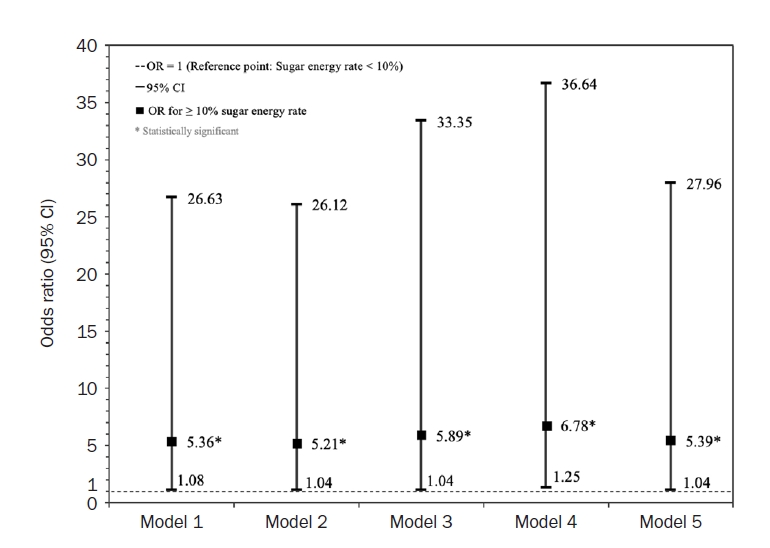
From 2019 to 2021, sugar intake significantly declined with age in both men and women (P for trend < 0.001), with the highest intake observed in the 19–29 age group (61.38 g). Men consumed significantly more sugar than women across all age groups except for the 50–64 and 65–74 groups (P < 0.05). However, the sugar energy rate was significantly higher in women than in men (P < 0.05). While the association between sugar intake and cancer prevalence varied across regression models and cancer types, cervical cancer consistently showed a significant association with sugar intake (P < 0.05).
Conclusion
The association between sugar energy rate and the prevalence of premenopausal cervical cancer was consistent and significant. Given that women had a higher sugar energy rate than men, the relationship between sugar intake and cancer prevalence in women warrants further investigation. Longitudinal studies with more detailed sugar intake assessments are needed. -
Citations
Citations to this article as recorded by
- Sugar rationing during the first 1000 days and early onset cancer: a natural experiment
Runhua Tang, Haoran Wang, Huimin Hou, Jianye Wang, Shuhang Luo, Jianyong Liu, Ming Liu
The American Journal of Clinical Nutrition.2026; 124(3): 101453. CrossRef - A study on hypertension relevant nutritional knowledge and dietary practices in Chinese college students studying in South Korea
Zhe Sun, Wookyoun Cho
Journal of Nutrition and Health.2015; 48(5): 441. CrossRef - Influence of the Size of the Spoon on the Eating rate, Energy Intake and the Satiety Levels of Female College Students
Yang Hee Hong, Young Suk Kim, Hyun Jung Kwon, Do Seok Chang, Dong Geon Kim, Un Jae Chang
Korean Journal of Community Nutrition.2015; 20(5): 375. CrossRef - Dietary behavior and nutritional status among Chinese female college students residing in Korea
Gaowei, Soyeon Kim, Namsoo Chang, Ki Nam Kim
Korean Journal of Nutrition.2013; 46(2): 177. CrossRef
- Sugar rationing during the first 1000 days and early onset cancer: a natural experiment
- 4,038 View
- 142 Download
- 4 Crossref

- [English]
- Food and nutrient intake in pregnant women with singletons or multiples and post-delivery changes in intake in Korea: an observational study
- Cheawon Lee, Dahyeon Kim, Yoon Ha Kim, Myeong Gyun Choi, Jong Woon Kim, Clara Yongjoo Park
- Korean J Community Nutr 2025;30(1):1-15. Published online February 28, 2025
- DOI: https://doi.org/10.5720/kjcn.2024.00325
-
Abstract
PDFSupplementary Material
- Objectives
Nutrient intake during pregnancy and lactation is crucial for the health of both mother and offspring. Diet and nutrient metabolism potentially vary according to ethnicity and fetal number; nevertheless, recent studies validating this are inadequate. Furthermore, few studies have tracked changes in intake after delivery. We compared the food and nutrient intakes between pregnant women in Korea carrying singletons and multiples during late pregnancy and assessed their changes through postpartum.
Methods
Ninety-eight pregnant women were recruited from Chonnam National University Hospital between January 2019 and December 2023, and 48 responded to follow-up. Third trimester and postpartum intake were assessed via food frequency questionnaires and supplement questionnaires. Student’s t-test, Mann–Whitney U test, chi-square test, paired t-test or Wilcoxon signed-rank test was performed and adjustments were made for covariates.
Results
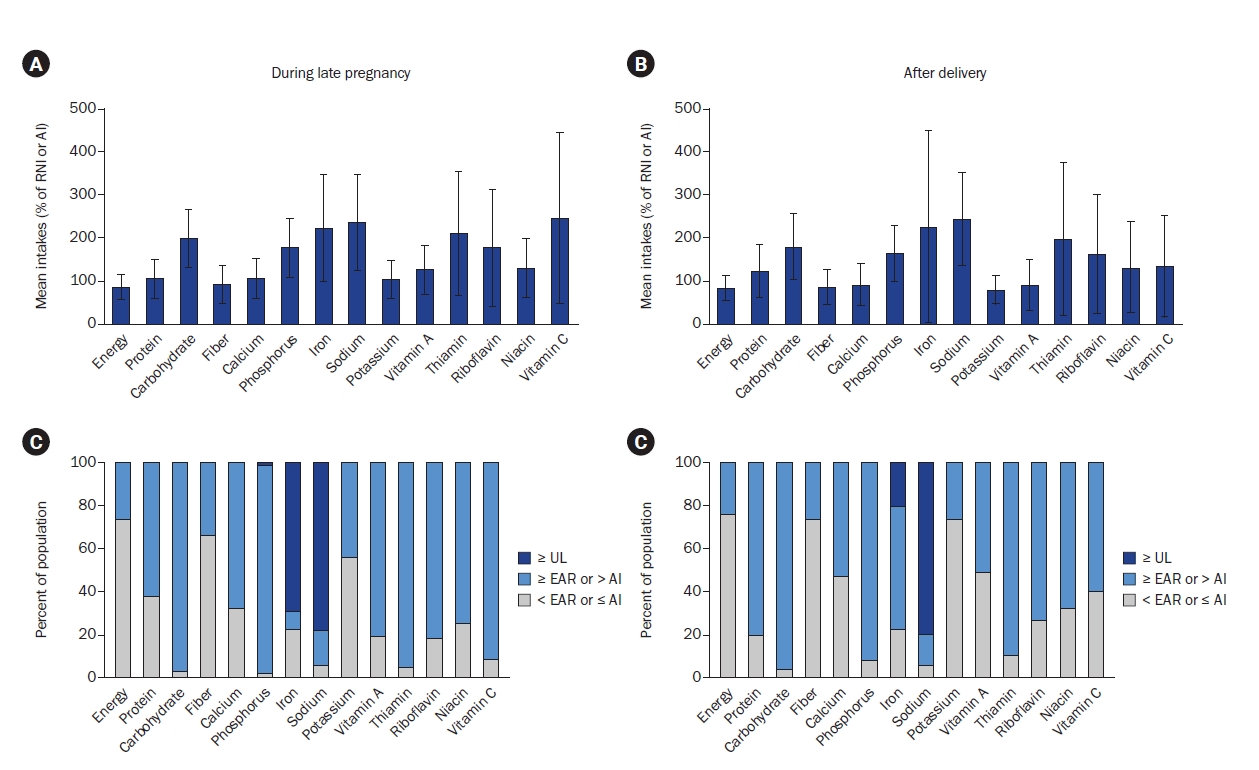
Nutrient intake was generally adequate relative to the Dietary Reference Intakes for Koreans, with no differences between singleton- and multiple-pregnancy women. Sixty-six of 98 (67%) pregnant women consumed meat, fish, vegetables, and fruit daily. Dairy intake was low, while the mean iron intake during pregnancy reached 54.2 ± 34.0 mg/d, exceeding the tolerable upper intake level, mainly owing to supplements. Postpartum fruit and vitamin C intake decreased, with no significant differences between breastfeeding and non-breastfeeding women.
Conclusion
Dietary intake did not significantly differ between Korean singleton- and multiple-pregnancy women. Dairy intake was low and iron intake was excessive. Fruit intake decreased after delivery; however, difference in dietary intake according to breastfeeding status was minimal. Nutritional education may be necessary to promote a balanced diet in pregnant and postpartum women. Trial Registration: Clinical Research Information Service Identifier KCT0005118. -
Citations
Citations to this article as recorded by- Postpartum bone mineral density in Korean women: associations with lactation status and calcium intake
Cheawon Lee, Hangyeol Jeon, Yoon Ha Kim, Myeong Gyun Choi, Jong Woon Kim, Clara Yongjoo Park
Nutrition Research and Practice.2026; 20(1): 145. CrossRef - Placental cadmium and its association with maternal diet and offspring growth in Koreans
Dahyeon Kim, Cheawon Lee, Yoon Ha Kim, Myeong Gyun Choi, Jong Woon Kim, Clara Yongjoo Park
Nutrition Research and Practice.2025; 19(3): 473. CrossRef
- Postpartum bone mineral density in Korean women: associations with lactation status and calcium intake
- 8,960 View
- 87 Download
- 2 Crossref
- [Korean]
- Biochemical characteristics, nutrient intakes, and chronic disease risk according to the dietary fat energy ratio in middle-aged Korean: a cross-sectional study using data from the 7th (2016–2018) Korean National Health and Nutrition Examination Survey
- Ga-Hyeon Jeong, Sook-Bae Kim
- Korean J Community Nutr 2024;29(6):528-540. Published online December 31, 2024
- DOI: https://doi.org/10.5720/kjcn.2024.00304
-
Abstract
PDF
- Objectives
This study aimed to examine health-related characteristics and chronic disease risk in middle-aged Koreans based on their fat energy intake ratio.
Methods
We analyzed data from 7,274 Koreans aged 40–64 years using the 7th (2016–2018) Koreans National Health and Nutrition Examination Survey. Participants were classified into three groups based on their fat energy intake ratio: insufficient (< 15%), adequate (15%–30%), and excessive (> 30%). We assessed their socio-demographic characteristics; lifestyle characteristics; biochemical characteristics; quantitative and qualitative nutrient intakes, measured using dietary reference intakes for Koreans and index of nutrition quality (INQ); and chronic disease risk.
Results
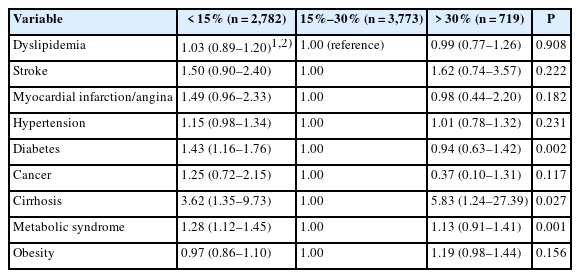
Significant differences were observed between the groups in age, gender, income, education, and residence region. The insufficient group had the highest proportion of older adults, male, lower income, rural residents, and lower education levels. The groups differed significantly in lifestyle characteristics, with the insufficient group having the highest rates of no walking, heavy drinking, smoking, and poor subjective health perception. Biochemical characteristics in the insufficient group exhibited the lowest levels for fasting blood glucose, hemoglobin A1c, and triglycerides. Significant differences were found in both the quantitative and qualitative intake of nutrients. The insufficient group had the lowest intake of most nutrients except fiber, whereas the excessive group had the lowest fiber intake. Based on the INQ, vitamin A and Ca were the lowest in the insufficient group, and vitamin C and folic acid were the lowest in the excessive group. The risk of diabetes mellitus and metabolic syndrome was highest in the deficient group, and the risk of liver cirrhosis was highest in the excessive group.
Conclusion
Insufficient or excessive fat energy intake ratio negatively affects nutrient intake and chronic disease risk. Fat energy intake of 15%–30% is important for improving nutrient intake and managing chronic diseases, such as diabetes mellitus, metabolic syndrome, and liver cirrhosis. We suggest that education and an appropriate social environment are necessary to ensure this fat energy intake. -
Citations
Citations to this article as recorded by- Study on the Optimization of Manufacturing Conditions for Traditional Potato Bugak Using Response Surface Methodology
Yu Hyeon Jo, Jeong Ok Rho
Journal of the East Asian Society of Dietary Life.2025; 35(1): 60. CrossRef - Nutritional risk assessment using estimated usual nutrient intake in Korean adults: analysis of the 8th (2019–2021) Korea National Health and Nutrition Examination Survey data
Woojin Byeon, Cho-il Kim, Sung Ok Kwon, Jihyun Yoon, Linxi Huang
Nutrition Research and Practice.2025; 19(5): 799. CrossRef
- Study on the Optimization of Manufacturing Conditions for Traditional Potato Bugak Using Response Surface Methodology
- 2,782 View
- 76 Download
- 2 Crossref
- [English]
- Associations between the symptoms of gastroesophageal reflux disease and dietary and lifestyle behavior among young Korean adults: a preliminary cross-sectional study
- Soheun Shim, Jeong-Hwa Choi, Young-Ran Heo
- Korean J Community Nutr 2024;29(5):396-405. Published online October 31, 2024
- DOI: https://doi.org/10.5720/kjcn.2024.00011

-
Abstract
PDF
- Objectives
Gastroesophageal reflux disease (GERD) is a clinical condition caused by esophageal tissue damage resulting from the reflux of stomach or duodenal contents. An increasing number of GERD cases have been reported recently; however, research on this population, especially young adults, is lacking. This study aimed to investigate the dietary and lifestyle factors associated with GERD symptoms in young Korean adults. Methods: A total of 202 individuals (19–34 years old) living in Gwangju were surveyed using a questionnaire to examine their general characteristics, lifestyle, and dietary behaviors. GERD symptoms were investigated using the gastroesophageal reflux disease questionnaire (GerdQ). The participants were grouped into normal (GerdQ score ≤ 4) and caution (GerdQ score ≥ 5), and their characteristics were analyzed according to the group. Results: The findings suggested 15 participants (7.4%) belonged to the GERD caution group. More non-office workers were in the caution group than in the normal group (P < 0.05). The participants’ smoking, physical activity, sleep duration, and pillow height were not significantly different between the GERD phenotypes; however, the caution group consumed alcohol more frequently than the normal group (P < 0.001). The analyses of the participants’ eating behaviors revealed that the frequency of overeating, late-night snacking and chocolate consumption was significantly higher in the caution group (P < 0.001). Conclusion: Lifestyle and dietary behaviors were associated with GERD symptoms in young Korean adults. Further studies with larger cohorts are required to confirm these findings.
- 7,237 View
- 98 Download
- [English]
- Effects of a nutrition education program on metabolic syndrome risk factors in middle-aged Korean adults: an intervention study
- Minji Kang, Young-Hee Park, Subeen Kim, Eunyoung Tak, Hyun Wook Baik, Hee Young Paik, Hyojee Joung
- Korean J Community Nutr 2024;29(4):265-277. Published online August 31, 2024
- DOI: https://doi.org/10.5720/kjcn.2024.00005
-
Abstract
PDF
- Objectives
This study was conducted to evaluate the effects of a nutrition education program on metabolic syndrome in middle-aged Korean adults.
Methods
A total of 411 Korean adults 30–59 years of age were allocated randomly into three groups: the nutrition education group for promoting Han-sik consumption (HG), the nutrition education group for eating balanced diet (EG), and the control group (CG). The HG and EG received four face-to-face nutrition education sessions over 16 weeks to improve nutritional problems based on the individual’ usual diet. Effectiveness of the program was evaluated with the differences of self-reported dietary behaviors, dietary intakes, anthropometric measurements and biochemical indices between the baseline and the end of the nutrition education program. The changes within groups were analyzed using paired t-test and McNemar test and effectiveness among three groups was analyzed by repeated analysis of variance.
Results
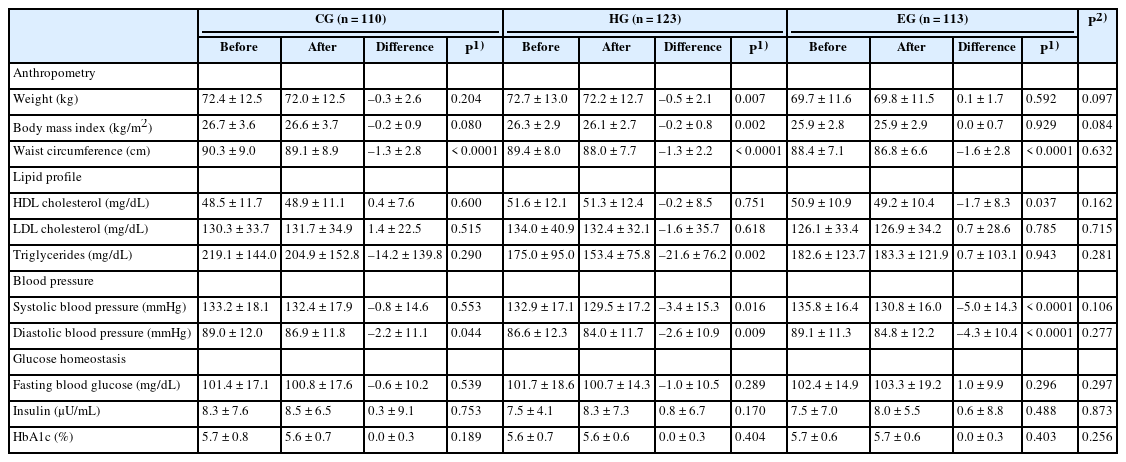
After the nutrition education, the percentages of participants who achieved the recommended food group consumption in the Korean Food Guidance Systems significantly increased in HG (P = 0.022). Body weight (P = 0.007), body mass index (P = 0.002), and triglycerides (P = 0.002) significantly decreased in HG. Waist circumference and diastolic blood pressure decreased in all three groups (P < 0.05).
Conclusions
This study found that tailored nutrition education program for middle aged Korean adults showed beneficial effects on improving dietary behaviors and metabolic syndrome risk factors. Further studies are needed to assess the long-term effects of the nutrition education programs on metabolic syndrome risks. -
Citations
Citations to this article as recorded by- Multicomponent intervention increases nutrition knowledge scores in rural China
Zhifan He, Ming Feng, Lu Li, Jing Li, Xiaohui Li
Scientific Reports.2025;[Epub] CrossRef
- Multicomponent intervention increases nutrition knowledge scores in rural China
- 5,699 View
- 104 Download
- 1 Crossref
- [English]
- Total sugar intake and its contributed foods by age groups in Koreans using the 8th (2019–2021) Korea National Health and Nutrition Examination Survey: a cross-sectional study
- Hyejin Yu, Sang-Jin Chung
- Korean J Community Nutr 2024;29(3):222-233. Published online June 30, 2024
- DOI: https://doi.org/10.5720/kjcn.2024.29.3.222
-
Abstract
PDF
- Objectives
This study was conducted to investigate the status of total sugar intake and contributing foods in Korea according to age groups.
Methods
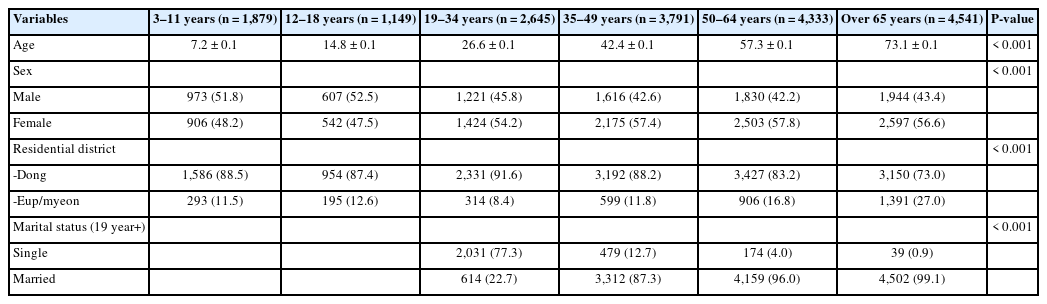
This study used 24-hour dietary recall data from the 8th Korea National Health and Nutrition Examination Survey (2019–2021) to investigate the nutritional and total sugar intake status among Koreans. A total of 18,338 research participants (≥3 years old) were included in this study. To analyze the types of foods contributing to total sugar intake, these foods were categorized into 15 types. Moreover, we examined the total sugar intake and ranked the most consumed foods by age groups (3–11 years, 12–18 years, 19–34 years, 35–49 years, 50–64 years, over 65 years). A survey procedure was employed for statistical analysis.
Results
The energy intake ratio from total sugars was approximately 12%–15%, which was within the recommended range. However, the proportion of individuals consuming total sugar exceeding 20% of their total caloric intake is nearly 20%, raising concerns about excessive sugar consumption. Furthermore, the percentage of participants whose intake of sugar from processed foods exceeded 10% of their total calories was highest in the 12–18 age group at 37.1%, followed by the 3–11 age group at 35.2%, and the 19–34 age group at 34.0%. Carbonated drinks, cola, and cider were the primary foods consumed by children and adolescents (3–18 years old) and young adults (19–34 years old). For middle-aged and older adults, mixed coffee with sugar and cream was a prominent contributor to sugar intake.
Conclusions
This study investigated sugar consumption patterns among Koreans, finding the principal foods contributing to this intake. Identifying these contributors is pivotal, given their potential impact on public health. -
Citations
Citations to this article as recorded by- Psychosocial factors related to the stages of change in reducing sugar intake among adults in Seoul, Korea: a cross-sectional study
Ju Young Lee, Kyung Won Kim
Korean Journal of Community Nutrition.2026; 31(1): 21. CrossRef - Associations of self-efficacy and perceived benefits and barriers with sugar-sweetened beverage consumption patterns: a secondary analysis of the 2017–2020 Nutrition and Health Survey in Taiwan (NAHSIT)
Chi-Hsuan Liu, Chyi-Huey Bai, Te-Chih Wong, Shu-Chen Lee, Yi-Chun Chen
Frontiers in Nutrition.2026;[Epub] CrossRef - Ten-year trends in sugar-sweetened beverages consumption among Koreans, 2014–2023
HyunJi Son, Khongorzul Ganbat, SuJin Song
Nutrition Research and Practice.2026; 20(4): 683. CrossRef
- Psychosocial factors related to the stages of change in reducing sugar intake among adults in Seoul, Korea: a cross-sectional study
- 18,904 View
- 185 Download
- 3 Crossref
- [Korean]
- Comparative study on the health and dietary habits of Korean male and female adults before and after the coronavirus disease 2019 pandemic: utilizing data from the 8th Korea National Health and Nutrition Examination Survey (2019–2021)
- Chaemin Kim, Eunjung Kim
- Korean J Community Nutr 2024;29(1):65-80. Published online February 29, 2024
- DOI: https://doi.org/10.5720/kjcn.2024.29.1.65
-
Abstract
PDF
- Objectives
This study aims to compare changes in physical factors, health behaviors, eating habits, and nutritional intake among Korean male and female adults over a period of three years (2019–2021) before and after the outbreak of coronavirus disease 2019 (COVID-19).
Methods
This study utilized raw data from the 8th Korea National Health and Nutrition Examination Survey (2019–2021). The participants in this study included 6,235 individuals in 2019, 5,865 individuals in 2020, and 5,635 individuals in 2021. Individuals whose daily energy intake was less than 500 kcal or exceeded 5,000 kcal were excluded from the study.
Results
In comparison to 2019, overweight/obesity rates, weight, waist circumference, weekend sleep hours, and resistance exercise days/week increased in both male and female during the COVID-19 pandemic. Regarding eating habits, the proportions of people skipping breakfast, not eating out, consuming health supplements, and recognizing nutritional labels increased in 2020 and 2021, whereas the rate of skipping dinner decreased. Total energy intake has continued to decrease for the two years since 2019. A comparison of nutrient intake per 1,000 kcal before and after the outbreak of COVID-19 revealed that intake of nutrients, including protein, phosphorus, iron, vitamin A, riboflavin, and niacin increased, while folic acid intake decreased. In male, calcium, phosphorus, riboflavin, and niacin intakes increased, whereas iron, vitamin C, and folic acid intakes decreased. In female, phosphorus, iron, vitamin A, and riboflavin intake increased significantly, while protein and niacin intake decreased significantly.
Conclusions
After COVID-19, the obesity rate, breakfast skipping rate, health supplement intake, and nutritional label use increased, while the frequency of eating out, dinner skipping rate, and total energy intake decreased. These environmental changes and social factors highlight the need for nutritional education and management to ensure proper nutritional intake and reduce obesity rates in the post-COVID-19 era. -
Citations
Citations to this article as recorded by- Status of Use of Protein Supplement Products according to the Health Concerns of Adults in Their 20s and 30s
Cho-In Oh, Bok-Mi Jung
Journal of the East Asian Society of Dietary Life.2025; 35(1): 9. CrossRef - A study on regional differences in dietary behaviors and satisfaction in Korea focusing on urban and rural comparisons: a cross-sectional study
Jong-Youn Rha, Sohyun Kim, Hae-Rang Lee, Juhyeon Kil
Korean Journal of Community Nutrition.2025; 30(2): 140. CrossRef - How Did the Dietary Behavior of Older Korean Adults Change During the COVID-19 Pandemic?
Yong-Seok Kwon, Dasol Kim, Hee-Sook Lim
Nutrients.2025; 17(12): 1973. CrossRef - Intake of energy and macronutrients according to household income among elementary, middle, and high school students before and during the COVID-19 pandemic: a cross-sectional study
Chae-Eun Jeong, Heejin Lee, Jung Eun Lee
Korean Journal of Community Nutrition.2024; 29(3): 234. CrossRef - 성인 남녀의 먹방 시청시간에 따른 식행동에 대한 연구
하얀 남, 복미 정, 은례 전
Korean Journal of Food and Cookery Science.2024; 40(4): 275. CrossRef
- Status of Use of Protein Supplement Products according to the Health Concerns of Adults in Their 20s and 30s
- 7,163 View
- 98 Download
- 5 Crossref
- [Korean]
- Association of ultra-processed food with diabetes and impaired fasting glucose in elderly populations (urban and rural): a cross-sectional study
- Seung Jae Lee, Mi Sook Cho
- Korean J Community Nutr 2024;29(1):51-64. Published online February 29, 2024
- DOI: https://doi.org/10.5720/kjcn.2024.29.1.51
-
Abstract
PDF
- Objectives
This study examined the association between ultra-processed food (UPF) consumption and chronic diseases in elderly Koreans.
Methods
Data from the 2019–2021 Korea National Health and Nutrition Examination Survey were analyzed. Dietary intake and UPF consumption were assessed using the NOVA food classification based on 24-hour recall data from 3,790 participants (aged 65+ years). Participants were divided into 4 groups based on the quartile of energy intake from UPFs. Regions were classified as urban or rural. Multivariable logistic regression was employed to estimate the adjusted odds ratios (AORs) with 95% confidence intervals (CIs) after controlling for potential confounders.
Results
Among the participants, 71.3% resided in urban and 28.7% in rural areas. Compared to the urban elderly, rural participants tended to be older, have lower education and income levels, be more likely to live in single-person households, and have a higher smoking rate (P < 0.05). Urban elderly consumed more UPFs daily (146.1 g) compared to rural residents (126.6 g; P < 0.05). “Sugar-sweetened beverages” were the most consumed category in both regions. “Sweetened milk and its products” and “traditional sauces” were prominent in urban areas, while rural elderly consumed more “traditional sauces” and “distilled alcoholic beverages.” Rural areas also had a higher carbohydrate-to-calorie ratio than urban areas. Compared to the lowest quartile of UPF intake, the highest quartile was significantly associated with impaired fasting glucose only in rural areas (AOR, 1.48; 95% CI, 1.00–2.19; P for trend = 0.0014). No significant associations were observed for diabetes in either urban or rural areas.
Conclusions
This study suggests that high intake of UPFs is associated with increased odds of impaired fasting glucose in rural elderly. Further research is needed to elucidate the specific negative health effects of UPFs in different populations, and targeted efforts should promote healthy diets in both urban and rural areas. -
Citations
Citations to this article as recorded by- Ultra-Processed Foods and Cardiometabolic Health: A Review of Current Evidence
Nazlıcan Erdoğan Gövez, Eda Köksal
Current Nutrition Reports.2025;[Epub] CrossRef - 노인의 사회활동 참여 정도와 영양상태와의 관계
지수 백, 영란 허
Korean Journal of Food and Cookery Science.2025; 41(6): 418. CrossRef - A Study of the Chemosensory Properties of Commercial Processed Foods Using Electronic Sensors
Hyeonjin Park, Younglan Ban, Sojeong Yoon, Hyangyeon Jeong, Seong Jun Hong, Hee Sung Moon, Se Young Yu, Hyun-Wook Kim, Kyeong Soo Kim, Eun Ju Jeong, Eui-Cheol Shin
Journal of the Korean Society of Food Science and Nutrition.2024; 53(8): 805. CrossRef - Analysis of Flavor and Taste Patterns of Various Processed Animal Foods: Using the Electronic Tongue and Nose
Hee Sung Moon, Se Young Yu, Younglan Ban, Hyeonjin Park, Sojeong Yoon, Na Eun Yang, Seong Jun Hong, Hyun-Wook Kim, Kyeong Soo Kim, Eun Ju Jeong, Eui-Cheol Shin
Journal of the Korean Society of Food Science and Nutrition.2024; 53(12): 1267. CrossRef
- Ultra-Processed Foods and Cardiometabolic Health: A Review of Current Evidence
- 3,206 View
- 101 Download
- 4 Crossref
- [Korean]
- Dietary sodium and potassium intake of Koreans estimated using 2 different sources of their contents in foods, Food & Nutrient Database and the Korean Total Diet Study : a comparative study
- Jee Yeon Lee, Sung Ok Kwon, Soo Hyun Lee, Min Jeong Seo, Gae Ho Lee, Cho-il Kim
- Korean J Community Nutr 2023;28(3):235-244. Published online June 30, 2023
- DOI: https://doi.org/10.5720/kjcn.2023.28.3.235
-
Abstract
PDF
- Objectives
Based on the results from the Korean Total Diet Study (KTDS), the sodium (Na) and potassium (K) intake of Koreans were estimated and compared with intake estimates from the Food & Nutrient Database (FNDB), as in the Korea National Health and Nutrition Examination Survey (KNHANES) to verify the validity of these estimates.
Methods
One hundred and thirty-four representative foods (RFs) covering 92.5% of the total food intake of Koreans were selected, and 228 pairs of corresponding ‘RF x representative cooking method’ were derived by reflecting the methods used mainly in terms of frequency and quantity in their cooking. RF samples were collected from three cities with a larger population size in three regions (nine cities) nationwide, and six composite samples were made for each RF, considering its regional and/or seasonal characteristics. One thousand three hundred and sixty-eight ‘RF x representative cooking method’ pair samples were prepared, and the Na and K contents were assessed using inductively coupled plasma atomic emission spectrometry (ICP-MS). The Na and K intake of the Korean population was estimated by linking the content with the food intake data from the 7th KNHANES.
Results
The mean Na and K intake of Koreans were 2,807.4 mg and 2,335.0 mg per person per day, respectively. A comparison with the Na and K intake from KNHANES, including only RFs of KTDS, showed comparable results with less than 5% variation. While the contribution and ranking of food items to Na intake were similar between KNHANES and KTDS, there were differences in K intake. This was attributed to the large discrepancies in the K content of rice and coffee between KTDS results and the values in the 9th Revision of the National Food Composition Table used in KNHANES.
Conclusions
The Na and K intake of Koreans estimated based on the KTDS, which performed nutrient analysis on samples prepared to a ‘table-ready’ state using foods of the representative collection, was similar and comparable with that of KNHANES. This supports the validity and usefulness of FNDB-based nutrient intake estimation at the population level. The list of nutrients studied in KTDS is expected to be expanded, allowing for intake estimation of nutrients with currently insufficient or absent information in the FNDBs in use.
- 3,387 View
- 81 Download
- [English]
- Nutritional status and dietary behavior of North Korean adolescent refugees based on Nutrition Quotient for Korean adolescents: a preliminary study
- Young Goh, Seong-Woo Choi, So-Yeong Kim, Jeong-Hwa Choi
- Korean J Community Nutr 2023;28(1):1-10. Published online February 28, 2023
- DOI: https://doi.org/10.5720/kjcn.2023.28.1.1
-
Abstract
PDF
- Objectives
This study aimed to investigate the nutritional status and dietary behavior of adolescents from North Korean refugee (NKR) families residing in South Korea (SK), who are known to be at a higher risk of malnutrition due to their lower socioeconomic status and facing other psychological challenges.
Methods
A total of 178 adolescents (91 males and 87 females) from NKR families were included in the analysis, and their demographic details such as age, birthplace, parental nationality, and duration of their settlement in SK were collected through questionnaires. Anthropometric measurements were also taken to determine their growth and nutritional status according to the 2017 Korean National Growth Charts for children and adolescents. The study used the Nutrition Quotient for Korean Adolescents (NQ-A) questionnaire to assess the dietary behavior of the participants.
Results
Approximately 11.8% and 10.1% of participants were identified with malnutrition and obesity, respectively. The total mean score for the NQ-A was 50.1. The mean scores for the individual factors of balance, diversity, moderation, environment, and practice were 49.2, 44.7, 43.8, 51.2, and 61.5, respectively. Approximately 47.2% of participants had a low NQ-A grade. However, there was no significant difference in the NQ-A scores according to their nutritional status or duration of time in SK.
Conclusions
Adolescents from NKR families exhibited both malnutrition and obesity. However, their dietary behavior, as assessed using the NQ-A, did not vary with their nutritional status. The unique challenges and related dietary behavior of North Korean adolescent refugees should be taken into consideration, when developing targeted strategies for nutritional education and health management programs.
- 2,853 View
- 37 Download
- [Korean]
- Development of Korean NOVA Food Classification and Estimation of Ultra-Processed Food Intake Among Adults: Using 2018 Korea National Health and Nutrition Examination Survey
- Hae Jin Park, Sohyun Park, Jee Young Kim
- Korean J Community Nutr 2022;27(6):455-467. Published online December 31, 2022
- DOI: https://doi.org/10.5720/kjcn.2022.27.6.455
-
Abstract
PDF
- Objectives
In this study, we suggest a Korean NOVA food classification that can be applied to food consumption among Korean. Based on this suggestion, the nutritional intake of Korean adults from ultra-processed foods (UPFs) was estimated.
Methods
Korean commercial food was categorized based on the NOVA food classification criteria through the Korea Food Code and expert meetings. Then, the nutrient intake status of 6,991 participants in the 2018 National Health and Nutrition Examination Survey was analyzed according to the food processing level. Then, 4,152 adult participants (age 19-65) were divided into quartiles on the basis of their intake of UPFs, and the nutrient intakes from UPFs were compared.
Results
Korean NOVA Food Classification defines with priority Group I (Unprocessed/ Minimally processed foods) and Group II (Processed culinary ingredients) foods based on the food cooking or consumption. Then, Group III (Processed foods) and Group IV (UPFs) are classified according to whether the characteristics of the raw materials used are maintained or whether the food was consumed before the 1970s. Our analysis results showed that most of the calories in the diet were consumed by Group I (52.7%), followed by Group IV (29.3%). After categorization of the adult participants into four groups according to their energy consumption from UPFs, we found that the highest consumption group (Q4) was younger and had higher percentage of men than women. The comparative analysis of the consumption of ultra-processed foods by Korean adults revealed that participants of a younger age and men consumed higher energy from UPFs than older participants and women, respectively (P < 0.01). Furthermore, the larger intake of UPFs was associated with an increasing trend for a higher intake of energy, sugar, saturated fat (P for trend < 0.001), total fat (P for trend = 0.021), and sodium (P for trend = 0.005), whereas the intake of carbohydrate, protein, and dietary fiber had a decreasing trend (P for trend < 0.001).
Conclusions
With the current increase in the consumption of processed and ultra-processed foods, it is important to carefully consider not only nutrient intake but also the level of food processing. -
Citations
Citations to this article as recorded by- Comparison of nutrients and ultra-processed food consumption between different phenotypes defined by abdominal obesity and sarcopenia
Eunjin Jang, Sarang Jeong, Jinhyun Kim, Sukyoung Jung, Jee Young Kim, Jung Eun Lee, Sohyun Park, Jang Won Son
Frontiers in Nutrition.2026;[Epub] CrossRef - Ultra-Processed Food Consumption and Domain-Specific Quality of Life in Postmenopausal Women: Associations with Mobility and Mental Health
Byung Soo Kwan, Jung-Hwan Cho, Jun Young Kim, Hye In Kim, Nak Gyeong Ko, Ji Eun Park
Healthcare.2026; 14(6): 791. CrossRef - Trends in Ultraprocessed Food Consumption Among Korean Children and Adolescents, 2007 to 2024
Sukyoung Jung, Eunice Hong Lim Lee, Jee Young Kim, Sohyun Park, Jung Eun Lee
JAMA Network Open.2026; 9(4): e265528. CrossRef - Ultra-Processed Food and Diabetes
Ji Yun Han
The Journal of Korean Diabetes.2026; 27(1): 37. CrossRef - Development of a simplified NOVA-based scoring tool for assessing ultra-processed food consumption among Korean young adults: a cross-sectional study
Jinhyun Kim, Eunjin Jang, Sarang Jeong, Sukyoung Jung, Jee Young Kim, Jung Eun Lee, Dahye Han, Eunseo Lee, Junhyeok Jang, Sohyun Park
Korean Journal of Community Nutrition.2026; 31(2): 140. CrossRef - Consumption of ultra-processed foods and major contributing foods according to the age group in Korean adults and older adults: using data from the Korean National Health and Nutrition Examination Survey (2016–2019)
Seulgi Lee, Jee Young Kim, Kirang Kim
Journal of Nutrition and Health.2025; 58(1): 59. CrossRef - Potential misclassification of ultra-processed foods across studies and the need for a unified classification system: a scoping review
Sukyoung Jung, Jee Young Kim, Sohyun Park, Jung Eun Lee
Nutrition Research and Practice.2025; 19(3): 331. CrossRef - Gender Differences in Ultra-Processed Food Consumption and Its Association with Obesity Among Korean Adults
Seung Jae Lee, Kyung Won Lee
Nutrients.2025; 17(12): 2027. CrossRef - Interaction between chronotype and ultra-processed food intake on triglyceride-glucose index in Korean adults
Sarang Jeong, Eunjin Jang, Sukyoung Jung, Jinhyun Kim, Minjeong Jeong, Dahye Han, Sohyun Park
Nutrition Research and Practice.2025; 19(4): 591. CrossRef - Ultra-processed food intake and risk of type 2 diabetes: a pooled analysis of three prospective cohorts of Korean adults and an updated meta-analysis
Yujin Kim, Yoonkyoung Cho, Bonjae Koo, Zhangling Chen, Qi Sun, Hannah Oh
European Journal of Epidemiology.2025; 40(11): 1293. CrossRef - Sex Differences in the Association Between Ultra-Processed Food Consumption and NAFLD: An Analysis of KNHANES 2013–2021 Data
Byung Soo Kwan, Nak Gyeong Ko, Ji Eun Park
Journal of Clinical Medicine.2025; 14(22): 7930. CrossRef - Ultra-processed food intake and dietary behaviors in Korean adolescents: a cross-sectional study based on the 2019–2023 Korea National Health and Nutrition Examination Survey
Jin-A Kim, Sim-Yeol Lee
Korean Journal of Community Nutrition.2025; 30(6): 410. CrossRef - Associations of Ultra-Processed Food Intake with Body Fat and Skeletal Muscle Mass by Sociodemographic Factors
Sukyoung Jung, Jaehee Seo, Jee Young Kim, Sohyun Park
Diabetes & Metabolism Journal.2024; 48(4): 780. CrossRef - Navigating Ultra-Processed Foods with Insight
Ji A Seo
Diabetes & Metabolism Journal.2024; 48(4): 713. CrossRef - Association of ultra-processed food with diabetes and impaired fasting glucose in elderly populations (urban and rural): a cross-sectional study
Seung Jae Lee, Mi Sook Cho
Korean Journal of Community Nutrition.2024; 29(1): 51. CrossRef - Sustainable diets: a scoping review and descriptive study of concept, measurement, and suggested methods for the development of Korean version
Sukyoung Jung
Korean Journal of Community Nutrition.2024; 29(1): 34. CrossRef - Eating patterns in Korean adults, 1998–2018: increased energy contribution of ultra-processed foods in main meals and snacks
Sukyoung Jung, Jee Young Kim, Sohyun Park
European Journal of Nutrition.2024; 63(1): 279. CrossRef - Association Between Ultraprocessed Food Consumption and Metabolic Disorders in Children and Adolescents with Obesity
Gyeong-yoon Lee, Joo Hyun Lim, Hyojee Joung, Dankyu Yoon
Nutrients.2024; 16(20): 3524. CrossRef - Changes in Ultra-Processed Food Consumption among Adolescents before and after the COVID-19 Pandemic : Using Data from the 7th (2018~2019) and 8th (2020~2021) Korea National Health and Nutrition Examination Survey
Hyun-Jin Hwang, Yoo Kyeong Kim
Korean Journal of Human Ecology.2024; 33(6): 981. CrossRef - Higher consumption of ultra-processed food is associated with cardiovascular risk in Korean adults: KNHANES 2016–2018
Sukyoung Jung, Eunjin Jang, Hyeongyeong Lee, Jee Young Kim, Sohyun Park
Frontiers in Nutrition.2023;[Epub] CrossRef
- Comparison of nutrients and ultra-processed food consumption between different phenotypes defined by abdominal obesity and sarcopenia
- 8,445 View
- 301 Download
- 20 Crossref
- [Korean]
- Association between Sarcopenia and Energy and Protein Intakes in Community-dwelling Elderly
- Woori Na, Dayoung Oh, Seohyeon Hwang, Bonghee Chung, Cheongmin Sohn
- Korean J Community Nutr 2022;27(4):286-295. Published online August 31, 2022
- DOI: https://doi.org/10.5720/kjcn.2022.27.4.286
-
Abstract
PDF
- Objectives
Sarcopenia is one of the most representative factors of senescence, and nutritional status is known to affect sarcopenia. This study was performed to analyze the relationships between energy and protein intake and sarcopenia.
Methods
The study subjects were 3,236 individuals aged ≥ 65 that participated in the Korea National Health and Nutrition Examination Survey (KNHANES) 2008 ~ 2011. General characteristics and anthropometric and 24-hour dietary recall data were analyzed. Sarcopenia was diagnosed using a formula based on appendicular skeletal muscle mass (ASM) and body weight. Logistic regression was performed to determine relationships between sarcopenia risk and energy and protein intakes.
Results
For energy intake, the odds ratio (OR) of sarcopenia in women was significantly higher those with the lowest intake [OR = 1.680, 95% confidence interval (CI) = 1.213-2.326] than those with the highest intake (P for trend = 0.001). Regarding protein intake per kg of body weight, the odds ratio of sarcopenia was significantly higher for those that consumed < 0.8 g/kg of protein daily than those that consumed > 1.2g/kg for men (OR = 2.459, 95% CI = 1.481-4.085) and women (OR = 2.178, 95% CI = 1.423-3.334).
Conclusions
This study shows a link between sarcopenia and energy and protein intake levels and suggests that energy and protein consumption be promoted among older adults to prevent sarcopenia. -
Citations
Citations to this article as recorded by- Relationship Between Electronic Device Usage and Frailty Among Older Adults Living Alone in South Korea: Analysis of the Mediating Effect of Nutrition Management
Kawoun Seo
Healthcare.2026; 14(6): 816. CrossRef - Association between nutrient intake and frailty status in Korean older adults: a cross-sectional study using the 9th (2022–2023) Korea National Health and Nutrition Examination Survey
Hyejin Yu, Sang-Jin Chung
Korean Journal of Community Nutrition.2026; 31(2): 153. CrossRef - Association Between Vitamin D Intake and Sarcopenia in Older Adults in South Korea: The Moderating Role of the Area Deprivation Index
Jong Suk Lee, Seok Hwan Kim
Asia Pacific Journal of Public Health.2026; 38(4): 274. CrossRef - Comparison of energy and protein intake adequacy, dietary habits, and social characteristics associated with sarcopenia in young-old and old-old Korean adults: based on the 2022–2023 Korea National Health and Nutrition Examination Survey
Saetbyeol Chae, Sarang Jeong, Suji Im, Yoon Jung Yang
Journal of Nutrition and Health.2026; 59(3): 260. CrossRef - Association Between Protein Intake and Sarcopenia-Related Indicators Among Korean Older Adults: A Scoping Review
Minjee Han, Kyung-sook Woo, Kirang Kim
Clinical Nutrition Research.2025; 14(3): 216. CrossRef - Nutritional Approaches in Sarcopenia Management
Min-Yu Chung
Journal of the Korean Society of Food Science and Nutrition.2025; 54(7): 565. CrossRef - The Present and Future of Sarcopenia Diagnosis and Exercise Interventions: A Narrative Review
Hongje Jang, Jeonghyeok Song, Jeonghun Kim, Hyeongmin Lee, Hyemin Lee, Hye-yeon Park, Huijin Shin, Yeah-eun Kwon, Yeji Kim, JongEun Yim
Applied Sciences.2025; 15(23): 12760. CrossRef - Design of contents for developing an intervention app for sarcopenia in older adults: A research study using the Delphi technique
Hee Jung Kim, Ju Young Ha
Journal of Korean Gerontological Nursing.2024; 26(4): 370. CrossRef - Association of Protein Intake with Sarcopenia and Related Indicators Among Korean Older Adults: A Systematic Review and Meta-Analysis
Minjee Han, Kyungsook Woo, Kirang Kim
Nutrients.2024; 16(24): 4350. CrossRef - Muscle Mass Changes After Daily Consumption of Protein Mix Supplemented With Vitamin D in Adults Over 50 Years of Age: Subgroup Analysis According to the Serum 25(OH)D Levels of a Randomized Controlled Trial
Yeji Kang, Namhee Kim, Yunhwan Lee, Xiangxue An, Yoon-Sok Chung, Yoo Kyoung Park
Clinical Nutrition Research.2023; 12(3): 184. CrossRef
- Relationship Between Electronic Device Usage and Frailty Among Older Adults Living Alone in South Korea: Analysis of the Mediating Effect of Nutrition Management
- 5,010 View
- 91 Download
- 10 Crossref
- [Korean]
- Dietary Iron Intake of Koreans Estimated using 2 Different Sources of Iron Contents are Comparable: Food & Nutrient Database and Iron Contents of Cooked Foods in the Korean Total Diet Study
- Jeeyeon Lee, Sung Ok Kwon, Yoonjae Yeoh, Min Jeong Seo, Gae Ho Lee, Cho-il Kim
- Korean J Community Nutr 2022;27(3):245-253. Published online June 30, 2022
- DOI: https://doi.org/10.5720/kjcn.2022.27.3.245
-
Abstract
PDF
- Objectives
This study was conducted to find out if the dietary iron intake of Koreans estimated by 2 different methods (iron content sources) using the food intake data from the Korea National Health and Nutrition Examination Survey (KNHANES) are comparable. One method was based on the KNHANES's Food & Nutrient Database (FND) derived mainly from the Korean Food Composition Table and the other used the iron content (IC) of food samples processed in the Korean Total Diet Study (KTDS).
Methods
Dietary intake data from the 2013-2016 KNHANES was used to select representative foods (RFs) in KTDS for iron analysis. Selection of the RFs and cooking methods for each RF (RF × cooking method pair) was performed according to the ‘Guidebook for Korean Total Diet Studies’ and resulted in a total of 132 RFs and 224 ‘RF × cooking method’ pairs. RFs were collected in 9 metropolitan cities nationwide once or twice (for those with seasonality) in 2018 and made into 6 composites each, based on the origin and season prior to cooking. Then, the RF composites prepared to a ‘table ready’ state for KTDS were analyzed by Inductively Coupled Plasma-Mass Spectrometry (ICP-MS). Dietary iron intake of the Korean population was estimated using only RFs’ intake data based on the 2 sources of iron content, namely FND-KNHANES and IC-KTDS.
Results
RFs in KTDS covered 92.0% of total food intake of Koreans in the 2016-2018 KNHANES. Mean iron intake of Koreans was 7.77 mg/person/day by IC-KTDS vs 9.73 mg/person/day by FND-KNHANES. The major food groups contributing to iron intake were meats (21.7%), vegetables (20.5%), and grains & cereals (13.4%) as per IC-KTDS. On the other hand, the latter source (FND-KNHANES) resulted in a very different profile: grains & cereals (31.1%), vegetables (16.8%), and meats (15.3%). While the top iron source was beef, accounting for 8.6% in the former, it was polished rice (19.2%) in the latter. There was a 10-fold difference in the iron content of polished rice between 2 sources that iron intakes excluding the contribution by polished rice resulted in very similar values: 7.58 mg/person/day by IC-KTDS and 7.86 mg/person/day by FNDKNHANES.
Conclusions
This study revealed that the dietary iron intake estimated by 2 different methods were quite comparable, excluding one RF, namely polished rice. KTDS was thus proven to be a useful tool in estimating a ‘closer-to-real’ dietary intake of nutrients for Koreans and further research on various nutrients is warranted. -
Citations
Citations to this article as recorded by- Nutrients and food intake according to atherogenic index of plasma in Korean postmenopausal women
Ye-Jin Lee, Sun Yung Ly
Journal of Nutrition and Health.2025; 58(1): 87. CrossRef - Iron Consumption and Colorectal Cancer in Korean Adults: A Prospective Cohort Study
Sukhong Min, Katherine De la Torre, Hyobin Lee, Woo-Kyoung Shin, Daehee Kang
Nutrients.2025; 17(8): 1309. CrossRef - Dietary sodium and potassium intake of Koreans estimated using 2 different sources of their contents in foods, Food & Nutrient Database and the Korean Total Diet Study: a comparative study
Jee Yeon Lee, Sung Ok Kwon, Soo Hyun Lee, Min Jeong Seo, Gae Ho Lee, Cho-il Kim
Korean Journal of Community Nutrition.2023; 28(3): 235. CrossRef
- Nutrients and food intake according to atherogenic index of plasma in Korean postmenopausal women
- 2,775 View
- 26 Download
- 3 Crossref
- [Korean]
- Trends in Dietary Protein Intake and Its Adequacy among Korean Adults: Data from the 2010 ~ 2019 Korea National Health and Nutrition Examination Survey (KNHANES)
- Hyunji Ham, Kyungho Ha
- Korean J Community Nutr 2022;27(1):47-60. Published online February 28, 2022
- DOI: https://doi.org/10.5720/kjcn.2022.27.1.47
-
Abstract
PDF
- Objectives
This study aimed to evaluate dietary protein intake and its adequacy among Korean adults during recent 10 years.
Methods
Based on the 2010 ~ 2019 Korea National Health and Nutrition Examination Survey (KNHANES) data, a total of 51,296 adults aged 19 years old or more who participated in a one-day 24-hr dietary recall were included. Dietary protein intake was estimated as percentages of total energy (% of energy) and grams per body weight (g/kg/ day) and compared with the 2020 Dietary Reference Intakes for Koreans to evaluate the adequacy of protein intake. In addition, proportions of people whose protein intakes were less than the estimated average requirement (EAR) and above the upper limit of the acceptable macronutrient distribution range (AMDR) (> 20% of energy) were calculated according to sociodemographic characteristics.
Results
Protein intake was increased from 14.7% of energy in 2010 to 15.6% of energy in 2019 among Korean adults. However, there was no increase in protein intake relative to the recommended nutrient intake (% RNI) during the recent 10 years. Protein intake relative to the RNI was decreased from 130.2% in 2010 to 121.1% in 2019 (P for trend < 0.0001) among total participants, and a significant decreasing trend was observed in all age groups except for over 65 years old. However, protein intake relative to the RNI was lowest in the elderly (98.6%). Proportions of low protein intake (< EAR) and high protein intake (> AMDR) increased in the past 10 years (P for trend < 0.0001 for all), and these were associated with socioeconomic statuses, such as education and household income levels.
Conclusions
These findings suggest that protein adequacy in Korean adults has not been improved over the past decade compared with recommended levels. Nutritional education and intervention programs should consider different intake levels according to sociodemographic characteristics. -
Citations
Citations to this article as recorded by- Combined associations of protein intake and resistance exercise with handgrip strength in postmenopausal women
Jin Kyung Baek, Hae Rim Kim, Eun Jin Lee, Yun Soo Chung, Seok Kyo Seo
Maturitas.2026; 205: 108808. CrossRef - Dietary Assessment and Trends Among Preschoolers in South Korea: Data from KNHANES 2012–2021
Yong-Seok Kwon, Ye-Jun Kim, Eun-Kyung Kim, Jin-Young Lee, Yangsuk Kim, Sohye Kim
Nutrients.2026; 18(2): 240. CrossRef - The Effect of Demographic Characteristics on Eating Behavior: Focus on Changes in Households and Generational Differences from 2010 to 2022
Min-seob Kim, Young-tae Cho, Sung-ho Won, Woo-rim Ko
Journal of the Korean Society of Food Science and Nutrition.2026; 55(2): 156. CrossRef - Association between nutrient intake and frailty status in Korean older adults: a cross-sectional study using the 9th (2022–2023) Korea National Health and Nutrition Examination Survey
Hyejin Yu, Sang-Jin Chung
Korean Journal of Community Nutrition.2026; 31(2): 153. CrossRef - Associations of higher protein intake with diet quality and diabetes-related metabolic health indicators in Korean adults without diabetes: analysis of Korean National Health and Nutrition Examination Survey (KNHANES) 2019–2021
Ye-Jin Kim, Soo-Kyung Lee
Nutrition Research and Practice.2026; 20(3): 521. CrossRef - Socioeconomic Disparities in Cardiovascular Health: A Cross-Sectional Analysis Unpacking the Sequential Mediation Roles of Protein Intake and Handgrip Strength
Youlim Kim, Sun-Young Park
Healthcare.2026; 14(13): 1897. CrossRef - Status of Use of Protein Supplement Products according to the Health Concerns of Adults in Their 20s and 30s
Cho-In Oh, Bok-Mi Jung
Journal of the East Asian Society of Dietary Life.2025; 35(1): 9. CrossRef - Dietary Assessment of Older Korean Adults by Level of Plant Protein Intake
Yong-Seok Kwon, Ye-Jun Kim, Jeong-Hun Song, Yangsuk Kim
Nutrients.2025; 17(12): 1976. CrossRef - Trends in dietary amino acid intake and food sources among Korean adults: data from the 2010-2022 Korea National Health and Nutrition Examination Survey
Sumin Kim, Hyunji Ham, Kyungho Ha
Nutrition Research and Practice.2025; 19(5): 773. CrossRef - Nutritional risk assessment using estimated usual nutrient intake in Korean adults: analysis of the 8th (2019–2021) Korea National Health and Nutrition Examination Survey data
Woojin Byeon, Cho-il Kim, Sung Ok Kwon, Jihyun Yoon, Linxi Huang
Nutrition Research and Practice.2025; 19(5): 799. CrossRef - High-Protein Products in 2013 and 2023: Shifts in Diverse Aspects Over the Last Ten Years
Hye Ran Lee, Ihyeon Cho, Hyejin Yi, Hee Jung Park
Food Supplements and Biomaterials for Health.2024;[Epub] CrossRef - Regional differences in protein intake and protein sources of Korean older adults and their association with metabolic syndrome using the 2016–2019 Korea National Health and Nutrition Examination Surveys: a cross-sectional study
You-Sin Lee, Yoonna Lee
Korean Journal of Community Nutrition.2024; 29(3): 173. CrossRef - Development of Protein Enhanced Diet for Socially Vulnerable Elderly
Jihye Hong, Hyung-Geun Jeon, Seulgi Kim, Gitae Park
Journal of the East Asian Society of Dietary Life.2024; 34(1): 39. CrossRef - Consumption of protein supplements/protein-fortified foods among young adults in Jeju
Hyoju Lee, Youjeong Jang, Sumin Kim, Kyungho Ha
Journal of Nutrition and Health.2024; 57(2): 261. CrossRef - Association between Processed Meat Protein Consumption and Incident Osteoporosis in Adults Aged 50 Years and Older: A Prospective Cohort Study Based on Korean Genome and Epidemiology Study Data (2005–2020)
Dohee Lee, Soo Hyoung Lee, Ki Hyun Park, Kunhee Han, Eunjin Jeong
Korean Journal of Family Medicine.2024; 45(5): 268. CrossRef - The Relationship of Pork Meat Consumption with Nutrient Intakes, Diet Quality, and Biomarkers of Health Status in Korean Older Adults
Ah-Jin Jung, Anshul Sharma, Mei Chung, Taylor Wallace, Hae-Jeung Lee
Nutrients.2024; 16(23): 4188. CrossRef - Higher Animal-Based Protein Intake Levels Show a Greater Likelihood of Having Metabolic Syndrome in Single-Person Households Among Korean Adults
Yeongin Lee, Hyojee Joung
Nutrients.2024; 16(23): 4239. CrossRef - Relationship between protein intake and grip strength in qualitative and quantitative aspects among the elderly in Korea: results from the Korea National Health and Nutrition Examination Survey
Mi‑Hyun Kim, Mi‑Kyeong Choi, Yun‑Jung Bae
BMC Geriatrics.2023;[Epub] CrossRef - Current status of nutrient intake in Korea: focused on macronutrients
Seung-Won Oh
Journal of the Korean Medical Association.2022; 65(12): 801. CrossRef
- Combined associations of protein intake and resistance exercise with handgrip strength in postmenopausal women
- 9,646 View
- 247 Download
- 19 Crossref
- [Korean]
- Association between Eating Alone Patterns and Mental Health Conditions by Region among Korean Adults
- Kyung Won Lee, Dayeon Shin
- Korean J Community Nutr 2021;26(6):441-454. Published online December 31, 2021
- DOI: https://doi.org/10.5720/kjcn.2021.26.6.441
-
Abstract
PDF
- Objectives
This study investigated the association between the frequency and pattern of eating alone and the mental health status according to region in Korean adults.
Methods
The data of 10,040 Korean adults aged ≥ 19 years from the Korea National Health and Nutrition Examination Survey (KNHANES) 2017 and 2019 were used. Participants were divided into 4 groups based on their frequency of eating alone: none (all meals together), 1, 2, and 3 meals/day alone. The regions were divided into urban and rural areas. Mental health status was assessed by stress recognition, depressive symptoms, and suicidal ideation. Multivariable logistic regressions were conducted to estimate the adjusted odds ratios (AORs) with 95% confidence intervals (CIs) on the association of the frequency and pattern of eating alone with poor mental health after controlling for covariates.
Results
Among Korean adults, 74.1% ate more than one meal a day alone. Individuals having 3 meals a day alone tended to be less educated, single, single person households, or living in urban areas (all P < 0.05). In rural areas, those having 3 meals/ day alone had higher odds of stress recognition (AOR: 1.55, 95% CI: 1.02-2.35) than those having all meals together. In urban areas, individuals eating alone 3 times/day had higher odds of stress recognition (AOR: 1.60, 95% CI: 1.31-1.96), depressive symptoms (AOR: 1.61, 95% CI: 1.23-2.12), and suicidal ideation (AOR: 2.14, 95% CI: 1.42-3.22) compared to those having all meals together. Urban residents having dinner alone had higher odds of depressive symptoms (AOR: 1.29, 95% CI: 1.05-1.58) and suicidal ideation (AOR: 1.66, 95% CI: 1.19-2.33) than those having dinner with others.
Conclusions
Our findings showed that the frequency and patterns of eating alone were differentially associated with increased odds of poor mental health according to region of residence. Nutrition education is needed for those frequently eating alone, particularly those living in urban areas, to highlight the advantages of eating together and to ensure that they have balanced and healthy meals even if they eat alone. -
Citations
Citations to this article as recorded by- The Impact of Social Activity Restrictions on Depression in Young Single-Person Households: The Moderating Effect of Eating Alone
Jiwon Kim, Youngye Park
Journal of Social Science.2025; 36(3): 27. CrossRef - Association of ultra-processed food with diabetes and impaired fasting glucose in elderly populations (urban and rural): a cross-sectional study
Seung Jae Lee, Mi Sook Cho
Korean Journal of Community Nutrition.2024; 29(1): 51. CrossRef - How Does the Frequency of Eating-Alone among Older People in Korea Affect Their Health and Dietary Behavior?
Yongseok Kwon, Kyung Hee Hong, Yoo-Kyung Park, Sohye Kim
Nutrients.2023; 15(9): 2085. CrossRef - Impact assessment of a primary care physician counseling program for youth population
Yun-Su Kim, Shin-Ae Kim
Medicine.2022; 101(46): e31916. CrossRef
- The Impact of Social Activity Restrictions on Depression in Young Single-Person Households: The Moderating Effect of Eating Alone
- 3,370 View
- 62 Download
- 4 Crossref
- [Korean]
- Association of Dietary Quality with Subjective Health-Related Perception and Chronic Diseases According to Age Segmentation of Korean Elderly
- Sojeong Lee, Seungmin Lee
- Korean J Community Nutr 2021;26(5):363-381. Published online October 31, 2021
- DOI: https://doi.org/10.5720/kjcn.2021.26.5.363
-
Abstract
PDF
- Objectives
This study examined the Korean elderly’s dietary intake status, subjective health-related perception and chronic disease prevalence among age groups. Associations of dietary quality with subjective health-related perception and chronic diseases were also examined.
Methods
Based on data from the 7th National Health and Nutrition Examination Survey, a total of 3,231 elderly were selected and categorized into 4 age groups of ‘65 ~ 69’, ‘70 ~ 74’, ‘75 ~ 79’ and ‘over 80’. Nutrient intakes, proportions of those with insufficient nutrient intakes, Korean Healthy Eating Index (KHEI), some subjective health-related perceptions and prevalence of major chronic diseases were compared according to the age groups. Differences in the subjective health-related perceptions and odds ratios of the chronic diseases according to the quartile levels of KHEI within the same age group were analyzed.
Results
With the increase of age, several nutrient intakes (P < 0.001) and KHEI scores significantly decreased (P < 0.01). In women, activity restriction increased (P < 0.05), and EQ-5D score decreased with age (P < 0.001). Prevalence of hypertension (P < 0.0001), hypercholesterolemia (P < 0.05) and anemia (P < 0.01) significantly increased, while hypertriglyceridemia (P < 0.01) significantly decreased only in men. Obesity prevalence decreased, while underweight prevalence increased (P < 0.05). Subjective health status, EQ-5D score and PHQ-9 score significantly improved as KHEI score increased in certain age groups of women (P< 0.05). Odds ratio of hypercholesterolemia significantly increased with the increase of KHEI score in 65 ~ 69-year-old women. However, hypertension and anemia significantly decreased with the increase of KHEI score in 75 ~ 79-year-old women (P < 0.05).
Conclusions
The study findings suggest that nutrition management and policy for the Korean elderly need to apply a segmented age standard that can better reflect their dynamic characteristics. -
Citations
Citations to this article as recorded by- Effect of a community-based nutrition intervention incorporating social cognitive theory constructs and transtheoretical model-based counseling among communitydwelling elderly in Korea: a quasi-experimental study
Hyewon Shin, Seungmin Lee
Korean Journal of Community Nutrition.2026; 31(3): 264. CrossRef - Factors associated with malnutrition in demented and non-demented elderly residing in the community of Korea: a cross-sectional descriptive and analytical study
Jinhee Kwon, Jung Hee Kim, Hyeonjin Jeong, Jung Suk Lee
Korean Journal of Community Nutrition.2024; 29(5): 359. CrossRef - Association between Healthy Eating Index and Mental Health in Middle-Aged Adults Based on Household Size in Korea
Ji-Myung Kim, EunJung Lee
International Journal of Environmental Research and Public Health.2022; 19(8): 4692. CrossRef - Blood Biochemical Characteristics, Dietary Intake, and Risk Factors Related to Poor HbA1c Control in Elderly Korean Diabetes Patients: Comparison between the 4th(2007-2009) and the 7th(2016-2018) Korea National Health and Nutrition Examination Surveys
Sung-Won Oh, Sook-Bae Kim
Korean Journal of Community Nutrition.2022; 27(5): 406. CrossRef - Comparison of the Nutrient Intake and Health Status of Elderly Koreans According to their BMI Status: Focus on the Underweight Elderly Population
You-Sin Lee, Yoonna Lee
Korean Journal of Community Nutrition.2022; 27(5): 422. CrossRef
- Effect of a community-based nutrition intervention incorporating social cognitive theory constructs and transtheoretical model-based counseling among communitydwelling elderly in Korea: a quasi-experimental study
- 2,385 View
- 26 Download
- 5 Crossref
- [English]
- Development of a Zinc Database to Estimate the Zinc Intake Levels in the Korean Toddlers and Preschool Children
- Su-In Yoon, Jae Eun Shim
- Korean J Community Nutr 2021;26(2):103-110. Published online April 30, 2021
- DOI: https://doi.org/10.5720/kjcn.2021.26.2.103
-
Abstract
PDF
- Objectives
The objective of this study was to develop a zinc database (DB) to estimate the intake levels of zinc in Korean toddlers and preschool children using the data from the Korea National Health and Nutrition Examination Survey (KNHANES). Methods: A total of 3,361 food items for the DB representing the usual diet of Korean toddlers and preschool children were selected based on KNHANES (2009~2013) and the food composition table of Rural Development Administration (RDA). The existing values of zinc in foods were collected from the latest food composition tables of RDA (9th revision) and the US Department of Agriculture (legacy release). The zinc contents were filled preferentially with these collected values. The missing values were replaced with the calculated values or imputed values using the existing values of similar food items from the data source. The zinc intake levels of Korean toddlers and preschool children were estimated using KNHANES and zinc DB Results: A total of 1,188 existing values, 412 calculated values, and 1,727 imputed values were included in the zinc DB. The mean intake levels of zinc for 1-2-year-old children and 3-5-year-olds were 5.17 ± 2.94 mg/day and 6.30 ± 2.84 mg/day, respectively.There was no significant difference in the zinc intake levels between boys and girls in each group. Conclusions: This newly developed zinc DB would be helpful to assess the zinc nutritional status and investigate the association between the zinc intakes and related health concerns in Korean toddlers and preschool children. -
Citations
Citations to this article as recorded by- Food sources of zinc and nutritional status with usual dietary zinc intake in Korean toddlers and preschool children
SuJin Song, Jae Eun Shim
Nutrition Research and Practice.2023; 17(6): 1211. CrossRef
- Food sources of zinc and nutritional status with usual dietary zinc intake in Korean toddlers and preschool children
- 2,203 View
- 5 Download
- 1 Crossref
Original Articles
- [English]
- Relation between the Total Diet Quality based on Korean Healthy Eating Index and the Incidence of Metabolic Syndrome Constituents and Metabolic Syndrome among a Prospective Cohort of Korean Adults
- Saerom Shin, Seungmin Lee
- Korean J Community Nutr 2020;25(1):61-70. Published online February 29, 2020
- DOI: https://doi.org/10.5720/kjcn.2020.25.1.61
-
Abstract
PDF
- OBJECTIVES
This study examined the association of the total diet quality with the incidence risk of metabolic syndrome constituents and metabolic syndrome among Korean adults.
METHODS
Based on a community-based cohort of the Korean Genome and Epidemiology Study (KoGES) from 2001 to 2014, data from a total of 5,549 subjects (2,805 men & 2,744 women) aged 40~69 years at the baseline with a total follow-up period of 38,166 person-years were analyzed. The criteria of the National Cholesterol Education Program Adult Treatment Panel was employed to define metabolic syndrome. The total diet quality was estimated using the Korean Healthy Eating Index (KHEI). Hazard ratios (HR) and 95% confidence intervals (CI) for risk of metabolic syndrome constituents and metabolic syndrome in relation to KHEI quintile groups was calculated by multivariate Cox proportional hazards regression model.
RESULTS
After adjusting for age, energy intake, income, education, physical activity, smoking, and drinking, the incidence of abdominal obesity and high blood pressure was significantly lower, by approximately 29.7% (P < 0.01) and 25.2% (P < 0.01), respectively, in the fifth KHEI quintile compared to the first quintile in men. A significant decreasing trend of the metabolic syndrome incidence was observed across the improving levels of KHEI (HRq5vs.q1: 0.775, 95% CIq5vs.q1: 0.619~0.971, P for trend < 0.01). In women, the incidence of abdominal obesity and metabolic syndrome was significantly lower, by approximately 29.8% (P < 0.01) and 22.5% (P < 0.05), respectively, in the fifth KHEI quintile compared to the first quintile adjusting for multiple covariates. On the other hand, the linear trend of metabolic syndrome risk across the KHEI levels did not reach the significance level.
CONCLUSIONS
A better diet quality can prevent future metabolic syndrome and its certain risk factors among Korean men and women. -
Citations
Citations to this article as recorded by- Association between the Korean Healthy Eating Index sub-domains and the risk of metabolic syndrome in Korean adults: data from the 2022–2023 Korea National Health and Nutrition Examination Survey
Ha-Jeong An, Sang-Jin Chung
Nutrition Research and Practice.2026; 20(1): 114. CrossRef - Adherence to the Dietary Approaches to Stop Hypertension score and cardiovascular disease risk in Korean adults: a prospective cohort study using marginal structural models
Soo-Hyun Kim, Hyunju Kim, Dayeon Shin
The American Journal of Clinical Nutrition.2026; 123(6): 101297. CrossRef - Sweet Taste Receptor Genetic Variation TAS1R2 rs35874116 Is Associated with Dietary Quality in a Korean Population
Eunyoung Kim, Jeong-Hwa Choi
Nutrients.2026; 18(8): 1224. CrossRef - The mediating effect of the Korean Healthy Eating Index on the relationship between lifestyle patterns and metabolic syndrome in middle-aged Koreans: data from the 2019–2021 Korea National Health and Nutrition Examination Survey
Sori On, Woori Na, Cheongmin Sohn
Nutrition Research and Practice.2025; 19(1): 96. CrossRef - FTO rs9939609 polymorphism is associated with dietary quality in Korean females
Minjeong Kim, Jeong-Hwa Choi
European Journal of Nutrition.2025;[Epub] CrossRef - Gender-specific association of diet with the risk of loss of muscle mass in Korean baby boomers: a prospective population-based cohort analysis
Eun-Hee Jang, Seungmin Lee
Nutrition Research and Practice.2025; 19(4): 635. CrossRef - Maternal Diet Quality Assessed Using the Korean Healthy Eating Index and Risk of Small-for-Gestational-Age Infants: Findings from the Mothers and Children’s Environmental Health (MOCEH) Study
Won Jang, Minji Kim, Eunhee Ha, Hyesook Kim
Nutrients.2025; 17(19): 3056. CrossRef - Sex differences in the association between Korean Healthy Eating Index and type 2 diabetes mellitus in Korean adults: a prospective cohort study
Yeeun Park, Minji Kim, Kyong Park
Korean Journal of Community Nutrition.2025; 30(5): 331. CrossRef - Association between Korean Healthy Eating Index and abdominal obesity in Korean adults: the mediating effect of high-sensitivity C-reactive protein
Jina Yoon, Dayeon Shin
Journal of Nutrition and Health.2024; 57(1): 88. CrossRef - Association between Dietary Quality and Non-Alcoholic Fatty Liver Disease in Korean Adults: A Nationwide, Population-Based Study Using the Korean Healthy Eating Index (2013–2021)
Seong-Uk Baek, Taeyeon Kim, Yu-Min Lee, Jong-Uk Won, Jin-Ha Yoon
Nutrients.2024; 16(10): 1516. CrossRef - TAS2R38 bitterness receptor genetic variation is associated with diet quality in Koreans
Hae Young Kim, Jeong-Hwa Choi
Appetite.2024; 200: 107561. CrossRef - Contents of Pantothenic Acid in Frequently Consumed Korean Vegetables and Fruits
Jihwan Kim, Jina Lee, Yoonjeong Kim, Eunji Park, Jinju Park, Youngmin Choi, Younghwa Kim
Journal of the Korean Society of Food Science and Nutrition.2024; 53(8): 816. CrossRef - Association of Social Jetlag with the Dietary Quality Among Korean Workers: Findings from a Nationwide Survey
Seong-Uk Baek, Jin-Ha Yoon
Nutrients.2024; 16(23): 4091. CrossRef - Association between green tea consumption and metabolic syndrome among Korean adults: results from the Health Examinees study
Hyeonjin Cho, Sunwoo Han, Jiwon Jeong, Hyein Jung, Sangah Shin
Journal of Nutrition and Health.2023; 56(1): 70. CrossRef - Obesity-Status-Linked Affecting Factors of Dyslipidemia in Korean Young-Adult Men: Based on the Korea National Health and Nutrition Examination Survey (2019–2021)
Min Kwon, Jinheum Kim, Eunjeong Cha
Healthcare.2023; 11(14): 2015. CrossRef - The association of the Korean Healthy Eating Index with chronic conditions in middle-aged single-person households
EunJung Lee, Ji-Myung Kim
Nutrition Research and Practice.2023; 17(2): 316. CrossRef - Association between the Korean Healthy Eating Index and Serum Vitamin D Level in Korean Adults: 2013–2015 Korea National Health and Nutrition Examination Survey
So-Yoon Choi, Yu-Jin Kwon, Ji-Won Lee
Korean Journal of Family Practice.2023; 13(4): 218. CrossRef - Benefits of adherence to the Korea Healthy Eating Index on the risk factors and incidence of the metabolic syndrome: analysis of the 7th (2016–2018) Korea National Health and Nutrition Examination Survey
Sun A Choi, Sung Suk Chung, Jeong Ok Rho
Journal of Nutrition and Health.2022; 55(1): 120. CrossRef - Prediction of metabolic and pre-metabolic syndromes using machine learning models with anthropometric, lifestyle, and biochemical factors from a middle-aged population in Korea
Junho Kim, Sujeong Mun, Siwoo Lee, Kyoungsik Jeong, Younghwa Baek
BMC Public Health.2022;[Epub] CrossRef - Comparison of the Nutrition Composition and Antioxidant Activity of Carrots and Parsnips
Yeon-Jin Park, So-Yeon Han, Jae-Joon Lee
The Korean Journal of Community Living Science.2022; 33(1): 83. CrossRef - Analysis of Fruit Consumption and the Korean Healthy Eating Index of Adults Using the 2018 Korea National Health and Nutrition Examination Survey
Sun A Choi, Sung Suk Chung, Jeong Ok Rho
Journal of the Korean Society of Food Science and Nutrition.2021; 50(10): 1124. CrossRef - Association of Dietary Quality with Subjective Health-Related Perception and Chronic Diseases According to Age Segmentation of Korean Elderly
Sojeong Lee, Seungmin Lee
Korean Journal of Community Nutrition.2021; 26(5): 363. CrossRef - Association between frailty and dietary quality in community-dwelling elderly: data from the 6th Korea National Health and Nutrition Examination Survey (2014–2015)
Woori Na, Hyeji Kim, Cheongmin Sohn
Journal of Clinical Biochemistry and Nutrition.2021; 68(3): 268. CrossRef - Changes in Prevalence of Body Mass Index and Metabolic Syndrome during COVID-19 Lockdown Period
Ji Young Kwon, Sang-Wook Song, Ha-Na Kim, Sung Gu Kang
Korean Journal of Family Practice.2021; 11(4): 304. CrossRef
- Association between the Korean Healthy Eating Index sub-domains and the risk of metabolic syndrome in Korean adults: data from the 2022–2023 Korea National Health and Nutrition Examination Survey
- 2,921 View
- 73 Download
- 24 Crossref
- [English]
- Evaluation of Total Fat and Fatty Acids Intakes in the Korean Adult Population using Data from the 2016–2017 Korea National Health and Nutrition Examination Surveys
- SuJin Song, Jae Eun Shim
- Korean J Community Nutr 2019;24(3):223-231. Published online June 30, 2019
- DOI: https://doi.org/10.5720/kjcn.2019.24.3.223
-
Abstract
PDF
- OBJECTIVES
This study evaluated dietary intakes of total fat and fatty acids among the Korean adult population.
METHODS
This cross-sectional study used the 2016–2017 Korea National Health and Nutrition Examination Survey data. A total of 10,772 subjects aged ≥19 y for which dietary data were available were selected. Data pertaining to energy and nutrient intakes were obtained by a 24-h recall method. Total fat and fatty acids intakes were evaluated based on the Acceptable Macronutrient Distribution Ranges (AMDR) of 2015 Dietary Reference Intakes for Koreans by sex and age groups. All statistical analyses accounted for the complex sampling design effect and sampling weights.
RESULTS
The mean intakes of energy and total fat were 1,952 kcal (95% CI: 1928–1977) and 46.1 g (45.2–47.1), respectively, and about 21% of the energy was obtained from fat in this study population (21.7% in men and 20.2% in women). The mean percentages of energy from saturated, monounsaturated, and polyunsaturated fatty acids were 6.4%, 6.7%, and 5.2%, respectively. About 18% of adults exceeded the AMDR for fat (30% of energy), whereas 37.6% exceeded the AMDR for saturated fatty acids (7% of energy). The proportions of subjects who consumed more than the AMDR for fat and saturated fatty acids decreased across age groups in both sexes. Among young adults (19–29 y), about 63% of the subjects obtained ≥7% of their energy from saturated fatty acids. About 61% of older adults obtained less than 15% of their energy from total fat.
CONCLUSIONS
Increased intake of fat energy was prominent in saturated fatty acids. Our findings suggest current information on total fat and fatty acids intakes in Korean adults and can be used to provide dietary guidelines for the improvement of public health. -
Citations
Citations to this article as recorded by- Dietary patterns derived by reduced rank regression are associated with lipid disorders among Korean adults: a cross-sectional analysis
Hyun Ah Kim, Hye Ran Shin, SuJin Song
Lipids in Health and Disease.2024;[Epub] CrossRef - Dietary intake and food sources of essential fatty acids among Korean adolescents: a cross-sectional study based on the 2016–2021 KNHANES data
Enkhgerel Erdenetsetseg, Hye Ran Shin, SuJin Song
Korean Journal of Community Nutrition.2024; 29(2): 144. CrossRef - Nutrition and food intake status among adults in Jeju according to sociodemographic characteristics and obesity
Hyunji Ham, Hanbin Ko, Sumin Kim, Youjeong Jang, Jong-Seok Byun, Yoonsuk Jekal, Insuk Chai, Kyungho Ha
Journal of Nutrition and Health.2024; 57(6): 667. CrossRef - Biochemical characteristics, nutrient intakes, and chronic disease risk according to the dietary fat energy ratio in middle-aged Korean: a cross-sectional study using data from the 7th (2016–2018) Korean National Health and Nutrition Examination Survey
Ga-Hyeon Jeong, Sook-Bae Kim
Korean Journal of Community Nutrition.2024; 29(6): 528. CrossRef - Evaluation of Nutritional Content of Snacks for Smart Snack Choices
Chae Young Yoon, Eunju Kim
Journal of the East Asian Society of Dietary Life.2023; 33(4): 264. CrossRef - Trends in dietary intake and food sources of long-chain polyunsaturated fatty acids among Korean adults between 2007 and 2018
Jae Eun Shim, Youngmi Lee, SuJin Song
Epidemiology and Health.2023; 45: e2023069. CrossRef - Diabetes and Dietary Fats
Jae Won Cho
The Journal of Korean Diabetes.2023; 24(3): 154. CrossRef - Association of Saturated Fatty Acid Intake and Its Food Sources With Hypercholesterolemia in Middle-Aged Korean Men and Women
In Young Jeong, Jae Eun Shim, SuJin Song
CardioMetabolic Syndrome Journal.2022; 2(2): 142. CrossRef - Increasing trends in dietary total fat and fatty acid intake among Korean children: using the 2007–2017 national data
SuJin Song, Jae Eun Shim
Nutrition Research and Practice.2022; 16(2): 260. CrossRef - Substitution of Carbohydrates for Fats and Risk of Type 2 Diabetes among Korean Middle-Aged Adults: Findings from the Korean Genome and Epidemiology Study
Hye-Ah Lee, Hyesook Park
Nutrients.2022; 14(3): 654. CrossRef - Food behaviors accounting for the recent trends in dietary fatty acid profiles among Korean adults
SuJin Song, Jae Eun Shim
Nutrition Research and Practice.2022; 16(3): 405. CrossRef - Current status of nutrient intake in Korea: focused on macronutrients
Seung-Won Oh
Journal of the Korean Medical Association.2022; 65(12): 801. CrossRef - Regional Differences in Dietary Total Fat and Saturated Fatty Acid Intake and Their Associations with Metabolic Diseases among Korean Adults: Using the 2016~2019 Korea National Health and Nutrition Examination Surveys
SuJin Song, Jae Eun Shim
Korean Journal of Community Nutrition.2021; 26(6): 495. CrossRef - The number of teeth is associated with diet quality in Korean adult population
Hye-Sun Shin
Archives of Oral Biology.2020; 118: 104882. CrossRef - Trends in Dietary Intake of Total Fat and Fatty Acids Among Korean Adolescents from 2007 to 2017
SuJin Song, Jae Eun Shim
Nutrients.2019; 11(12): 3073. CrossRef
- Dietary patterns derived by reduced rank regression are associated with lipid disorders among Korean adults: a cross-sectional analysis
- 2,734 View
- 14 Download
- 15 Crossref
- [English]
- Milk Intake Patterns with Lactose and Milk Fat in Korean Male Adults
- Jung Hyun Kim, Min Sook Kyung, Sung Hee Min, Myung Hee Lee
- Korean J Community Nutr 2018;23(6):488-495. Published online December 31, 2018
- DOI: https://doi.org/10.5720/kjcn.2018.23.6.488
-
Abstract
PDF
- OBJECTIVES
This study examined the milk intake patterns with lactose and milk fat in Korean male adults using the following variables: milk intake level, awareness of lactose, and milk fat, health problems, and necessity of milk intake. In addition, the factors affecting milk intake were analyzed by multiple regression analysis.
METHODS
The subjects were 532 males aged 20 years or older among the nationwide milk purchasing group. The subjects were 223 (41.9%) in the 20–29 year age group, 188 (35.3%) in the 30–49 year age group and 121(22.7%) in the over 50 year age group. The survey was conducted using ANOVA and multiple comparative analysis to examine the differences in age and multiple regression analysis was performed to investigate the factors affecting the intake of milk.
RESULTS
The intake of milk in the subjects was 538.14 ± 494.23 ml per week. There were statistically significant differences in the subjects' age according to processed milk, low fat, nonfat milk, cheese, and ice cream. The perception of milk and lactose and milk fat was recognized as a good food for skeletal health when milk was consumed. Among the milk nutrients, lactose was highly recognized at the age of 20–29, and milk fat was recognized in those over 50 years. In addition to lactose and milk fat, calcium was the most highly recognized among the milk nutrients. Health problems associated with milk were skeletal health, obesity, and lactose intolerance. The perception of lactose intolerance was related to lactose intolerance and fatness, and the dietary behavior was unaffected.
CONCLUSIONS
This study examined the milk intake patterns of adult Korean males. Many variables were found to be related to the intake of milk. In this study, the milk intake was high when there was no problem with the perception and dietary behaviors of milk nutrition (lactose and milk fat). This study focused on lactose and milk fat, which are major nutrients in milk, and it is a new perspective study among milk-related research. -
Citations
Citations to this article as recorded by- Association of milk and dairy product consumption with the incidence of cardio-cerebrovascular disease incidence in middle-aged and older Korean adults: a 16-year follow-up of the Korean Genome and Epidemiology Study
Yeseung Jeong, Kyung Won Lee, Hyekyeong Kim, Yuri Kim
Nutrition Research and Practice.2023; 17(6): 1225. CrossRef
- Association of milk and dairy product consumption with the incidence of cardio-cerebrovascular disease incidence in middle-aged and older Korean adults: a 16-year follow-up of the Korean Genome and Epidemiology Study
- 2,746 View
- 0 Download
- 1 Crossref
- [English]
- Development of 9(th) Revision Korean Food Composition Table and Its Major Changes
- Su Hui Park, Se Na Kim, Sang Hoon Lee, Jeong Sook Choe, Youngmin Choi
- Korean J Community Nutr 2018;23(4):352-365. Published online August 31, 2018
- DOI: https://doi.org/10.5720/kjcn.2018.23.4.352
-
Abstract
PDF
- OBJECTIVES
The Korean Food Composition Table (KFCT) was first published in 1970, and has since been updated every five years by the Rural Development Administration (RDA). This study was conducted to introduce the development strategies, features, and challenges of the 9th revision of the KFCT.
METHODS
Due to the increasing demands of nutrient database users and generators, the RDA started a new research project in 2013 to improve the quantity and quality of data for the 9th revision of the KFCT. Over 1,000 food items frequently consumed in Korea were selected as key foods using the results of the Korean National Health and Nutrition Examination Survey. About 200 raw materials and processed food items were collected and analyzed every year. Target nutrients that were analyzed by collaborative labs, such as, sugars, selenium, iodine, and biotin, were increased from 22 to 43. Analytical sample handling procedures and data quality evaluation systems were also established in collaboration with 10 contracted labs. Data were evaluated for data quality according to the FAO/INFOODS, CODEX, and AOAC guidelines.
RESULTS
The 9th revision contains data on 3,000 food items and up to 43 and 140 food nutrients for the printed table and the excel database file, respectively. Overall, 1,485 data items were newly added, 973 of which were provided by the RDA and 512 were cited from foreign nutrient databases. The remaining 1,515 food items were maintained as in the 8th revision.
CONCLUSIONS
The KFCT provides the basic infrastructure for food and nutrition policy, research, and dietary practice in South Korea. The use of the KFCT has increased exponentially in the past few years in both public and private sectors; accordingly, increased efforts should be paid to the preparation, improvement, and maintenance of KFCT. -
Citations
Citations to this article as recorded by- Combined associations of protein intake and resistance exercise with handgrip strength in postmenopausal women
Jin Kyung Baek, Hae Rim Kim, Eun Jin Lee, Yun Soo Chung, Seok Kyo Seo
Maturitas.2026; 205: 108808. CrossRef - Irregular meal frequency and depressive symptoms: Moderating roles of dietary diversity and breakfast skipping
Hyejin Tae, Jeong-Ho Chae
Journal of Affective Disorders.2026; 404: 121417. CrossRef - Analysis of Six Sugars in Domestically Distributed Seeds and Mushrooms
Sumin Song, Eun-Bin Seo, Su-Hyun Kim, Chang Wan Lim, Sung-Hwan Lee, Kyoung-Min Seo, Young-Hee Park, Youngmin Choi, Eunji Park, Byung-Man Kwak
Journal of the Korean Society of Food Science and Nutrition.2026; 55(1): 20. CrossRef - Evaluation of folate retention in ready-to-serve and ready-to-cook foods
Jong-Kug Lee, Ye-Eun Park, Seo-Eun Park, Hui Jin Lee, Jiyeon Chun
Food Science and Preservation.2026; 33(1): 151. CrossRef - Association Between Dietary Animal Protein and Depression in a General Population
Sunghee Lee
Nutrients.2026; 18(7): 1104. CrossRef - Nutrient-wide associations of asthma, atopic dermatitis, and allergic rhinitis in Korean adults: a cross-sectional analysis of KNHANES 2016–2023
Yu Kyoung Hwang, Hyo-Jin Min
Scientific Reports.2026;[Epub] CrossRef - Impact of energy intake on the association between protein intake and the prevalence of frailty in older Korean adults: The Korea National Health and Nutrition Examination Survey, 2014–2018
Seokju Kang, Youri Jin, Yongsoon Park
The Journal of nutrition, health and aging.2025; 29(4): 100518. CrossRef - Dietary β-Carotene, Vitamin A, and Retinol Intake and Prevalence of Colorectal Adenoma: A Cross-Sectional Study and Meta-Analysis
Joowon Chung, Jioh Kang, Sang Hoon Kim, Min Kyu Jung, Dong Hyun Kim, Hyun Joo Song, Ki Bae Kim, Seung-Joo Nam, Hoon Jai Chun, Jung Eun Lee, Yun Jeong Lim
Gut and Liver.2025; 19(6): 845. CrossRef - Relationship between urinary sodium excretion and bone mineral density in pediatrics: population-based study from KNHANES V 2010–2011
In Kyung Lee, Yoo Mi Kim, Han Hyuk Lim
Journal of Pediatric Endocrinology and Metabolism.2024; 37(6): 553. CrossRef - Development and Validation of a Questionnaire to Measure Adherence to a Mediterranean-Type Diet in Youth
Yu-Jin Kwon, Young-Hwan Park, Yae-Ji Lee, Li-Rang Lim, Ji-Won Lee
Nutrients.2024; 16(16): 2754. CrossRef - Nutrition survey methods and food composition database update of the Korean Genome and Epidemiology Study
Seon-Joo Park, Jieun Lyu, Kyoungho Lee, Hae-Jeung Lee, Hyun-Young Park
Epidemiology and Health.2024; 46: e2024042. CrossRef - Fruits and the Risk of Type 2 Diabetes: The Korean Genome and Epidemiology Study Cohort
Hojun Yu, Cheol Min Lee, Seung-Won Oh
Korean Journal of Family Medicine.2024; 45(1): 44. CrossRef - Ultra-Processed Food Intakes Are Associated with Depression in the General Population: The Korea National Health and Nutrition Examination Survey
Sunghee Lee, Myungjin Choi
Nutrients.2023; 15(9): 2169. CrossRef - Analyzing the Sugar Components of Domestic Agricultural Products for Establishing the National Standard Food Composition Data-Base
Eun-Ha Jang, Ki-Yeon Lee, Kyung-Dae Kim, Jae-Hee Lee, Ji-Sun Park, Jae-Gil Lim, Jin-Kwan Ham, Jin-Ju Park
Journal of the East Asian Society of Dietary Life.2023; 33(1): 71. CrossRef - Comparative analysis of the relationship between four hepatic steatosis indices and muscle mass
Taesic Lee, Tae-Ha Chung
Scientific Reports.2023;[Epub] CrossRef - Association Between Parental BMI and Offspring’s Blood Pressure by Mediation Analysis: A Study Using Data From the Korean National Health and Nutrition Examination Survey
Hyowon Choi, Hunju Lee, Yeon-Soon Ahn
Journal of Preventive Medicine and Public Health.2023; 56(6): 533. CrossRef - Intake of omega-3 polyunsaturated fatty acids and fish associated with prevalence of low lean mass and muscle mass among older women: Analysis of Korea National Health and Nutrition Examination Survey, 2008-2011
Yeji Kim, Yongsoon Park
Frontiers in Nutrition.2023;[Epub] CrossRef - Association of Protein Intake with Handgrip Strength and Its Relation to Strength Exercise in Korean Adults Aged over 60 Years in the KNHANES (2014-18)
Eun Young Choi
Nutrients.2023; 15(4): 1014. CrossRef - Analysis of Vitamin K Content in Commonly Consumed Foods in Korea
Seungjun Lee, Youngmin Choi, Minjoo Gu, Seungjoo Baik, Jeehye Sung, Heon Sang Jeong, Junsoo Lee
Journal of the Korean Society of Food Science and Nutrition.2022; 51(12): 1272. CrossRef - The association between fruit and vegetable consumption and metabolic syndrome in Korean adults: does multivitamin use matter?
Jihae Kim, Li-Juan Tan, Hyein Jung, Yumi Roh, Kyungjoon Lim, Sangah Shin
Epidemiology and Health.2022; 44: e2022039. CrossRef - Association of Dietary Total Antioxidant Capacity with Cancer Recurrence and Mortality among Breast Cancer Survivors: A Prospective Cohort Study
Doyeon Han, Minsung Chung, Yongsoon Park
Nutrition and Cancer.2022; 74(9): 3253. CrossRef - Daily Walking Accompanied with Intermittent Resistance Exercise Prevents Osteosarcopenia: A Large Cohort Study
Sangyeob Lee, Ji-Seok Kim, Ki-Soo Park, Kyung-Wan Baek, Jun-Il Yoo
Journal of Bone Metabolism.2022; 29(4): 255. CrossRef - Comparison of multivariate linear regression and a machine learning algorithm developed for prediction of precision warfarin dosing in a Korean population
Van Lam Nguyen, Hoang Dat Nguyen, Yong‐Soon Cho, Ho‐Sook Kim, Il‐Yong Han, Dae‐Kyeong Kim, Sangzin Ahn, Jae‐Gook Shin
Journal of Thrombosis and Haemostasis.2021; 19(7): 1676. CrossRef - Comparative Analysis of Universal Protein Extraction Methodologies for Screening of Lipase Activity from Agricultural Products
Jisu Ha, Jun-Young Park, Yoonseok Choi, Pahn-Shick Chang, Kyung-Min Park
Catalysts.2021; 11(7): 816. CrossRef - Association of a Tobacco-specific Nitrosamine Carcinogen with Urinary Cotinine, Urinary Sodium Excretion, and Total Energy Intake in Adolescents and Children
Jong Weon Choi, Tatsuyoshi Fujii, Noriyoshi Fujii
Current Medical Science.2021; 41(2): 270. CrossRef - Development of an Unified Food Composition Database for the European Project “Stance4Health”
Daniel Hinojosa-Nogueira, Sergio Pérez-Burillo, Beatriz Navajas-Porras, Bartolomé Ortiz-Viso, Silvia Pastoriza de la Cueva, Fabio Lauria, Alexandra Fatouros, Kostas N. Priftis, Verónica González-Vigil, José Ángel Rufián-Henares
Nutrients.2021; 13(12): 4206. CrossRef - Total, bioavailable and free 25-hydroxyvitamin D levels as functional indicators for bone parameters in healthy children
You Joung Heo, Yun Jeong Lee, Kyunghoon Lee, Jae Hyun Kim, Choong Ho Shin, Young Ah Lee, Junghan Song, Dengshun Miao
PLOS ONE.2021; 16(10): e0258585. CrossRef - Association of Dietary Total Antioxidant Capacity with Bone Mass and Osteoporosis Risk in Korean Women: Analysis of the Korea National Health and Nutrition Examination Survey 2008–2011
Donghyun Kim, Anna Han, Yongsoon Park
Nutrients.2021; 13(4): 1149. CrossRef - Association between Iron Intake and Diabetic Peripheral Neuropathy in Type 2 Diabetes: Significance of Iron Intake and the Ratio between Iron Intake and Polyunsaturated Fatty Acids Intake
Kyuho Kim, YoonJu Song, Tae Jung Oh, Sung Hee Choi, Hak Chul Jang
Nutrients.2020; 12(11): 3365. CrossRef - Association between Dietary Patterns and Handgrip Strength: Analysis of the Korean National Health and Nutrition Examination Survey Data Between 2014 and 2017
Yunkoo Kang, Jieun Kim, Do-Yeon Kim, Seung Kim, Sowon Park, Hyunjung Lim, Hong Koh
Nutrients.2020; 12(10): 3048. CrossRef - Comparison of hemodialysis and peritoneal dialysis patients’ dietary behaviors
Seon-Mi Kim, Byung Chin Kang, Hyun-Jung Kim, Min-Sook Kyung, Hyung Jung Oh, Jung-Hyun Kim, Oran Kwon, Dong-Ryeol Ryu
BMC Nephrology.2020;[Epub] CrossRef - Development of a Smartphone Application for Dietary Self-Monitoring
Jeong Sun Ahn, Dong Woo Kim, Jiae Kim, Haemin Park, Jung Eun Lee
Frontiers in Nutrition.2019;[Epub] CrossRef
- Combined associations of protein intake and resistance exercise with handgrip strength in postmenopausal women
- 6,307 View
- 70 Download
- 32 Crossref
- [English]
- Salinity of Representative Korean Foods High in Sodium from Home Meals, Foodservices, and Restaurants
- Lin Jiang, Damin Shin, Yeon Kyung Lee
- Korean J Community Nutr 2018;23(4):333-340. Published online August 31, 2018
- DOI: https://doi.org/10.5720/kjcn.2018.23.4.333
-
Abstract
PDF
- OBJECTIVES
This study was conducted to analyze the salinity of representative Korean foods high in sodium to generate data for use as a fundamental resource for setting salinity standards in foods.
METHODS
A total of 480 foods from 16 representative Korean foods high in sodium were collected from 10 households, 10 industry foodservice establishments, and 10 Korean restaurants in four regions (Capital area, Chungcheong Province, Gyeongsang Province, and Jeolla Province) and analyzed for salinity.
RESULTS
Among the foods, stir-fried anchovies (4.07~4.45%) showed the highest salinity, followed by pickled onion (1.86~2.62%), cabbage kimchi (1.83~2.2%), braised burdock and lotus root (1.79~2.17%), and sliced radish kimchi (1.78~1.89%) (p < 0.001). The salinity of kimchi from home meals (2.2%) was significantly higher than that of foodservice (1.83%) and restaurant (1.93%) kimchi (p < 0.05). Salinity in each group of food was highest in kimchi (1.83~2.04%), followed by braised dishes (1.54~1.78%), steamed dishes (1.0~1.22%), stir-fried dishes (1.02~1.18%), and soup or stew (0.74~1.02%) (p < 0.001). The salinity of soup and stew from restaurants (1.02%) was significantly higher than that of home meal (0.84%) and foodservice (0.74%) soup and stew.
CONCLUSIONS
Determination of the salinity of representative Korean foods known to be high in sodium by eating place is expected to be useful to establishing guidelines for reduction of salinity. -
Citations
Citations to this article as recorded by- Co-occurrence network and pattern of school lunch using big data and text-mining using data from the 2021–2023 school meal menu information on the NEIS open educational information portal: an exploratory study
Hyeyun Kang, Jimi Kim
Korean Journal of Community Nutrition.2024; 29(6): 514. CrossRef - A Literature Review Study on Chronic Changes in Yukgaejang
Soon-Ah Choi, Bokyung Ryu, Lana Chung
Journal of the East Asian Society of Dietary Life.2020; 30(1): 1. CrossRef - Sodium Reduction Practice and Importance-Performance Analysis of Sodium Reduction Methods in School Foodservice in Daegu
Su-Hyeon Kim, Eun-Kyung Shin, Yeon-Kyung Lee
Korean Journal of Community Nutrition.2020; 25(5): 386. CrossRef - Comparison of the portion sizes of Korean adults across eating places: Korea National Health and Nutrition Examination Survey (2012–2016)
Hye-Sook Hong, Seon-Joo Park, Do-Kyung Lee, Hae-Jeung Lee
Journal of Nutrition and Health.2020; 53(6): 676. CrossRef - Development of standards for reducing the sodium content and salinity of Korean fermented soybean sauces and representative Korean foods high in sodium
Lin Jiang, Eun-Kyung Shin, Jung-Sook Seo, Yeon-Kyung Lee
Journal of Nutrition and Health.2019; 52(2): 185. CrossRef - Current status, perception and practicability of restaurant staffs related to reducing sodium use in Seongnam, Korea
So-Hyun Ahn, Jong Sook Kwon, Kyungmin Kim, Yoonna Lee, Hye-Kyeong Kim
Journal of Nutrition and Health.2019; 52(5): 475. CrossRef
- Co-occurrence network and pattern of school lunch using big data and text-mining using data from the 2021–2023 school meal menu information on the NEIS open educational information portal: an exploratory study
- 3,766 View
- 10 Download
- 6 Crossref
- [English]
- Recognition and Propagation for Temple Food among University Students with Food-related Majors
- In Joon Huh, Sim Yeol Lee
- Korean J Community Nutr 2018;23(2):137-147. Published online April 30, 2018
- DOI: https://doi.org/10.5720/kjcn.2018.23.2.137
-
Abstract
PDF
- OBJECTIVES
This study was conducted to investigate the perspective and popularization of temple food among university students with food related majors, and to provide basic data for the popularization and the fostering of professional lecture in temple food.
METHODS
A self-administered questionnaire was applied to 453 university students at six universities with food related majors. The questionnaire was designed to examine interest, recognition, consumption, popularization and curriculum of temple food.
RESULTS
The study population consisted of 19.2% men, and 80.8% women, and the most common response to desired career after graduation was food related employment (53.9%). Overall, 49.0% replied that they had an interest in temple food, which was relatively low. 59.9% of respondents who had been known throw TV, Internet, newspaper, and magazines about temple food were showed the highest results. Additionally, as for the perception of temple food, ‘Prevention of lifestyle related disease’ was the highest score (4.10). Overall, 64.9% of the subjects had not tried temple food, and 84.7% of these responded that this was because they had not encountered temple food. Among subjects who had tried temple food, most had encountered it at a temple (73.0%), and 78.0% replied that the taste of temple food was suitable. The intention to try temple food was 73.3%, and 64.8% of respondents said there was a necessity to establishment curriculum regarding temple food. Finally, interest, popularization, and intention to try temple food were significantly positively corelated.
CONCLUSIONS
The results showed high interest in temple food and willingness to participate in education regarding temple food, as well as awareness of the need for popularization. Therefore, it is necessary to increase intake opportunities to raise interest in temple foods. This can be accomplished utilizing publicity materials, as well as by offering opportunities for temple food education through curriculum.
- 1,609 View
- 5 Download
- [English]
- Study of the Coverage of Nutrition Labeling System on the Nutrient Intake of Koreans - using the 2013 Korea National Health and Nutrition Examination Survey (KNHANES) Data
- Ji Eun Park, Haeng Shin Lee, Yoonna Lee
- Korean J Community Nutr 2018;23(2):116-127. Published online April 30, 2018
- DOI: https://doi.org/10.5720/kjcn.2018.23.2.116
-
Abstract
PDF
- OBJECTIVES
The purpose of this study was to examine the coverage of the current mandatory nutrition labeling system on the nutrient intake of Koreans.
METHODS
KNHANES dietary intake data (2013) of 7,242 subjects were used in the analysis. KNHANES dietary intake data were collected by a 24-hour recall method by trained dietitians. For analysis, all food items consumed by the subjects were classified into two groups (foods with mandatory labeling and other foods). In the next step, all food items were reclassified into four groups according to the food type and nutrition labeling regulations: raw material food, processed food of raw material characteristics, processed foods without mandatory labeling, and processed foods with mandatory labeling. The intake of energy and five nutrients (carbohydrate, protein, fat, saturated fat, and sodium) of subjects from each food group were analyzed to determine the coverage of the mandatory nutrition labeling system among the total nutrient intake of Koreans.
RESULTS
The average intake of foods with mandatory labeling were 384g/day, which was approximately one quarter of the total daily food intake (1,544 g/day). The proportion of energy and five nutrients intake from foods with mandatory labeling was 18.1%~47.4%. The average food intake from the 4 food groups were 745 g/day (48.3%) for the raw food materials, 54 g/day (3.5%) for the processed food of raw material characteristics, 391 g/day (25.3%) for the processed foods without mandatory labeling, and 354 g/day (22.9%) for the processed foods with mandatory labeling.
CONCLUSIONS
Although nutrition labeling is a useful tool for providing nutritional information to consumers, the coverage of current mandatory nutrition labeling system on daily nutrient intake of the Korean population is not high. To encourage informed choices and improve healthy eating habits of the Korean population, the nutrition labeling system should be expanded to include more food items and foodservice menus.
- 1,948 View
- 1 Download
- [English]
- Relation between Beverage Consumption Pattern and Metabolic Syndrome among Healthy Korean Adults
- Eun Ju Dennis, Minji Kang, Sung Nim Han
- Korean J Community Nutr 2017;22(5):441-455. Published online October 31, 2017
- DOI: https://doi.org/10.5720/kjcn.2017.22.5.441
-
Abstract
PDF
- OBJECTIVES
The purpose of this study is to describe beverage patterns among healthy Korean adults and investigate their association with prevalence and components of metabolic syndrome.
METHODS
Subjects consisted of 6,927 Korean adults, aged 19-64 years in the 6th Korea National Health and Nutrition Examination Survey (KNHANES, 2013-2015). Beverages were regrouped into twelve groups based on food codes and beverage intake (g/day) was assessed by 24-hour recall. Factor analysis was used to obtain beverage patterns. Waist circumference and body mass index (BMI) were used as anthropometric data; fasting blood glucose, triglyceride, high density lipoprotein (HDL), and blood pressure were used as biochemical indicators. The odds ratio (OR) for prevalence of metabolic syndrome and components of metabolic syndrome was assessed using logistic regression analysis.
RESULTS
Three beverage patterns were identified using factor analysis: 1) carbonated soft drinks 2) coffee (without added sugar or powdered creamer), and 3) alcoholic beverages. Subjects with high scores for the carbonated soft drink and coffee without added sugar or powdered creamer patterns were younger and subjects with high scores for the alcoholic beverage pattern were older. There were significant differences in gender distribution in all three beverage patterns, with men more likely to have high scores for carbonated soft drink and alcoholic beverage patterns. On the other hand, women were more likely to have higher scores for coffee without added sugar or powdered creamer pattern. Within each pattern, there were significant differences in sociodemographic and lifestyle characteristics such as education, household income, frequency of eating out, and smoking status according to the quartile of pattern scores. Alcoholic beverages and carbonated soft drinks patterns were associated with an increased levels of metabolic syndrome components, but coffee without added sugar or powdered creamer was not associated with any of metabolic syndrome components in healthy Korean adults after adjusting for age, sex, education, BMI, weight management, household income, smoking status, frequency of eating out, and energy intake.
CONCLUSIONS
Alcoholic beverages and carbonated soft drinks patterns are associated with increased levels of metabolic syndrome components while coffee without added sugar or powdered creamer pattern is not associated with any of metabolic syndrome components in healthy Korean adults. -
Citations
Citations to this article as recorded by- Nutritional and Health Status According to the Frequency of Carbonated Beverage Consumption among Adults in Their 20s : Based on the 2019-2021 Korea National Health and Nutrition Examination Survey (KNHANES) Data
You-Sin Lee
Journal of the East Asian Society of Dietary Life.2025; 35(3): 159. CrossRef - Calcium- and Sodium-Rich Food Intake among Koreans with and without Metabolic Syndrome: Cross-Sectional Analysis of the Korean Genome and Epidemiology Study
Byeonggeun Choi, Jiyoon Kim, Yeonjin Kim, Jiae Shin, Sang-Ah Lee
Nutrients.2024; 16(15): 2439. CrossRef - Effects of Calamansi Soju and Other Alcoholic Beverages on Resin Restorations
Moon-Jin Jeong, Kyungwon Heo, Myoung-Hwa Lee, Myeong-Ju Jeong, Do-Seon Lim
Journal of Dental Hygiene Science.2021; 21(4): 251. CrossRef - Association between Sugar-Sweetened Beverage Intake and Dietary Quality using Nutritional Quotient among Adults in Daegu, Korea
Kilye Kim, Yeon-Kyung Lee
Korean Journal of Community Nutrition.2021; 26(5): 350. CrossRef - Association between Dietary Habits, Shift Work, and the Metabolic Syndrome: The Korea Nurses’ Health Study
Heeja Jung, Hyunju Dan, Yanghee Pang, Bohye Kim, Hyunseon Jeong, Jung Eun Lee, Oksoo Kim
International Journal of Environmental Research and Public Health.2020; 17(20): 7697. CrossRef - Exploring parenting variables associated with sweetness preferences and sweets intake of children
Taejung Woo, Kyung-Hea Lee
Nutrition Research and Practice.2019; 13(2): 169. CrossRef - Influence of beverage type and ingestion time on tooth corrosion
Jae-Deok Cheon, Eun-Ah Cho, Hyun-Bae Park, Yu-Jin Choi, Han-Ju Kim, Jung-Soo Lee, Eun-Jeong Bae
Korean Journal of Dental Materials.2018; 45(3): 169. CrossRef
- Nutritional and Health Status According to the Frequency of Carbonated Beverage Consumption among Adults in Their 20s : Based on the 2019-2021 Korea National Health and Nutrition Examination Survey (KNHANES) Data
- 2,617 View
- 8 Download
- 7 Crossref
- [English]
- A Study on Recognition, Preference and Popularization of Temple Food - Among Local and Foreign Restaurant Visitors
- Yang Su Moon, Sim Yeol Lee
- Korean J Community Nutr 2017;22(1):53-62. Published online February 28, 2017
- DOI: https://doi.org/10.5720/kjcn.2017.22.1.53
-
Abstract
PDF
- OBJECTIVES
This study was conducted to identify factors that influence the consumption of temple food and to find systematic methods improving the popularization of temple food.
METHODS
A self-administered questionnaire was applied to 304 temple food restaurant visitors, including 232 local and 72 foreign individuals. The questionnaire was designed to investigate recognition, consumption, preference and popularization of temple food among restaurant visitors.
RESULTS
The study population consisted of 30.6% men, 69.4% women. 76.3% were Korean while 23.7% were foreigners. The responses on their impression on temple food contained the words, “vegetarian†(4.64), “plain and familiar†(4.19), and “good for dieting†(4.16). The most commont reason to favor temple food was its “mild taste†(63.0%) in the local group while foreigners preferred it because it is “good for health†(35.8%). The preferred kind of side dish of the local group was roasted dish (4.40), stir-fried dish (4.39), blanched vegetables (4.36), and food boiled with sauce (4.23); foreigner's high preference was for stir-fried (4.67), Jangachi (4.63), food boiled with sauce (4.56), and Buggak (4.55).. Most respondents thought that it is necessary to maintain the traditional form of temple food. While 43.5 percent of Koreans responded that “the five pungent vegetables†could be allowed, 62.8 percent of foreign respondents said it is permissible.
CONCLUSIONS
A systematic approach to improve the temple food that reflects both foreign and local preference while maintaining its originality is necessary for its globalization. Furthermore, restaurants specialized in temple food should be expanded and promoted through effective marketing strategies that would make the cuisine easily accessible and spread throughout the world. -
Citations
Citations to this article as recorded by- A Study on the Consumer Perception and Needs for Temple Food Meal Kits
Jin-A Kim, Sim-Yeol Lee
Journal of the East Asian Society of Dietary Life.2023; 33(6): 535. CrossRef - Sustainable and Religion Food Consumer Segmentation: Focusing on Korean Temple Food Restaurants
Junkyu Park, Mark A. Bonn, Meehee Cho
Sustainability.2020; 12(7): 3035. CrossRef - Recognition and Propagation for Temple Food among University Students with Food-related Majors
In-Joon Huh, Sim-Yeol Lee
Korean Journal of Community Nutrition.2018; 23(2): 137. CrossRef
- A Study on the Consumer Perception and Needs for Temple Food Meal Kits
- 2,066 View
- 21 Download
- 3 Crossref
- [English]
- Comparison of Nutritional Status and Eating Behavior of Korean and Chinese Children using the Nutrition Quotient (NQ)
- Hua Ling, Hokyung Ryu
- Korean J Community Nutr 2017;22(1):22-39. Published online February 28, 2017
- DOI: https://doi.org/10.5720/kjcn.2017.22.1.22
-
Abstract
PDF
- OBJECTIVES
This study was conducted to investigate the nutritional status and dietary behavior of Korean and Chinese elementary school children using Nutritional Quotient (NQ).
METHODS
The survey was conducted by distributing questionnaires to the parents of the child, after selecting four elementary schools located in Pusan city of Korea and three elementary schools located in Luoyang city, Henan Province of China, from Grade 1 to Grade 6 in each school.
RESULTS
The NQ scores of Korean children and Chinese children were 64.99 and 66.57, respectively, which did not show a statistically significant difference. Korean children significantly showed higher diversity score (p<0.001) than Chinese, but Chinese children significantly showed higher moderation (p < 0.001), regularity (p < 0.001) and practice score (p < 0.01) than Korean. NQ grades showed a statistically significant difference. According to food security of the household, NQ scores of the Chinese children of secure household were significantly higher than those of food insecurity household (p < 0.01). In particular, it showed a significant difference in the practice (p < 0.001), moderation (p < 0.05) and regularity score (p < 0.05). Korean children's NQ score showed a significant correlation with the score of following the Dietary Guidelines of parents, but Chinese did not show such a correlation.
CONCLUSIONS
There were differences in children's dietary behaviors and parents' impact to children's dietary attitude between Korean and Chinese. NQ developed for Korean could be successfully applied to Chinese. -
Citations
Citations to this article as recorded by- Assessment of the dietary quality among Chinese adults living in Shanghai and the Anhui Province using the Nutrition Quotient for adults
Ani Liu, Ji-Yun Hwang
Journal of Nutrition and Health.2025; 58(1): 117. CrossRef - Diet-Related Disparities and Childcare Food Environments for Vulnerable Children in South Korea: A Mixed-Methods Study
Jiyoung Park, Seolhyang Baek, Gahui Hwang, Chongwon Park, Sein Hwang
Nutrients.2023; 15(8): 1940. CrossRef
- Assessment of the dietary quality among Chinese adults living in Shanghai and the Anhui Province using the Nutrition Quotient for adults
- 2,169 View
- 9 Download
- 2 Crossref
- [English]
- Comparison of Diet Quality and Diversity according to Obesity Type among 19-64 year old Korean Adults
- Hyae Min Gu, So Yeon Ryu, Jong Park, Mi Ah Han, Yeong Eun Son
- Korean J Community Nutr 2016;21(6):545-557. Published online December 31, 2016
- DOI: https://doi.org/10.5720/kjcn.2016.21.6.545
-
Abstract
PDF
- OBJECTIVES
This study was performed to compare the diet quality and diversity according to types of obesity categorized by body mass index and waist circumference among Korean adults aged 19-64 years.
METHODS
This study used the data of the 5th Korea National Health and Nutrition Examination Survey (KNHANES-V) and included 11,081 study participants. Type of obesity was categorized into 4 groups (Type 1: BMI obesity + abdominal obesity; Type 2: BMI obesity only; Type 3: abdominal obesity only; Type 4: Normal). To compare the diet quality and diversity according to obesity type, ANCOVA (Analysis of covariance) was used with stratification of age groups (19-44 years, 45-64 years).
RESULTS
With regard to comparative analysis of diet quality, there were significant differences between diet qualities in energy, protein, thiamin, riboflavin, niacin, phosphorous and iron and type of obesity in the 19-44 age group, while there were significant differences between diet qualities on protein, vitamin C, phosphorous and type of obesity in the 45-64 age group. There was no significant difference between diet diversity score and type of obesity in Korean adults.
CONCLUSIONS
This study showed that in Korean adults, diet qualities of some nutrients were different among obesity types, while diet diversity was not. These observations should be considered in an effort to improve intake of over-and deficient nutrients and in further studies to evaluate the effects of nutrient quality on obesity. -
Citations
Citations to this article as recorded by- Prevalence of pre-obesity and above and its associated factors in adult women: an analysis of the 2020 Korea National Health and Nutrition Examination Survey
Hyunju Chae
Women's Health Nursing.2024; 30(2): 117. CrossRef - The Factors Influencing the Bone Mineral Density in Korean Adult Men : Based on Korea National Health and Nutrition Examination Survey 2010~2011 Data
Hye-Sang Lee
Korean Journal of Community Nutrition.2017; 22(2): 136. CrossRef
- Prevalence of pre-obesity and above and its associated factors in adult women: an analysis of the 2020 Korea National Health and Nutrition Examination Survey
- 1,976 View
- 1 Download
- 2 Crossref
- [English]
- Development of a Korean Food Culture Education Textbook for Married Female Immigrants
- Jeong Sook Lee
- Korean J Community Nutr 2016;21(5):415-425. Published online October 31, 2016
- DOI: https://doi.org/10.5720/kjcn.2016.21.5.415
-
Abstract
- OBJECTIVES
The purpose of the study was to develop a textbook of the integrated education of Korean food culture and language for married female immigrants.
METHODS
An analysis was conducted with the textbooks and researches for married female immigrants, and dietary life related contents were extracted. The contents were organized by activity oriented approach which is acquired the culture. The evaluation was conducted through depth interview with 6 married female immigrants through an analysis of the qualitative materials.
RESULTS
The text book comprised of 30 Korean food recipes with the target expressions and vocabularies. It also included Korean basic table setting, Korean table manner, main dishes and side dishes, basic cutting, seasoning and garnish, measure of the ingredients, symbolic food, regional food culture, choice of food ingredients, shopping, bargaining, taste expression, color expression, all sorts of spices, Korean traditional festival food, and seasonal customs and food. For intensifying communication, activity which is close to real life was added. Through cooking, married female immigrants expose words and sentence patterns and that allows to evaluate their level of understanding. We observed that the developed textbook is suited for married female immigrants' needs and cognitive level. The text book included a comparative study between Korean culture and their country's culture, which could provide the motive for accepting each other’s cultures. The study showed how to develop a textbook that integrates Korean language education and Korean food culture and how to apply the textbook in real life.
CONCLUSIONS
The correct understanding about Korean food culture could lead to improvements communication ability. Useful information which relates to Korean food, recipes, and food culture could increase daily life satisfaction. Conducting both cultural education and language education could increase the participation of married female immigrants in learning activities. Therefore this study could help these females to adapt Korean society and manage family dietary life effectively. -
Citations
Citations to this article as recorded by- Analysis of Korean Dietary Life Adaptation of Married Female Immigrants
Jeong-Sook Lee
Korean Journal of Community Nutrition.2017; 22(2): 103. CrossRef
- Analysis of Korean Dietary Life Adaptation of Married Female Immigrants
- 2,490 View
- 0 Download
- 1 Crossref
- [English]
- Quality of Diet and Nutritional Intake and Mortality Risk among South Korean Adults Based on 12-year Follow-up Data
- Hye Ryun Kim
- Korean J Community Nutr 2016;21(4):354-365. Published online August 31, 2016
- DOI: https://doi.org/10.5720/kjcn.2016.21.4.354
-
Abstract
PDF
- OBJECTIVES
Studies that reported the association between diet quality/nutritional intake status and mortality have rarely used long-term follow-up data in Asian countries, including Korea. This study investigated the association between the risk of mortality (all-cause and cause-specific) and the diet quality/nutritional intake status using follow-up 12-year mortality data from a nationally representative sample of South Koreans.
METHODS
8,941 individuals who participated in 1998 and 2001 Korea Health and Nutrition Examination Surveys were linked to mortality data from death certificates. Of those individuals, 1,083 (12.1%) had died as of December, 2012. Cox proportional hazard models were used to estimate the relative risks of mortality according to the level of diet quality and intakes of major nutrients. Indicators for diet quality index and nutritional intake status were assessed using MAR (mean adequacy ratio) and energy and protein intake level compared with the 2010 Korean DRI.
RESULTS
Higher diet quality/nutritional intake status were associated with lower mortality; the mortality risk (95% confidence interval) from all-cause of lowest MAR group vs highest was 1.66 (1.27 to 2.18) among ≥ 30 year old, and 1.98 (1.36 to 2.86) among 30~64 year old individuals. Those with below 75% of energy and protein intake of Korean DRI had higher mortality risks of all-cause mortality compared to the reference group. Diet quality/nutritional intake status was inversely associated with mortality from cardiovascular diseases and cancer.
CONCLUSIONS
Poor Diet quality/nutritional intake status were associated with a higher risk of mortality from all-cause and mortality from cardiovascular diseases and cancer among South Korean adults. -
Citations
Citations to this article as recorded by- Nutrition Quotient and nutrient intake among older adults in a rural Korean community: a cross-sectional study
Ji-Sook Park, Hyeon-Mi Bae, Jung-Eun Yim
Korean Journal of Community Nutrition.2025; 30(6): 397. CrossRef - Risk of all-cause mortality is associated with multiple health-related lifestyle behaviors and does not differ between urban and rural areas in Korea
Seunghee Kim, Clara Yongjoo Park
Nutrition Research and Practice.2024; 18(4): 554. CrossRef - Development of an evaluation tool for dietary guideline adherence in the elderly
Young-Suk Lim, Ji Soo Oh, Hye-Young Kim
Journal of Nutrition and Health.2024; 57(1): 1. CrossRef - Effect of Soymilk Intake on Diet Management and Blood Biochemistry in Diabetes Patients
Kyung-Ok Shin, Hyo-Jeong Hwang, Soon-Hee Park, Kwang-Jin Chon, Chung-Hwa Song, Dae-Gyun Moon
Journal of the East Asian Society of Dietary Life.2024; 34(3): 154. CrossRef - The relationship between diet quality indices and odds of breast cancer in women: a case–control study
Mohammad Hassan Sohouli, Genevieve Buckland, Cain C. T. Clark, Heitor O. Santos, Felipe L. Athayde, Vahid Sanati, Leila Janani, Akram Sadat Sajadian, Mitra Zarrati
BMC Women's Health.2023;[Epub] CrossRef - Relationship between Dietary Patterns and Cardiovascular Disease Risk in Korean Older Adults
Ae-Rim Seo, Tae-Yoon Hwang
International Journal of Environmental Research and Public Health.2021; 18(7): 3703. CrossRef - Do Where The Elderly Live Matter? Factors Associated with Diet Quality among Korean Elderly Population Living in Urban Versus Rural Areas
Sohyun Park, Hyun Ja Kim, Kirang Kim
Nutrients.2020; 12(5): 1314. CrossRef - A Comparisons of Nutritional Intake and Diet Quality Index-International in Gynecological Cancer Survivors and Normal Women: Using the Korea National Health and Nutrition Examination Survey 2013~2016
Bo-Young Seo, Eun-Sil Her
Korean Journal of Community Nutrition.2020; 25(5): 406. CrossRef - Association between Breakfast Frequency and Atherosclerotic Cardiovascular Disease Risk: A Cross-Sectional Study of KNHANES Data, 2014–2016
Hyeon Ji Lee, Jieun Jang, Sang Ah Lee, Dong-Woo Choi, Eun-Cheol Park
International Journal of Environmental Research and Public Health.2019; 16(10): 1853. CrossRef - Effect of nutrition care process-based nutrition intervention on improvement of intake in the elderly in-patients with malnutrition
Ji-Hyun Park, Min-Ji Kang, Jung-Sook Seo
Journal of Nutrition and Health.2018; 51(4): 307. CrossRef
- Nutrition Quotient and nutrient intake among older adults in a rural Korean community: a cross-sectional study
- 2,271 View
- 7 Download
- 10 Crossref
- [English]
- Analysis of Weight Control Behaviors by Body Image Perception among Korean Women in Different Age Groups: Using the 2010 Korea National Health and Nutrition Examination Survey Data
- Young Suk Lim, Na Ri Park, Su Bin Jeon, So Yeon Jeong, Zuunnast Tserendejid, Hae Ryun Park
- Korean J Community Nutr 2015;20(2):141-150. Published online April 30, 2015
- DOI: https://doi.org/10.5720/kjcn.2015.20.2.141
-
Abstract
PDF
- OBJECTIVES
Self perceived body image among women is drawing a lot of attention in Korea due to their unhealthy weight control behaviors. To determine the relationship between self-perceived body image and dietary behaviors among Korean women, the discrepancy between actual body size and body image perception, weight control behaviors were assessed based on age groups using the 2010 KNHANES data.
METHODS
A total of 1,747 subjects were selected after eliminating those of likely changing their diet recently using the 2010 KNHANES data. The subjects were divided into 3 groups, self-underweight, self-normal, and self-obese according to their perception of body image. The BMI and weight control behaviors were assessed based on age groups according to the body image perception.
RESULTS
The younger, the higher ratio of underweight, women perceived their body size as normal or overweight. Exercise and reduced food intakes were dominant among various weight control methods but unhealthy methods were dominant among self perceived overweight group.
CONCLUSIONS
Incorrect body image perception and unhealthy weight control behaviors can cause nutritional problems. Nutritional education should emphasize the importance of healthy weight and proper body image perception for Korean women. -
Citations
Citations to this article as recorded by- Prediction model of weight control experience in men with obesity in their 30 s and 40 s using decision tree analysis
Myeunghee Han
Scientific Reports.2024;[Epub] CrossRef - The impact of weight loss diet programs on anemia, nutrient deficiencies, and organ dysfunction markers among university female students: A cross-sectional study
Osama Y. Althunibat, Sultan Ayesh Mohammed Saghir, Saleem Hmoud Aladaileh, Atikah Rawadieh
Electronic Journal of General Medicine.2023; 20(1): em436. CrossRef - Obesity-Status-Linked Affecting Factors of Dyslipidemia in Korean Young-Adult Men: Based on the Korea National Health and Nutrition Examination Survey (2019–2021)
Min Kwon, Jinheum Kim, Eunjeong Cha
Healthcare.2023; 11(14): 2015. CrossRef - Physical Activity and Quality of Life in Adult Men and Women with Distorted Perception of Weight Status: Nationwide Surveys (KNHANES 2016–2018)
Su-Jin Lee, Min-Gyu Lim, Jung hee Kim, Chulyong Park, YoungJi Ko, Myung-Gwan Kim, Chul-Hyun Kim, Aeryoung Kim, Jong-Moon Hwang
International Journal of Environmental Research and Public Health.2022; 19(16): 10417. CrossRef - Consumption of Weight-control or Health Functional Foods, Dietary Habits, and Weight Perceptions According to the Body Mass Index of Adult Women in the Chungcheong Area
Gayoung Seong, Munkyong Pae
Korean Journal of Community Nutrition.2022; 27(2): 81. CrossRef - What are the correlates of body image distortion and dissatisfaction among school-adolescents?
Houda Ben Ayed, Sourour Yaich, Maissa Ben Jemaa, Mariem Ben Hmida, Maroua Trigui, Jihene Jedidi, Imen Sboui, Raouf Karray, Habib Feki, Yosra Mejdoub, Mondher Kassis, Jamel Damak
International Journal of Adolescent Medicine and Health.2021;[Epub] CrossRef - Biochemical Index, Nutrition Label Use, and Weight Control Behavior in Female Adolescents: Using the 2010 and 2011 Korea National Health and Nutrition Examination Survey
Mi-Ja Choi, Hyun-Ju Jo, Mi-Kyung Kim
Clinical Nutrition Research.2020; 9(1): 32. CrossRef - The effects of body mass index and body shape perceptions of South Korean adults on weight control behaviors; Correlation with quality of sleep and residence of place
Nam E Kang, Seung Ju Kim, Yoon Sin Oh, Se-Eun Jang
Nutrition Research and Practice.2020; 14(2): 160. CrossRef - Factors influencing disordered eating behavior based on the theory of triadic influence
Jee Hee Han, Sun Ah Kim, Sue Kim, Jin Young Park
Perspectives in Psychiatric Care.2019; 55(3): 366. CrossRef - Comparison of factors affecting weight control experiences by perception types of body shape
Yeo Jeong Gu, Jae Yeon Jeong, Ji Yun Jeong, Hae Jong Lee
Korean Journal of Health Education and Promotion.2019; 36(4): 77. CrossRef - Relationships between Obesity, Body Image Perception, and Weight Control in Adult Women
Hyunju Chae
Korean Journal of Women Health Nursing.2019; 25(2): 129. CrossRef - Relationship between body image and weight status in east Asian countries: comparison between South Korea and Taiwan
Jin-Won Noh, Young Dae Kwon, Youngmi Yang, Jooyoung Cheon, Jinseok Kim
BMC Public Health.2018;[Epub] CrossRef - The Association of Food Label Use with Objective and Subjective Obesity among a Korean Population
In Sook Lee, Kowoon Lee
Journal of Korean Academy of Community Health Nursing.2016; 27(3): 262. CrossRef - The association of body image distortion with weight control behaviors, diet behaviors, physical activity, sadness, and suicidal ideation among Korean high school students: a cross-sectional study
Jounghee Lee, Youngmin Lee
BMC Public Health.2015;[Epub] CrossRef - Weight Control Behaviors, Health-related Quality of Life and Nutritional Status by Overestimation of Body Image among Young Korean Females: Data from the Fifth Korea National Health and Nutrition Examination Survey, 2010-2011
Seulki Park, Taisun Hyun, Hongmie Lee
Korean Journal of Community Nutrition.2015; 20(5): 362. CrossRef - A Comparison of Body Image and Dietary Behavior in Middle and High School girls in Gyeongbuk Area
Hye-Jin Kim, Kyung-A Lee
Korean journal of food and cookery science.2015; 31(4): 497. CrossRef - The Influence of Self-resilience on Dietary Management in Middle School Students
Yunhwa Kim
Korean Journal of Community Nutrition.2015; 20(6): 399. CrossRef
- Prediction model of weight control experience in men with obesity in their 30 s and 40 s using decision tree analysis
- 3,166 View
- 18 Download
- 17 Crossref
- [English]
- Revision of the Target Pattern based on Single Serving Size of Dishes for Korean Adolescent Meal Plan
- Mi Jin Park, Youngnam Kim
- Korean J Community Nutr 2015;20(1):21-29. Published online February 28, 2015
- DOI: https://doi.org/10.5720/kjcn.2015.20.1.21
-
Abstract
PDF
- OBJECTIVES
Maintaining a balanced diet is very crucial for adolescents. However, adolescents, who may have a short notion about the amount of food, find it difficult to plan daily meals by applying the target pattern proposed by the Korean Nutrition Society. This study was carried out to revise the target pattern based on cooked dishes instead of raw material food groups as an easier way for Korean adolescents to plan their meals.
METHODS
Target pattern for Korean adolescents were revised based on the following: 1st, categorize dish groups, 2nd, calculate representative values of each dish based on the adolescent' intake amount. 3rd, assign the recommended number of intake for each dish. Validity of the target pattern for Korean adolescent meal plan was examined by the energy content, energy contribution ratio, and NAR & INQ of nutrients.
RESULTS
The 11 dish groups categorized were bab; gook.tang.gigae; side dishes of meat, fish, egg, legume, kimchi, vegetable, seaweed; and between meal of fruit, and milk.dairy product. Based on the representative energy values, recommended number of intake were assigned to each dish. For boys, bab and gook.tang.gigae: 3 each; meat, fish, egg, and legume: 1 each; kimchi and vegetable: 3 each; seaweed: 1; fruit and milk.dairy product: 2 each were assigned. For girls, bab and gook.tang.gigae: 2 each; meat, fish, egg, and legume: choice of 3 dishes, 1 each; kimchi and vegetable: 3 each; seaweed: 1; fruit and milk.dairy product: 2 each were assigned. Energy contents, energy contribution ratio of carbohydrate, protein, and fat for boys and girls were in adequate range. The NARs were 1.0 and INQs were > or = 1.0 for all nutrients examined.
CONCLUSIONS
Revised dish-based, instead of food-based adolescent target patterns for boys and girls were easier and a valid way of Korean adolescent meal planning. -
Citations
Citations to this article as recorded by- Representative Nutrients Contents and Nutritional Adequacy Evaluation of Single-Dish Meal for Middle School Students
Gisun Lee, Youngnam Kim
Korean Journal of Community Nutrition.2018; 23(2): 93. CrossRef - Nutritional Adequacy Analysis of Recommended Menu in Dietary Reference Intakes for Koreans 2015
Youngnam Kim
Korean Journal of Community Nutrition.2017; 22(4): 279. CrossRef - Proposition and Application of a Dish-Based Target Pattern for Korean Adolescent Girls
Mi Jin Park, Youngnam Kim
Korean Journal of Community Nutrition.2015; 20(2): 87. CrossRef - Validation of Nutrient Intake Estimation based on One Serving Size
Yi-Yeong Kim, Mi-Hyun Kim, Mi-Kyeong Choi
The Korean Journal of Food And Nutrition.2015; 28(5): 871. CrossRef
- Representative Nutrients Contents and Nutritional Adequacy Evaluation of Single-Dish Meal for Middle School Students
- 1,854 View
- 3 Download
- 4 Crossref
- [English]
- Nutritional Evaluation and Its Relation to the Risk of Metabolic Syndrome according to the Consumption of Cooked Rice and Cooked Rice with Multi-grains in Korean Adults: Based on 2007-2008 Korean National Health and Nutrition Examination Survey
- Soo Hyun Son, Hwa Jung Lee, Kyong Park, Tae Youl Ha, Jung Sook Seo
- Korean J Community Nutr 2013;18(1):77-87. Published online February 28, 2013
- DOI: https://doi.org/10.5720/kjcn.2013.18.1.77
-
Abstract
PDF
- This study was conducted to investigate the nutrient intakes of subjects by quartile of percent energy intake from cooked rice, consumption of cooked rice mixed with multi-grains and to evaluate rice consumption in relation to the risk of metabolic syndrome. The subjects were 5,830 males and females aged between 20~64 years based on 2007-2008 KNHNES data. Levels of percent energy intake from cooked rice were classified into 4 groups (Q1, Q2, Q3, Q4 groups: 25% of each) using data of 24-hour recall method from KNHNES. Using medical examination and questionnaire, subjects were classified according to diagnostic criteria of metabolic syndrome. The subjects with higher age, being married, lower education, lower economic level were more likely to take higher percent energy intake from cooked rice. Quartile Q3 of percent energy intake from cooked rice tended to show higher Index of Nutritional Quality (INQ) for fiber, calcium, iron, potassium and vitamin A. INQ of protein, dietary fiber, calcium, thiamin, phosphorus, potassium, riboflavin, niacin and vitamin C by consumption of cooked rice mixed with multi-grains was higher than that by consumption of cooked white rice when adjusted for age. No association with a risk for metabolic syndrome was found for quartile of percent energy intake from cooked rice or cooked rice mixed with multi-grains compared to cooked white rice after adjusting for energy, gender, age, BMI, alcohol, smoking, income and physical activity. In conclusion, consumption of over 54% energy intake from cooked rice or only cooked white rice showed relatively low INQs, but was not associated with a higher risk for metabolic syndrome.
-
Citations
Citations to this article as recorded by- Dietary patterns and diet quality among adults in their 20s according to rice consumption: a co-occurrence network analysis using the Korea National Health and Nutrition Examination Survey (KNHANES) 2019–2021
Eun-kyung Kim, Jin-Young Lee, Yong-Seok Kwon, Minji Kang
Journal of Nutrition and Health.2025; 58(6): 571. CrossRef - Associations of Whole Grain and Refined Grain Consumption With Metabolic Syndrome. A Meta-Analysis of Observational Studies
Hongbin Guo, Jun Ding, Jieyu Liang, Yi Zhang
Frontiers in Nutrition.2021;[Epub] CrossRef - Association of Korean fermented cabbage kimchi consumption with an incidence of metabolic syndrome: 10-year follow-up results of the Korean Genome and Epidemiology Study
Suk Hyeon Seo, Jiyoun Hong, Im Huei Son, Young Hee Han, Taisun Hyun
Journal of Nutrition and Health.2019; 52(6): 569. CrossRef - Dietary quality differs by consumption of meals prepared at home vs. outside in Korean adults
Kyung Won Lee, Won O. Song, Mi Sook Cho
Nutrition Research and Practice.2016; 10(3): 294. CrossRef - Diet Pattern According to Socio-Economic status - Using the Fifth (2010-2012) Korea National Health and Nutrition Examination Survey
Han Na Kim, Hyo Eun Park
The International Journal of Advanced Culture Technology.2016; 4(3): 24. CrossRef - Evaluation of Obesity and Nutritional Status by Age among Low-income Women aged over 20 -Using Data from the Fourth Korea National Health and Nutrition Examination Survey-
Hee-Kyung Jang
Journal of the East Asian Society of Dietary Life.2015; 25(2): 246. CrossRef - The Development of Institutional Food-Service Menu with Temple Food
Sim-Yeol Lee, Jin-A Kim
Korean Journal of Community Nutrition.2015; 20(5): 338. CrossRef - Adequate Standard Pot and Number of Plants Per Tree of Raising Seeding Pot on the Foxtail Millet Transplanting Culture in the Southern Province
Yong-Soon Kim, Dong-Kwan Kim, Jin-Gyung Choi, Heung-Gyu Park, Myeong-Seok Kim, Hae-Ryoung Shin, Gyung-Ju Choi, Jong-Tag Yun
The Korean Journal of Crop Science.2015; 60(1): 23. CrossRef - Analysis of Dietary Intake Status and Risk of Metabolic Syndrome According to White Rice Consumption in Korea: Basted on Data 1st (1998), 4th (2007~2009), 6th (2013) Korean National Health and Nutrition Examination Survey (KNHANES)
Fang-Fang Song, Jin-A Jang, Yang-suk Kim, Hei-ryeo Yoon, Mi-Sook Cho
Journal of The Korean Society of Food Culture.2015; 30(5): 682. CrossRef - The Effect on Behavior of Instant Rice Selected Attributes According to Food Lifestyle
Inja Youn, Sohyeong Myeong, Deokihn Yoon
Journal of The Korean Society of Food Culture.2015; 30(6): 804. CrossRef - The Relationship between Health Behavior and General Health Status: Based on 2011 Korea National Health and Nutrition Examination Survey
Chunhoo Cheon, So-Mi Oh, Soobin Jang, Jeong-Su Park, Sunju Park, Bo-Hyoung Jang, Yong-Cheol Shin, Seong-Gyu Ko
Osong Public Health and Research Perspectives.2014; 5(1): 28. CrossRef - An Evaluation of Dietary Habit and Nutritional Status by Household Income in Female Adults over the Age of 20 - Using Data from the Fourth Korea National Health and Nutrition Examination Survey -
Hee-Kyung Jang
The Korean Journal of Food And Nutrition.2014; 27(4): 660. CrossRef - The Risk of Metabolic Syndrome by Dietary Patterns of Middle-aged Adults in Gyeonggi Province
You-Sin Lee, Moo-Yong Lee, Sim-Yeol Lee
Korean Journal of Community Nutrition.2014; 19(6): 527. CrossRef - Cooking Properties and Antioxidant Activity of Cooked Rice According to the Addition of Glutinous and Non-glutinous Sorghum
Koan Sik Woo, Jee Yeon Ko, Jung In Kim, Jae Saeng Lee, Seuk Bo Song, Jae Min Cho, Tae Wook Jung, Ki Young Kim, In Seok Oh
Korean Journal of Crop Science.2013; 58(4): 399. CrossRef - Nutritional Assessment and Perioperative Nutritional Support in Gastric Cancer Patients
Kyung Won Seo, Ki Young Yoon
The Korean Journal of Gastroenterology.2013; 61(4): 186. CrossRef
- Dietary patterns and diet quality among adults in their 20s according to rice consumption: a co-occurrence network analysis using the Korea National Health and Nutrition Examination Survey (KNHANES) 2019–2021
- 2,405 View
- 4 Download
- 15 Crossref
- [English]
- A Study on the Perception as HANSIK (Korean Food) for the Common Dishes in Korean Adults Residing in Seoul and Metropolitan Area
- Young Hee Park, Minji Kang, Hyun Wook Baik, Sang Woo Oh, Su Jin Park, Hee Young Paik, Jeong Sook Choe, Jin Young Lee, Min Sook Kang, Hyojee Joung
- Korean J Community Nutr 2012;17(5):555-578. Published online October 31, 2012
- DOI: https://doi.org/10.5720/kjcn.2012.17.5.555
-
Abstract
PDF
- This study was conducted to investigate which food items are perceived as HANSIK (Korean food) in Korea. 562 males and females aged 20-70 were surveyed on 512 most frequently consumed dish items from 4th Korean National Health and Nutrition Survey if they perceive it as HANSIK. Dish items in kimchi, namul - sukchae (cooked and seasoned vegetable) and jeotgal (salt-fermented food) category showed high response rate to be perceived as HANSIK. The response rate of twigim (frying foods) as HANSIK was low showing less than 70%. The response rate as HANSIK for foreign origin foods such as ramen and jjajangmyeon (black bean paste noodle) were lower than 25%. In jang . yangnyum (seasoning) category, doenjang (soybean paste) and gochujang (red pepper paste) showed high response rate as HANSIK more than 90%. Females showed a higher response rate as HANSIK than males for most food items except several items of myen . mandu (noodle and dumpling). The younger age group had higher HANSIK perception on many items of recently consumed foods, especially budae-jjigae (spicy sausage stew) (p < 0.001) and jwipo-jorim (braised dried filefish) (p < 0.001), implying that they already accept the common foods as HANSIK regardless of the origin. These results provide an information on the foods perceived as HANSIK among currently consumed common foods in Korea and these results can be utilized for establishment of HANSIK concept reflecting transition of dietary life in Korea.
-
Citations
Citations to this article as recorded by- Consumption of Korean Foods with High Flavonoid Contents Reduces the Likelihood of Having Elevated C-Reactive Protein Levels: Data from the 2015–2017 Korea National Health and Nutrition Examination Survey
Dongwoo Ham, Shinyoung Jun, Minji Kang, Hee-Young Paik, Hyojee Joung, Sangah Shin
Nutrients.2019; 11(10): 2370. CrossRef - Consumption of Han-sik and its Association with Socioeconomic Status among Filipino Immigrant Women: the Filipino Women's Diet and Health Study (FiLWHEL)
Nayeon Kim, Minji Kang, Grace Abris, Sherlyn Mae P. Provido, Hyojee Joung, Sangmo Hong, Sung Hoon Yu, Chang Beom Lee, Jung Eun Lee
Korean Journal of Community Nutrition.2018; 23(6): 475. CrossRef - Shifts in Kimchi Consumption between 2005 and 2015 by Region and Income Level in the Korean Population: Korea National Health and Nutrition Examination Survey (2005, 2015)
Junghyun Park, Hae-Jeung Lee
Korean Journal of Community Nutrition.2017; 22(2): 145. CrossRef - University Students’ Eating Habit, Perception and Acceptance of Korean Food in Jeollabuk-do Province
Kyung Jin Min, Hwi-Jin Joung, Ye-Ji Lee, Moon Sook Kim, Il Sook Choi
Korean Journal of Food & Cookery Science.2017; 33(5): 588. CrossRef - Dietary assessment according to intake of Korean soup and stew in Korean adults: Based on the 2011~2014 Korea National Health and Nutrition Examination Survey
Yong-Suk Kwon, Gyusang Han
Journal of Nutrition and Health.2016; 49(5): 335. CrossRef - Needs Assessment for Dietary Education Program Focused on the Increase of HAN-SIK (Korean Food) Consumption in Children and Adolescents Living in Jeonbuk and Gyunggi Areas
Sang-Eun Lee, Yangsuk Kim, Eun Mi Ahn, Young Hwang, Young Kim
The Korean Journal of Community Living Science.2016; 27(S): 609. CrossRef - Estimated macronutrients and antioxidant vitamins intake according to Hansik consumption rate among Korean adults: Based on the Korea National Health and Nutrition Examination Survey 2007~2012
Seong-Ah Kim, Shinyoung Jun, Eunju Hong, Hyojee Joung
Journal of Nutrition and Health.2016; 49(5): 323. CrossRef - Nutrition knowledge, eating attitudes, nutrition behavior, self-efficacy of childcare center foodservice employees by stages of behavioral change in reducing sodium intake
Yun Ahn, Kyung Won Kim, Kyungmin Kim, Jinwon Pyun, Ikhyun Yeo, Kisun Nam
Journal of Nutrition and Health.2015; 48(5): 429. CrossRef - Assessment on Dietary Diversity According to Korean Dietary Pattern Score of Korean Adolescents and Children: Using 2007~2013 Korea National Health and Nutrition Examination Survey (KNHANES) Data
Yong-Suk Kwon, Yangsuk Kim
Korean journal of food and cookery science.2015; 31(5): 660. CrossRef - Development of Han-sik Database Utilizing an Expert Focus Group and Assessment of Han-sik Effects on Diet Quality
Minji Kang, Hyun Ju Jung, Hyojee Joung, Jae Eun Shim, Sang Eun Lee, Young-Hee Park, Hee Young Paik
Journal of the Korean Society of Food Culture.2014; 29(1): 9. CrossRef - Perception of common Korean dishes and foods among professionals in related fields
Sang Eun Lee, Minji Kang, Young-Hee Park, Hyojee Joung, Yoon-Kyoung Yang, Hee Young Paik
Korean Journal of Nutrition.2012; 45(6): 562. CrossRef
- Consumption of Korean Foods with High Flavonoid Contents Reduces the Likelihood of Having Elevated C-Reactive Protein Levels: Data from the 2015–2017 Korea National Health and Nutrition Examination Survey
- 8,670 View
- 31 Download
- 11 Crossref
- [English]
- Comparison of Food and Nutrient Consumption Status between Displaced North Korean Children in South Korea and South Korean Children
- Soo Kyung Lee, So Young Nam
- Korean J Community Nutr 2012;17(4):407-418. Published online August 31, 2012
- DOI: https://doi.org/10.5720/kjcn.2012.17.4.407
-
Abstract
PDF
- Many displaced North Koreans (NK) are living in South Korea (SK); however nutrition research with the displaced NK is limited. This study examined food and nutrient consumption status of displaced NK children (6-18 year-old) currently living in SK. A total of 154 children were recruited, and a pre-tested dietary behavior questionnaire, food frequency questionnaire, 24-hr recall method were used. Sex- and age-matched SK children (n = 462) randomly selected from 2009-2010 Korea National Health and Nutrition Examination Survey were used as the comparison group. This study found that more NK children skipped breakfast (37%) and dinner (11%), and ate breakfast (38.8%) and dinner (18.2%) without family members than SK children. Many NK children reported that they rarely ate bread, rice cake, hamburger, pizza, fried food, candy. NK children consumed significantly less energy and nutrients (except calcium) and obtained more energy from fat and protein than SK children. Overall index of nutrient quality in NK children, however, was generally good. Length of stay in SK and breakfast skipping rates were significantly associated with lower diet quality. Therefore, nutrition education with displaced NK children should target those who recently came to SK. How to incorporate "new" foods, generally high in energy, sugar, or fat, in healthy ways and importance of breakfast should be emphasized. The growth patterns of the displaced NK children who were born and raised in food-deprived environments and will grow in food-affluent environments of SK should be monitored for health promotion of the NK children and for nutrition policy of the future united Korea.
-
Citations
Citations to this article as recorded by- Changes in the Prevalence of Malnutrition and Obesity of Children from North Korean Refugee Families in South Korea: Three Repeated Surveys from 2017 to 2023
Seong-Woo Choi, So-Yeong Kim
Journal of Health Informatics and Statistics.2024; 49(3): 224. CrossRef - Changes in the Nutritional Status of Children from North Korean Refugee Families Following Resettlement in South Korea
So-Yeong Kim, Hyae-Min Gu, Seong-Woo Choi
Journal of The Korean Society of Maternal and Child Health.2023; 27(2): 102. CrossRef - Growth and Nutritional Status of Children in North Korean Refugee Families
Seong-Woo Choi
Journal of The Korean Society of Maternal and Child Health.2020; 24(2): 96. CrossRef - Double burden of malnutrition and obesity in children and adolescents from North Korean refugee families
So-Young Kim, Seong-Woo Choi, Madhavi Bhargava
PLOS ONE.2020; 15(11): e0241963. CrossRef - Changes in body weight and food security of adult North Korean refugees living in South Korea
HaYoung Jeong, Soo-Kyung Lee, Sin-Gon Kim
Nutrition Research and Practice.2017; 11(4): 307. CrossRef - Growth retardation at early life and metabolic adaptation among North Korean children
S.-K. Lee, S.-Y. Nam, D. J. Hoffman
Journal of Developmental Origins of Health and Disease.2015; 6(4): 291. CrossRef - Food security experiences of displaced North Korean households
Soo-Kyung Lee, So-Young Nam
Nutrition Research and Practice.2014; 8(2): 198. CrossRef - Food security experiences of displaced North Korean households
Soo-Kyung Lee, So-Young Nam
Nutrition Research and Practice.2014; 8(2): 198. CrossRef
- Changes in the Prevalence of Malnutrition and Obesity of Children from North Korean Refugee Families in South Korea: Three Repeated Surveys from 2017 to 2023
- 2,397 View
- 2 Download
- 8 Crossref
- [English]
- Effects of Fusion-Food Cooking Activity on Elementary School Students' Knowledge, Preferences and Perceptions of Korean Traditional Foods
- Jeong Hae Bae, Kyoung Ae Lee
- Korean J Community Nutr 2012;17(4):376-389. Published online August 31, 2012
- DOI: https://doi.org/10.5720/kjcn.2012.17.4.376
-
Abstract
PDF
- The purpose of this study was to develop a fusion-food cooking program and apply that to sixth grade elementary school students, and to investigate its' effects on their knowledge, preferences, and perceptions of Korean traditional foods. The program focused on ten components. Students learned the general features of Korean traditional foods and Western foods in the 1st lesson. They learnt about kinds, nutrition value, and histories of kimchi, Tteok (rice cake), and Jeon (pan fried food), and cooked two fusion-foods of kimchi, Tteok, and Jeon each. As a result of learning about those food items, the students advanced their knowledge (p < 0.001) of kimchi, Tteok, and Jeon. Their preferences for Tteok (p < 0.05) and Jeon (p < 0.01) were increased, but those for kimchi remained unchanged. The interest (p < 0.05) and preferences (p < 0.01) for the general Korean traditional foods were increased. In conclusion, our results suggested that the fusion-food cooking program had the ability to improve elementary school students' perceptions of Korean traditional foods by increasing their knowledge, preferences, and interest in them. Furthermore it was considered that the program could help students understand the value of Korean traditional foods and in turn may encourage them to consume such food items more frequently. Since the fusion-food cooking activity program can be a good learning program as shown by the results of this study, more fusion-foods cooking activity programs, which are not discussed in this study, should be evaluated and developed in the future.
-
Citations
Citations to this article as recorded by- Traditional Food Consumption and Cultural Food Knowledge in Korean and Japanese Elementary School Students
Jiyu Choi, Sooyoun Kwon, Sang-Jin Chung
The Korean Journal of Food And Nutrition.2016; 29(2): 218. CrossRef
- Traditional Food Consumption and Cultural Food Knowledge in Korean and Japanese Elementary School Students
- 2,108 View
- 6 Download
- 1 Crossref
- [English]
- Nutrient Intake, Lifestyle Factors and Prevalent Hypertension in Korean Adults: Results from 2007-2008 Korean National Health and Nutrition Examination Survey
- Sle Koo, Youngok Kim, Mi Kyung Kim, Jin Sook Yoon, Kyong Park
- Korean J Community Nutr 2012;17(3):329-340. Published online June 30, 2012
- DOI: https://doi.org/10.5720/kjcn.2012.17.3.329
-
Abstract
PDF
- Hypertension is a well-known risk factor for cardiovascular disease. Previous studies have shown that changes in diet and lifestyle factors can prevent the development of hypertension, but the combined effects of these modifiable factors on hypertension are not well established. The objective of this study is to investigate associations of diet and lifestyle factors, evaluated both individually and in combination, with prevalent hypertension among Korean adults. We analyzed data obtained from the 2007-2008 Korean National Health and Nutritional Examination Survey, a nationwide cross-sectional study using a stratified, multistage probability sampling design. The associations of 12 nutrient intakes and lifestyle factors with risk of hypertension were explored using restricted cubic spline regression and logistic regression models among 6,351 adults. Total energy and several nutrients and minerals, including, calcium, vitamin A, vitamin C, and sodium, showed non-linear relationships with the risk of prevalent hypertension. In multivariate logistic regression models, dietary score, obesity and alcohol intake were independently associated with the risk of prevalent hypertension, but smoking and physical activity were not. Overall, participants whose dietary habits and lifestyle factors were all in the low-risk group had 68% lower prevalence of hypertension (OR: 0.32, 95 CI: 0.14-0.74) compared to those who were at least one in the high-risk group of any dietary or lifestyle factors. The result suggests that combined optimal lifestyle habits are strongly associated with lower prevalence of hypertension among Korean adults.
-
Citations
Citations to this article as recorded by- Genetic Variations in Thiamin Transferase SLC35F3 and the Risk of Hypertension in Koreans
Ja-young Seo, Jeong-Hwa Choi
Clinical Nutrition Research.2021; 10(2): 140. CrossRef - Association of Soybean Food Intake and Cardiometabolic Syndrome in Korean Women: Korea National Health and Nutrition Examination Survey (2007 to 2011)
Sook-Hyun Jun, Woo-Kyoung Shin, Yookyung Kim
Diabetes & Metabolism Journal.2020; 44(1): 143. CrossRef - How Much Intake of Sodium Is Good for Frailty? : The Korean Frailty and Aging Cohort Study (KFACS)
S. Kim, M. Kim, J. Min, J. Yoo, M. Kim, J. Kang, Chang Won Won
The Journal of nutrition, health and aging.2019; 23(6): 503. CrossRef - Nutritional Status of Hypertensive Men in Gyeongnam Area
Hae-Jin Park, Ye-Ji Choi, Sung-Hee Kim
Journal of the East Asian Society of Dietary Life.2016; 26(4): 297. CrossRef - Nutrition knowledge, eating attitudes, nutrition behavior, self-efficacy of childcare center foodservice employees by stages of behavioral change in reducing sodium intake
Yun Ahn, Kyung Won Kim, Kyungmin Kim, Jinwon Pyun, Ikhyun Yeo, Kisun Nam
Journal of Nutrition and Health.2015; 48(5): 429. CrossRef - Prevalence of Osteoarthritis and Related Risk Factors in the Elderly: Data from the Fifth Korea National Health and Nutrition Examination Survey (KNHANES V), 2010~2012
Hye-Sang Lee
Journal of the Korean Dietetic Association.2014; 20(2): 99. CrossRef - Excessive Sodium Intake and Related Factors According to Energy Intakes Among Korean Elderly: A Nationwide Cross-Sectional Study
Young-Jin Tak, Jeong-Gyu Lee, Yun-Jin Kim, Sangyeoup Lee, Dong-Wook Jung, Yu-Hyeon Yi, Young-Hye Cho, Eun-Jung Choi, Seung-Hun Lee, Hye-Lim Hwang, A-Ra Cho
Journal of the Korean Geriatrics Society.2014; 18(4): 185. CrossRef - The relationship of dietary sodium, potassium, fruits, and vegetables intake with blood pressure among Korean adults aged 40 and older
Mi Kyung Kim, Kirang Kim, Min-Ho Shin, Dong Hoon Shin, Young-Hoon Lee, Byung-Yeol Chun, Bo Youl Choi
Nutrition Research and Practice.2014; 8(4): 453. CrossRef - An Analysis of Food Consumption Patterns of the Elderly from the Korea National Health and Nutrition Examination Survey (KNHANES Ⅴ-1)
Eun Mi Kim, Mi-Kyung Choi
Journal of the Korean Society of Food Science and Nutrition.2013; 42(5): 818. CrossRef - Prevalence of Hypertension and Related Risk Factors in the Elderly: Data from the 4th Korean National Health & Nutrition Examination Survey, 2007~2009
Hye-Sang Lee
Journal of the Korean Dietetic Association.2013; 19(1): 14. CrossRef - Association of Bone Mineral Density and Blood Pressure, Calcium Intake among Adult Women in Seoul · Kyunggi Area - Based on 2011 KNHANES -
Jae Ok Koo
Korean Journal of Community Nutrition.2013; 18(3): 269. CrossRef
- Genetic Variations in Thiamin Transferase SLC35F3 and the Risk of Hypertension in Koreans
- 1,987 View
- 2 Download
- 11 Crossref
- [English]
- The Relationship between High Energy/Low Nutrient Food Consumption and Obesity among Korean Children and Adolescents
- Gyu Jin Heo, So Young Nam, Soo Kyung Lee, Sang Jin Chung, Ji hyun Yoon
- Korean J Community Nutr 2012;17(2):226-242. Published online April 30, 2012
- DOI: https://doi.org/10.5720/kjcn.2012.17.2.226
-
Abstract
PDF
- Consumption of foods with high energy and low nutrient values has been linked to various health issues including obesity and chronic diseases. This study investigated the high-energy/low-nutrient food consumption status and its relationship with obesity status and intake of energy and nutrients, using the Korea National Health and Nutrition Examination Survey (KNHANES) and the Korea Youth Risk Behavior Web-based Survey (KYRBWS). The prevalence of overweight and obesity among 2-18 year-olds was 8.4% and 10.8% in 2008 and 8.5% and 9.0% in 2009, respectively, in KNHANES. The prevalence of obesity among 12-18 year-olds was 13.9% in 2008 and 11.4% in 2009 in KNHANES, while it was 8.1% in 2008 and 8.2% in 2009 in KYRBWS. Consumption patterns of high-energy/low-nutrient foods were diverse depending on the particular food type. High-energy/low-nutrient foods such as cookies were most often consumed more frequently (2~3 times per week), but fast food type foods were generally consumed less frequently (once per week or less). No significant relationships between high-energy/low-nutrient food consumption and level of energy and nutrient intakes were found in either datasets. Adolescents who were not obese more frequently consumed ramen (p < 0.001), cookies (p < 0.001) and fast food (p < 0.001) than those who were obese in KYRBWS, however, such relationships were not found in KNHANES. This direction of the relationship could be probably attributed to the cross-sectional nature of the datasets. This study was limited by the cross-sectional nature of the data, therefore, further longitudinal research using various study techniques would be necessary to understand the effects of high-energy/low-nutrient foods on child obesity.
-
Citations
Citations to this article as recorded by- Changes in Ultra-Processed Food Consumption among Adolescents before and after the COVID-19 Pandemic : Using Data from the 7th (2018~2019) and 8th (2020~2021) Korea National Health and Nutrition Examination Survey
Hyun-Jin Hwang, Yoo Kyeong Kim
Korean Journal of Human Ecology.2024; 33(6): 981. CrossRef - Do types of snacks, sleep hours, and eating places affect nutritional intakes and its adequacy in adolescents?
Sora Kim, Jeonglee Kim, Hyeja Chang
Nutrition Research and Practice.2021; 15(3): 396. CrossRef - Analysis on the Relationship between Eating Behavior, Physical Activities and Youth Obesity: Based on the Korea Youth Risk Behavior Survey for High School Students in 2016~2018
Seung-Hoo Lee, Jong-Ho Lee
Information.2020; 11(3): 169. CrossRef - Relationship between the Intake of Children's Favorite Foods and Policy based on Special Act on Safety Control of Children's Dietary Life
Taejung Woo, Jihye Yoo, Kyung-Hea Lee
Korean Journal of Community Nutrition.2019; 24(2): 106. CrossRef - Diet and Physical Activity of Korean Female Adolescents in Their Peer Networks
Sophia Jihey Chung, Anne L. Ersig, Ann Marie McCarthy
Journal of Nursing Scholarship.2019; 51(2): 147. CrossRef - Systematic Review on the Study of the Childhood and Adolescent Obesity in Korea: Dietary Risk Factors
Eun Jeong Heo, Jae Eun Shim, Eun Young Yoon
Korean Journal of Community Nutrition.2017; 22(3): 191. CrossRef - Development of NQ-A, Nutrition Quotient for Korean Adolescents, to assess dietary quality and food behavior
Hye-Young Kim, Jung-Sug Lee, Ji-Yun Hwang, Sehyug Kwon, Hae Rang Chung, Tong-Kyung Kwak, Myung-Hee Kang, Young-Sun Choi
Journal of Nutrition and Health.2017; 50(2): 142. CrossRef - Food deserts in Korea? A GIS analysis of food consumption patterns at sub-district level in Seoul using the KNHANES 2008-2012 data
Dohyeong Kim, Chang Kil Lee, Dong Yeon Seo
Nutrition Research and Practice.2016; 10(5): 530. CrossRef - Dietary assessment according to frequency of food consumed away from home among children and adolescents: Based on the 2010~2012 Korea National Health and Nutrition Examination Survey
Yong-Suk Kwon, Wan-Soo Hong, Seyoung Ju
Journal of Nutrition and Health.2016; 49(6): 471. CrossRef - Associations between Exposure to Unhealthy Food Outlets Within Residential District and Obesity: Using Data from 2013 Census on Establishments and 2013-2014 Korea National Health and Nutrition Examination Survey
Yoonjung Kim, Sung Nim Han
Korean Journal of Community Nutrition.2016; 21(5): 463. CrossRef - The awareness level and needs for education on reducing sugar consumption among mothers with preschool children
Younhee Lee, Nami Joo
Nutrition Research and Practice.2016; 10(2): 229. CrossRef - Analysis of consumption frequencies of vegetables and fruits in Korean adolescents based on Korea youth risk behavior web-based survey (2006, 2011)
Yangsuk Kim, Yong-Suk Kwon, Young-Hee Park, Jeong-Sook Choe, Jin-Young Lee
Nutrition Research and Practice.2015; 9(4): 411. CrossRef - Evaluation of nutrient intake and food variety by age in Korean adolescents: Based on 2010~2012 Korean National Health and Nutrition Examination Survey
Yun-Jung Bae
Journal of Nutrition and Health.2015; 48(3): 236. CrossRef - Influences of Korean Haw (Crataegus pinnatifida BUNGE) on Lipid Concentration in Hypercholesterolemia
Han-Soo Kim, Min-A Kim, Seong-Ho Jang
Journal of Environmental Science International.2014; 23(5): 793. CrossRef - Influences of Wild Haw (Crataegus pinnatifida BUNGE) on Lowering BUN and Creatinine Concentrations in Dyslipidemia
Han-Soo Kim, Min-A Kim, Yishan Duan, Seong-Ho Jang, Han-Jin Cho, Jae-Young Ryu, Sang-Woo Kim
Journal of Environmental Science International.2014; 23(6): 1029. CrossRef - Effects of Haw (Crataegus pinnatifida BUNGE) on Relaxation in the Lipid Components and Blood Glucose of Lipid Metabolism Syndrome
Han-Soo Kim, Min-A Kim, Yishan Duan, Seong-Ho Jang, Won-Ki Lee, Jae-Young Ryu
Journal of Environmental Science International.2014; 23(6): 1021. CrossRef - A Survey on the Calorie and Nutrient in Children-favored Food within Green Food Zone in Gwangju
Yongshik Yang, Jungmi Seo, Sujin Mun, Taesun Kim, Bokyung Kim, Sooyeon Choi, Baesik Cho, Dongryong Ha, Eunsun Kim
Journal of Food Hygiene and Safety.2013; 28(4): 299. CrossRef - Characteristics of School Menus from the Daegu and Gyeongbuk Area
Seon Woo Ahn, Mi-Kyung Choi
Journal of the Korean Society of Food Science and Nutrition.2013; 42(6): 983. CrossRef
- Changes in Ultra-Processed Food Consumption among Adolescents before and after the COVID-19 Pandemic : Using Data from the 7th (2018~2019) and 8th (2020~2021) Korea National Health and Nutrition Examination Survey
- 2,105 View
- 3 Download
- 18 Crossref
- [English]
- Korean and Chinese University Students' Importance and Performance Analysis for Quality Attributes by Coffee Type in Daejeon
- Hye Young Kim, Hye Kyung Chung, Hae Young Lee
- Korean J Community Nutr 2011;16(4):511-524. Published online August 31, 2011
- DOI: https://doi.org/10.5720/kjcn.2011.16.4.511
-
Abstract
PDF
- The purposes of this study was to investigate importance and performance for coffee quality attributes in Korean and Chinese university students by 3 types of coffee; coffee in coffee houses, coffee in vending machines and canned/bottled coffee. Survey was done for 360 students in Daejeon with developed questionnaires including general information, favorite type of coffee and 15 quality attributes of coffee. Finally, data from 168 Korean and 126 Chinese university students was used for statistical analysis by SPSS 18.0 package program. Results of this study were as follows: for favorite type of coffee, the rates of coffee in coffee houses, coffee in vending machines and canned/bottled coffee were 43.0% 34.8% and 22.2% in Korean students and 8.7%, 78.0%, and 12.2% in Chinese students, respectively. Comparing Chinese students and Korean students showed higher importance for several quality attributes of coffee in coffee house (p < 0.05), but lower importance for most quality-attributes of coffee in vending machine (p < 0.05) and canned/bottled coffee (p < 0.05). According to importance and performance analysis, strategies for increasing satisfaction were to improve 'price' of canned/bottled coffee in Korean students, and 'taste', 'volume', 'concentration' and 'variety' of canned/bottled coffee and 'freshness' of coffee in vending machine in Chinese students. These results suggested that differentiated marketing plans between Korean and Chinese university students should be needed in coffee industry.
-
Citations
Citations to this article as recorded by- The Allure of Foreignness: Exploring the Impact of Foreign Language Labels and the Mediating Effects of Consumer Xenocentrism on Consumer Perceptions
Erion Shehu, Ralf Vollmann, Azin Taban, Gentjan Cera, Enxhi Shehu
Journal of International Consumer Marketing.2026; 38(1): 56. CrossRef - Influence of Language of Packaging Labels on Consumers’ Buying Preferences
Han-Chiang Ho, Candy Lim Chiu, Dai Jiang, Jiale Shen, Hong Xu
Journal of Food Products Marketing.2019; 25(4): 435. CrossRef - Health-related Factors and Nutritional Status in Shift-workers at Coffee Shops - Focused on Single Women in Twenties in Seoul -
Seung-Lim Lee, Soo-Jin Kim
Korean Journal of Community Nutrition.2013; 18(5): 467. CrossRef - Importance-Performance Analysis of Quality Attributes of Coffee Shops and a Comparison of Coffee Shop Visits between Koreans and Mongolians
Mi-Na Jo, Bolorerdene Purevsuren
Journal of the Korean Society of Food Science and Nutrition.2013; 42(9): 1499. CrossRef - IPA Analysis according to the Attributes of the Franchise Coffee Shop Selection of College Students in Busan
Kyung-Hee Kim
Journal of the Korean Society of Food Culture.2013; 28(2): 195. CrossRef - Analysis of University Student' Perception of Coffee Shop Prices through Price Sensitivity Measurements
Hyun-Ah Kim
Journal of the Korean Society of Food Science and Nutrition.2012; 41(8): 1182. CrossRef - A Study on the Differences in Dietary Satisfaction with Age in North Korean Refugees
Eun-Jung Lee, Yong-Qin Pei
Journal of the Korean Society of Food Culture.2012; 27(6): 636. CrossRef - Survey on Consumption of Coffee Beverages and Energy Contribution Ratios of Coffee Beverages and Accompanying Snacks by College Students in Daejeon City and Chungnam Province in Korea
Young-Hee Lim, Sun-Hyo Kim
Journal of the Korean Society of Food Culture.2012; 27(3): 240. CrossRef - Changes in Food and Nutrient Intakes of College Students between 1999 and 2009
Han Byul Jang, Hwa Young Lee, Young-Hee Han, Jeehye Song, Ki Nam Kim, Taisun Hyun
Korean Journal of Community Nutrition.2011; 16(3): 324. CrossRef - The Antecedents of Coffee Satisfaction by Lifestyle Segments for Korean and Chinese University Students in Korea
Hye-Kyung Chung, Hye-Young Kim, Hae-Young Lee
Korean Journal of Community Nutrition.2011; 16(6): 782. CrossRef
- The Allure of Foreignness: Exploring the Impact of Foreign Language Labels and the Mediating Effects of Consumer Xenocentrism on Consumer Perceptions
- 2,760 View
- 6 Download
- 10 Crossref
- [English]
- Egg Consumption and Prevalence of Metabolic Syndrome in Korean Adults: Based on 2007-2008 Korean National Health and Nutrition Examination Survey
- Hyo Jin Kim, Kyong Park
- Korean J Community Nutr 2011;16(3):364-374. Published online June 30, 2011
- DOI: https://doi.org/10.5720/kjcn.2011.16.3.364
-
Abstract
PDF
- There is a great public concern that higher consumption of eggs may increase the risk of chronic disease due to high levels of cholesterol in eggs. In contrast to this concern, limited studies have examined this relationship, and the study results have been inconsistent. This study was to evaluate the cross-sectional associations between egg consumption, blood markers and metabolic syndrome in Korean adults. We analyzed data from the combined 2007-2008 Korean National Health and Nutrition Examination Survey (KNHANES). Egg intakes were assessed using a food frequency questionnaire. Metabolic syndrome was ascertained using criteria of the NCEP ATP III (2001) and abdominal obesity criteria of the WHO. In 5,548 subjects, 937 subjects were defined as having metabolic syndrome. In linear regression models, subjects reporting one or more egg consumption per day had significantly lower levels of triglyceride, fasting blood glucose and blood pressure, and a higher level of HDL cholesterol, compared to those who rarely consumed eggs (P-trends < 0.05). After adjustments for potential confounding factors, the associations were no longer significant except for total cholesterol, showing higher levels with frequent egg consumption. More frequent intakes of egg (1 egg or more/day) were associated with lower risk of metabolic syndrome in a logistic regression model (OR: 0.69, 95% CI: 0.50-0.96), but this association also became insignificant after adjustments for multiple confounding factors (OR: 1.05, 95% CI: 0.71-1.57). In healthy Korean adults, frequent intakes of eggs did not adversely affect the risk of metabolic syndrome. Further studies are needed to confirm this finding.
-
Citations
Citations to this article as recorded by- Association of High sensitivity C-reactive protein (Hs-CRP) with poor Glycaemic control and Coronary Heart Disease in Type 2 Diabetes Mellitus
dayoub Aziz, Imad Khayat Mohammad, Zrieki Afraa
Research Journal of Pharmacy and Technology.2023; : 193. CrossRef - Relationship between Egg Consumption and Metabolic Syndrome. A Meta-Analysis of Observational Studies
J. Ding, Yi Zhang
The Journal of nutrition, health and aging.2022; 26(4): 373. CrossRef - Relationship between Egg Consumption and Body Composition as Well as Serum Cholesterol Level: Korea National Health and Nutrition Examination Survey 2008–2011
Jung-Eun Shim, Young-Gyun Seo
Journal of Clinical Medicine.2021; 10(24): 5918. CrossRef - Food consumption frequency of Korean adults based on whether or not having chewing difficulty using 2013–2016 KNHANES by sex-stratified comparative analysis
Mi Jeong Kim
Nutrition Research and Practice.2020; 14(6): 637. CrossRef - Risk of metabolic syndrome in non-alcoholic fatty liver disease patients
Yahya Pasdar, Shima Moradi, Jalal Moludi, Mitra Darbandi, Parisa Niazi, Seyyed Mostafa Nachvak, Hadi Abdollahzad
Mediterranean Journal of Nutrition and Metabolism.2019; 12(4): 353. CrossRef - Analysis of Kimchi, vegetable and fruit consumption trends among Korean adults: data from the Korea National Health and Nutrition Examination Survey (1998-2012)
Eun-Kyung Kim, Ae-Wha Ha, Eun-Ok Choi, Se-Young Ju
Nutrition Research and Practice.2016; 10(2): 188. CrossRef - Utilization and Application to Increase Egg Dishes in Communal Food Service in Accordance to Dietician’s Awareness
Heon Ok Lee, Si Jin Seong, Sang Woo Beak, Jung Geun Park, Jong Jun Kim, Eun Zoo Kang, Ae Son Om
Korean Journal of Food & Cookery Science.2016; 32(5): 619. CrossRef - Evaluation of Obesity and Nutritional Status by Age among Low-income Women aged over 20 -Using Data from the Fourth Korea National Health and Nutrition Examination Survey-
Hee-Kyung Jang
Journal of the East Asian Society of Dietary Life.2015; 25(2): 246. CrossRef - A Study on the Kimchi Consumption of Korean Adults:Using Korea National Health and Nutrition Examination Survey (2010~2012)
Eun-Kyung Kim, Yoo-Kyung Park, Se-Young Ju, Eun-Ok Choi
Journal of The Korean Society of Food Culture.2015; 30(4): 406. CrossRef - Food Insecurity and Related Risk Factors in the Elderly: Korea National Health and Nutrition Examination Survey 2013 Data
Hye-Sang Lee
Journal of the Korean Dietetic Association.2015; 21(4): 308. CrossRef - Utilization of Korea National Health and Nutrition Examination Survey Database: Estimation of Tomato Consumption and the Risk of Metabolic Syndrome
Eunha Youn, Jean Kyung Paik, Bumsik Kim
Food Engineering Progress.2014; 18(2): 109. CrossRef - An Evaluation of Dietary Habit and Nutritional Status by Household Income in Female Adults over the Age of 20 - Using Data from the Fourth Korea National Health and Nutrition Examination Survey -
Hee-Kyung Jang
The Korean Journal of Food And Nutrition.2014; 27(4): 660. CrossRef - The Factors Influencing Health-Related Quality of Life in the Elderly: Focused on the General Characteristics, Health Habits, Mental Health, Chronic Diseases, and Nutrient Intake Status: Data from the Fifth Korea National Health and Nutrition Examination
Hye-Sang Lee
Korean Journal of Community Nutrition.2014; 19(5): 479. CrossRef - Prevalence of Osteoarthritis and Related Risk Factors in the Elderly: Data from the Fifth Korea National Health and Nutrition Examination Survey (KNHANES V), 2010~2012
Hye-Sang Lee
Journal of the Korean Dietetic Association.2014; 20(2): 99. CrossRef - Permeation Efficiency of Sea Tangle (Laminaria japonica) Extract into Egg Using Temperature Change Method and Pressure
Yeo-Jin Park, Dong-Ho Kim, Keum-Il Jang
Journal of the Korean Society of Food Science and Nutrition.2014; 43(4): 544. CrossRef
- Association of High sensitivity C-reactive protein (Hs-CRP) with poor Glycaemic control and Coronary Heart Disease in Type 2 Diabetes Mellitus
- 1,968 View
- 0 Download
- 15 Crossref
- [English]
- Association of Whole Grain Consumption with Socio-Demographic and Eating Behavior Factors in a Korean Population: Based on 2007-2008 Korea National Health and Nutrition Examination Survey
- Seungmin Lee
- Korean J Community Nutr 2011;16(3):353-363. Published online June 30, 2011
- DOI: https://doi.org/10.5720/kjcn.2011.16.3.353
-
Abstract
PDF
- The objective of the current study was to examine associations of whole grain consumption with socio-demographic (i.e.: sex, age, household income, education, marriage status) and certain eating behavior factors (i.e.: dish source, eating place, meal type) among a generally healthy Korean population. Using twenty-four hour recall data from the 2007-2008 National Health and Nutrition Examination Surveys, whole grain intake (g/day) was calculated for a total of 8,836 generally healthy Koreans aged 6 years and higher. The study subjects had very low whole grain intake. Specifically approximately 60% of the subjects reported no whole grain consumption on the survey day, and mean daily intake ranged from 8.0 g to 15.1 g in different gender and age groups. Living with a spouse was found to be a positive environment factor for whole grain consumption, especially among men. As household income levels increased, whole grain consumption status also improved. The proportion of non-consumer was lowest in a 6-19 year group, and mean intake amount was highest in middle-aged adults. Major dish sources for whole grain consumption included boiled rice with mixed grains, corn, boiled rice with brown rice, cereal products, and other types of boiled rice. It was found that whole grain consumption was highly affected by eating places rather than meal types. The best contributing eating place was home in each age and gender group. The study findings may be useful in planning nutrition education strategy and formulating dietary behavior guidelines for whole grain consumption improvement.
-
Citations
Citations to this article as recorded by- Whole grain metabolite 3,5-dihydroxybenzoic acid is a beneficial nutritional molecule with the feature of a double-edged sword in human health: a critical review and dietary considerations
Waldemar Wagner, Katarzyna Sobierajska, Łukasz Pułaski, Anna Stasiak, Wojciech M. Ciszewski
Critical Reviews in Food Science and Nutrition.2024; 64(24): 8786. CrossRef - Association between quality and quantity of dietary carbohydrate and pregnancy-induced hypertension: A case–control study
Fereshteh Sanjarimoghaddam, Fatemeh Bahadori, Farnush Bakhshimoghaddam, Mohammad Alizadeh
Clinical Nutrition ESPEN.2019; 33: 158. CrossRef - Three types of a high-carbohydrate diet are differently associated with cardiometabolic risk factors in Korean adults
SuJin Song, YoonJu Song
European Journal of Nutrition.2019; 58(8): 3279. CrossRef - Associations between Low-Carbohydrate Diets from Animal and Plant Sources and Dyslipidemia among Korean Adults
Seong-Ah Kim, Kyungjoon Lim, Sangah Shin
Journal of the Academy of Nutrition and Dietetics.2019; 119(12): 2041. CrossRef - High-Carbohydrate Diets and Food Patterns and Their Associations with Metabolic Disease in the Korean Population
Yun Jung Lee, SuJin Song, YoonJu Song
Yonsei Medical Journal.2018; 59(7): 834. CrossRef - Association between dietary carbohydrate quality and the prevalence of obesity and hypertension
D.‐Y. Kim, S. H. Kim, H. Lim
Journal of Human Nutrition and Dietetics.2018; 31(5): 587. CrossRef - Analysis of Kimchi, vegetable and fruit consumption trends among Korean adults: data from the Korea National Health and Nutrition Examination Survey (1998-2012)
Eun-Kyung Kim, Ae-Wha Ha, Eun-Ok Choi, Se-Young Ju
Nutrition Research and Practice.2016; 10(2): 188. CrossRef - Evaluation of Obesity and Nutritional Status by Age among Low-income Women aged over 20 -Using Data from the Fourth Korea National Health and Nutrition Examination Survey-
Hee-Kyung Jang
Journal of the East Asian Society of Dietary Life.2015; 25(2): 246. CrossRef - A Study on the Kimchi Consumption of Korean Adults:Using Korea National Health and Nutrition Examination Survey (2010~2012)
Eun-Kyung Kim, Yoo-Kyung Park, Se-Young Ju, Eun-Ok Choi
Journal of The Korean Society of Food Culture.2015; 30(4): 406. CrossRef - Associations between food insecurity and healthy behaviors among Korean adults
In-Ae Chun, So-Yeon Ryu, Jong Park, Hee-Kyung Ro, Mi-Ah Han
Nutrition Research and Practice.2015; 9(4): 425. CrossRef - An Evaluation of Dietary Habit and Nutritional Status by Household Income in Female Adults over the Age of 20 - Using Data from the Fourth Korea National Health and Nutrition Examination Survey -
Hee-Kyung Jang
The Korean Journal of Food And Nutrition.2014; 27(4): 660. CrossRef - Relations of Whole Grain Consumption with Predisposing, Reinforcing, and Enabling Factors among Korean Adults
Da-Hae Chae, Jin-Hee Yum, Seung Min Lee
Journal of the Korean Dietetic Association.2014; 20(2): 133. CrossRef - Effects of Green Whole Grain Mixed Diet on Body Weight and Waist Circumference in Patients with Type 2 Diabetes
Bo Kyung Han, Young Mi Kang, Sang Hyeon Ju, Min Young Shin, Ji Min Kim, So Young Rha, Kyong-Hye Joung, Ju Hee Lee, Koon Soon Kim, Hyun Jin Kim, Bon Jeong Ku
The Korean Journal of Obesity.2014; 23(1): 41. CrossRef - Association of Whole Grain Consumption with Nutrient Intakes and Metabolic Risk Factors in Generally Healthy Korean Middle-Aged Women
Ye Jin Kim, Jin Hee Yum, Seungmin Lee
Korean Journal of Community Nutrition.2014; 19(2): 176. CrossRef - Quality Characteristics of Bakery Products with Whole Green Wheat Powder
Jin-Young Kim, Ki-Teak Lee, Jeung-Hee Lee
Korean journal of food and cookery science.2013; 29(2): 137. CrossRef - Nutritional Evaluation and Its Relation to the Risk of Metabolic Syndrome according to the Consumption of Cooked Rice and Cooked Rice with Multi-grains in Korean Adults: Based on 2007-2008 Korean National Health and Nutrition Examination Survey
Soo-Hyun Son, Hwa-Jung Lee, Kyong Park, Tae-Youl Ha, Jung-Sook Seo
Korean Journal of Community Nutrition.2013; 18(1): 77. CrossRef - Study on Food Culture of Koreans over 80-Years-Old Living in Goorye and Gokseong
Hae-Kyung Chung, Mi-Hye Kim
Journal of the Korean Society of Food Culture.2012; 27(2): 142. CrossRef - Diet Quality and Food Patterns of Obese Adult Women from Low Income Classes -Based on 2005 KNHANES-
Jin-Sook Yoon, Heekyung Jang
Korean Journal of Community Nutrition.2011; 16(6): 706. CrossRef
- Whole grain metabolite 3,5-dihydroxybenzoic acid is a beneficial nutritional molecule with the feature of a double-edged sword in human health: a critical review and dietary considerations
- 2,393 View
- 11 Download
- 18 Crossref
- [English]
- Research Trend of Nutrition through Analysis of Articles Published in 'Korean Journal of Community Nutrition'
- Jin Suk Jo, Kyoung Sin Lee, Ki Nam Kim
- Korean J Community Nutr 2011;16(2):278-293. Published online April 30, 2011
- DOI: https://doi.org/10.5720/kjcn.2011.16.2.278
-
Abstract
PDF
- The purpose of this study was to examine the research trend of nutrition for the recent 12 years from 1996 to 2007 by analyzing 734 articles published in the Korean Journal of Community Nutrition. The majority of the articles (61.4%) were classified as survey types in terms of data collection methods. Most of the subjects used in the articles were adults (28.8%), and the subject whose research has been increased at the highest rate was "patients". The most frequent keywords in the title of articles were "nutrient intake" (231times), "food service" (92times), "dietary habits" (69times), and "obesity" (69times). The keywords that have appeared more frequently with the years were "osteoporosis" (450.0%), "menopause" (350.0%) and "dietary attitudes" (208.3%). As for research interests, "nutrient intake" was dominant in the early stage of research while "disease", "dietary habits", "dietary attitudes" and "nutrition education" have increased in recent years. Some of the most common methods of nutrition assessment were "dietary intake" (41.2%), "anthropometric" (34.0%) and "biochemical test" (14.7%). The most common methods of dietary intake were "24-hours recall" (28.6%) and "dietary habits" (23.3%). The results of this study showed some biases in data collection methods, gender of the subjects, and study areas. Moreover, inconsistent terminologies, questionnaire contents, and measures were used for the researches on dietary behaviors, dietary habits, dietary attitudes, which made it difficult to compare their results for each research. Therefore, standardized research methods and terminologies need to be developed regarding dietary practices.
-
Citations
Citations to this article as recorded by- Evaluation of research trends in physical therapy through analysis of articles published at the world confederation for physical therapy congress
Wan-hee Lee, Ju-Ri Jeong, Joohee Hahn
Journal of Physical Therapy Science.2016; 28(12): 3473. CrossRef - Development of a Questionnaire for Dietary Habit Survey of Korean Adults
Jin Suk Jo, Ki Nam Kim
Korean Journal of Community Nutrition.2014; 19(3): 258. CrossRef
- Evaluation of research trends in physical therapy through analysis of articles published at the world confederation for physical therapy congress
- 1,944 View
- 1 Download
- 2 Crossref
- [English]
- Effect of School Lunch Menu Intervention through Calcium Enriched Menus on Nutrient Intakes of High School Girls
- Eon Kyoung Lee, Young Sun Choi, Bok Seon Bae
- Korean J Community Nutr 2011;16(2):265-277. Published online April 30, 2011
- DOI: https://doi.org/10.5720/kjcn.2011.16.2.265
-
Abstract
PDF
- This study was conducted to improve the nutritional status of high school girls via lunch menu intervention. Surveys were carried out twice to evaluate basal status and status after lunch menu intervention. In the first survey nutrient intakes of 24-hour and school lunch were each estimated by 24-hour recall dietary survey and self-recording, respectively. Calcium intake was the lowest among nutrients, and stir-frying was the most preferred cooking method. Five dishes of school lunch menus which were included in the first survey were replaced with recipes containing foods with higher calcium level; anchovy stir-fried with red pepper paste, anchovy stir-fried with almond, pork stir-fried with shredded kelp, crab meat soup, and tteokbokki with cheese. In the second survey calcium intake from school lunch was significantly (p < 0.001) increased from 45.5% to 50.2% of one thirds of recommended intake (RI) after calcium enriched lunch menu intervention. Intakes of vitamin A and E were also significantly increased, whereas those of energy, thiamin, and vitamin C were decreased. Index of nutritional quality values of nutrients of 24-hour intakes (except thiamin, vitamin B6, vitamin C) is increased by intervention; however, those of calcium, folic acid, iron are still very low. Even though this study shows a possibility of improving nutrient intakes of students through school lunch menu intervention, lunch intervention by itself is not enough action to improve nutritional status of micronutrient for adolescents.
-
Citations
Citations to this article as recorded by- Study on Necessity of Updating Nutritional Standards for School Lunch Programs in Korea
Meeyoung Kim, So-young Kim, Jihyun Yoon
Journal of the East Asian Society of Dietary Life.2017; 27(2): 137. CrossRef - Study on Improvement of Elementary School Food Service by Applying Preferred Recipes to Disliked Seafood Menus
Ji-Hye Seong, Mi Jeong Kim
Journal of the East Asian Society of Dietary Life.2017; 27(4): 387. CrossRef - Calcium and Milk Intake of Elementary School Students from School Foodservices - Focus on the Gyeongsangbukdo Province -
Sun-Hee Park, Kyeung-Soon Lee, Soo-Kyong Choi, Jung-Sook Seo
Journal of the Korean Dietetic Association.2014; 20(1): 12. CrossRef - Characteristics of School Menus from the Daegu and Gyeongbuk Area
Seon Woo Ahn, Mi-Kyung Choi
Journal of the Korean Society of Food Science and Nutrition.2013; 42(6): 983. CrossRef
- Study on Necessity of Updating Nutritional Standards for School Lunch Programs in Korea
- 1,854 View
- 1 Download
- 4 Crossref
- [English]
- A Study on Body Image Perception and Eating Disorders by Birth-Place and the Length of Residence in USA in Korean American College Students
- Ho Kyung Ryu, Isobel R Contento
- Korean J Community Nutr 2011;16(1):113-125. Published online February 28, 2011
- DOI: https://doi.org/10.5720/kjcn.2011.16.1.113
-
Abstract
PDF
- This study was conducted to compare the body image perception, weight control experiences and the eating disorders according to where they were born, and the length of residence in USA among Korean-American college students. Three hundred college students participated in the study: 144 males and 156 females, 122 America-born (AB) and 171 Korea-born (KB) who live in New York City and New Jersey. Subjects responded to a self-administered questionnaire. The results showed that the ratio of overweight (23.2%) and obesity (26.8%) of males was higher than females' (16.1% and 6.3%, respectively). There were no significant differences according to born-place or the length of residence in USA of KB. People who had tried to control their weight were 58%. The ratio of weight control experiences of females (72.4%) was higher than males' (42.4%) as well as people who were normal or underweight than who were overweight or obesity. There were no significant differences according to born-place or the length of the residence in the USA of KB. In body image perception, the subjects who were normal and underweight overestimated their body figure, and the subjects who were overweight and obese underestimated their body figure. The desired and ideal figure of female students was significantly thinner than the current figure and also that of male students. There were no significant differences according to born-place or the length of the residence in USA of KB. The ratio of eating disorder was 8.7%, and females had higher percentage than males. And shorter they lived in USA, the percentage of eating disorder was higher.
-
Citations
Citations to this article as recorded by- A Comparative Study of Dietary and Weight Control Behavior of Female College Students in Korea and China
Li Song, Na Young An, Ho Kyung Ryu
The Korean Journal of Community Living Science.2015; 26(4): 761. CrossRef - The Associations between Discordance of Body Image and Physical Activities among Adults Aged 19 to 64 Years: Based on the Data from 2010 Community Health Survey
In Ae Chun, So Yeon Ryu, Jong Park, Mi Ah Han, Seong Woo Choi, Dae Sik Ko
The Korean Journal of Obesity.2014; 23(4): 274. CrossRef - The differences of dietary and health-related habits, depression, eating disorder and nutrient intake according to the life stress in nursing college students
Myung-Sook Park, Kyung-Ae Park
Journal of the Korea Academia-Industrial cooperation Society.2014; 15(1): 344. CrossRef - The Study of the Weight Control Experiences, Body Image Perception and Eating Disorder Status of High School Students in Yantai City, Shandong Province, China
Wen Jing Yu, Ho Kyung Ryu
The Korean Journal of Community Living Science.2013; 24(4): 447. CrossRef - The Effect of Height on Body Weight Estimation by the Photo in Internet Users and Experts
Young-Jin Tak, Yun-Jin Kim, Sang-Yeoup Lee, Jeong-Gyu Lee, Dong-Wook Jung, Yu-Hyeon Yi, Young-Hye Cho, Eun-Jung Choi, Byung-Mann Cho
The Korean Journal of Obesity.2013; 22(1): 50. CrossRef - A Study o f the Body Weight Perception, Living Habits and Food Intake Frequency by Residence Type in Female College Students of Chenbuk Area
Eun-Sook Park
Korean Journal of Human Ecology.2013; 22(1): 215. CrossRef
- A Comparative Study of Dietary and Weight Control Behavior of Female College Students in Korea and China
- 2,199 View
- 4 Download
- 6 Crossref
- [English]
- Establishment of One Portion Size of Foods Frequently Consumed by Korean Children Aged 6-11 Using 2005 Korea National Health and Nutrition Examination Survey and Its Comparison with Adults
- Mi Kyeong Choi, Hye Sang Lee, Sook Bae Kim, Se Na Kim, So Young Kim, Mi Hyun Kim
- Korean J Community Nutr 2010;15(5):625-635. Published online October 31, 2010
-
Abstract
PDF
- The purpose of this study was to define a one portion size of food frequently consumed by Korean children aged 6-11 for convenient use in food selection, diet planning, nutritional evaluation, and nutrition education. We analyzed using the original data on 889 persons (9.96%) aged 6-11 years among 8,930 persons to whom NHANES 2005 and selected food items consumed by the intake frequency of 10 or higher among the 500 most frequently consumed food items. A total of 172 varieties of food items of regular use were selected. Also the portion size of food items was set on the basis of the median (50 percentile) of the portion size for a single intake by a single person was analyzed. The portion size of cereals was 5 g for prosomillet to 120 g for hamburger. As for vegetables, it posted 1 g for red pepper to 50 g for nabakkimchi. The portion size of meats and products was 15 g for luncheon meat to 120 g for beef feet soup. In comparison of children's portion size with adults', the children's portion sizes of every food groups, with the exception of meats and eggs, were lower than those of adults. The portion size of the regular food items of children in this study will be conveniently and effectively used by children, children's diet planners and researchers in selecting food items for a nutritionally balanced diet and in assessing the children's diet intake.
- 605 View
- 4 Download
- [English]
- A Comparative Study on Cognition and Preference of Korean Traditional Food Classified by Age in Busan
- Jeong Sook Lee, Seong Jin Kim
- Korean J Community Nutr 2010;15(3):351-360. Published online June 30, 2010
-
Abstract
PDF
- This study was carried out to investigate the Korean traditional foods cognition and preference classified by age in Busan. The survey was conducted from January 2 to March 31, 2008, by questionnaires and data analyzed by SPSS program. The results are summarized as follows: Thirty-four point nine percent of the subjects were interested the Korean traditional foods. Over 40's were more interested in the foods than under 30's. Most of the subjects (65.5%) were proud of the Korean traditional foods and the most proud food was kimchi in all of the subjects. The improvement for Korean traditional foods was indicated as cooking method. There was a significant positive correlation between preference of bab, juk, guksu, gug, jeon-juk-sun, gui-jjim, jigae, jorim, bokeum, kimchi, namul, eumcheong and cognition degree of the Korean traditional foods. Therefore, the understanding of the requirements and preference of the subjects according to age and sex is needed to develop our traditional food.
- 652 View
- 1 Download
- [English]
- A Survey on the Breakfast Skipping Rate of Korean Adults Relative to Their Lifestyle and Breakfast Skipping Reasons and Dietary Behavior of Breakfast Skippers
- Sunju Yun, Hye Ryeon Jeong, Mi Hyun Kim
- Korean J Community Nutr 2010;15(2):191-205. Published online April 30, 2010
-
Abstract
PDF
- This study investigated the rates and reasons for breakfast skipping according to gender, age, and lifestyle related factors in Korean adults. The survey was conducted using questionnaires and the subjects included 1148 male and female adults aged 19-64. The rate of breakfast skipping (frequency of eating breakfast under 4 times/week) was 41.20% of the total subjects. The breakfast skipping rate of the male subjects was significantly higher than that of the female subjects (p < 0.001). As age and household income decreased, the breakfast skipping rate increased. Residents in small cities more frequently skipped breakfast than those in larger cities. The main reason for breakfast skipping was "lack of time for the preparation and consumption of food" and this reason was especially higher for office workers and younger adults among the participants. In addition, the proportion of habitual breakfast skippers increased with age. Among the answers regarding the person who prepares breakfast in their households, the highest proportion was for "family members" in the males and "myself" for the females. Of breakfast skippers, 77.63% answered that they consumed breakfast substitutes such as breads, dairy and fruits/vegetables. To summarize the results, the gender, age and lifestyle factors of adults were significantly related to the rates and reasons for breakfast skipping. Therefore, to reduce breakfast skipping in Korean adults, a differentiated nutritional education approach relative to gender, age, and lifestyle is needed along with the development of balanced breakfast substitutes.
- 985 View
- 29 Download
- [English]
- A Comparison of Cluster and Factor Analysis to Derive Dietary Patterns in Korean Adults Using Data from the 2005 Korea National Health and Nutrition Examination Survey
- Yoon Ju Song, Hee Young Paik, Hyojee Joung
- Korean J Community Nutr 2009;14(6):722-733. Published online December 31, 2009
-
Abstract
PDF
- The purpose of this study was to explore dietary patterns and compare dietary patterns using cluster and factor analysis in Korean adults. This study analyzed data of 4,182 adult populations who aged 30 and more and had all of socio-demographic, anthropometric, and dietary data from 2005 Korean Health and Nutrition Examination Survey. Socio-demographic data was assessed by questionnaire and dietary data from 24-hour recall method was used. For cluster analysis, the percent of energy intake from each food group was used and 4 patterns were identified: "traditional", "bread, fruit & vegetable, milk", "noodle & egg", and "meat, fish, alcohol". The "traditional" pattern group was more likely to be old, less educated, living in a rural area and had higher percentage of energy intake from carbohydrates than other pattern groups. "Meat, fish, alcohol" group was more likely to be male and higher percentage of energy intake from fat. For factor analysis, mean amount of each food group was used and also 4 patterns were identified; "traditional", "modified", "bread, fruit, milk", and "noodle, egg, mushroom". People who showed higher factor score of "traditional" pattern were more likely to be elderly, less educated, and living in a rural area and higher proportion of energy intake from carbohydrates. In conclusion, three dietary patterns defined by cluster and factor analysis separately were similar and all dietary patterns were affected by socio-demographic factors and nutrient profile.
- 605 View
- 1 Download
Evaluation Studies
- [English]
- The Evaluation Study on Eating Behavior and Dietary Quality of Elderly People Residing in Samcheok According to Age Group
- Mi Hyun Kim, Jae Cheol Lee, Yun Jung Bae
- Korean J Community Nutr 2009;14(5):495-508. Published online October 31, 2009
-
Abstract
PDF
- The purpose of this study was to evaluate the eating behaviors and dietary quality of various aged adults. This study conducted through questionnaire and dietary survey by 24-hr recall to 850 adults residing in Samcheok. Subjects were divided into four groups according to the age in male and female, which included 20~29 yrs group (male n = 94, female n = 66), 30~49 yrs group (male n = 201, female n = 216), 50~64 yrs group (male n = 88, female n = 96), and >or = 65 yrs group (n = 46, female n = 43). In male, 20~29 yrs group had a larger proportion of subjects who skipped breakfast, lunch and dinner compared to other groups (p<0.001, p<0.05, p<0.01). The daily food and energy intakes in > or = 50 yrs group were significantly lower than those of < 50 yrs. Protein and fat intakes of 20~29 yrs group were significantly higher than those of the other groups. But ND (Nutrient Density) of minerals as like calcium, iron and plant iron in 20~29 yrs group were significantly lower than those of other groups. The KDDS (Korean's Dietary Diversity Score) of 20~29 yrs group, 30~49 yrs group, 50~64 yrs group and > or = 65 yrs group in male were 4.1, 3.8, 3.7 and 3.5 respectively and there was significant difference (p < 0.001). In female, skipping breakfast and dinner were significantly higher in 20~29 yrs group than in other groups (p<0.001, p<0.001). And the use of nutrient supplementation was higher in 30~49 yrs group than that of other groups (p<0.05). The daily energy intakes was higher in 20~49 yrs group than that of >or = 65 yrs group. The ND (Nutrient Density) of animal protein, vitamins A and B1 in 20~29 yrs group were significantly lower than those of other groups. The KDDS of 20~29 yrs group, 30~49 yrs group, 50~64 yrs group and > or = 65 yrs group in female were 4.0, 3.9, 3.9 and 3.6 respectively and >or = 65 yrs group was significant lower than other groups. According to these results, >or = 65 yrs and 20~29 yrs group had more dietary habit problems and poor nutrition status than 30~64 yrs group. The results of this study revealed that nutritional management and education for adequate meals should be emphasized in adults and elderly.
- 515 View
- 0 Download
Original Article
- [English]
- The Comparative Study on Food Consumption Patterns, Dietary Behavior, and Nutrition Knowledge of Korean Professional Soccer Players and Non-athletic Males
- Hye Kyeong Kim, Jong Sook Kwon, Chan Kim, Jun Ho Kim, Chul Hyun Kim, Kyung Min Kim
- Korean J Community Nutr 2008;13(2):164-175. Published online April 30, 2008
-
Abstract
PDF
- This study was performed to compare food consumption patterns, dietary behavior, and nutrition knowledge between Korean professional soccer players and the non-athletic males. Data were collected from 53 soccer players working for Korean professional soccer clubs and 44 non-athletic males, using self-administered questionnaires. There were significant differences in food consumption frequency between two groups. Meats and eggs, fishes and shellfishes, sea weeds were consumed more frequently by the soccer players. The frequency scores of foods rich in iron, calcium, and protein were also higher in the soccer players compared with the non-athletes. Meanwhile, the consumption of alcohol was more frequent in the non-athletes. As for the cooking method, the soccer players showed higher preference for steaming/parboiling and consumed raw vegetables and fruits more frequently than the non-athletic males (p < 0.05). The average scores of soccer players on nutrition knowledge for basic nutrition and athletic nutrition were lower than the respective values of the non-athletic males. However, the soccer players showed better eating behaviors and dietary habits compared with non-athletic males (p < 0.001). They had well-balanced, regular diet and good habits for chronic disease prevention. No significant relationship could be observed with respect to nutrition knowledge and nutritional behavior. Moreover, the experience of getting nutrition information did not affect either nutrition knowledge score or nutritional habits score, except that for habits of chronic disease prevention in non-athletes. Therefore, it is suggested that more effective and practical nutrition education program be needed for promoting healthy eating habits and improving nutritional status in young males.
- 684 View
- 5 Download
 First
First Prev
Prev


