
Skip Navigation
Skip to contents

Korean J Community Nutr : Korean Journal of Community Nutrition

OPEN ACCESS

Articles

Page Path
HOME > Korean J Community Nutr > Volume 31(2); 2026 > Article
Review
Life-course personalized nutrition strategy for adolescents and young adults in Korea based on a behavioral science approach and community-based model: a narrative review
Jung-Hyun Kimorcid
Korean Journal of Community Nutrition 2026;31(2):127-139.
DOI: https://doi.org/10.5720/kjcn.2026.00129
Published online: April 30, 2026

Professor, Department of Food and Nutrition, Pai Chai University, Daejeon, Korea

†Corresponding author: Jung-Hyun Kim Department of Food and Nutrition, Pai Chai University, 155-40 Baejae-ro, Seo-gu, Daejeon 35345, Korea Tel: +82-42-520-5424 Fax: +82-70-4850-8485 Email: jhkim99@pcu.ac.kr
• Received: April 8, 2026   • Revised: April 22, 2026   • Accepted: April 23, 2026

© 2026 The Korean Society of Community Nutrition

This is an Open-Access article distributed under the terms of the Creative Commons Attribution Non-Commercial License (https://creativecommons.org/licenses/by-nc/4.0) which permits unrestricted non-commercial use, distribution, and reproduction in any medium, provided the original work is properly cited.

  • 46 Views
  • 0 Download
prev next
  • Objectives
    This review examines the nutritional challenges among Korean adolescents and young adults from life-course and behavioral science perspectives and proposes an integrated, community-based nutrition strategy for this critical transitional period.
  • Methods
    A narrative review was conducted following the Scale for the Quality Assessment of Narrative Review Articles guidelines. Literature published between January 2015 and June 2025 was retrieved from PubMed, Google Scholar, and Research Information Sharing Service using keywords related to adolescent and young adult nutrition, life course approaches, behavioral nutrition, and personalized nutrition. Policy documents from the World Health Organization, Food and Agriculture Organization of the United Nations, United Nations Nutrition, and Korean government agencies were also included. A total of 40 references (32 peer-reviewed articles and 8 policy reports) were analyzed.
  • Results
    Korean adolescents and young adults exhibited high rates of skipping breakfast (> 38.3%), obesity, and excessive sodium and sugar intakes, with disparities driven by socioecological determinants. The Developmental Origins of Health and Disease framework highlights adolescence as the “second window of plasticity” for reshaping long-term health trajectories. Two behavioral frameworks were synthesized: the Formation–Maintenance Model, distinguishing adolescent (Learn–Practice) and young adult (Sustain) stages, and the socioecological nutrition model, addressing multi-level influences on dietary behavior. A structural discontinuity in public nutrition support, termed the “School-to-Society Nutrition Gap,” was identified. Community-based, participatory, and digitally integrated interventions showed strong potential for sustaining behavioral change.
  • Conclusion
    A personalized life-course nutrition strategy based on a Learn-Practice-Sustain framework was proposed. A Community-Linked Circular Nutrition Model was presented to bridge the gap between school-based and community-level nutrition systems, emphasizing nutrition equity and digital engagement as key drivers of sustainable health outcomes.
The United Nations (UN)-Nutrition Strategy 2022–2030 establishes a coordinated framework for UN agencies to address all forms of malnutrition, with the vision of “a world free from all forms of malnutrition where all people achieve their full potential in health and well-being” [1]. The strategy outlines two overarching goals: ensuring consistent joint action and implementation of nutrition policy across the UN system, and promoting coherent policies and approaches to nutrition challenges at national, regional, and global levels [1]. Accountability mechanisms are embedded within the framework through biennial workplans, a midterm review, and an end-term evaluation, providing a structured cycle of planning, implementation, and assessment [1]. This approach aligns with the World Health Organization (WHO)’s Global Action Plan for the Prevention and Control of Noncommunicable Diseases (NCDs) 2013–2020, which identifies unhealthy diet as a primary modifiable risk factor for NCDs including cardiovascular diseases, cancer, chronic respiratory diseases, and diabetes, and provides governments with a policy roadmap to reduce the global burden of these conditions [2], thereby reinforcing nutrition as a foundational dimension of sustainable public health.
Food choice is increasingly understood as a behavioral construct shaped by interactions among individual, social, and environmental determinants [3]. In particular, the dietary behaviors of adolescents are influenced by intrapersonal, socio-physical, and macro-level environmental factors [4], and nutritional status during this period constitutes a critical determinant of health and cognitive development across their lifespan [5].
Although adolescence (10–19 years) and young adulthood (20–29 years) represent pivotal transitional periods during which health behaviors are formed and consolidated, these life stages have historically been underrepresented in existing nutritional policy frameworks [6]. Nutritional status during this period exerts long-term effects not only on the risk of chronic disease in adulthood, but also on cognitive function, academic and occupational attainment, and socioeconomic productivity [6, 7]. In this context, Hargreaves et al. [7] emphasized that nutrition interventions targeting adolescents and young adults extend beyond health protection to directly influence the national developmental potential, calling for a fundamental reordering of policy priorities. Azzopardi et al. [8] showed that investing in adolescent health, particularly in low- and middle-income countries, is cost-effective and can reduce intergenerational health inequities.
The life-course perspective and Developmental Origins of Health and Disease (DOHaD) theory posit that early developmental environments are primary determinants of subsequent health trajectories [9, 10]. More recent scholarship has reframed adolescence and young adulthood as a “window of opportunity” during which existing health trajectories may be actively modified and reshaped [9, 10]. Notably, the nutritional environment during this period may influence gene expression through epigenetic mechanisms [11], and these effects may extend beyond the individual and affect the health of subsequent generations. To our knowledge, few reviews have attempted to integrate life-course theory, behavioral science, and community-based nutrition systems within a unified conceptual framework tailored to adolescents and young adults. This review responds to that gap by proposing an integrative framework linking these domains.
In light of these considerations, the present study applied a narrative review methodology [12] with three principal aims: (1) to examine the nutritional status and key nutritional challenges of Korean adolescents and young adults from integrated life-course and behavioral science perspectives; (2) to analyze the structural determinants of the nutritional management gap arising during the school-to-society transition; and (3) to develop a conceptual community-based, life-course personalized nutrition strategy model to address this gap. Ultimately, this review seeks to inform evidence-based strategies for extending healthy life expectancy and strengthening sustainable population health systems.
Ethics statement
This study was conducted as a narrative review based exclusively on previously published literature. It did not involve the collection, use, or analysis of human participants, biological specimens, or identifiable personal data. Accordingly, institutional review board (IRB) approval was not required for this study.
Study design
This study employed a narrative review methodology to comprehensively synthesize evidence on life-course nutrition, behavioral science, and community-based nutrition strategies [12, 13]. To ensure methodological rigor and transparency of reporting, the Scale for the Quality Assessment of Narrative Review Articles (SANRA) guidelines [12] and the narrative review procedures proposed by Sukhera [13] were adopted as reference frameworks. The six evaluative criteria of SANRA were operationalized as follows. The importance of the topic and the aims of the review were explicitly stated in the Introduction. The literature search strategy was described in detail, including databases, search terms, and screening procedures. References were selected to balance peer-reviewed evidence and policy reports. Scientific reasoning was derived through integrated life-course, behavioral, and community-based perspectives. Evidence synthesis was presented in tabular form (Table 1) [14] and as a conceptual framework (Fig. 1).
A literature search was conducted using PubMed, Google Scholar, and Research Information Sharing Service for studies published between January 2015 and June 2025; seminal references on the DOHaD framework [9, 10] and life-course nutrition [15] were additionally included regardless of publication date because of their conceptual relevance. The English-language search terms were as follows: (“adolescent nutrition” OR “young adult nutrition”) AND (“life-course nutrition” OR “community nutrition strategy”) AND (“behavioral nutrition” OR “personalized nutrition” OR “DOHaD”). The Korean-language search terms included “adolescent nutrition”, “young adult nutrition strategy”, “life-course nutrition”, “community nutrition”, and “dietary behavior”. The inclusion criteria were as follows: (1) studies focusing on adolescents (10–19 years), young adults (20–29 years), or life-course studies encompassing these age groups; and (2) peer-reviewed articles and policy reports from authoritative institutions addressing nutritional status, dietary behavior, nutrition strategies, or community-based interventions. Case reports, irrelevant studies, and duplicate sources were excluded. Literature selection was conducted using a two-stage screening process comprising a title/abstract review and full-text evaluation. The final corpus comprised 40 references (32 peer-reviewed articles and eight policy reports), which were classified and synthesized under four thematic domains: (1) life-course nutrition theory, (2) behavioral science-based dietary behavior models, (3) DOHaD and the strategic positioning of adolescence and young adulthood, and (4) case studies of community-based nutrition strategies. Narrative synthesis was performed through thematic organization and critical interpretation [12, 13].
Adolescence and young adulthood as strategic life-course periods
Adolescence and the transition to adulthood, broadly spanning from age 10 through the mid-to-late twenties, represent critical developmental stages during which health behaviors and lifestyle patterns are formed and internalized [16, 17]. Dietary behaviors established during this period shape dietary trajectories that persist into adulthood, thereby exerting enduring effects on health across the lifespan [18]. The concept of “emerging adulthood” (18–25 years) proposed by Arnett [17] characterizes this stage as a distinct developmental phase situated between adolescence and full adulthood—a period in which dietary behaviors and health habits are autonomously shaped yet have not been fully consolidated. Given that repetitive dietary behaviors become internalized as habits and routines [19], nutritional interventions during this period have important implication across the life course.
Adolescence and young adulthood constitute a complex transitional period marked by concurrent neurodevelopment, hormonal changes, and expansion of social roles. Nutritional imbalances during this period may exert sustained adverse effects on major physiological systems, including the endocrine system, brain development, gut microbiome, and immune function [20, 21]. Dietary behaviors during this stage are further shaped by the interaction of individual factors (nutritional knowledge, food preferences, and autonomy), interpersonal factors (family influence and peer pressure), and environmental factors (school meal programs, food service environment, and food accessibility) [3].
Accordingly, effective nutritional interventions require multi-level and integrated strategies rather than single-dimensional approaches. Øverby et al. [21] advocated understanding nutrition within a life-course framework spanning molecular mechanisms to social determinants of health, underscoring the far-reaching consequences of adolescent and young adult nutritional environments for later health trajectories.
Extension of the Developmental Origins of Health and Disease framework to adolescence
The DOHaD theory is based on the premise that adult diseases are shaped by the nutritional environment experienced during fetal development and early childhood [15]. Gluckman et al. [9] and Hanson & Gluckman [10] established the theoretical foundation of DOHaD by demonstrating that early developmental environments constitute a primary mechanism that determines subsequent health and disease trajectories. Subsequent studies have revealed that these mechanisms operate via epigenetic pathways [11].
More recent studies have extended the DOHaD framework to encompass adolescence, redefining this period as the “second window of plasticity” [20, 22]. Tohi et al. [20] emphasized that adolescence and young adulthood represent a phase in which dietary behaviors and social roles are reconfigured along with biological reorganization. Furthermore, this period has been identified as the critical juncture at which the intergenerational transmission of NCDs may be interrupted.
Through a systematic review, Tohi et al. [22] confirmed that adolescents are capable of understanding and internalizing the DOHaD concept, suggesting that education-based nutritional interventions can operate effectively in this population. This implies that nutritional interventions can function not only as risk factor reduction strategies but also as agents capable of transforming health trajectories. This extension of DOHaD represents a conceptual advancement from biological programming-focused approaches toward a broader notion of “developmental redesign” that incorporates behavioral and environmental factors [9, 10, 20]. Consequently, adolescence and young adulthood are reconceived not as periods requiring passive prevention, but as strategic windows for the active reshaping of health trajectories.
The School-to-Society Nutrition Gap conceptualized in this study functions as a structural factor that constrains this opportunity for health trajectory reshaping. Therefore, policy interventions to address this gap have significant implications for the practical application of the extended DOHaD theory.
Current nutritional risk patterns in Korean adolescence and young adults
According to the 2024 Korea National Health and Nutrition Examination Survey conducted by the Korea Disease Control and Prevention Agency, the nutritional risks faced by Korean adolescents and young adults are not isolated problems but rather manifest as structurally interconnected patterns [14]. The prevalence of breakfast skipping has steadily increased, reaching 38.3% among adolescents and 40.3% among young adults (20–29 years). The prevalence of obesity is 16.2% among middle and high school students (2023) and 29.6% among young adults, reflecting a tendency for unhealthy dietary behaviors established during adolescence to accumulate in young adulthood [14].
The proportion of individuals in the 20–29 years age group exceeding the WHO-recommended sodium intake limit (< 2,000 mg/day) reached 40.3%, while free sugar intake demonstrated an upward trend alongside increased consumption of ultra-processed foods and food delivery services (Table 1) [14]. These patterns are not unique to Korea; Moore Heslin & McNulty [6] identified irregular meal patterns, excessive consumption of ultra-processed foods, and insufficient fruit and vegetable intake as common manifestations of nutritional vulnerability across multiple national contexts.
These indicators collectively suggest a sequential risk pathway characterized by breakfast skipping, irregular meal patterns, consumption of high-energy, high-sodium, and high-sugar foods; and elevated metabolic risk [14, 17]. Adolescence and young adulthood are inherently periods of lifestyle instability due to academic pressures, employment preparation, and social transition—factors that further amplify this risk trajectory.
Nagata et al. [23] demonstrated that nutritional imbalances during early adolescence are closely associated with socioeconomic factors, including socioeconomic status, racial and ethnic backgrounds, and family structure, extending beyond individual food preferences. Food accessibility and choice are further constrained by differences in home, school, and community environments, thereby intensifying dietary inequality. In particular, among socioeconomically disadvantaged young adults, access to nutritious foods is limited by cost and time constraints, with consistently greater nutritional imbalances reported in this subgroup [24-26].
These findings suggest that nutritional challenges during adolescence and young adulthood represent complex public health issues in which living environments and social structures function as co-determinants, extending far beyond the realm of individual choices. Consequently, effective interventions require an integrated approach that encompasses not only individual-level education but also food environment and policy reforms [3, 6].
The current nutritional management system in Korea operates primarily within a school-based framework for adolescents, grounded in the School Meals Act [27] and the 4th Basic Plan for Dietary Life Education (2025–2029) [28]. However, following the transition to higher education or employment, public nutritional support becomes markedly reduced, resulting in a structural gap across this life-course transition [16].
In this review, this discontinuity is conceptualized as the “School-to-Society Nutrition Gap.” This concept refers to the structural discontinuity whereby systematic nutritional management provided through school meal programs and health education during adolescence is abruptly reduced as individuals transition into young adulthood, and institutional policy support undergoes substantial contraction.
Existing constructs such as “nutrition transition” [2] and “dietary trajectory” [17, 18] have tended to focus primarily on individual-level changes in dietary behavior and their outcomes. In contrast, the conceptual framework proposed in this study is distinguished by attributing such changes to structural discontinuities at the policy and environmental levels, conceptualizing the absence of life-course continuity in public nutrition support systems, rather than individual dietary behavior, as a primary underlying mechanism.
Although young adulthood is characterized by expanded autonomy, it paradoxically represents a period during which nutritional status deteriorates [6, 17]. This is attributable to the compounding effects of environmental changes—including independent living, irregular schedules, financial constraints, and time limitations—in the absence of an adequate public nutrition support system to replace the protective environment formerly provided by families and schools. Winpenny et al. [29] demonstrated through longitudinal research that major life transitions such as university enrollment, independent living, and entry into employment were significantly associated with adverse changes in dietary trajectories. Utter et al. [30] further reported that cooking skills during emerging adulthood predict long-term dietary behavior, underscoring the need for a structural support framework that sustains and reinforces these competencies following social transitions.
Nam et al. [31] identified structural limitations in the current school meal-based nutritional management system, particularly its failure to extend coverage beyond adolescence. Likewise, the WHO [16] identified policy gaps during the adolescent-to-adult transition and emphasized continuity in community-based nutrition support. The United Nations Children’s Fund (UNICEF) [32] further argued from a systems-thinking perspective that insufficient community-level food environment intervention following school-age education may perpetuate this gap.
This evidence suggests that the School-to-Society Nutrition Gap represents a pivotal point of discontinuity in life-course nutritional management and highlights the need for a continuous and integrated nutritional management system capable of bridging this structural divide.
The Formation–Maintenance Model
According to a systematic review by Nakabayashi et al. [33], which examined TTM-based nutritional interventions in adolescents, dietary behavior change is considered stable when initiated in the action stage and sustained for a minimum of 6 months during the maintenance stage. The longitudinal findings of Winpenny et al. [29] further demonstrated that major life transitions—including university enrollment, independent living, and entry into employment—are significantly associated with adverse changes in dietary trajectories. Chong [18] suggested that such dietary trajectories represent structural patterns formed over the course of life, whereas Arlinghaus & Stang [19] emphasized the process through which repetitive behaviors become internalized as habits and routines.
Drawing upon these theoretical foundations, this review proposes “Formation–Maintenance Model” as a conceptual framework to explain nutritional behavior during the present study proposes adolescence and young adulthood. This model integrates (1) the stage-based behavioral change process of the TTM [33], (2) dietary trajectory changes associated with life-course transitions [17, 18], and (3) the habituation process of repetitive behaviors [19]. Whereas the existing TTM focuses primarily on the stages of individual behavioral change, the proposed model extends this perspective by explaining the processes of behavioral formation and maintenance in a continuous manner that reflects the life-course transition from adolescence to young adulthood. Moreover, unlike existing constructs such as “nutrition transition” or “dietary trajectory”—which primarily describe resultant changes in dietary patterns—the present model is conceptualized as a framework for explicating the processes through which dietary behaviors are formed and maintained.
The Formation stage (primarily adolescence) represents the phase during which dietary behaviors are initially learned (Learn) and practiced (Practice) for the first time, while core dietary habits are established through neurodevelopment and expanding social relationships. The Maintenance stage (primarily young adulthood) constitutes the phase during which established behaviors are sustained (Sustain) in daily life. However, the risk of behavioral disruption increases during this period owing to environmental changes, such as independent living, employment, and irregular schedules [17, 19]. In particular, the life-transition points identified by Winpenny et al. [29] can be reinterpreted as critical transition points that demarcate the Formation and Maintenance stages.
Consequently, nutritional strategies targeting adolescents and young adults must be designed to extend beyond facilitating behavioral formation and simultaneously structure the environmental conditions and support systems necessary for sustained behavioral maintenance. This approach is consistent with the life-course integrated perspective proposed by Øverby et al. [21], which encompasses factors ranging from molecular mechanisms to social determinants of health.
The Socio-ecological Nutrition Model
The determinants of dietary behavior in adolescents and young adults are shaped by the interaction of individual (biological, psychological, and behavioral), interpersonal (family influence, peer pressure), environmental (school meal programs, food accessibility), and macro-level (media, food marketing, policy) factors [3, 4]. This multi-level determinant structure implies that dietary behavior change requires multi-level, rather than single-level interventions [3]. The WHO [34] has also emphasized the importance of youth-centered participatory food environment improvement strategies.
In the present study, the socio-ecological perspective is applied to nutritional behavior and reformulated as an analytical framework designated as the “Socio-ecological Nutrition Model.” In contrast to existing socio-ecological models, which primarily focus on broadly explaining health behaviors, this model is specifically designed to explain, in an integrated manner, the multi-level factors influencing the formation and maintenance of dietary behaviors during adolescence and young adulthood.
Nagata et al. [23] demonstrated that structural factors—including racial, ethnic, and socioeconomic background—exert a significant influence on dietary behavior formation, illustrating that dietary behaviors are shaped within sociostructural contexts that extend beyond individual choice. Given that peer group influences and social norms play particularly important roles in dietary behavior formation during adolescence [19], participatory nutritional education utilizing peer leaders and social norm-based interventions have been proposed as effective strategies. Furthermore, given that engagement functions as a critical mediating variable in digital behavioral interventions change interventions [35], tailored intervention designs that reflect the digital access patterns and usage characteristics of young adults are essential. From a systems thinking perspective, the UNICEF [32] emphasize that the effectiveness of socio-ecological approaches is maximized when integrated with regional food systems and extended to community-level implementation strategies. Thus, the proposed model provides a practical foundation for dietary behavior changes in adolescents and young adults through a multi-level intervention structure that connects the individual, social, environmental, and policy domains.
Theoretical integration of behavioral science frameworks
The two behavioral science frameworks proposed in this study—the Formation–Maintenance Model and the Socio-ecological Nutrition Model—constitute the theoretical foundation of the Community-Linked Circular Nutrition Model. These frameworks explain nutritional behavior across temporal and spatial dimensions, and the proposed model is derived from the integration of these two axes.
The Formation–Maintenance Model explicates the processes by which nutritional behaviors are “formed (Learn–Practice)” and “maintained (Sustain)” during the life-course transition from adolescence to young adulthood, thereby providing the theoretical basis for the three-stage Learn-Practice-Sustain structure, which serves as the temporal life-course axis adopted in the proposed model. Meanwhile, the Socio-ecological Nutrition Model elucidates the multi-level structure through which dietary behaviors are shaped across the individual, interpersonal, environmental, and policy levels. The WHO [34] has also emphasized the importance of youth-centered participatory approaches to improving food environments and nutrition outcomes for adolescents. Moreover, given that engagement functions as a critical mediating variable for behavioral change in digital interventions [35], digital platforms serve as important intervention hubs for nutritional strategies targeting young adults. This rationale provides the basis for the spatial ecological axis of the proposed model, which comprises the interconnected settings of schools, public health centers, families, digital platforms, universities, and workplaces.
These two axes interact throughout the life-course transition process, and the School-to-Society Nutrition Gap may be interpreted as a structural discontinuity occurring at a juncture where both the temporal and spatial axes are simultaneously weakened. In Korea, a school-centered nutritional management system based on the School Meals Act [27] and the 4th Basic Plan for Dietary Life Education [28] has been established; however, as Kim [36] noted, this system has limited extensibility to young adulthood, thereby engendering structural gaps.
The Community-Linked Circular Nutrition Model proposed in the present study accordingly functions as an implementation framework that centrally coordinates community-based interventions and connects diverse settings in a circular manner, with the aim of compensating for this structural discontinuity. Evidence indicates that community-based nutritional interventions targeting adolescents are effective for improving nutrition outcomes [37] and can address multiple nutrition-related problems simultaneously [38], supporting the practical relevance of the proposed model.
In conclusion, the proposed model provides a framework for translating behavioral science theories into community-based nutrition policy and implementation strategies through the integration of the temporal axis (life-course-based behavioral change) and spatial axis (multi-level environmental intervention).
School-based nutritional management policy: achievements and structural limitations
Korea’s nutritional management policy for adolescents is structured around the School Meals Act, Special Act on Safety Management of Children’s Dietary Life, and Basic Plan for Dietary Life Education. Article 5, Paragraph 1 of the School Meals Act stipulates nutritional standards, including macronutrient distribution ratios (carbohydrate:protein:fat = 55%–65%:7%–20%:15%–30%) [27], whereas the 4th Basic Plan for Dietary Life Education (2025–2029) identifies “sustainable dietary patterns” and “school–community integration” as core strategic directions [28]. These developments are important policy advances that correspond to the formation stage of dietary behavior during adolescence.
However, Kim et al. [36] has noted that current school meal nutritional standards do not adequately reflect the rapid growth and evolving dietary environment of contemporary adolescents. The WHO [34] and UNICEF [32] have similarly identified the structural limitations of school-centered policies, which remain concentrated in adolescence and fail to ensure the continuity of nutritional management into young adulthood. These limitations illustrate that the School-to-Society Nutrition Gap is structurally embedded at the policy level, underscoring the need for expansion toward a continuous nutritional management system that encompasses the entire life course.
Domestic and international case studies: transition toward participatory and integrated strategies
Nutritional programs targeting adolescents and young adults, both domestically and internationally, have increasingly shifted from knowledge transmission models to participatory and integrated approaches. Ranisavljev et al. [38] demonstrated that community-based, multi-strategy interventions hold promise for addressing complex nutritional problems involving undernutrition, overnutrition, and micronutrient deficiencies among adolescents in low- and middle-income countries. In particular, multicomponent approaches integrating nutrition education, physical activity, and food supplementation showed improvements in at least one nutritional outcome in the majority of included studies.
The WHO [34] has recommended youth-centered, participatory food environment improvement strategies, identifying digital platforms, peer leadership, and community linkages as core elements. Furthermore, given that engagement functions as a critical mediating factor for intervention effectiveness in digital behavioral change programs [35], tailored intervention designs that reflect the digital usage characteristics of young adults are particularly important.
Among international case studies, the National Health Service in the United Kingdom operates an adolescent healthy lifestyle program integrating online consultations, peer leadership, and family engagement, and has implemented a mobile application-based intervention model that integrates nutrition, physical activity, and sleep [34, 38].
In contrast, within the scope of this narrative review, evidence for sustained, community-based integrated nutritional intervention programs targeting Korean adolescents and young adults was limited. While some school-centered or short-term educational programs exist, community-linked integrated intervention models that account for life-course transitions have not been sufficiently developed or documented. This scarcity of domestic empirical evidence supports the view that the School-to-Society Nutrition Gap represents not merely a theoretical abstraction, but also a structural deficit observable in actual policy and practice contexts. This also identifies the core policy space in which the proposed Community-Linked Circular Nutrition Model can be applied.
Common features shared by international case studies include integrated lifestyle approaches; utilization of digital technologies; linkages across individual, social, and environmental dimensions; and the establishment of partnerships among policy, community, and industry stakeholders [37, 38]. Participatory and integrated strategies have been identified as essential elements for inducing sustainable behavioral change. However, the effectiveness of such programs may vary according to national food culture, socioeconomic context, and institutional infrastructure [32].
Accordingly, future research in Korea should pursue the development of community-based integrated nutritional intervention models that account for life-course transitions, accompanied by long-term follow-up studies to evaluate their effectiveness. This constitutes an important agenda for the empirical validation and extension of the proposed model.
The present study integrates the Formation–Maintenance Model, the School-to-Society Nutrition Gap framework, and the extended DOHaD conceptualization to propose the “Community-Linked Circular Nutrition Model” as a strategy for reshaping the health trajectories of adolescents and young adults.
The adolescent and young adult nutrition paradigm has undergone a progressive shift—from deficiency prevention, through food environment and overnutrition concerns, to a contemporary emphasis on sustainability and health equity (Table 2) [39, 40]. The UNICEF [32] have similarly advocated for approaches that integrate adolescent nutrition with local food systems.
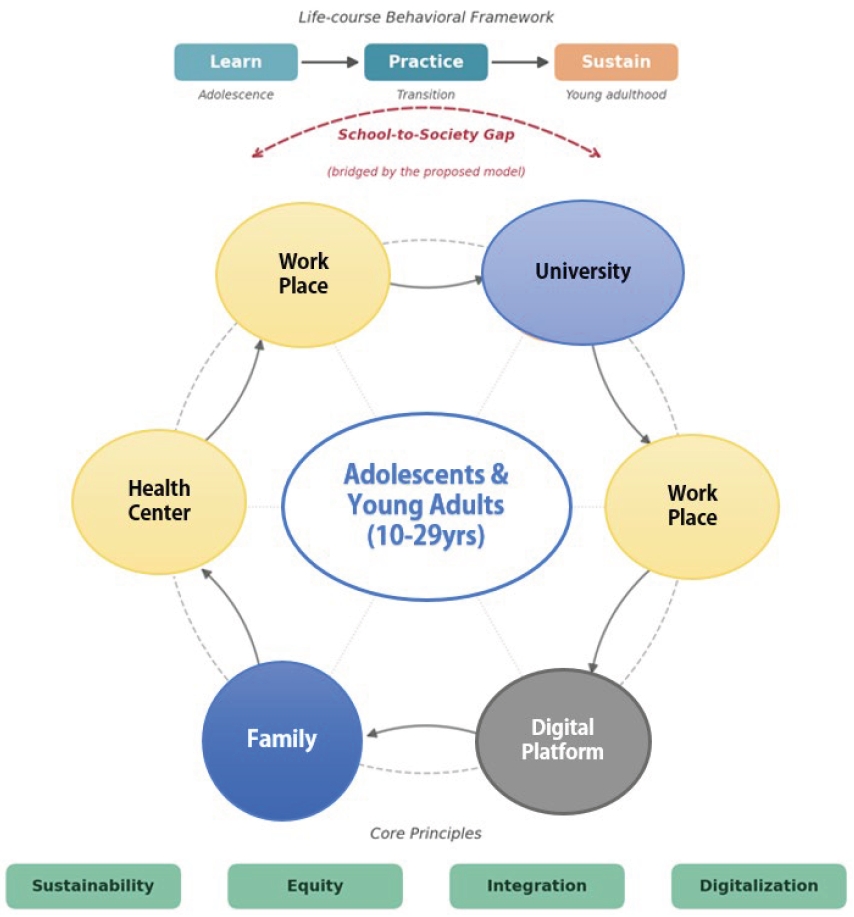
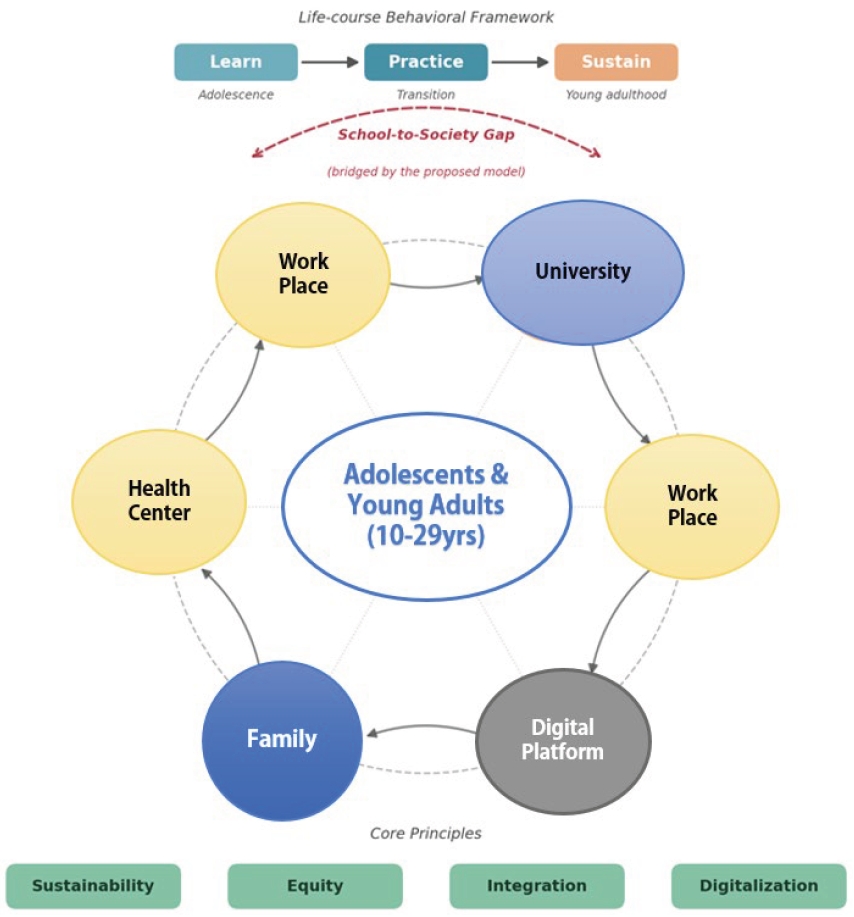
Longitudinal studies by Winpenny et al. [29] and Chong [18] demonstrated that dietary trajectories undergo rapid changes at major life transition points, which simultaneously constitute critical windows of opportunity for intervention. Accordingly, the present study proposes a life-course personalized nutrition strategy structured around the Learn-Practice-Sustain framework (Fig. 1).
The Learn stage (adolescence) represents the phase during which foundational nutrition knowledge and dietary habits are developed through school meal programs, nutrition education, and family participation [41]. The Practice stage (transition from adolescence to young adulthood) represents the phase during which real-world dietary practices are shaped across university, occupational, and community settings, and social support networks emerge [19, 29]. The Sustain stage (young adulthood) represents the phase during which established behaviors are maintained over the long term through digital platforms and behavioral feedback mechanisms, supporting long-term behavioral stability [32].
To operationalize this strategy, the Community-Linked Circular Nutrition Model proposed in the present study is grounded in an ecosystem connecting schools, public health centers, families, digital platforms, universities, and workplaces [32, 37]. The model is guided by four core principles—Sustainability, Equity, Integration, and Digital Connectivity—with each setting performing different functions according to its corresponding life-course stage. For example, schools and public health centers serve as primary hubs during the Learn stage, universities during the Practice stage, and workplaces during the Sustain stage. Notably, families and digital platforms fulfill a “bridging” function that spans all stages, ensuring the continuity of support throughout the life course.
In digitally delivered nutritional interventions, engagement is a key determinant of effective behavior change [35]. Accordingly, mobile applications, social networking services, gamification, and peer-based support strategies may play important roles in fostering participation among adolescents and young adults and sustaining behavioral change [38]. Nagata et al. [23] emphasized the need to address digital access disparities in the design of digital interventions, noting that socioeconomic structural factors are deeply embedded in dietary behaviors.
For personalized nutrition strategies to be effective, nutritional equity must be integrated as a foundational principle. The WHO [34] has emphasized equitable access to healthy diets, while UNICEF [32] has argued that equity-based food environments are important foundations for sustainable healthy dietary patterns. This principle aligns with Sustainable Development Goals (SDGs 2, 3, and 10) [34].
Nutrigenomics and omics-based personalized nutrition [42] are considered future developmental directions of the model proposed in this study, rather than the core current components. Although these technologies may enable a more precise intervention design when integrated with community-based nutritional strategies, their application necessitates careful consideration of issues related to accessibility and health equity [22, 42].
This study is a narrative review presenting conceptual models derived from theoretical and policy integration rather than empirically validated intervention frameworks. Accordingly, their effectiveness warrants future verification through community-based interventions and longitudinal cohort studies. The principal conclusions of this review are as follows:
First, adolescence and young adulthood represent the “second window of plasticity” as delineated by the DOHaD framework—a strategic window during which health trajectories may be reshaped [20, 22]. Arnett’s [17] concept of emerging adulthood substantiates the developmental distinctiveness of this period, and the extended DOHaD perspective emphasizes that nutritional interventions constitute a public health strategy extending beyond individual health to interrupt the intergenerational transmission of NCDs [9, 10, 20].
Second, Korean adolescents and young adults exhibit structurally interconnected nutritional risk patterns, encompassing breakfast skipping, obesity, and excessive sodium and free sugar intake [14], which reflect the complex interplay of socioepidemiological factors and food environments [23, 25]. In particular, a School-to-Society Nutrition Gap exists during the transition from school-based nutritional support to community-based services [16, 27, 36], necessitating the development of a continuous life-course nutritional management system.
Third, the Formation–Maintenance Model proposed in this study integrates adolescence and young adulthood into a continuous process of behavioral change [17, 19, 33], with the three-stage Learn-Practice-Sustain strategy providing a practical foundation for the formation and maintenance of health behaviors. Key implementation strategies can be summarized as follows: (1) constructing a behavioral formation structure grounded in school, family, and community linkages; (2) enhancing digitally participatory interventions; (3) developing peer- and family-centered social support systems; (4) developing tailored messaging centered on key nutrients and food choices; (5) establishing staged evaluation frameworks; and (6) securing long-term sustainability through policy, financial, and infrastructure foundations [6, 7, 19, 32, 35, 37, 41].
Fourth, the Community-Linked Circular Nutrition Model is grounded in a multi-level ecosystem connecting schools, public health centers, families, digital platforms, universities, and workplaces, guided by the core principles of Sustainability, Equity, Integration, and Digital Connectivity [32, 37]. By integrating nutrition equity as a central axis, the model aligns with SDG 2, 3, and 10 and the WHO [34] Nutrition for Health Framework. Nutrigenomics and omics-based personalized nutrition approaches are regarded as future developmental directions rather than core current components, and require careful application with due consideration of issues of accessibility and health equity [22, 42].
Future research should acknowledge that the models proposed in this study are conceptual frameworks grounded in a narrative review and therefore require systematic empirical verification. To this end, (1) quasi-experimental studies applying community-based nutritional interventions should be conducted to evaluate intervention effects; (2) longitudinal cohort studies tracking the life-course transition from adolescence to young adulthood should be conducted to verify the sustainability of behavioral change; (3) mixed-methods research to elucidate the causal relationship between engagement and dietary behavior change in digital platform-based interventions should be undertaken; and (4) equity-focused evaluations targeting socioeconomically disadvantaged populations should be undertaken to evaluate the differential effects and applicability of the proposed interventions.
Additionally, the development of differentiated target strategies reflecting Korea’s unique socioeconomic and cultural context is warranted, along with follow-up research to evaluate the applicability and scalability of community-based multi-strategy interventions [37, 38]. Based on this accumulated evidence, the practical feasibility and policy utility of the proposed model in the present study should be verified through a phased, systematic process.
In conclusion, adolescence and young adulthood may be understood as a period of active health trajectory reshaping, and life-course-based integrated nutrition strategies represent a critical direction for extending healthy life expectancy and strengthening sustainable public health systems.

CONFLICT OF INTEREST

There are no financial or other issues that might lead to conflict of interest.

FUNDING

None.

ACKNOWLEDGEMENTS

This study was based on a presentation delivered at the 2025 Fall Conference of the Korean Society of Community Nutrition.

DATA AVAILABILITY

This narrative review is based on previously published literature and does not contain original data.

Fig. 1.
Community-linked circular nutrition model for adolescents and young adults, illustrating the integration of life-course stages, community-linked ecosystems, and core implementation principles.
kjcn-2026-00129f1.jpg
Table 1.
Major nutrition risk indicators among Korean adolescents and young adults
Indicator Adolescents (10–19 years) Young adults (20–29 years) Interpretation
Breakfast skipping 38.3% (2023) 40.3% (2023) Irregular eating patterns and increased risk of nutritional imbalance
Obesity prevalence 16.2% (middle/high school, 2023) 29.6% (2023) Continuous increase over the past decade; higher prevalence in males
Sodium intake 2,950 mg (exceeding WHO limit of 2,000 mg/day) 3,204 mg (exceeding WHO limit of 2,000 mg/day) Associated with processed foods and food delivery consumption

Based on Korea Disease Control and Prevention Agency [14].

WHO, World Health Organization.

Table 2.
Paradigm shift in adolescent and young adult nutrition: past, present, and future
Era Key characteristics Policy and academic focus Keywords Strategic direction
Past Deficiency prevention Nutrient intake, school meals, growth Quantity/deficiency How much to eat (supply-focused)
Present Food environment and overnutrition focus Food environment, behavioral economics, digital tools Environment/overnutrition What, why, and how to eat
Future Sustainability- and equity-focused Nutrition security, sustainable diets, AI-based coaching Sustainability/equity Personalized nutrition coaching

Based on Willett et al. [39] and United States Department of Agriculture [40].

AI, artificial intelligence.

  • 1. UN-Nutrition. UN-Nutrition strategy 2022–2030: one UN for nutrition [Internet]. UN-Nutrition; 2022 [cited 2025 Jun 1]. Available from: https://www.unnutrition.org/wp-content/uploads/UN-Nutrition-Strategy-2022-2030_WEB_28Oct2022_EN.pdf
  • 2. World Health Organization (WHO). Global action plan for the prevention and control of noncommunicable diseases 2013–2020 [Internet]. WHO; 2013 [cited 2025 Jun 1]. Available from: https://www.who.int/publications/i/item/9789241506236
  • 3. Sobal J, Bisogni CA. Constructing food choice decisions. Ann Behav Med 2009; 38 Suppl 1: S37-S46. ArticlePubMed
  • 4. Patton GC, Sawyer SM, Santelli JS, Ross DA, Afifi R, Allen NB, et al. Our future: a Lancet commission on adolescent health and wellbeing. Lancet 2016; 387(10036): 2423-2478. ArticlePubMedPMC
  • 5. Puri S, Shaheen M, Grover B. Nutrition and cognitive health: a life course approach. Front Public Health 2023; 11: 1023907.ArticlePubMedPMC
  • 6. Moore Heslin A, McNulty B. Adolescent nutrition and health: characteristics, risk factors and opportunities of an overlooked life stage. Proc Nutr Soc 2023; 82(2): 142-156. ArticlePubMed
  • 7. Hargreaves D, Mates E, Menon P, Alderman H, Devakumar D, Fawzi W, et al. Strategies and interventions for healthy adolescent growth, nutrition, and development. Lancet 2022; 399(10320): 198-210. ArticlePubMed
  • 8. Azzopardi PS, Hearps SJC, Francis KL, Kennedy EC, Mokdad AH, Kassebaum NJ, et al. Progress in adolescent health and wellbeing: tracking 12 headline indicators for 195 countries and territories, 1990–2016. Lancet 2019; 393(10176): 1101-1118. ArticlePubMedPMC
  • 9. Gluckman PD, Hanson MA, Buklijas T. A conceptual framework for the developmental origins of health and disease. J Dev Orig Health Dis 2010; 1(1): 6-18. ArticlePubMed
  • 10. Hanson MA, Gluckman PD. Early developmental conditioning of later health and disease: physiology or pathophysiology? Physiol Rev 2014; 94(4): 1027-1076. ArticlePubMedPMC
  • 11. Hanson MA, Gluckman PD. Developmental origins of health and disease: new insights. Basic Clin Pharmacol Toxicol 2008; 102(2): 90-93. ArticlePubMed
  • 12. Baethge C, Goldbeck-Wood S, Mertens S. SANRA—a scale for the quality assessment of narrative review articles. Res Integr Peer Rev 2019; 4: 5.ArticlePubMedPMCPDF
  • 13. Sukhera J. Narrative reviews: flexible, rigorous, and practical. J Grad Med Educ 2022; 14(4): 414-417. ArticlePubMedPMCPDF
  • 14. Korea Disease Control and Prevention Agency (KDCA). Korea Health Statistics 2023: Korea National Health and Nutrition Examination Survey (KNHANES Ⅸ-2). KDCA; 2025 [cited 2025 Dec 22]. Available from: https://knhanes.kdca.go.kr
  • 15. Barker DJ. The fetal and infant origins of adult disease. BMJ 1990; 301(6761): 1111.ArticlePubMedPMC
  • 16. World Health Organization (WHO). Adolescent and young adult health [Fact sheet] [Internet]. WHO; 2024 [cited 2025 Jun 1]. Available from: https://www.who.int/news-room/fact-sheets/detail/adolescents-health-risks-and-solutions
  • 17. Arnett JJ. Emerging adulthood. A theory of development from the late teens through the twenties. Am Psychol 2000; 55(5): 469-480. ArticlePubMed
  • 18. Chong MF. Dietary trajectories through the life course: opportunities and challenges. Br J Nutr 2022; 128(1): 154-159. ArticlePubMed
  • 19. Arlinghaus KR, Stang JS. Population-engaged approaches to improving adolescent nutrition. J Nutr 2021; 151(6): 1371-1372. ArticlePubMedPDF
  • 20. Tohi M, Bay JL, Tu’akoi S, Vickers MH. The developmental origins of health and disease: adolescence as a critical lifecourse period to break the transgenerational cycle of NCDs. Int J Environ Res Public Health 2022; 19(10): 6024.ArticlePubMedPMC
  • 21. Øverby NC, Hillesund ER, Medin AC, Vik FN, Ostojic SM. Nutrition in a lifecourse perspective: from molecular to social determinants. Matern Child Nutr 2024; 20(Suppl 2): e13582. ArticlePubMed
  • 22. Tohi M, Tu’akoi S, Vickers MH. A systematic review exploring evidence for adolescent understanding of concepts related to the developmental origins of health and disease. J Dev Orig Health Dis 2023; 14(6): 755-762. ArticlePubMed
  • 23. Nagata JM, Helmer CK, Wong J, Diep T, Domingue SK, Do R, et al. Social epidemiology of early adolescent nutrition. Pediatr Res 2025; 98(3): 885-894. ArticlePubMedPDF
  • 24. Wolfson JA, Insolera N, Laska MN, Leung CW. High prevalence of food insecurity and related disparities among US college and university students from 2015–2019. J Nutr Educ Behav 2024; 56(1): 27-34. ArticlePubMedPMC
  • 25. Kim DJ, Lee SB, Choi JH, Son SO. Young adult health behavior and policy challenges. Korea Institute for Health and Social Affairs; 2025. Report No. 2025-29.
  • 26. Food and Agriculture Organization (FAO). Influencing food environments for healthy diets [Internet]. FAO; 2016 [cited 2025 Jun 1]. Available from: https://openknowledge.fao.org/items/060ce716-3d8b-4574-9857-dc38252fc283
  • 27. Korean Law Information Center. School meals act, article 5, paragraph 1 [Internet]. Ministry of Government Legislation; 2026 [cited 2026 Apr 22]. Available from: https://www.law.go.kr/LSW/lsInfoP.do?lsiSeq=283421
  • 28. Ministry of Agriculture, Food and Rural Affairs (MAFRA). The 4th basic plan for dietary life education (2025–2029). [Internet]. MAFRA; 2025 [cited 2025 Jun 1]. Available from: https://www.mafra.go.kr/bbs/home/792/586259/download.do
  • 29. Winpenny EM, van Sluijs EMF, White M, Klepp KI, Wold B, Lien N. Changes in diet through adolescence and early adulthood: longitudinal trajectories and association with key life transitions. Int J Behav Nutr Phys Act 2018; 15(1): 86.ArticlePubMedPMCPDF
  • 30. Utter J, Larson N, Laska MN, Winkler M, Neumark-Sztainer D. Self-perceived cooking skills in emerging adulthood predict better dietary behaviors and intake 10 years later: a longitudinal study. J Nutr Educ Behav 2018; 50(5): 494-500. ArticlePubMedPMC
  • 31. Nam Y, Yoon J, Kim M. Application of draft nutritional standards for school lunches in the Republic of Korea: a feasibility study from the supplier perspective. Nutr Res Pract 2023; 17(1): 149-163. ArticlePubMedPMCLink
  • 32. United Nations Children’s Fund (UNICEF). Undernourished and overlooked: a global nutrition crisis in adolescent girls and women [Internet]. UNICEF; 2023 [cited 2026 Apr 22]. Available from: https://www.unicef.org/reports/undernourished-overlooked-nutrition-crisis/
  • 33. Nakabayashi J, Melo GR, Toral N. Transtheoretical model-based nutritional interventions in adolescents: a systematic review. BMC Public Health 2020; 20(1): 1543.ArticlePubMedPMCPDF
  • 34. World Health Organization (WHO). Global accelerated action for the health of adolescents (AA-HA!): guidance to support country implementation, second edition. WHO; 2023.
  • 35. Perski O, Blandford A, West R, Michie S. Conceptualising engagement with digital behaviour change interventions: a systematic review using principles from critical interpretive synthesis. Transl Behav Med 2017; 7(2): 254-267. ArticlePubMedPMCPDF
  • 36. Kim M, Kim SY, Yoon J. Study on necessity of updating nutritional standards for school lunch programs in Korea. J East Asian Soc Diet Life 2017; 27(2): 137-147.
  • 37. Sari DN, Hilmanto D, Sunjaya DK, Sari P. Community-based interventions to improve adolescent nutrition: a scoping review. BMC Public Health 2025; 25(1): 4615.ArticlePubMedPMCPDF
  • 38. Ranisavljev M, Kurniawan AL, Ferrero E, Shinde S, Zhao S, Partap U, et al. Community-based interventions addressing multiple forms of malnutrition among adolescents in low- and middle-income countries: a scoping review. Nutr J 2025; 24(1): 69.ArticlePubMedPMC
  • 39. Willett W, Rockström J, Loken B, Springmann M, Lang T, Vermeulen S, et al. Food in the Anthropocene: the EAT-Lancet commission on healthy diets from sustainable food systems. Lancet 2019; 393(10170): 447-492. ArticlePubMed
  • 40. United States Department of Agriculture (USDA). USDA announces actions on nutrition security [Internet]. USDA; 2022 [cited 2025 Jun 1]. Available from: https://www.usda.gov/media/press-releases/2022/03/17/usda-announces-actions-nutrition-security
  • 41. Laska MN, Larson NI, Neumark-Sztainer D, Story M. Does involvement in food preparation track from adolescence to young adulthood and is it associated with better dietary quality? Findings from a 10-year longitudinal study. Public Health Nutr 2012; 15(7): 1150-1158. ArticlePubMedPMC
  • 42. Escobedo-Monge M, Lustig RH, Suchkov S, Blokh S, Andronova N, Goryacheva O, et al. Personalized nutrition in pediatric chronic diseases. Metabolites 2025; 15(10): 653.ArticlePubMedPMC

Figure & Data

REFERENCES

    Citations

    Citations to this article as recorded by  

      • Cite
        CITE
        export Copy Download
        Close
        Download Citation
        Download a citation file in RIS format that can be imported by all major citation management software, including EndNote, ProCite, RefWorks, and Reference Manager.

        Format:
        • RIS — For EndNote, ProCite, RefWorks, and most other reference management software
        • BibTeX — For JabRef, BibDesk, and other BibTeX-specific software
        Include:
        • Citation for the content below
        Life-course personalized nutrition strategy for adolescents and young adults in Korea based on a behavioral science approach and community-based model: a narrative review
        Korean J Community Nutr. 2026;31(2):127-139.   Published online April 30, 2026
        Close
      • XML DownloadXML Download
      Figure
      • 0
      We recommend
      Life-course personalized nutrition strategy for adolescents and young adults in Korea based on a behavioral science approach and community-based model: a narrative review
      Image
      Fig. 1. Community-linked circular nutrition model for adolescents and young adults, illustrating the integration of life-course stages, community-linked ecosystems, and core implementation principles.
      Life-course personalized nutrition strategy for adolescents and young adults in Korea based on a behavioral science approach and community-based model: a narrative review
      Indicator Adolescents (10–19 years) Young adults (20–29 years) Interpretation
      Breakfast skipping 38.3% (2023) 40.3% (2023) Irregular eating patterns and increased risk of nutritional imbalance
      Obesity prevalence 16.2% (middle/high school, 2023) 29.6% (2023) Continuous increase over the past decade; higher prevalence in males
      Sodium intake 2,950 mg (exceeding WHO limit of 2,000 mg/day) 3,204 mg (exceeding WHO limit of 2,000 mg/day) Associated with processed foods and food delivery consumption
      Era Key characteristics Policy and academic focus Keywords Strategic direction
      Past Deficiency prevention Nutrient intake, school meals, growth Quantity/deficiency How much to eat (supply-focused)
      Present Food environment and overnutrition focus Food environment, behavioral economics, digital tools Environment/overnutrition What, why, and how to eat
      Future Sustainability- and equity-focused Nutrition security, sustainable diets, AI-based coaching Sustainability/equity Personalized nutrition coaching
      Table 1. Major nutrition risk indicators among Korean adolescents and young adults

      Based on Korea Disease Control and Prevention Agency [14].

      WHO, World Health Organization.

      Table 2. Paradigm shift in adolescent and young adult nutrition: past, present, and future

      Based on Willett et al. [39] and United States Department of Agriculture [40].

      AI, artificial intelligence.


      Korean J Community Nutr : Korean Journal of Community Nutrition
      Close layer
      TOP