
 KSCN
KSCN
Current issue
- Page Path
- HOME > Browse Articles > Current issue
- Volume 31(4); August 2026
-


Review
- [English]
- Nutritional strategies to promote healthy life expectancy of Korean older adults based on their nutritional status and current nutrition programs: a narrative review
- SuJin Song
- Korean J Community Nutr 2026;31(4):297-308. Published online August 31, 2026
- DOI: https://doi.org/10.5720/kjcn.2026.00283
-
 Abstract
 PDF
PDF - Objectives
Korea has entered a super-aged society, resulting in a growing socioeconomic burden and rapidly increasing demand for home- and community-based nutrition services. This review aimed to examine the nutritional health status of Korean older adults and the existing nutrition programs, along with suggesting effective nutritional strategies to improve their healthy life expectancy.
Methods
This narrative review was conducted by collecting and synthesizing domestic and international literature, including journal articles, books, government documents, national health statistics, and reports on foreign nutrition programs. The literature was collected through scholarly databases and institutional websites searches using relevant keywords.
Results
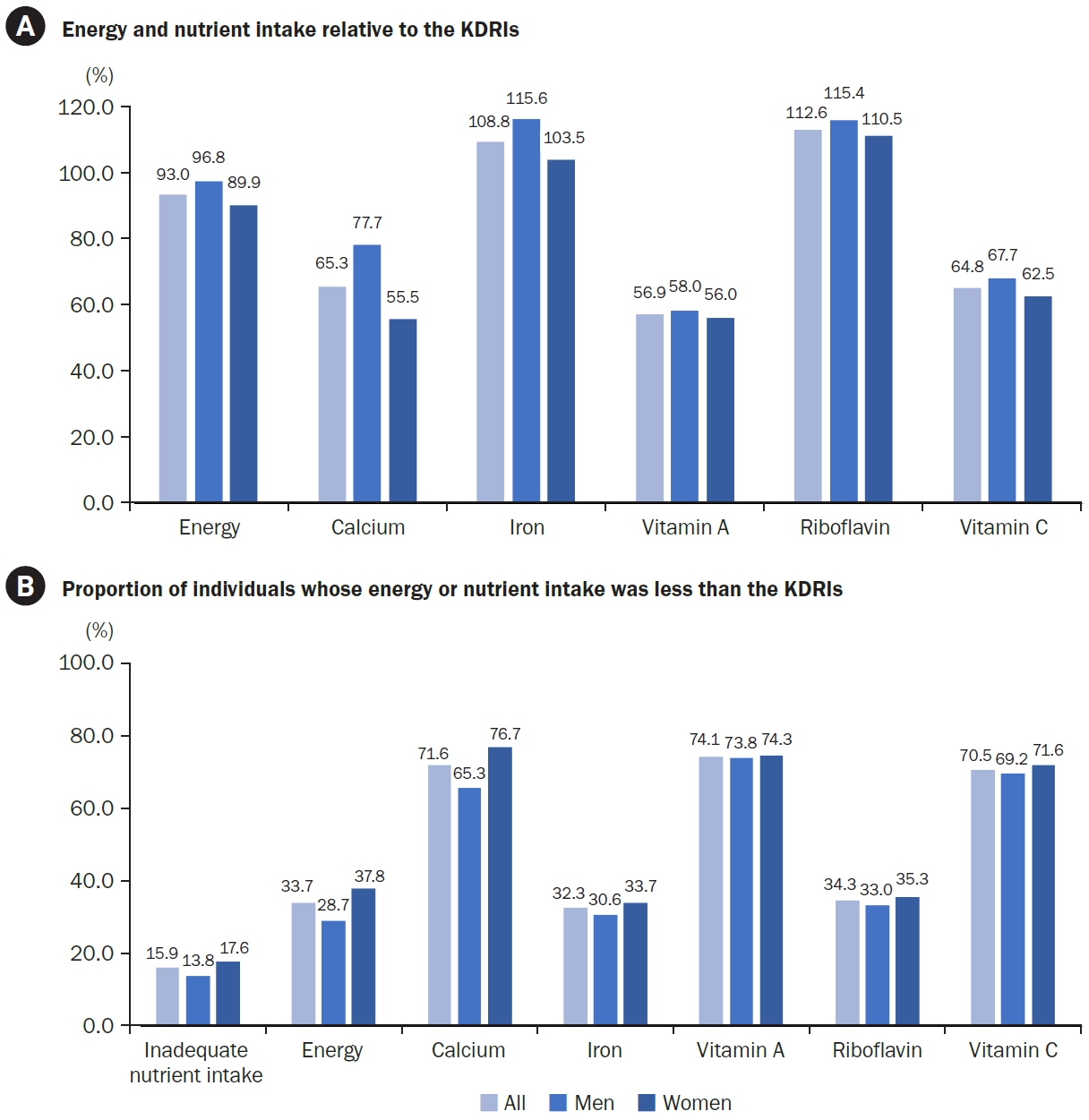
The synthesized results indicate that Korean older adults have insufficient intakes of essential nutrients, such as calcium, vitamin A, and vitamin C, alongside a high prevalence of multimorbidity and associated polypharmacy. Existing community-based nutrition programs provide meal services, home-delivered meals/side dishes, and nutrition education/counseling to vulnerable older populations. Additionally, the Center for Social Welfare Foodservice Management contributes to overseeing nutrition and hygiene management in small-scale elderly foodservice facilities. However, more effective nutritional strategies are required to achieve fully integrated community care. First, homebased nutrition care services for community-dwelling older adults should be introduced to enable tailored nutritional management. Second, expanding and strengthening the role of the Center for Social Welfare Foodservice Management may facilitate efficient management of meals across elderly foodservice facilities. Third, specialized education and training programs are required to enhance the professional competency of dietitians delivering these services. Furthermore, robust legal, institutional, and budgetary foundations, improved working conditions and job security for dietitians, and heightened public awareness of nutrition services are needed.
Conclusion
Implementing these strategies may prevent functional decline and disease aggravation, and ultimately reduce the socioeconomic costs associated with medical treatment, nursing, and long-term care of older adults.
- 184 View
- 7 Download

Research Articles
- [English]
- Development of a nutrition program for Koreans with type 2 diabetes based on the health belief model: a pre-post intervention study
- Kyoung-Min Lee, EunSeok Cha, Han-Sol Park, Min-Sun Jeon
- Korean J Community Nutr 2026;31(4):309-327. Published online August 31, 2026
- DOI: https://doi.org/10.5720/kjcn.2026.00234
-
Abstract
PDF
- Objectives
To evaluate the effectiveness of a health belief model (HBM)-based nutrition education program in improving dietary behaviors, nutrition knowledge, and self-management among Koreans with type 2 diabetes mellitus (T2DM), and to examine age-related differences and the effects of intervention delivery strategies.
Methods
A pre–post intervention study was conducted among 21 adults with T2DM (glycated hemoglobin levels ≥ 7.5%) attending outpatient clinics at university hospitals in Korea. The HBM-based program incorporated passive learning strategies (lectures and videos) and active, experiential learning strategies. Nutrition knowledge, dietary attitudes, and dietary behaviors were assessed before and after the intervention. Participants’ interest and satisfaction were also evaluated using interest–satisfaction analysis (ISA).
Results
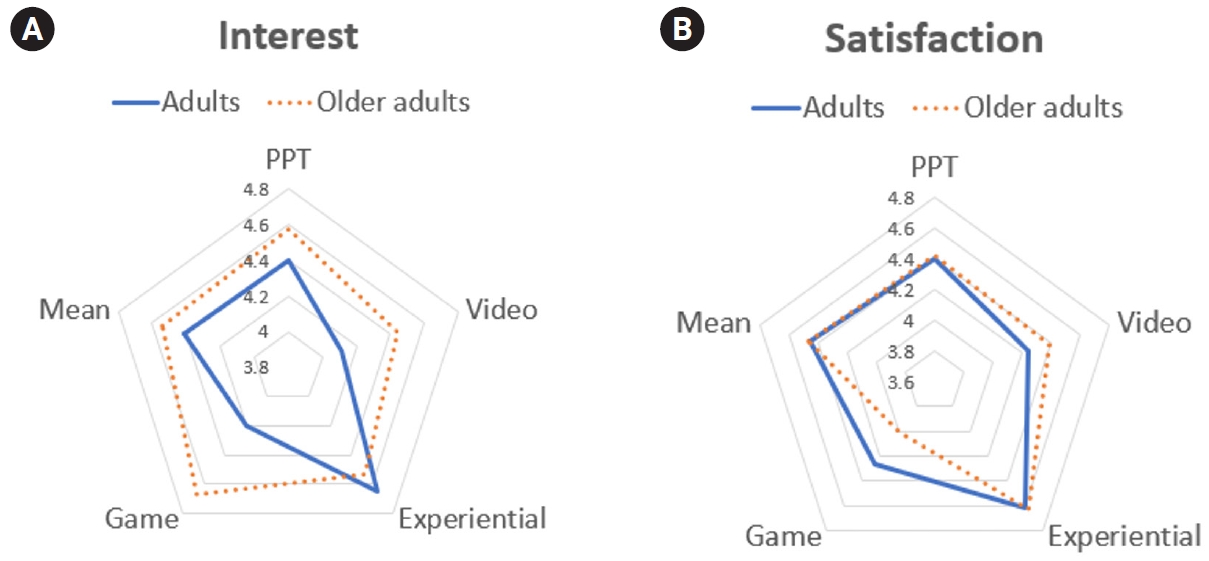
Nutrition knowledge and dietary behaviors improved significantly among adults following the intervention. Adults (n = 15) showed significant increases in nutrition knowledge (0.50 to 0.60, P < 0.05) and dietary behavior scores (2.26 to 2.47, P < 0.05), whereas no significant changes were observed among older adults (n = 6). The mean interest and satisfaction scores were 4.44 and 4.43 out of 5, respectively. Experiential learning strategies were associated with higher satisfaction than passive approaches. ISA showed that hands-on activities received the highest interest and satisfaction ratings, whereas passive methods were rated less favorably.
Conclusion
Participation in an HBM-based nutrition education program was associated with improved dietary behaviors among Koreans with T2DM in a clinical nutrition setting. Experiential learning approaches appeared to be more effective than passive methods, and the age-related differences observed suggest a need for tailored intervention strategies. These findings support the development of scalable, patient-centered nutrition interventions for chronic disease management.
- 213 View
- 10 Download
- [English]
- Consumer responses to upcycled foods in sustainable diets in Korea: a protection motivation theory-based cross-sectional study
- Jellna Chung, Yeong Gug Kim
- Korean J Community Nutr 2026;31(4):328-338. Published online August 31, 2026
- DOI: https://doi.org/10.5720/kjcn.2026.00052
-
Abstract
PDF
- Objectives
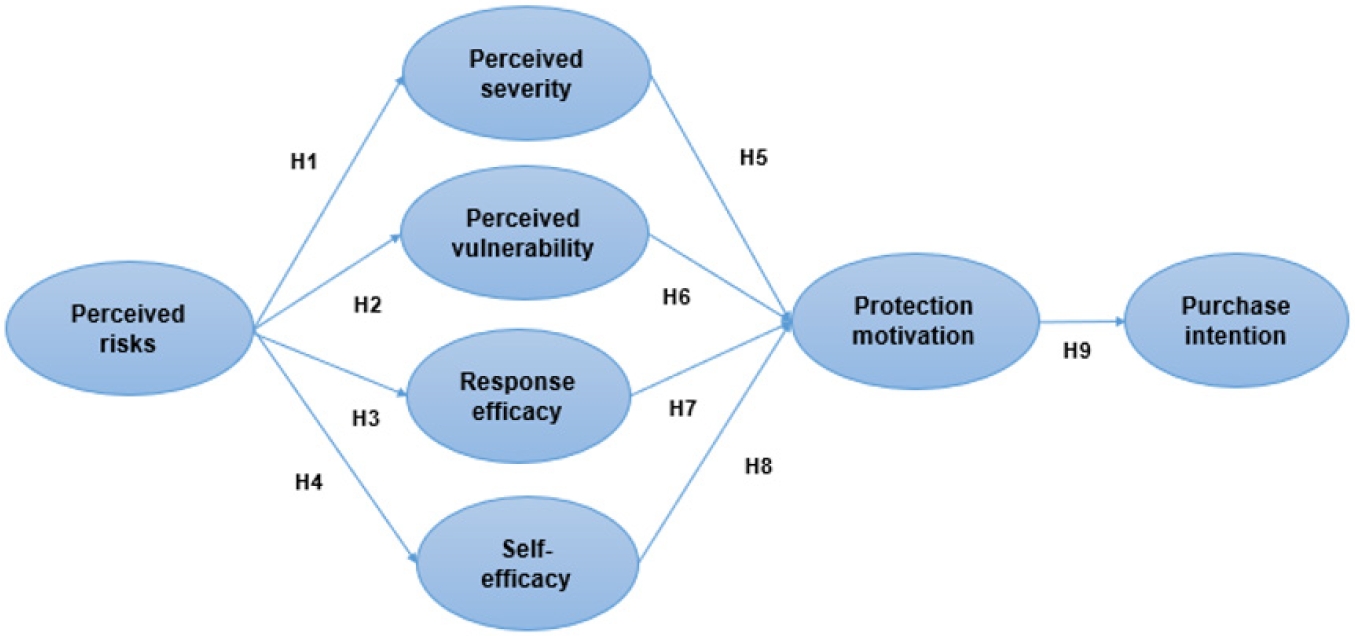
This study aims to examine how perceived risks associated with upcycled foods shape consumer decision-making through the lens of Protection Motivation Theory (PMT). Although upcycled foods have gained increasing attention as a promising approach to reducing food waste and supporting sustainable diets, consumer acceptance remains uncertain due to concerns about safety, quality, unfamiliarity, and perceived contamination. Specifically, this study investigates the cognitive mechanisms by which threat and coping appraisals influence protection motivation and purchase intention.
Methods
Using a cross-sectional survey design, data were collected from 211 consumers in South Korea through an online questionnaire. The survey measured perceived risk, perceived severity, perceived vulnerability, response efficacy, self-efficacy, protection motivation, and purchase intention toward upcycled foods. Confirmatory factor analysis and structural equation modeling were employed to assess the validity and reliability of the measurement model and to test the proposed PMT-based framework and hypothesized relationships among perceived risk, cognitive appraisals, motivation, and intention.
Results
Perceived risks significantly increase perceived severity and vulnerability while reducing response efficacy. These findings indicate that consumers who perceive greater risks associated with upcycled foods are more likely to recognize potential negative consequences and their personal susceptibility, and to question whether purchasing such products can effectively address sustainability-related concerns. Both threat appraisal and coping appraisal significantly affect protection motivation, which in turn positively influences purchase intention. The relationship between perceived risk and self-efficacy was not supported, suggesting that risk perception alone may not directly undermine consumers’ confidence in their ability to choose or consume upcycled foods.
Conclusion
The findings demonstrate that perceived risks do not uniformly inhibit consumption of upcycled food but operate through nuanced cognitive pathways. By highlighting the central role of coping appraisal, this study suggests that strengthening consumers’ efficacy beliefs is critical to promoting informed, sustainable adoption of upcycled foods. The results have practical implications for marketers, policymakers, and food industry stakeholders by emphasizing the need for transparent information, credible communication, and consumer education to reduce uncertainty and reinforce the perceived effectiveness and accessibility of upcycled food choices.
- 133 View
- 4 Download
- [Korean]
- Association between mukbang and cookbang watching and obesity in Korean adolescents: a cross-sectional study
- Ji-Hye Jung, Yeon-Oh Han
- Korean J Community Nutr 2026;31(4):339-347. Published online August 31, 2026
- DOI: https://doi.org/10.5720/kjcn.2026.00171
-
Abstract
PDF
- Objectives
In this study, the association between the frequency of watching mukbang/ cookbang (online eating and cooking broadcasts) and obesity in Korean adolescents was investigated using data from the 21st (2025) Korea Youth Risk Behavior Web-based Survey.
Methods
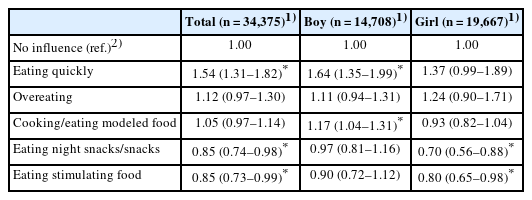
The subjects were 52,624 middle- and high-school students, who were classified based on watching frequency as follows: non-watchers, monthly watchers, and weekly watchers (≥ 1 time/week). Changes in the dietary behavior of the watchers (n = 34,375) were assessed. Obesity was defined as a sex- and age-specific body mass index ≥ 95th percentile as per the 2017 Korean Children and Adolescents Growth Standard. Complex sample multiple logistic regression was used to calculate the adjusted odds ratios (aORs) and 95% confidence intervals (CIs), controlling for sociodemographic, health-related, and dietary covariates. Sex-stratified analyses and P for trend tests were also conducted.
Results
Overall, 65.3% of students watched mukbang/cookbang in the past year. The weekly watchers had significantly higher odds of obesity than the non-watchers (aOR = 1.09, 95% CI: 1.02–1.16; P for trend = 0.011). Sex-stratified analyses showed a positive association in boys (aOR = 1.20, 95% CI: 1.11–1.30), but an inverse association in girls (aOR = 0.86, 95% CI: 0.77–0.97). Among the watchers, the “eating quickly” group had the highest odds for obesity (aOR = 1.54, 95% CI: 1.31–1.82), whereas the “eating night snacks/ snacks” (aOR = 0.85, 95% CI: 0.74–0.98) and “eating spicy or highly flavored foods” (aOR = 0.85, 95% CI: 0.73–0.99) groups were associated with lower odds of obesity.
Conclusion
Regular mukbang/cookbang viewing was significantly associated with adolescent obesity. A media-induced “fast eating rate” was identified as a potential behavioral pathway linked to higher obesity risk, suggesting that adolescent obesity prevention programs should incorporate media literacy and behavioral interventions that promote slower eating.
- 168 View
- 8 Download
- [Korean]
- Evaluation of the nutrition quality of meals served in small-scale public foodservice for the elderly in Korea by foodservice operation type–focused on proportion over chronic disease risk reduction intake and nutrient adequacy ratio: a cross-sectional study
- Inhee Kang, Hyeongmo An, Gyoungok Gang, Hyeja Chang
- Korean J Community Nutr 2026;31(4):348-359. Published online August 31, 2026
- DOI: https://doi.org/10.5720/kjcn.2026.00290
-
Abstract
PDF
- Objectives
Although delivery-based contract-managed operations have recently increased in small-scale foodservice facilities serving older adults, studies investigating the nutrient adequacy of meals and chronic disease risk reduction intake remain limited. This study aimed to evaluate nutrient intake levels, nutrient intake adequacy, and their chronic disease risk, and to compare differences between self-operation and contract-managed foodservice.
Methods
Nutrient intakes of 777 participants were assessed for lunch and snack in 18 small-scale foodservice settings serving older adults in Korea. Data collection included 12 visits to six self-operated foodservice settings (November 2024–June 2025) and 24 visits to 12 contract-managed foodservice settings (December 2025–March 2026). Using the individual leftover measurement method, consumption adjustment factors were calculated. By applying it to standardized recipes from lunch and afternoon snacks, nutrient intake was analyzed using CAN-Pro 6.0 (Professional Edition; The Korean Nutrition Society). Based on the 2025 Korean Dietary Reference Intakes, nutrient adequacy ratio (NAR), the proportion of participants with intakes below nutrient reference values, and the proportion over chronic disease risk reduction intake (CDRR) were calculated.
Results
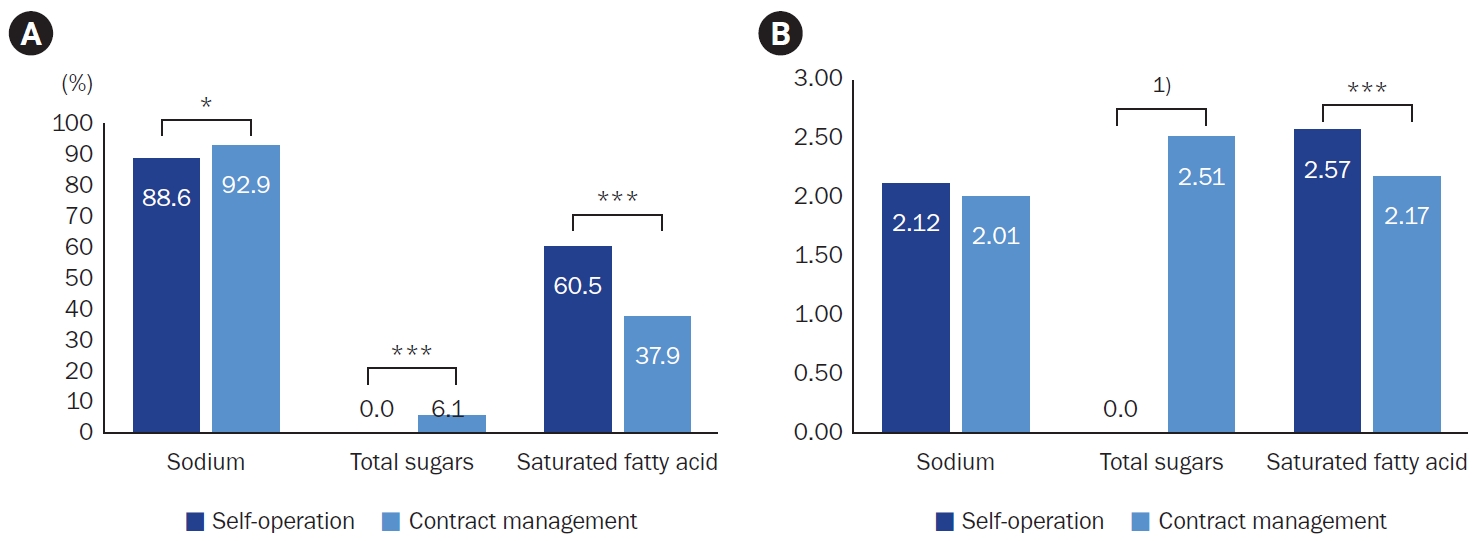
Except for significantly higher soup consumption in self-operated foodservice, no significant differences in consumption and consumption adjustment factors were observed among food types between the two foodservice operation types. NARs were low for vitamin B6 (0.29), vitamin D (0.37), vitamin A (0.52), vitamin C (0.55), and calcium (0.61), indicating inadequate micronutrient intake. The highest proportions were for vitamin B6 (94.9%), followed by vitamin A and folate (76.4%), vitamin C (70.4%), and calcium (69.0%). The proportion over CDRR of the participants was highest for sodium (91.2%), followed by saturated fatty acids (46.6%) and total sugars (3.7%), showing significant differences between the two foodservice operation types.
Conclusion
Nutrition management in small-scale public foodservice facilities for older people should reflect actual consumption and operation type-specific nutrient deficiencies or excesses.
- 185 View
- 10 Download
- [Korean]
- Analysis of evaluation indicators and development of a logic model-based performance evaluation framework for early childhood programs in the Center for Children’s and Social Welfare Foodservice Management in South Korea: a mixed-methods study
- Sohyun Park, Jieun Oh, Hyun Joo Ryou, Ji-Yun Hwang, Kirang Kim
- Korean J Community Nutr 2026;31(4):360-373. Published online August 31, 2026
- DOI: https://doi.org/10.5720/kjcn.2026.00122
-
Abstract
PDF
- Objectives
This study analyzed the current evaluation indicators used for early childhood programs by the Center for Children’s and Social Welfare Foodservice Management (CCFSM) in South Korea and developed a logic model-based performance evaluation framework to improve the system through outcome-oriented assessment.
Methods
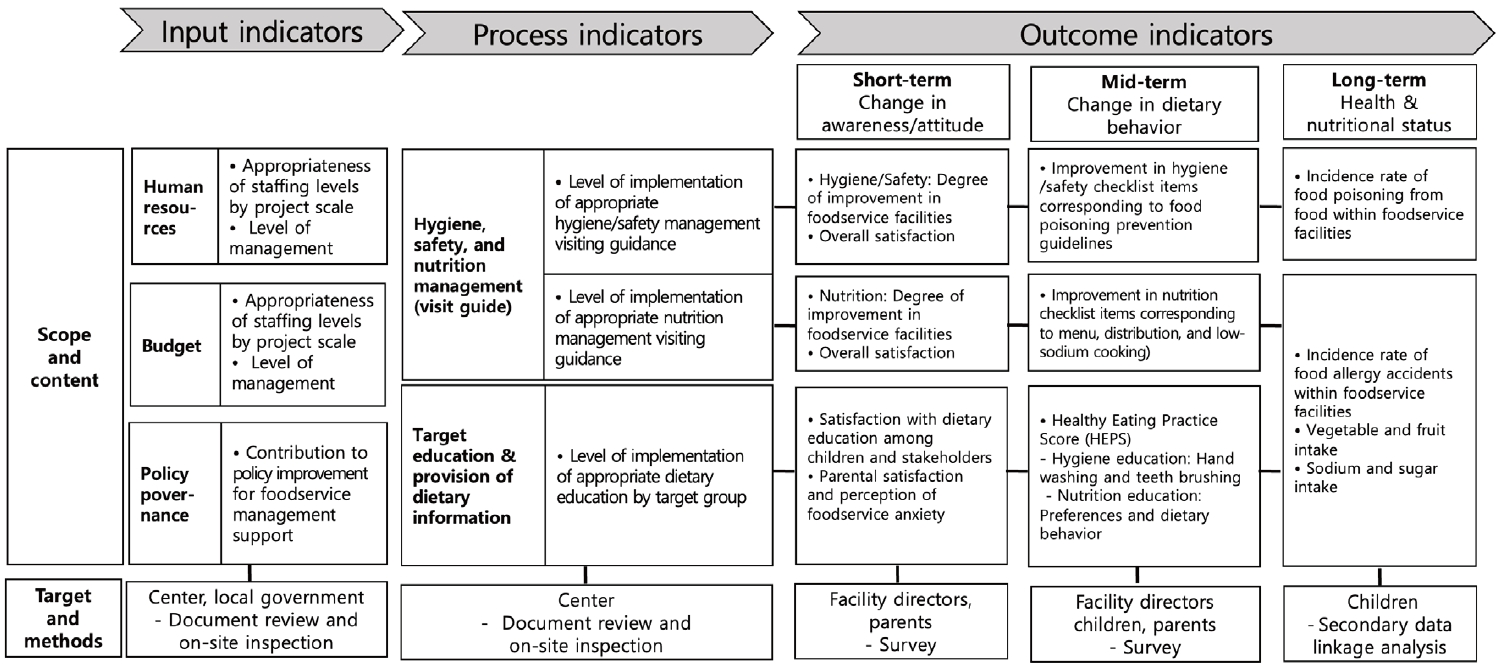
The study comprised four stages. First, existing on-site evaluation indicators were mapped onto a logic model framework to assess their suitability for evaluating program effectiveness. Second, focus group interviews were conducted with stakeholders and experts to examine their understanding of, and perceived limitations in, the current evaluation system. Third, new outcome indicators were developed using checklist items for hygiene, safety, and nutrition management implemented across centers, and program effectiveness was evaluated using these indicators. Fourth, additional indicators were developed to assess the effectiveness of child-targeted nutrition and dietary education programs, and their practical applicability was examined.
Results
The current evaluation indicators focused primarily on structural (input) and process measures, with limited emphasis on outcomes reflecting the ultimate program goals. Few indicators directly assessed improvements in children’s health and dietary behaviors, and existing outcome measures relied largely on subjective satisfaction surveys completed by facility directors and parents. Based on the logic model, the proposed outcome indicators included, in the mid-term, improvements in hygiene, safety, and healthy eating practices scores, and, in the long-term, reductions in foodborne illness and food allergy incidents, increased fruit and vegetable intake, and decreased sodium and sugar intake.
Conclusion
The findings highlight the need to transition the CCFSM evaluation system toward a performance-oriented framework. A logic model-based evaluation system would improve accountability and better align evaluation practices with policy objectives, whereas phased implementation would help minimize operational burden on practitioners.
- 159 View
- 4 Download
 First
First Prev
Prev


