- [Korean]
-
Awareness, importance and performance of sustainable diets among university students in Daegu and Gyeongbuk, Korea: a cross-sectional study
-
Yun-Gyeong Cho, Eun-Kyung Shin, Yeon-Kyung Lee
-
Korean J Community Nutr 2026;31(3):276-286. Published online June 30, 2026
-
DOI: https://doi.org/10.5720/kjcn.2026.00080
-
-
 Abstract Abstract
 PDF PDF
- Objectives
The need for a sustainable diet is being emphasized as dietary changes are linked to climate change, biodiversity loss, and worsening food security. The purpose of this study was to investigate university students’ awareness, knowledge, behaviors, perceived importance, and performance of sustainable diets, and to compare these variables between students who had taken a food and nutrition course and those who had not.
Methods
A total of 300 university students in the Daegu Gyeongbuk region, Korea, participated in an online survey conducted in 2024, and 292 valid (male, 139; female, 153) responses were analyzed. The survey assessed awareness, knowledge, behaviors, perceived importance, and performance of sustainable diets. These were compared between participants (134) and non-participants (158) in the food and nutrition course.
Results
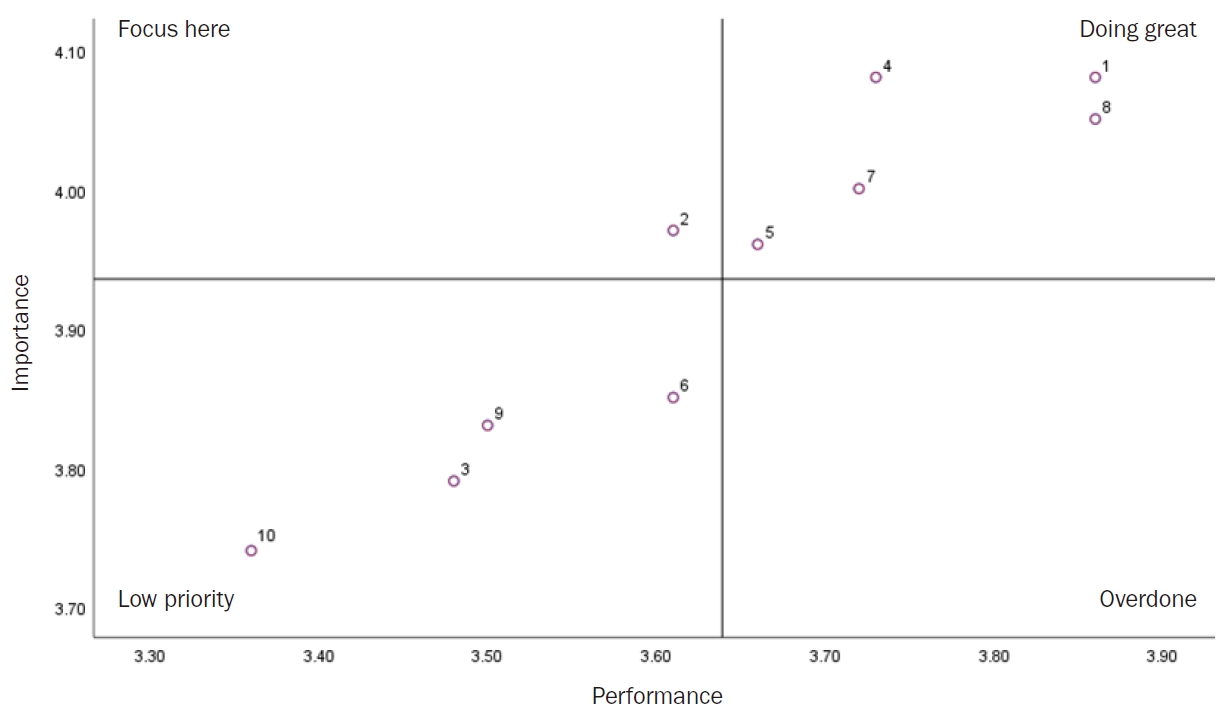
Our results showed that 54.5% of students were aware of sustainable diets, and 58.7% expressed an intention to participate in sustainable diet education in the future. The total knowledge and behavior scores on sustainable diets were 7.09/10 and 3.67/5, respectively, and the scores of the course-taking group were significantly higher than those of the non-course-taking group. The actual level of performance of sustainable diets (3.63/5) was relatively low compared to their perceived importance (3.93/5). Students who took the course demonstrated significantly higher importance (society) and performance (environment, health, and society) scores than those who did not. No significant differences were detected between the two groups regarding the importance of the environmental and health aspects of sustainable diets.
Conclusion
Students taking the food and nutrition course demonstrated high levels of awareness, knowledge, behavior, perceived importance, and performance regarding sustainable diets. These findings highlight the need for systematic educational strategies in higher education to promote sustainable dietary competencies among university students.
|

 KSCN
KSCN