- [Korean]
-
Survey on consumer perceptions, health benefits and preferences of kindergarten and school foodservices in Korea, including related keywords reported in newspaper: a mixed-methods study
-
Gyoungok Gang, Chaewon Park, Hyeja Chang
-
Korean J Community Nutr 2025;30(4):309-320. Published online August 29, 2025
-
DOI: https://doi.org/10.5720/kjcn.2025.00199
-
-
 Abstract Abstract
 PDF PDF
- Objectives
With the rapid development of social culture, the perception of kindergarten and school foodservice, as well as opinions on its health benefits, has changed significantly. However, research on this topic remains scarce. We conducted a survey in South Korea on consumers’ perceptions, healthiness, and preferences regarding kindergarten and school foodservice.
Methods
With the nationwide cooperation of 17 city and provincial education offices, online and offline surveys were conducted targeting the parents of kindergarten and lower-grade elementary school children, as well as upper-grade elementary, middle, and high school students. In addition, keywords in newspaper reports were analyzed using the Big Kinds platform. A total of 532 valid questionnaires were collected, and statistical analysis was performed using IBM SPSS Statistics version 27.0 (IBM Co.).
Results
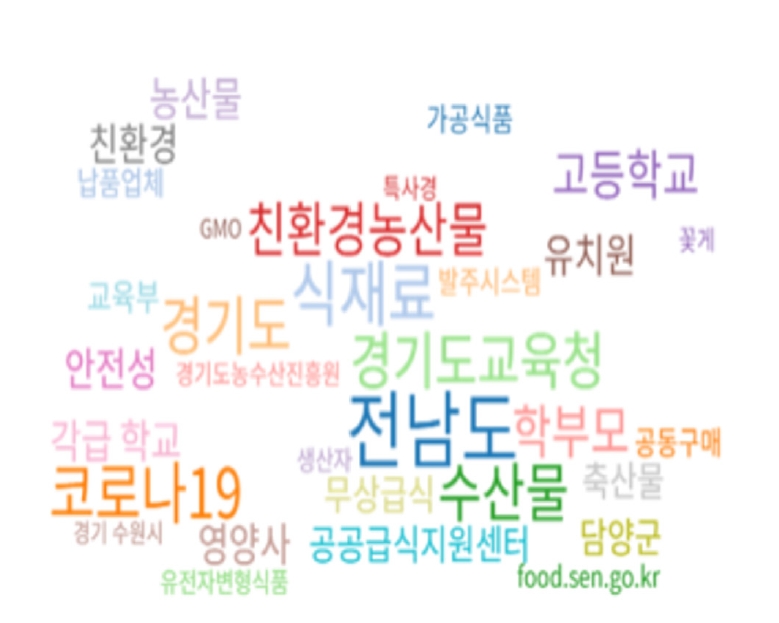
The average age of the parents and students was 40 and 12.5 years, respectively, with 36.4% of the students attending schools in the Seoul and Gyeonggi areas. The main keywords reported in newspaper articles, as analyzed using the Big Kinds platform, were “eco-friendly agricultural products,” “food ingredients,” “safety,” and “marine products.” The perception of kindergarten and school foodservice was very positive, especially regarding the attributes of safe ingredient use (4.44), menu variety (4.29), cafeteria cleanliness (4.31), cleanliness of plates, spoons, and utensils (4.24), thorough hygiene management (4.2), nutritional excellence (4.24), and support for proper eating habits (4.18). The healthiness of school foodservice was highly rated, although there is still room for improvement in terms of “not serving fried foods more than twice a week”. In terms of preference for school meals, the most preferred items were meat side dishes, followed by chicken, noodles, fried food, beverages, and bread. In contrast, soybean paste soup, vegetables, and mixed-grain rice received relatively low preference.
Conclusion
The results described above may be used to develop educational programs or policies that inform students and parents about the goals of school foodservice and help address common misunderstandings.
- [English]
-
Developing educational videos to inform rightly about school foodservice from kindergarten to high school: a case study
-
Gyoungok Gang, Chaewon Park, Haejin Kang, Wan Soo Hong, Yoo Kyoung Park, Sook Hee Choi, Seung Hye Kim, Jieun Choi, Jihyun Park, Hyeja Chang
-
Korean J Community Nutr 2024;29(2):97-113. Published online April 24, 2024
-
DOI: https://doi.org/10.5720/kjcn.2024.29.2.97
-
-
Abstract
PDF
- Objectives
Since the enactment of the School Nutrition Act in 1981, school lunch programs in South Korea have grown quantitatively and qualitatively with a current student participation rate of 99.8%. Nonetheless, educational materials are needed to reduce misunderstanding and ignorance about school lunch programs. This study aimed to develop 3 educational videos that help students of various ages (kindergarteners/lower-grade elementary, upper-grade elementary, and secondary school, respectively), understand the school lunch program.
Methods
A scenario was created, was made, and the opinions on the scenario from experts in foodservice sectors were collected. A survey was conducted to students and parents to determine topics they wanted to know about school foodservice. The final videos were produced using this information and the expert opinions. The data were analyzed using SPSS 27.0 for Mac (IBM Corp., Armonk, NY, USA); a P-value of < 0.05 was considered significant.
Results
Three videos on school foodservice were developed for various age levels of students: kindergarten/lower-grade elementary, upper-grade elementary, and secondary school. Additionally, English subtitles were included for the multicultural student population. These videos, each lasting about 7 minutes, cover topics such as nutrition, hygiene, and the cultural significance of the school lunch program. The survey results showed that parents and students wanted to know the following topics about the school lunch program: “nutritionally balanced diet” (11.9%), “purchasing safe food ingredients” (10.9%), and “healthy eating habits” (9.9%).
Conclusions
The developed videos will serve as valuable educational resources on school foodservice, foster a deeper understanding of the school lunch program in parents and students, and potentially address their inquiries regarding production processes, nutrition, hygiene, cultural heritage, and health.
|

 KSCN
KSCN